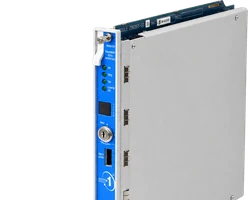
-
Match the complete marking
Include CP461-10 and every revision or approval marking visible on the item. Keep the exact reference on your enquiry and quotation.
-
Check the offered item before ordering
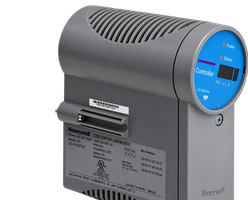
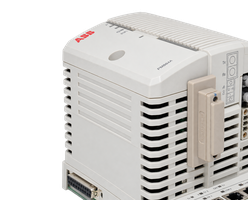
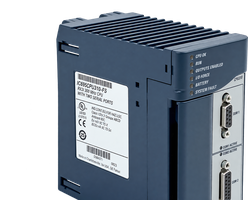
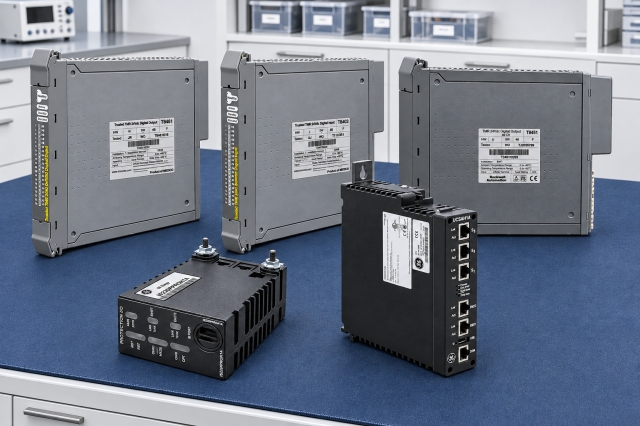
Request available label and interface photos. Have your maintenance team compare the offered CP461-10 reference with the installed equipment and applicable Yokogawa documentation.
Technical specifications for CP461-10
-
Manufacturer:Yokogawa
-
Product Category:DCS Systems
-
Spare Part Number:CP461-10
-
Weight:0.72 kg
-
Tariff Code:8537101190
-
Base model:CP461
-
Offered suffix:-10
-
Module function:Processor module
-
Supported FCU family:AFV30S / AFV30D
-
Supported cabinet FCU:AFV40S / AFV40D
-
Supported N-IO FCU:A2FV50S / A2FV50D
-
Supported RIO-upgrade FCU:A2FV70S / A2FV70D
-
Installation status:Preinstalled component in the applicable field control unit
-
Configuration boundary:Firmware, database and redundancy state are system-specific
-
Replacement boundary:Use the appropriate FCU manual for the installed platform
Information
- The complete CP461-10 identity establishes the offered hardware. Confirm the installed system, revision and field interfaces before approving the replacement.
Suffix boundary: The complete -10 marking is preserved without inventing an unsupported suffix meaning.
Changeover focus: Capture firmware, database, redundancy and FCU hardware state before removal.
Processor replacement is a system change, not only a board swap. Preserve project database, firmware context, controller identity, redundancy state, network settings and host-unit revision before intervention.
Acceptance should include controlled startup, controller health, redundancy synchronization where applicable, I/O communication, sequence execution and alarm/event review under the approved plant procedure.
-
Yokogawa CP461-10 technical reference
Apter Power reference with verified manufacturer data and exact-model applicability. -
Yokogawa CP461-10 engineering guide
Apter Power installation, configuration, diagnostic and acceptance guidance.
Platform applications: The uses below depend on the installed controller configuration and approved system design.
-
AFV30 field control
Operate as the processor component in supported single or duplex AFV30 units. -
AFV40 cabinet control
Serve the supported cabinet-style field control unit. -
A2FV50 N-IO control
Process control tasks in the supported N-IO field control unit. -
A2FV70 RIO upgrade
Support the approved RIO system-upgrade field control unit.
Create a verified, restorable control database and configuration backup.
Capture processor, host-unit and engineering-system software revisions.
Confirm active/standby roles and the approved switch or shutdown procedure.
Check backplane, power, cooling and companion modules before fitting the processor.
Preserve controller addresses, domain settings and communication assignments.
Prove controller health, I/O communication, redundancy and representative control functions.
Alternative Names
Technical notes
Installation relationship: Use the exact model marking and manufacturer wiring or installation information for the delivered hardware.
System boundary: Verify host equipment, companion interfaces, field wiring and configuration before energizing.
Technical reference: Yokogawa IM 33J01S10-01Z1 technical-document index and system conformity guidance.

FAQ View All FAQ
-
Which host platforms must be checked before installing CP461-10?Identify whether the processor is in AFV30, AFV40, A2FV50 or A2FV70 hardware and use the corresponding Yokogawa system document.
-
What backup is required before replacing CP461-10?Create and verify a restorable project database and record controller identity, firmware, network settings, redundancy state and application revisions.
-
How should duplex operation be managed for CP461-10?Follow the host FCU procedure to identify active and standby processors, verify synchronization and control the changeover or shutdown before removal.
-
What startup checks are essential after fitting CP461-10?Confirm power-on diagnostics, controller mode, time synchronization, network communication, I/O node status and application loading before enabling control.
-
How can an apparent CP461-10 processor fault be separated from a host fault?Check FCU power, backplane, cooling, network, companion modules and diagnostic logs before condemning the processor.
-
What configuration evidence should be compared after replacing CP461-10?Compare project checksum or revision, controller assignment, I/O database, communication settings and sequence enable states with the approved backup.
-
How should representative control be proved on CP461-10?Exercise approved analog, digital, sequence and communication paths while observing alarms, event timing and redundancy behaviour.
-
What closes a CP461-10 changeover?Retain backup identity, firmware and hardware record, diagnostic screenshots, synchronization result, representative functional tests and operations approval.
Supporting new and legacy automation
-
Please try to be as accurate as possible with your search.
-
We can quote you on 1000s of specialist parts, even if they are not listed on our website.
-
We can't find any results for “”.
Related cases and sourcing guidance
View all case studiesYou May Also Like
Product Browsing History
-
Whatsapp: +86 18030235313
Send us a message. -
sales13@apterpower.com
Complete our online form. -
+86 18030235313
Speak to our team in your native language.