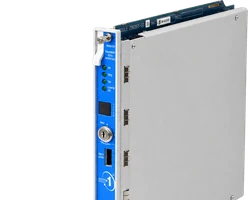
Speak to a sourcing specialist
sales13@apterpower.com
Get a quick price for AFV10D S2
E-mail *
Mobile *
Company
Content *
Quantity *
Upload (gif, jpg, jpeg, png, bmp, doc, docx, xls, xlsx, ppt, pdf, csv)
For more information on how your data is processed and stored by Apterpower please read our privacy policy

What happens after you enquire

  • 1

    Requirement review

    We review the part number, quantity and delivery requirements and ask for any missing details.
  • 2

    Quotation and availability

    We confirm the proposed item, condition, availability, price and estimated lead time in the quotation.
  • 3

    Order confirmation and dispatch

    Once the quotation and purchasing details are agreed, your contact will coordinate the order and available dispatch information.

Technical specifications for AFV10D S2

  • Manufacturer:
    Yokogawa
  • Product Category:
    DCS Systems
  • Spare Part Number:
    AFV10D S2
  • Estimated shipping dimensions:
    48.2×22×5cm
  • Weight:
    2.48 kg
  • Tariff Code:
    8537101190
  • Counliy of origin:
    Japan
  • Control architecture:
    Duplexed FCU
  • Network interface:
    Dual-redundant Vnet/IP
  • Processor:
    VR5432, 133 MHz
  • Main memory:
    32 Mbyte
  • Memory backup:
    Battery, 72 h maximum
  • Battery recharge:
    48 h minimum
  • Local I/O modules:
    8 maximum
  • Node units:
    14 maximum per FCU
  • ESB bus nodes:
    9 maximum
  • Status contact:
    30 V DC, 0.3 A maximum
  • Rack mounting:
    19-inch rack
  • Network cable:
    CAT5e or better

Information

Overview Manuals Common Applications Product Precautions
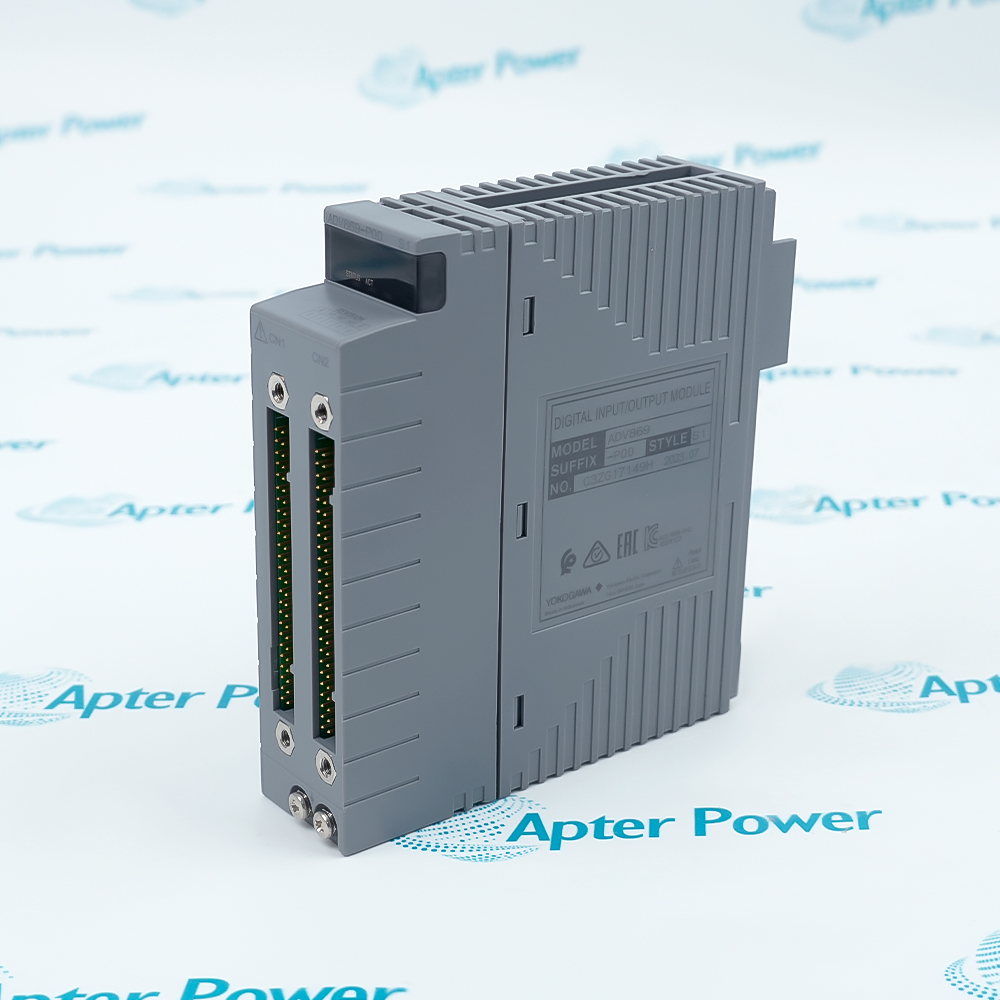
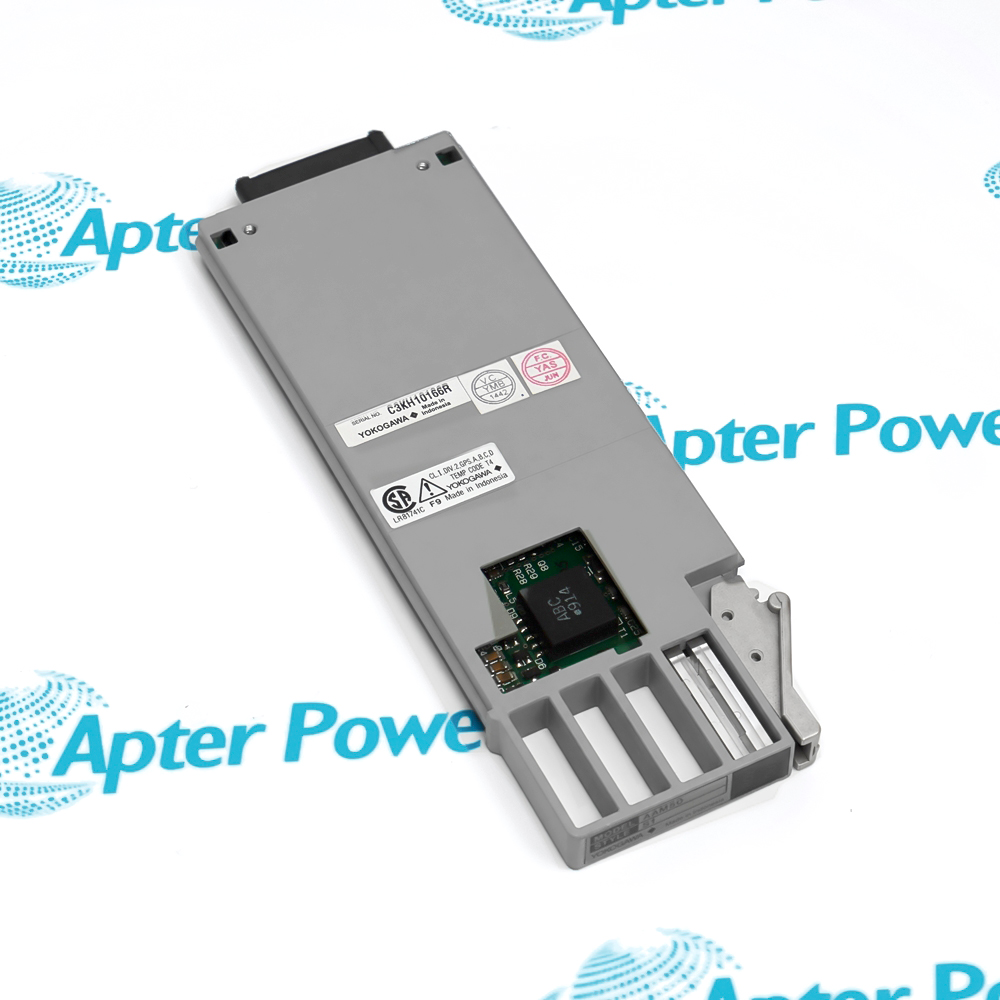
At the center of a CENTUM VP field control station, Yokogawa AFV10D S2 coordinates local FIO modules and connected ESB or ER bus nodes while its paired control paths maintain availability.
  • Two CP451 modules form the processing pair.
  • Vnet/IP communications retain redundant paths.
  • Eight local I/O-module positions support FIO integration.
  • ESB and ER buses extend control to remote node units.

The FCU connects to a Layer 2 switch through CAT5e-or-better UTP cabling and requires the LFS1500 control package. Node capacity and expansion licensing must be matched to the installed cabinet architecture before configuration restoration.

Important Notice: Confirm the complete AFV10D S2 identity, processor and power redundancy, installed EC401 or EB401 modules, node licenses and component style before replacement or SEM commissioning.

Yokogawa AFV10D S2 Manuals & Downloads
Yokogawa AFV10D S2 Official Technical Reference Excerpt (PDF)Yokogawa AFV10D S2 Installation & Commissioning Guide (PDF)

The official excerpt documents the duplexed FCU architecture, limits, installation rules and ordering identity. The installation guide organizes isolation, slot preservation, network restoration and witnessed commissioning.

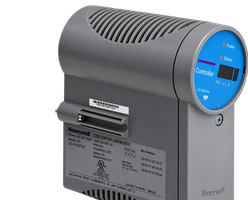
Duplexed process controlRun a CENTUM VP field control station with paired processing, network and power paths where the installed project uses redundant FCU operation.
Local FIO cabinet integrationHost as many as eight allocated FIO modules in the FCU while retaining the project-defined module order and barrier-partition requirements.
ESB node expansionConnect ANB10 node units over the dual-redundant ESB bus through EC401 modules assigned to the documented FCU slots.
ER bus extensionReach ANR10 ER bus node units by installing the required EB401 master arrangement and observing the single or redundant slot allocation.
Yokogawa AFV10D S2 combines two processors, redundant Vnet/IP, paired power and project-defined I/O expansion. Preserve all four identities during maintenance.
1
Read the complete AFV10D S2 component tag and record the installed style, suffix execution and redundant hardware before disturbing the FCU.
2
Place the controlled process and every connected node in the approved maintenance state before isolating FCU power or network paths.
3
Retain the two CP451 positions and their project configuration; a processor replacement is not permission to rearrange the paired control roles.
4
Keep EC401 modules in slots 7 and 8 for a redundant ESB arrangement, or slot 7 only when the approved project uses a single ESB path.
5
Verify CAT5e-or-better UTP network connections and the assigned Layer 2 switch ports before restoring Vnet/IP communication.
6
Install T9083ND whenever the FCU contains I/O modules with built-in barriers, and preserve the insulating-partition arrangement during module work.
7
Confirm LFS1500, any LFS1550 expansion and required node licenses against the number of connected ESB and ER bus nodes.
8
After restoration, check processor, power, Vnet/IP and node-bus status together and retain the witnessed functional result before process release.

Technical notes

Mount both EC401 modules in slots 7 and 8 when the ESB bus participates in the duplexed processor arrangement. Style 2 supports SEM for Vnet/IP, subject to the configured LFS1500/LFS1550 software and node licensing.

FAQ View All FAQ

  • Which redundant hardware paths are built into Yokogawa AFV10D S2?
    Yokogawa AFV10D S2 uses two CP451 processor modules, two power-supply modules and a dual-redundant Vnet/IP interface in its duplexed FCU architecture.
  • Where are the EC401 coupler modules installed when Yokogawa AFV10D S2 uses a redundant ESB bus?
    Both slot 7 and slot 8 receive an EC401 when the processor modules and ESB connection are configured redundantly. A single ESB configuration instead uses slot 7 and leaves slot 8 empty.
  • How is the node capacity of Yokogawa AFV10D S2 expanded beyond the basic LFS1500 allowance?
    LFS1500 permits up to three node units. Adding the LFS1550 Application Capacity Expansion Package and the required Node Unit Expansion License allows the configured total to reach the documented limit of 14 node units per FCU.
  • What memory-retention interval applies after Yokogawa AFV10D S2 loses power?
    The main-memory battery backup is specified for a maximum of 72 hours, and the battery requires at least 48 hours to recharge.
  • How does the FCU failure contact behave on Yokogawa AFV10D S2?
    The two-terminal NC/C FCU status contact opens during an FCU failure and is rated at 30 V DC with a maximum current of 0.3 A.
  • Can Yokogawa AFV10D S2 be used with SEM for Vnet/IP?
    Yes. The SEM requirement is Style 2 or later, and the style number is identified on the component tag.
  • What network cabling connects Yokogawa AFV10D S2 to its Layer 2 switch?
    The Vnet/IP connection uses UTP cable rated CAT5e or better between the FCU and the Layer 2 switch.
  • When does Yokogawa AFV10D S2 require the T9083ND insulating partition kit?
    The T9083ND insulating partition kit is required when I/O modules with built-in barriers are installed in the AFV10D unit.
Related reading

Related cases and sourcing guidance

View all case studies
SPEAK TO OUR TEAM
Let’s find the right solution for you.
Send us the part number, quantity and delivery destination. Our team will help confirm availability and lead time.
  • Whatsapp: +86 18030235313

    Send us a message.
  • sales13@apterpower.com

    Complete our online form.
  • +86 18030235313

    Speak to our team in your native language.