-
Match the complete marking
Match the complete Siemens 6ES5941-7UB11 marking and actual installed configuration. Check the memory submodule, front indicators, selector positions and backup arrangement.
-
Check the offered item before ordering
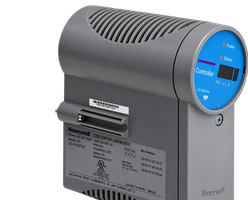
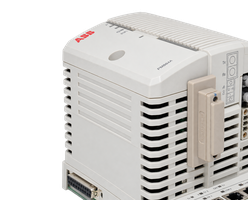
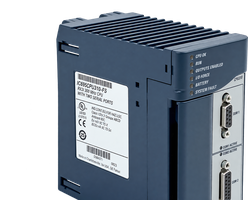
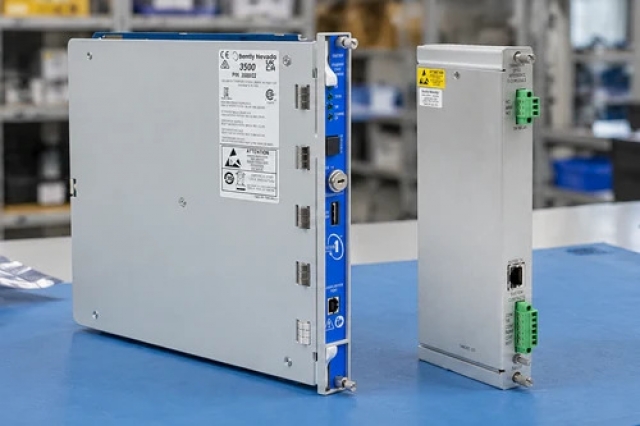
Compare offered-unit photographs, interfaces and included items with the installed 6ES5941-7UB11 and its applicable installation requirements.
Technical specifications for 6ES5941-7UB11
-
Manufacturer:Siemens
-
Product Category:PLC Systems
-
Spare Part Number:6ES5941-7UB11
-
Weight:0.72 kg
-
Tariff Code:8537101190
-
Maximum program capacity:9216 statements
-
Internal memory:1024 statements
-
Memory-submodule capacity:8192 statements maximum
-
Binary-operation time:Approximately 2.2 µs
-
Word-operation time:Approximately 60–200 µs
-
Flags:2048
-
Timers / counters:128 / 128
-
Timer range:0.01–9990 s
-
Default scan-time monitoring:Approximately 500 ms, adjustable
Information
- Siemens 6ES5941-7UB11 maintains the cyclic control sequence and stored operating state of an existing S5-115U installation, making program recovery and retention settings central to replacement planning.
State retention: Battery-dependent retentive flags, timers and counters
Commissioning focus: Review scan monitoring and restart behavior
Flags, timers and counters can be configured partly or wholly retentive. Their retention depends on backup power, so a restart assessment must include the battery condition and the process consequences of lost state.
Program execution time depends on the operations used. Review scan monitoring and the actual application workload, then test the restart, interlock and I/O behavior before placing the restored controller in automatic operation.
6ES5941-7UB11 Original Technical Excerpt
SIMATIC S5-115U Manual, EWA 4NEB 811 6130-02b. Selected original pages retain the relevant technical tables and interface context. PDF · 1 pages.6ES5941-7UB11 Installation & Verification Guide
Apter Power field guide covering secure the step 5 recovery set, check retention and process state, restore the cpu and memory arrangement, validation and handover. PDF · 5 pages.
Application scope: The applications below describe the installed measurement or control path. Select compatible companion equipment; accessories are included only when expressly itemized.
S5-115U sequence control
Execute the retained STEP 5 process sequence.Retentive-state applications
Maintain the configured operating state with a healthy backup arrangement.Legacy CPU replacement
Restore the approved program and memory-medium configuration.Restart validation
Check interlocks and outputs after the intended restart procedure.
Save the program and record the CPU 941 identity, installed memory medium and rack configuration. Capture retentive allocations and any process-state values needed for an orderly restart.
Assess the battery and the intended treatment of retained flags, timers and counters. Put the controlled equipment in its maintenance state before removing the CPU or memory submodule.
Follow the S5-115U replacement procedure and install the matching memory medium. Restore the approved program and configuration, then review selector settings and diagnostic indications before RUN.
Monitor the cycle behavior with the real operation mix. Check representative input states, output assignments and interlocks while the process remains under controlled commissioning conditions.
Perform the authorized restart test and verify the intended retention behavior. Record program identity, memory configuration, battery condition and final functional results for future recovery.
Retain the final 6ES5941-7UB11 identity, tested settings and accepted channel or system response for subsequent maintenance.
Alternative Names
Technical notes
Program-memory interpretation: Capacity is expressed in statements; a statement normally occupies two bytes. Verify the actual program and data use rather than treating the count as a byte capacity.
Retentive-state boundary: Retentive flags, timers and counters require the backup battery. Test the intended restart sequence with a recoverable program and controlled process state.
Scan monitoring: Binary and word operations have different execution costs. Evaluate the running application and investigate a cycle-time fault before extending its monitoring limit.

FAQ View All FAQ
-
Why must the memory submodule be considered when replacing 6ES5941-7UB11?The application can depend on both internal memory and a plug-in RAM, EPROM or EEPROM module. Preserve the correct medium and program image rather than replacing the processor in isolation.
-
Does the statement capacity of 6ES5941-7UB11 equal its capacity in bytes?No. A statement usually occupies two bytes. Assess the actual program and data requirements using the STEP 5 memory organization.
-
What can change after a battery failure on 6ES5941-7UB11?Retentive flags, timers and counters may lose their stored state. Review the restart logic and recover the approved application before allowing automatic operation.
-
How should a cycle-time fault on 6ES5941-7UB11 be investigated?Review the running program, recent changes and operation mix. Word operations take longer than simple binary operations, so instruction count alone does not establish scan time.
-
Why should a restart test of 6ES5941-7UB11 include process interlocks?A CPU can return to RUN while retained states and field conditions differ. Verify permissives and output behavior before the sequence is released.
-
Can the same program backup be used on 6ES5941-7UB11 without checking its hardware configuration?The backup must match the installed I/O allocation, memory arrangement and intended CPU configuration. Verify those relationships before downloading or starting the program.
-
Which values should be captured before removing 6ES5941-7UB11 from a running installation?Retain the approved program, memory-module identity, retentive allocation and relevant process-state data, together with the selector and diagnostic states.
-
What proves that a replacement 6ES5941-7UB11 is ready for production?A successful load is only one step. Confirm stable execution, correct I/O mapping, expected restart behavior and functional interlock tests under the approved commissioning sequence.
Supporting new and legacy automation
-
Please try to be as accurate as possible with your search.
-
We can quote you on 1000s of specialist parts, even if they are not listed on our website.
-
We can't find any results for “”.
Related cases and sourcing guidance
View all case studiesYou May Also Like
Product Browsing History
-
Whatsapp: +86 18030235313
Send us a message. -
sales13@apterpower.com
Complete our online form. -
+86 18030235313
Speak to our team in your native language.