Speak to a sourcing specialist
sales13@apterpower.com

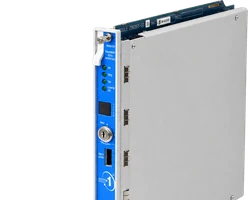
MMS6220

Dual-Channel Shaft Eccentricity Monitor
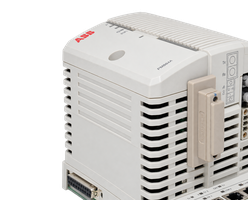
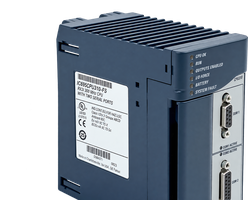
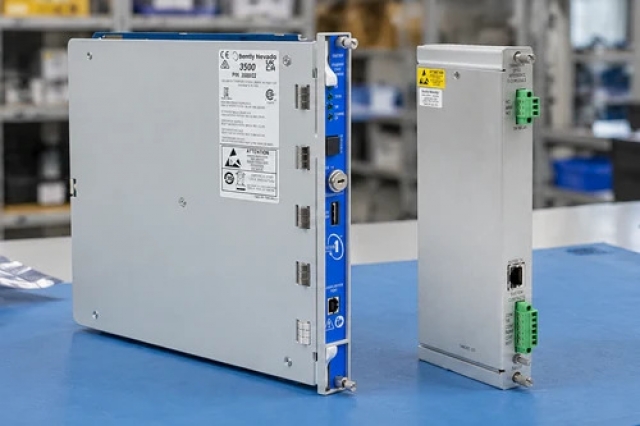
Product image is representative; revision or series may vary. Contact us to request a specific version.

Product Describe:

Epro MMS6220 evaluates shaft eccentricity from two compatible eddy-current probe chains in an MMS 6000 machine-monitoring system.
  • Manufacturer part number
    MMS6220
  • Shipping
    Swift global dispatch
  • Condition
    New, original product
  • Shipping size (est.)
    3.1cm × 19cm × 12.9cm
  • Country of Origin
    Germany
Get a quick price for MMS6220
E-mail *
Mobile
Company
Content *
Quantity *
Upload (gif, jpg, jpeg, png, bmp, doc, docx, xls, xlsx, ppt, pdf, csv)
For more information on how your data is processed and stored by Apterpower please read our privacy policy

What happens after you enquire

  • 0

    Review your reference

    Share the complete MMS6220 marking, host-system identification and photographs of the installed connection so the requested execution can be matched.

  • 1

    Confirm the offer

    We identify the available MMS6220 item, revision and condition, then itemize cables, connectors and any documents included in the quotation.

  • 2

    Arrange dispatch

    After the MMS6220 scope is agreed, quantity, shipment date and delivery method are confirmed in the quotation before release.

  • Match the complete marking

    Include MMS6220 and any revision or assembly number visible on the item. Keep the exact reference on your enquiry and quotation.

  • Check the offered item before ordering

    Request current label and front-panel and connector photos. Have your maintenance team compare the offered MMS6220 with the installed equipment and applicable Emerson documentation.

Technical specifications for MMS6220

  • Manufacturer:
    Epro
  • Product Category:
    Machinery Monitoring Systems
  • Spare Part Number:
    MMS6220
  • Weight:
    0.2 kg
  • Tariff Code:
    8537101190
  • System family:
    MMS 6000
  • Signal inputs:
    Two eddy-current measuring chains
  • Compatible probe family:
    PR642x
  • Input voltage:
    −1 to −23 V DC
  • Signal frequency:
    0.017–70 Hz
  • Measurement modes:
    Peak-to-peak, minimum/maximum, continuous gap
  • Local configuration:
    RS-232
  • System communication:
    RS-485

Information

Overview Downloads Applications / Compatibility Product Precautions
  • The MMS6220 fits an MMS 6000 monitoring architecture; its eccentricity channels depend on the proximity chains, key signal and saved machine configuration.
Use case: Slow-roll shaft condition
Reference need: Valid revolution key signal
Configuration focus: Gap and eccentricity scaling
The module processes relative radial shaft-motion signals to derive peak-to-peak eccentricity and minimum or maximum gap values. Such low-speed information helps reveal shaft bow and runout during a controlled machine run-up or rundown.

A complete eccentricity measurement needs a shaft revolution reference. The installed key-signal sensor and processing module, probe chain, target track and MMS6220 configuration must be considered together; the two input channels alone do not define a valid per-revolution calculation.

The monitor can retain characteristic values from the last startup or shutdown for analysis. Preserve the selected sensor sensitivity, range, limits, key pulse and RS-485 host mapping before exchange, then compare a controlled slow-roll result with the recorded machine baseline.
Measurement system reference: MMS 6000 machinery monitoring. Match the installed configuration and interfaces.
Technical downloads for Epro MMS6220: an Apter Power technical reference and an installation and commissioning guide.
These Apter Power documents support product identification and service planning. Apply the approved system and site procedures during installation.
Installation and commissioning checks for Epro MMS6220.
Confirm the key signal

Verify the one-pulse-per-revolution reference and its channel path before relying on eccentricity values.

Match proximity chains

Check each PR642x probe, converter, cable and target track.

Preserve measurement modes

Record peak-to-peak, min/max and gap selections and scaling.

Keep limit behavior

Retain warning/danger levels and run-up range multipliers.

Review communications

Confirm local setup and RS-485 host address after replacement.

Validate slow-roll data

Compare a known low-speed measurement and stored characteristic values with the machine record.

Alternative Names

MMS 6220 Epro MMS6220 Emerson MMS6220

Technical notes

Technical basis: EPRO MMS 6220 Dual Channel Eccentricity Monitor, manufacturer-original data sheet.

Applicability: Manufacturer-original MMS6220 data describe the base monitor. Confirm the offered revision and the project-specific key-signal and probe configuration.

Revolution reference: Peak-to-peak eccentricity requires a valid key pulse across a complete shaft revolution. Continuous gap is a separate position quantity and should be assessed against its own baseline.

FAQ View All FAQ

  • Why is a key pulse needed for MMS6220?
    A complete shaft revolution must be identified to calculate eccentricity correctly; verify the one-pulse-per-revolution path.
  • How can an incorrect sensitivity affect MMS6220?
    It changes the displacement calculated from the converter voltage, so match each probe-chain calibration before accepting the value.
  • What distinguishes gap from eccentricity on MMS6220?
    Continuous gap tracks position, whereas peak-to-peak eccentricity depends on the variation across a full revolution.
  • How should a false run-up alarm on MMS6220 be investigated?
    Check key-pulse quality, probe gap, range multiplier and alarm delay against the approved configuration.
  • Can both channels of MMS6220 share one sensor chain?
    Only if the manufacturer-approved wiring and project design provide the proper buffered signal and independent channel mapping.
  • Which values should be retained before replacing MMS6220?
    Save the last run-up/rundown record, sensor sensitivity, range, limits, key input and host address.
  • What is the commissioning reference for MMS6220?
    Use a controlled slow-roll or approved test signal with a valid key pulse and compare the result with the established baseline.
  • How is an abnormal MMS6220 signal isolated?
    Separate key-pulse loss, probe-chain faults, target runout and monitor settings before concluding that the module is defective.