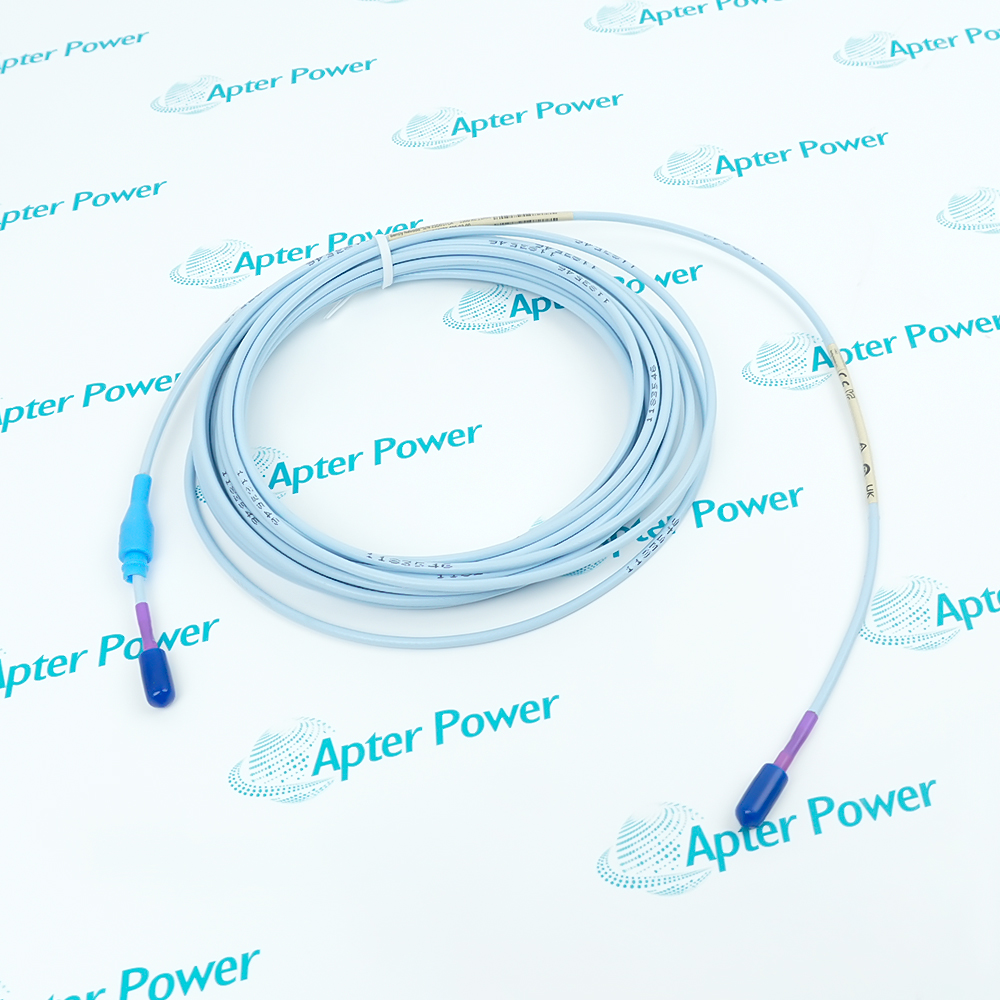
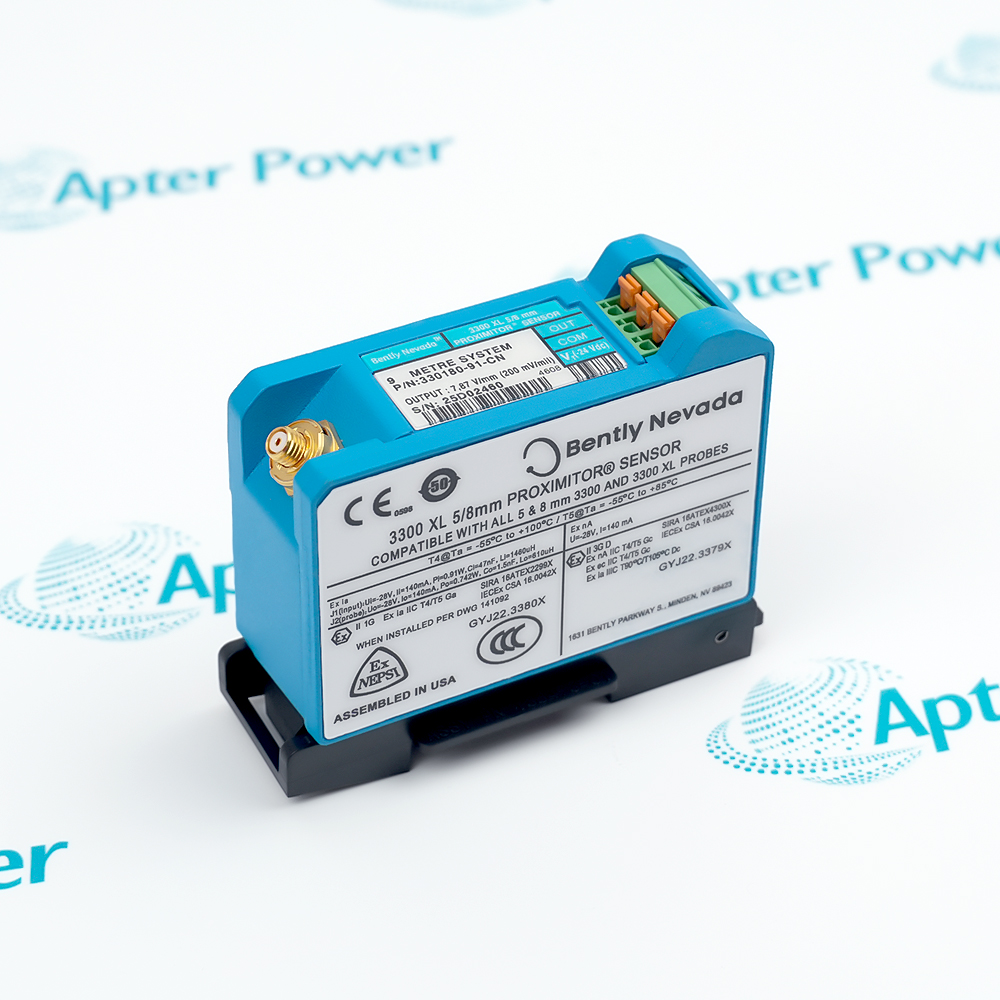
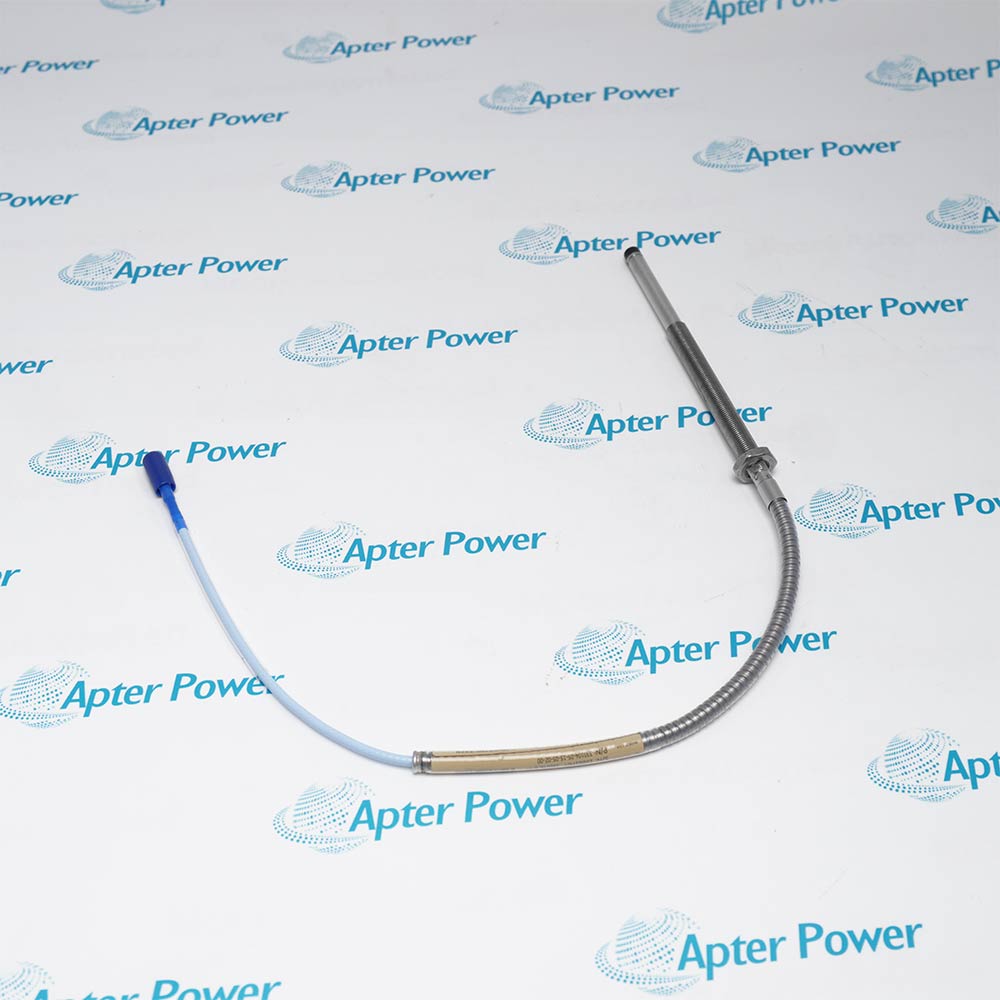
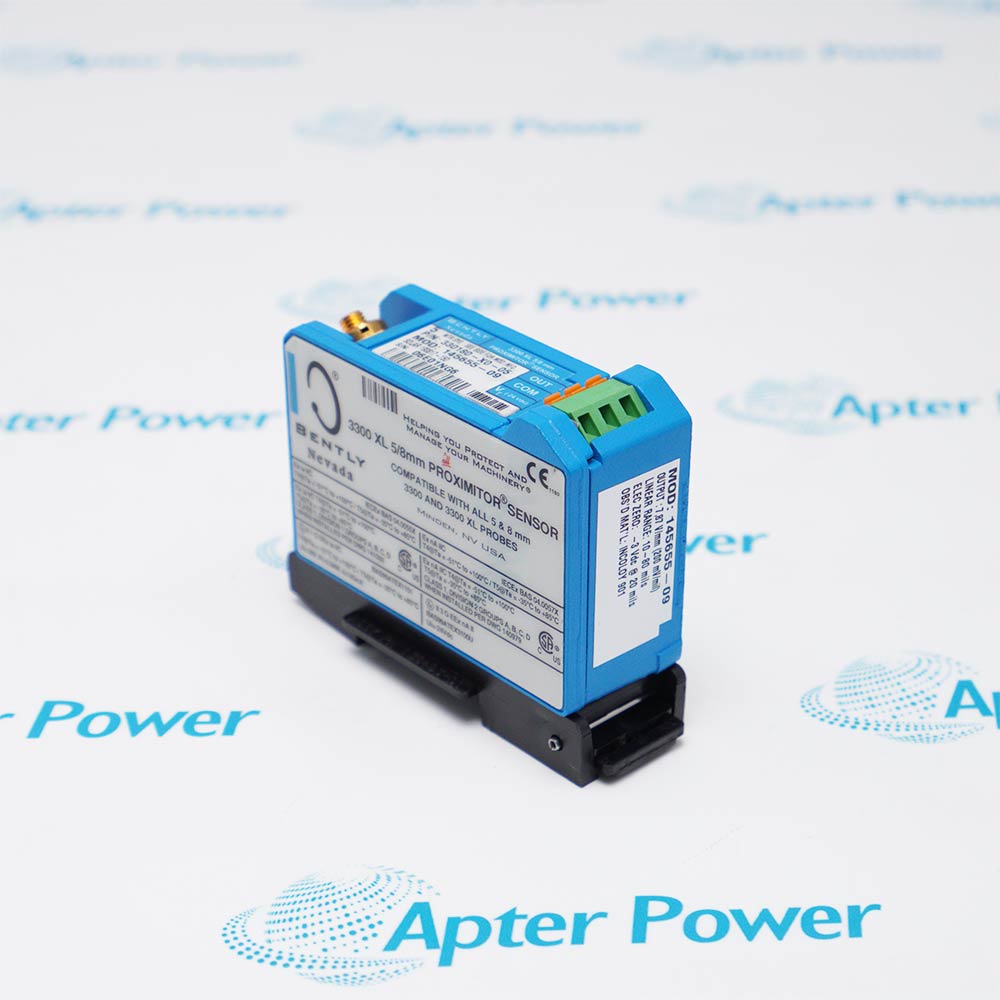
The 146054-08-05-02-05 is a Bently Nevada 3300 Series Ceramic Capped Proximity Probe. It features an Alumina ceramic tip hermetically sealed to a 304 stainless steel case, specifically designed to withstand anhydrous ammonia and pressures up to 500 psi.
Extreme Chemical Resilience
Compact Space Adaptability
Reliability of ClickLoc Connector
The 3300 Ceramic Capped Probe is a state-of-the-art solution for monitoring machinery in aggressive chemical or high-pressure environments. The alumina cap and 304 stainless steel probe case provide robust protection and increased life for applications in anhydrous ammonia or other extreme pH environments. The ceramic capped probe is compatible with the 3300 Proximitor Sensor and extension cable.The 146054, 146055, and 164517 probes were developed for applications that expose only the front of the probe case assembly to corrosive gases and liquids. These ceramic probe assemblies prevent corrosive gases and liquids from entering the front end of the probe case. We leak test the front-end ceramic to metal interface with helium to ensure a hermetic seal. These probes do not have a rear fitting or stainless steel tube, so that the rear of the probes are not sealed. You must not expose the rear of these probes to destructive environments such as water, NH3, NH4OH, hydrogen sulfide, etc.
Important Notice: Other accessories, manuals, cables, calibration data, software, etc. are not included with this equipment unless listed in the above stock item description.
Important Notice: Other accessories, manuals, cables, calibration data, software, etc. are not included with this equipment unless listed in the above stock item description.
Petroleum Refining
Monitoring centrifugal pumps in hydrotreating units; the 0.8-inch short case fits perfectly in compact bearing housings.
Chlor-Alkali Industry
Monitoring chlorine gas compressors; the ceramic cap effectively resists erosion from strong oxidizing gases.
Seawater Desalination
Monitoring high-pressure reverse osmosis pumps, preventing corrosion from salt spray and high-concentration brine.
Monitoring expanders in air separation units; the short case design minimizes interference with high-speed rotating equipment housings.
When using the 146054-08-05-02-05 ceramic-capped probe, the primary focus should be on its physical fragility and sealing limitations. Although the ceramic tip is designed to withstand high pressure and corrosion at the front, the material is brittle; therefore, mounting torque must be strictly controlled and any impact must be avoided to prevent fracturing. Furthermore, as only the front tip is hermetically sealed, it is crucial to ensure that the rear cable interface remains in a dry, non-corrosive environment to prevent media ingress from the back, which could lead to electrical failure. Additionally, regularly check the cleanliness of the ClickLoc connector to ensure stable signal transmission in long-term, high-vibration environments.