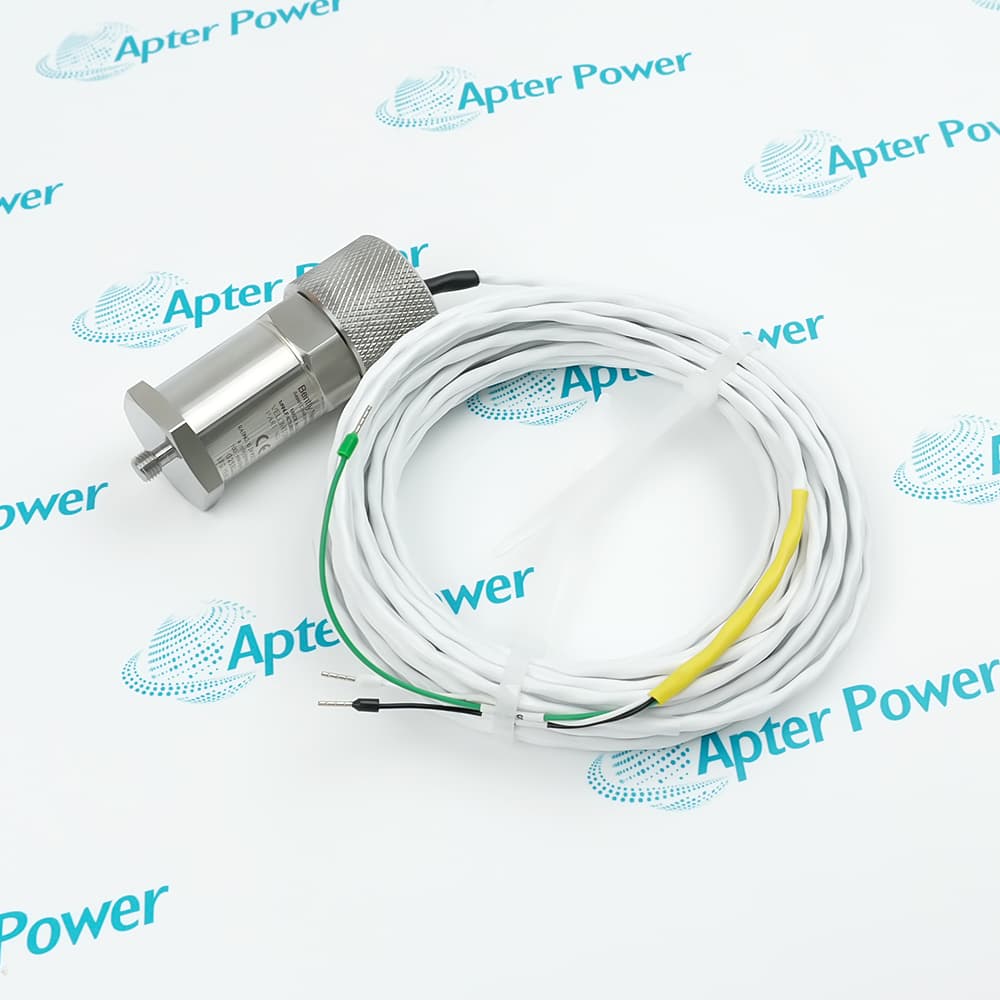
The Bently Nevada 190501-12-00-02 is a speed type vibration sensor specifically designed for low-speed machinery, often referred to as Velomitor CT (Cooling Tower).
- Low-Frequency
- Measures Casing Vibration Velocity
- Compatible with Cooling Towers and Air-Cooled Heat-Exchanger Fan Assemblies
The Velomitor CT Velocity Transducer is a low-frequencyversion of our standard Velomitor Piezo-velocity Sensor. Itsdesign specifically measures casing vibration velocity oncooling tower and air-cooled heat-exchanger fanassemblies that operate at or above 90 rpm (100 to 300 rpmtypical).
Important Notice:
Other accessories, manuals, cables, calibration data, software, etc. are not included with this equipment unless listed in the above stock item description.
Bently Nevada 190501-12-00-02 Velomitor CT Transducer Manuals, Datasheets, Drivers, Link
Important Notice: Other accessories, manuals, cables, calibration data, software, etc. are not included with this equipment unless listed in the above stock item description.
Excellent low-frequency response capability, capable of capturing subtle vibrations as low as 1.5 Hz (90 cpm), effectively warning of fan blade imbalance or early bearing failure; By integrating piezoelectric ceramic technology, it can directly output voltage signals proportional to vibration velocity, simplifying integration with DCS or 3500 systems. In addition, the sensor adopts a 316L stainless steel fully welded sealed housing, which has top-level moisture-proof and chemical corrosion resistance performance.
Its sturdy 316L stainless steel fully sealed shell provides excellent moisture resistance (100% condensation without flooding) and chemical corrosion protection; The internally integrated piezoelectric ceramic sensing elements have been specially tuned to have extremely high impact resistance (up to 5000g pk) and anti magnetic interference performance. In addition, the sensor achieves electrical isolation between the internal electronic circuit and the housing, coupled with an explosion-proof certified sealed connection design, effectively preventing interference from the grounding loop and the risk of electric sparks in hazardous areas.


 Videos
 News
News Applications