-
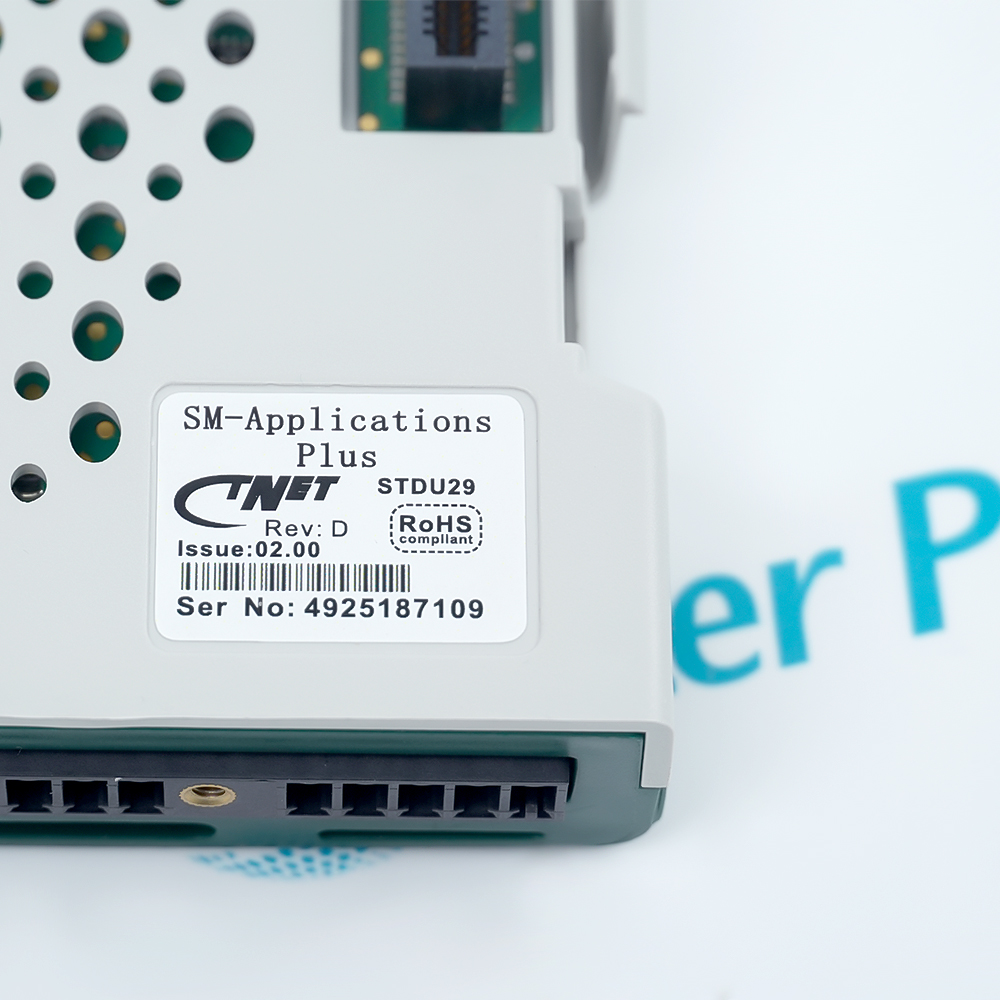
Match the complete marking
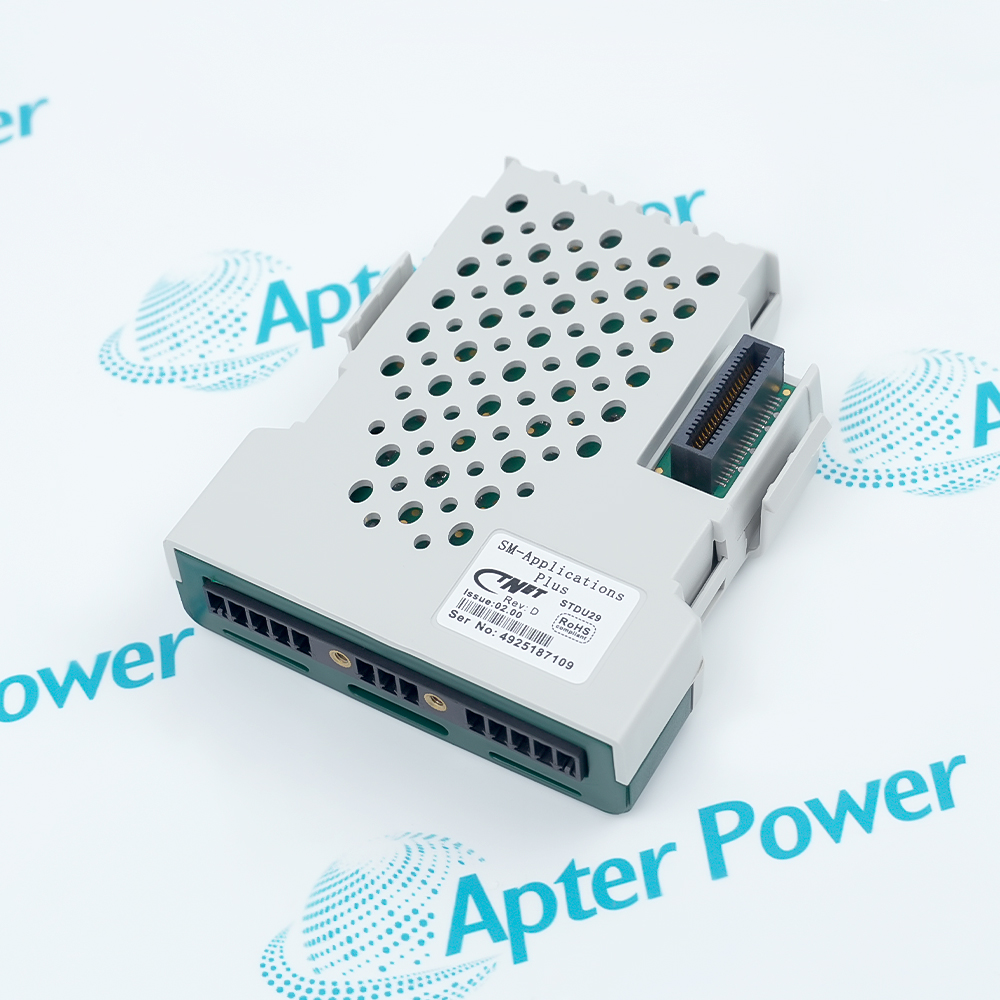
Include SM-APPLICATIONS and any revision or assembly number visible on the item. Keep the exact reference on your enquiry and quotation.
-
Check the offered item before ordering
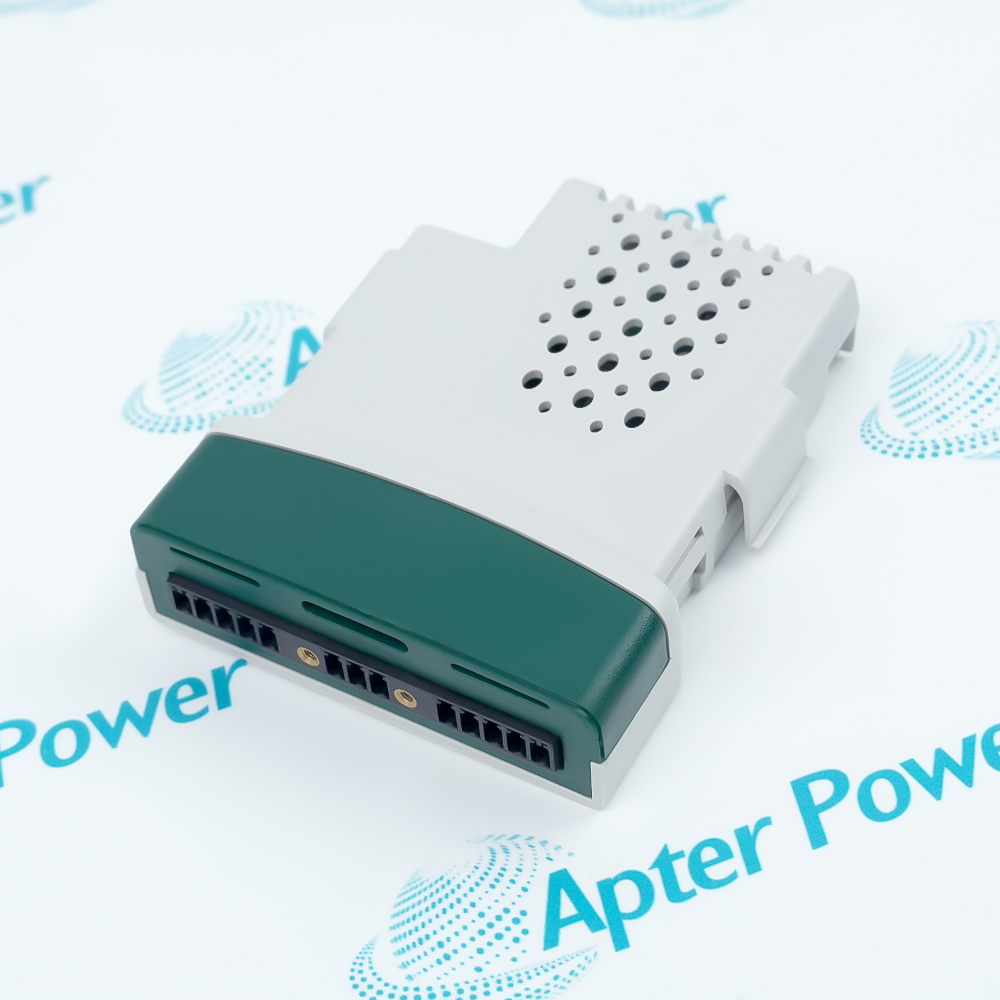
Request available label and connector photos. Have your maintenance team compare the offered SM-APPLICATIONS with the installed equipment and applicable Control Techniques documentation.
Technical specifications for SM-APPLICATIONS
-
Manufacturer:Emerson
-
Product Category:Servo Drives
-
Spare Part Number:SM-APPLICATIONS
-
Weight:0.25 kg
-
Tariff Code:8537101190
-
Module function:Dedicated applications processor for a supported drive
-
Module identity:Original SM-Applications; identification parameter 301
-
Programming environment:SyPTPro; DPL, ladder and function block programming
-
Execution model:Task-based real-time drive and process control
-
Power source:Host drive internal power supply
-
CTNet interface:High-speed network; up to 5 Mbit/s
-
Serial interface:EIA-RS485; two-wire or four-wire
-
Serial maximum rate:115200 bit/s
-
Serial protocols:CT-ANSI slave; Modbus RTU and ASCII master/slave
-
Digital inputs:2 × 24 V positive-logic inputs
-
Digital outputs:2 × 24 V positive-logic outputs
-
Output current:20 mA maximum; overload deactivates both outputs
-
Inactive output state:Effectively floating
-
Slot parameter menus:15, 16 or 17, according to drive slot
-
Program slot alias:Menu 81
-
Digital I/O parameter menu:Menu 86
-
Synchronization:CTSync
-
CTNet termination:82 ohm, 0.25 W at both ends with approved green CTNet cable
-
CTNet network limit:255 nodes; segment and repeater limits depend on network design
-
CTNet terminals:6: CTNet A; 7: shield; 8: CTNet B
-
Digital I/O terminals:9: 0 V; 10: DI0; 11: DI1; 12: DO0; 13: DO1
-
Digital input limit:Maximum applied input voltage ±30 V
-
Input threshold:9.5 V ±0.3 V
Information
- Emerson SM-APPLICATIONS adds an independent application processor to a supported Control Techniques drive, allowing drive parameters, local digital I/O and networked equipment to participate in a task-based control program.
Networking: CTNet and EIA-RS485
Local I/O: Two digital inputs and two digital outputs
CTNet provides a high-speed communication path at up to 5 Mbit/s. The separate EIA-RS485 port supports CT-ANSI slave operation and Modbus RTU or ASCII master/slave operation at up to 115200 bit/s, using two-wire or four-wire connections. A program is required when the module acts as the serial master; network topology, cable, baud rate and termination must be designed together.
The module provides two 24 V digital inputs and two positive-logic digital outputs controlled through menu 86. Active outputs source up to 20 mA; inactive outputs are effectively floating, and an output overload deactivates both channels. CTSync supports synchronization between suitable drives. Preserve the original module identity and application revision when assessing a replacement, because the Plus and Lite variants have different capabilities.
-
Emerson SM-APPLICATIONS technical reference
Original manufacturer excerpt - PDF, 10 pages. Original SM-Applications identity, interfaces, installation, CTNet and digital I/O. -
Emerson SM-APPLICATIONS installation guide
Prepared by Apter Power - PDF, 5 pages. Host-drive preparation, terminal wiring, network setup, program verification and service records.
Application boundary: The original module combines programmable processing, CTNet, RS485 and local digital I/O; a shared housing does not establish equivalence with Plus or Lite variants.
-
Drive sequencing
Execute application-specific DPL, ladder or function block logic alongside the drive control functions. -
Distributed CTNet systems
Exchange process data with suitable CTNet nodes using approved cable, correctly terminated segments and a coordinated baud rate. -
Serial device integration
Implement CT-ANSI slave or Modbus RTU/ASCII master or slave communication over the module RS485 interface. -
Local event and I/O handling
Read two digital inputs and control two positive-logic outputs through the user program, while respecting the output current limit.
Disconnect the supply and observe the host drive discharge procedure before fitting or removing the module. Never use the module as a safety isolation device.
Save the SyPTPro project, drive parameters, module slot and firmware details before replacement or configuration changes.
Confirm SM-Applications on the module label. Plus, Lite and Lite V2 have distinct hardware and software characteristics.
Use approved CTNet cable; fit 82 ohm, 0.25 W termination at both ends of the recommended green cable. Excess termination loads the network.
Each active output is a 24 V positive-logic source rated up to 20 mA. An overload deactivates both outputs; an inactive output is floating.
Follow the manual separation requirements for data and I/O circuits. Route communication cables away from drive power wiring and bond shields as specified.
Alternative Names
Technical notes
Installation: Fit the original SM-Applications in a supported drive option slot. Isolate the drive and follow its discharge procedure before insertion or removal; retain the installed program, slot and firmware record.
Network and I/O: Use the approved CTNet cable and its specified termination. RS485 supports two-wire or four-wire connections. The two positive-logic digital outputs supply up to 20 mA and float when inactive.
Technical reference: Control Techniques SM-Applications Modules and Motion Processors User Guide, 0471-0062-04, Issue 4. Specifications here apply to the original SM-Applications variant; the host drive instructions govern system installation and safety.

FAQ View All FAQ
-
What does Emerson SM-APPLICATIONS add to a drive?It adds a dedicated processor for application-specific real-time tasks, together with CTNet, RS485 and local digital I/O. It is powered by the supported host drive internal supply.
-
Which programming tools does SM-APPLICATIONS use?SyPTPro supports native DPL plus IEC 61131-3 based ladder and function block programming. Watch windows, breakpoints and single-step facilities assist commissioning.
-
Which serial protocols does SM-APPLICATIONS support?The EIA-RS485 port supports CT-ANSI slave, Modbus RTU master/slave and Modbus ASCII master/slave operation. The maximum serial rate is 115200 bit/s; master operation requires the appropriate application program.
-
How is the SM-APPLICATIONS slot addressed?The host drive uses menu 15, 16 or 17 according to the occupied slot. From the module application, menu 81 aliases the current slot. The original SM-Applications module identification value is 301.
-
What local digital I/O does SM-APPLICATIONS provide?There are two 24 V digital inputs and two positive-logic digital outputs. Menu 86 controls the I/O; an active output sources up to 20 mA, while an inactive output is effectively floating.
-
How should the CTNet cable for SM-APPLICATIONS be terminated?For the recommended Control Techniques green CTNet cable, fit an 82 ohm, 0.25 W resistor across the data pair at each end of the cable run. Use the approved cable and the CTNet design rules for segments and repeaters.
-
Can SM-APPLICATIONS use both two-wire and four-wire RS485 connections?Yes. Both arrangements are supported, with wiring, line loading and termination selected for the network. The host PC or controller interface must provide the required transceiver control for its chosen arrangement.
-
Is SM-APPLICATIONS identical to the Plus or Lite versions?No. The original, Plus, Lite and Lite V2 are separate variants. Compare the exact label, required interfaces, firmware, application project and host-drive support before considering a substitution.
Supporting new and legacy automation
-
Please try to be as accurate as possible with your search.
-
We can quote you on 1000s of specialist parts, even if they are not listed on our website.
-
We can't find any results for “”.
You May Also Like
Product Browsing History
-
Whatsapp: +86 18030235313
Send us a message. -
sales13@apterpower.com
Complete our online form. -
+86 18030235313
Speak to our team in your native language.