-
Match the complete marking
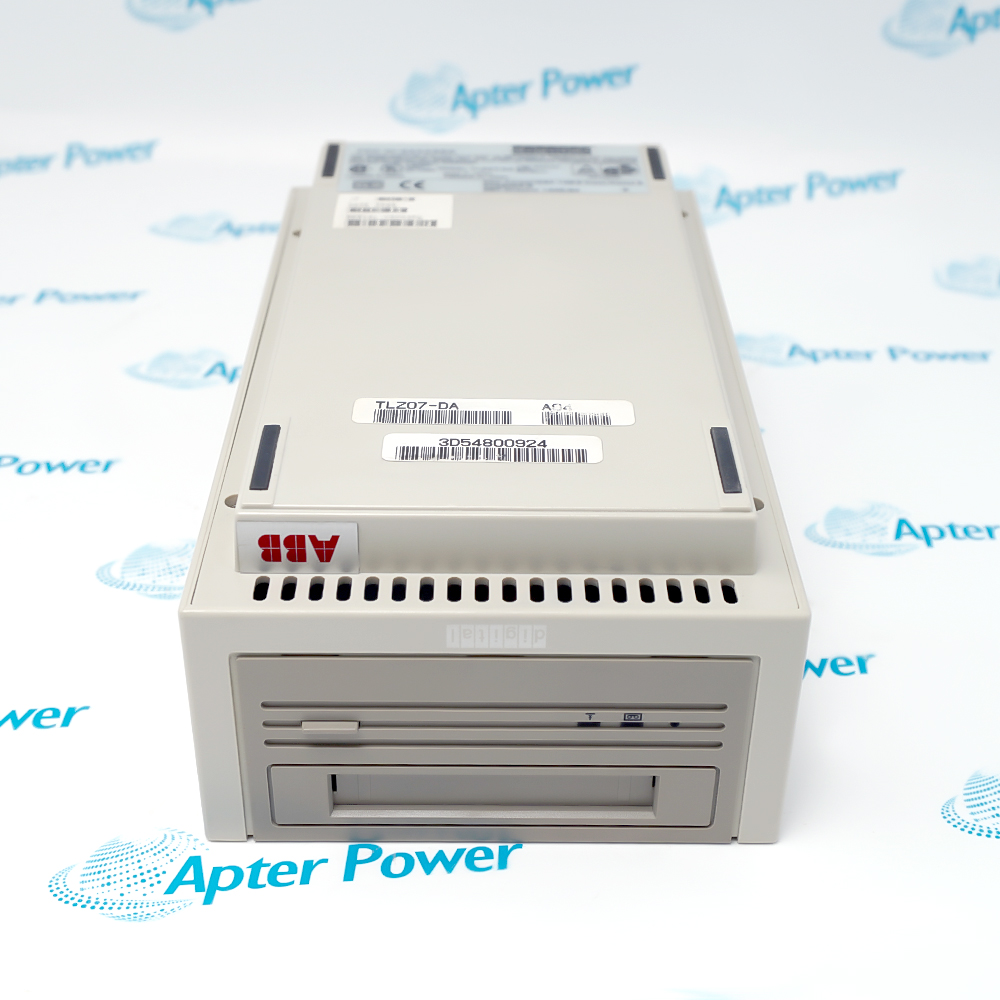
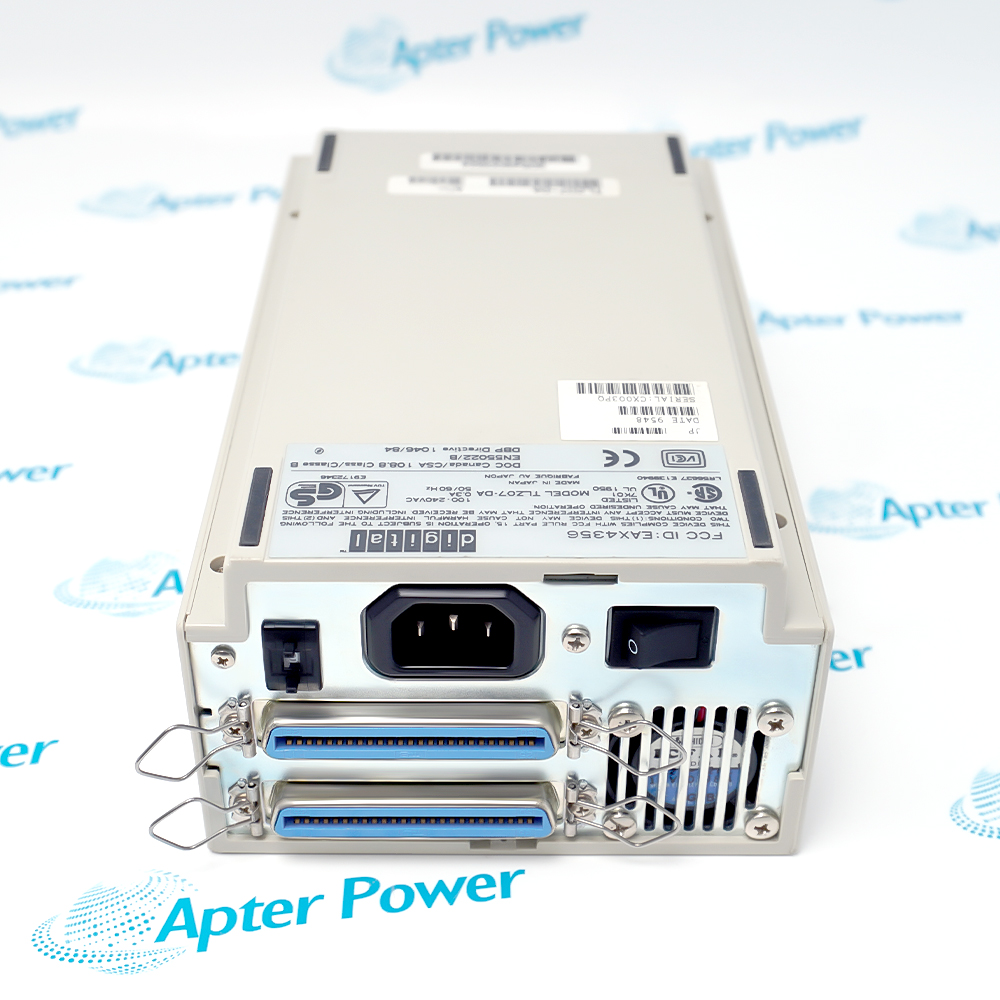
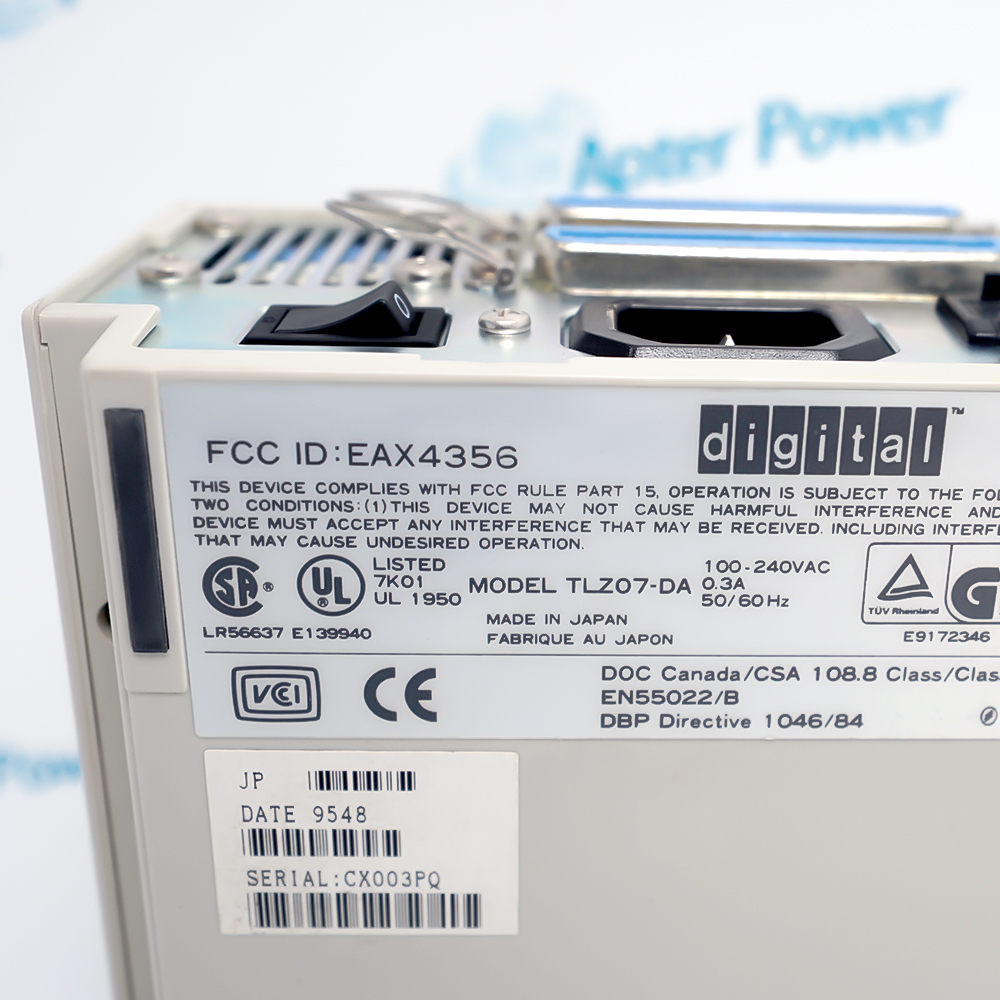
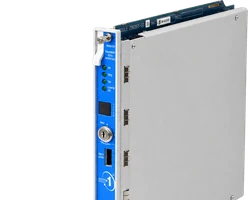
Include TLZ07-DA and every revision or approval marking visible on the item. Keep the exact reference on your enquiry and quotation.
-
Check the offered item before ordering
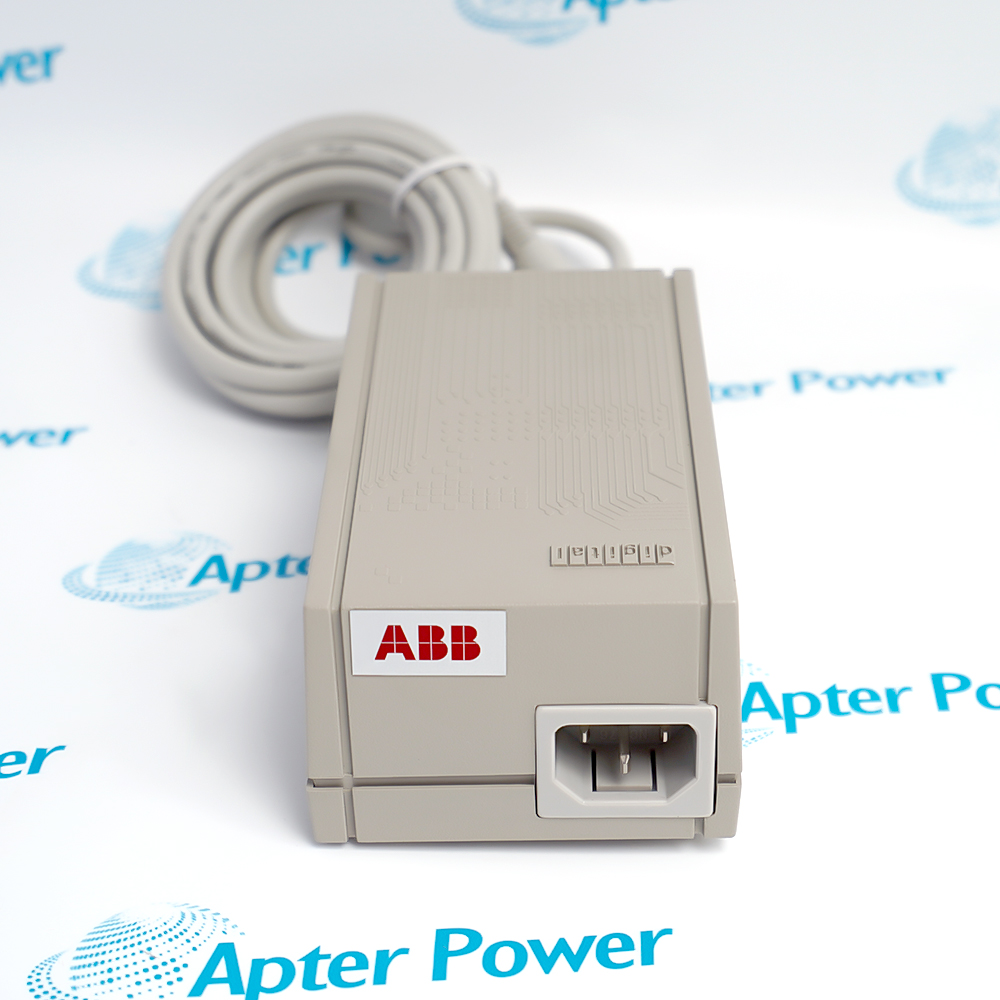
Request available label and interface photos. Have your maintenance team compare the offered TLZ07-DA reference with the installed equipment and applicable Digital documentation.
Technical specifications for TLZ07-DA
-
Manufacturer:DEC - Digital Equipment Corp
-
Product Category:General Automation
-
Spare Part Number:TLZ07-DA
-
Weight:2.4 kg
-
Tariff Code:8537101190
-
Interface:SCSI-2
-
Device form:Tabletop drive
-
Input voltage:100 to 240 V AC
-
Input current:0.3 A
-
Input frequency:50/60 Hz
-
Typical power:12 W
-
SCSI ID range:0 to 7
-
Factory SCSI ID:0
-
Native transfer rate:400 KB/s
-
Media width:4 mm
-
Media formats:DDS, DDS-2 and DC
-
Maximum compressed capacity:8.0 GB
-
Operating temperature:10 to 40 deg C
-
Operating humidity:20 to 80% non-condensing
-
Idle acoustic level:34 dBA
-
Operating acoustic level:35 dBA
Information
- Digital TLZ07-DA is a tabletop scsi-2 dds cassette tape drive documented for Digital TLZ07 DDS-2 SCSI tape storage system.
Bus configuration: Rear-panel SCSI ID selection must remain unique across the installed chain.
Media control: Reliable service depends on compatible cassettes, correct termination and a verified host data path.
The host sees the drive through a SCSI-2 bus, not as a stand-alone storage appliance. Address selection, cable continuity and end-of-bus termination must therefore be evaluated before the tape mechanism is blamed for a detection fault.
A known-good 4 mm cassette provides the controlled test medium. Service acceptance progresses from host inquiry to load, write/read comparison, rewind and unload while preserving the final bus settings.
TLZ07-DA Digital Technical Reference
Digital owner-information pages cover the TLZ07 drive controls, media handling and SCSI operating requirements.TLZ07-DA Installation & Verification Guide
Commissioning sequence for target-ID capture, termination review, known-media testing and host acceptance.
Bus-integration boundary: Compatibility requires agreement between the drive address, host adapter, cable topology, termination and supported 4 mm medium.
Scheduled host backup
Stream files from the SCSI host to a compatible DDS cassette under the installed backup application.Controlled data restore
Read a known archive only after confirming that its medium format is supported by the TLZ07 drive.Legacy workstation service
Retain the original adapter, cable and target-ID plan when maintaining a Digital workstation or server.Drive-versus-media diagnosis
Compare behavior with a verified cassette before condemning the transport or host interface.
Record the rear selector position before any cable or terminator is removed.
Identify the physical endpoints so termination is applied only where the installed topology requires it.
Mark each SCSI connection and inspect pins, shells and retention hardware before reconnection.
Use a clean, compatible 4 mm medium with known contents and quarantine repeatedly failing tapes.
Keep the tabletop enclosure level, ventilated and free from shock, dust and obstructed openings.
Confirm host inquiry before progressing through load, write/read comparison, rewind and unload.
Alternative Names
Technical notes
Bus topology: Assign one target ID to TLZ07-DA and place terminators according to its physical position on the SCSI chain.
Host dependency: The installed adapter, operating environment and backup software must recognize the drive and chosen medium.
Media discipline: Use a verified 4 mm cassette for diagnosis and isolate any tape that produces repeated load or read errors.
Thermal control: Maintain tabletop ventilation and the documented ambient range to protect the drive mechanism and media.
Diagnostic order: Resolve host inquiry and bus stability before evaluating transport motion or data-integrity results.

FAQ View All FAQ
-
How does a duplicate target address affect TLZ07-DA detection?Two devices using the same SCSI ID can prevent reliable inquiry; isolate the bus and assign TLZ07-DA an unused address before retesting.
-
Which symptoms suggest incorrect termination around TLZ07-DA?Intermittent detection, transfer resets or errors that change with cable position point to bus topology; verify termination only at the physical ends.
-
How can media failure be separated from a TLZ07-DA transport fault?Repeat load and read/write checks with a known-good compatible cassette, then compare whether the fault follows the tape or remains with the drive.
-
Which software information should be retained before replacing TLZ07-DA?Record the host adapter, operating environment, backup application, device assignment and medium format used by the installed system.
-
What indicates a cabling problem rather than an internal TLZ07-DA fault?A drive that changes detection behavior when connectors, cable length or terminator position changes should be diagnosed at the SCSI path first.
-
How should cassette compatibility be confirmed for TLZ07-DA?Check the documented 4 mm format, inspect the cartridge condition and prove operation with media already known to be readable in the approved environment.
-
What data-preservation step is required before removing TLZ07-DA?Confirm that required archives are readable and that another verified restore path exists before disturbing the legacy drive.
-
Which staged test demonstrates that TLZ07-DA is ready for service?Complete host inquiry, controlled load, write/read comparison, rewind and unload without bus resets or unexplained media errors.
Supporting new and legacy automation
-
Please try to be as accurate as possible with your search.
-
We can quote you on 1000s of specialist parts, even if they are not listed on our website.
-
We can't find any results for “”.
Related cases and sourcing guidance
View all case studiesYou May Also Like
Product Browsing History
-
Whatsapp: +86 18030235313
Send us a message. -
sales13@apterpower.com
Complete our online form. -
+86 18030235313
Speak to our team in your native language.