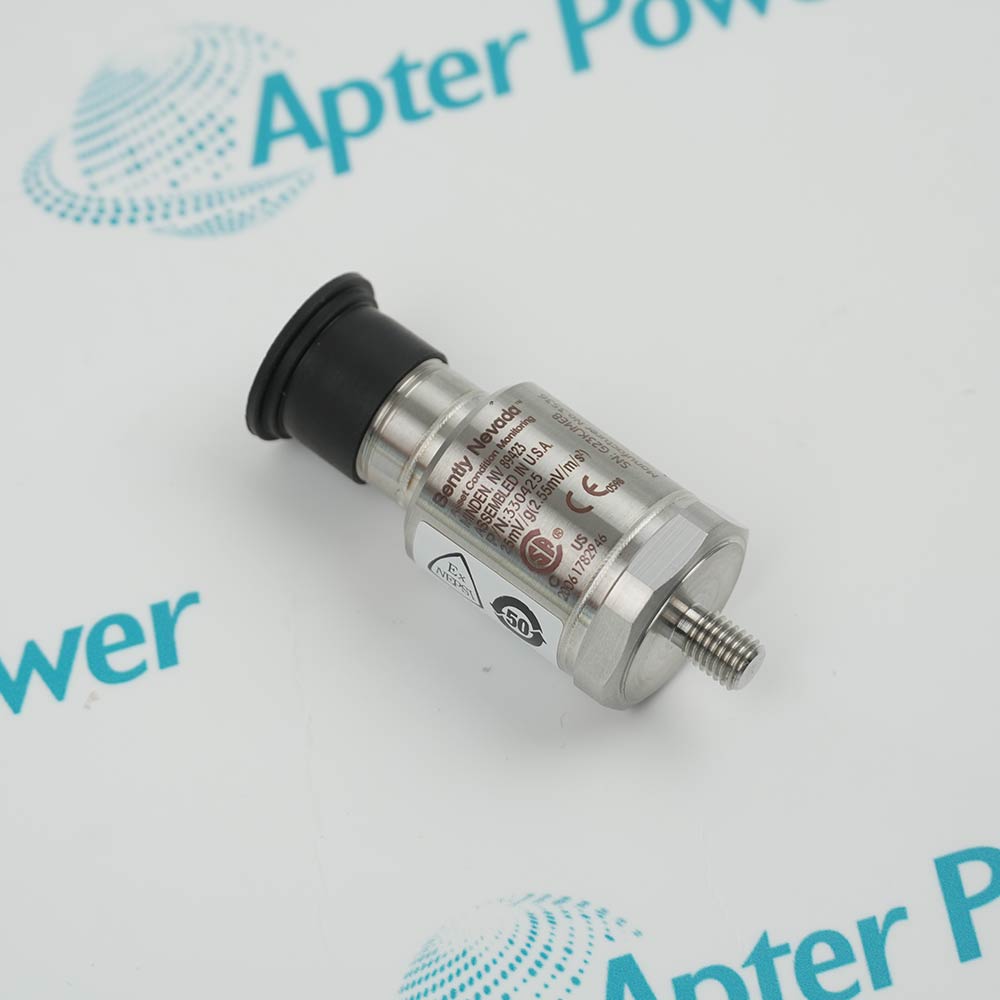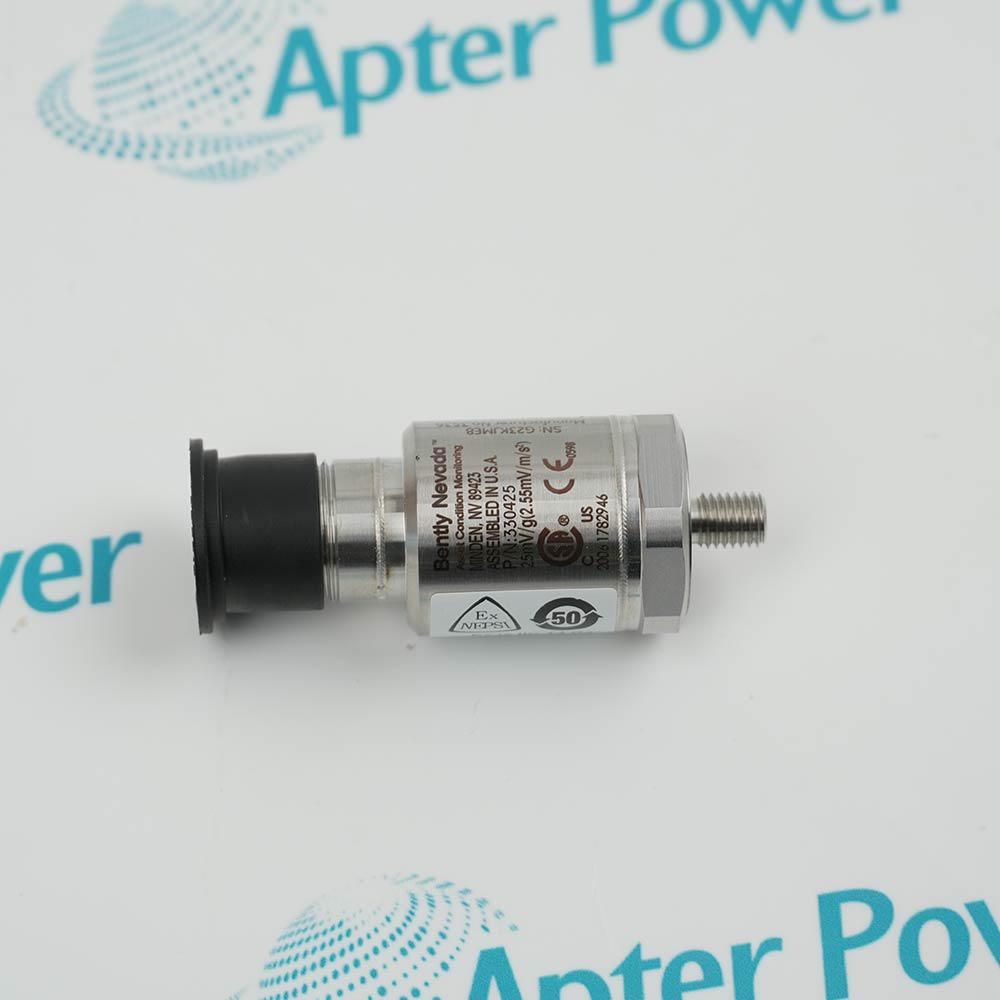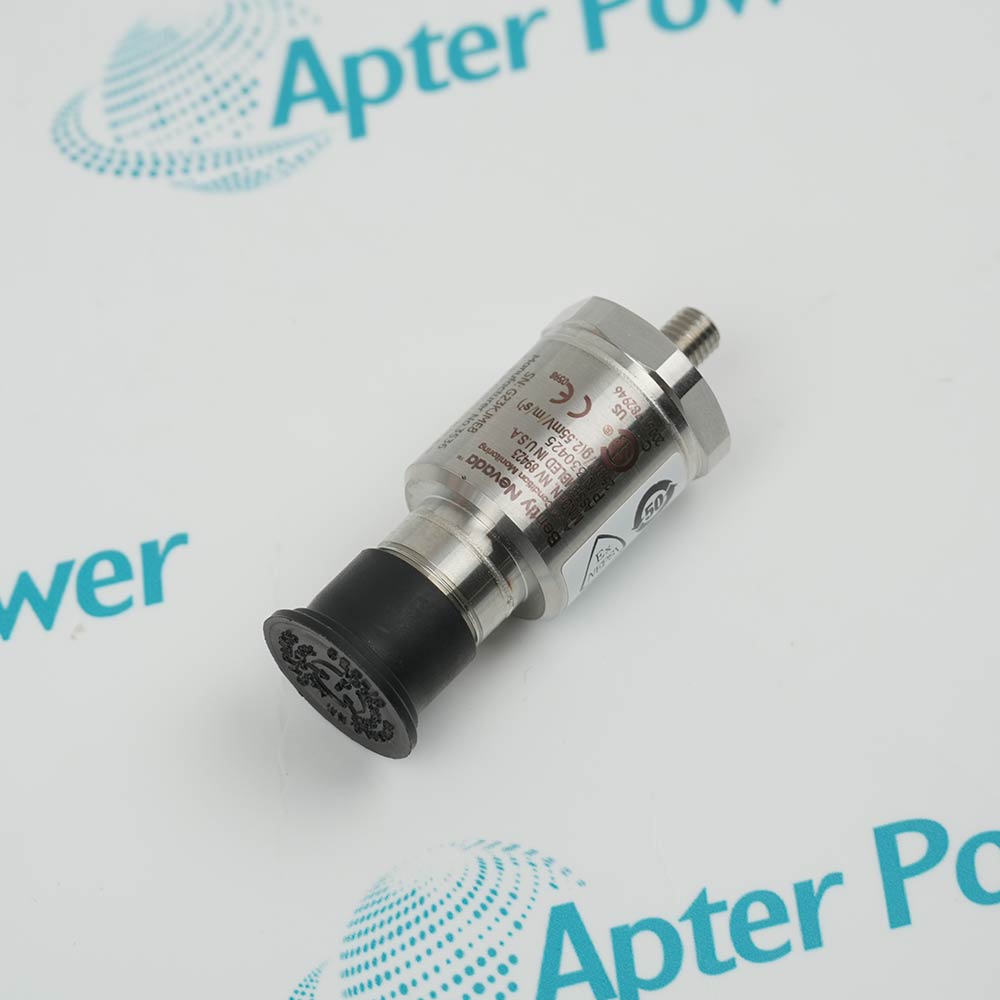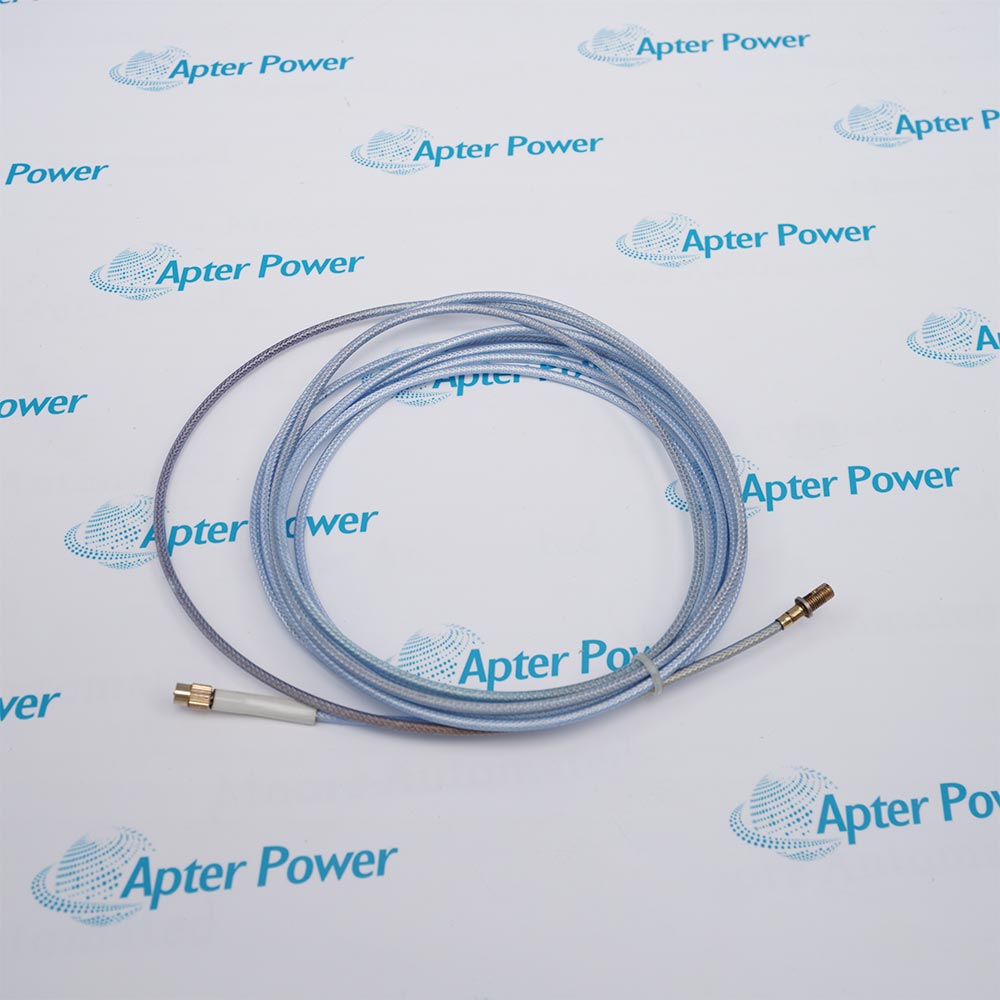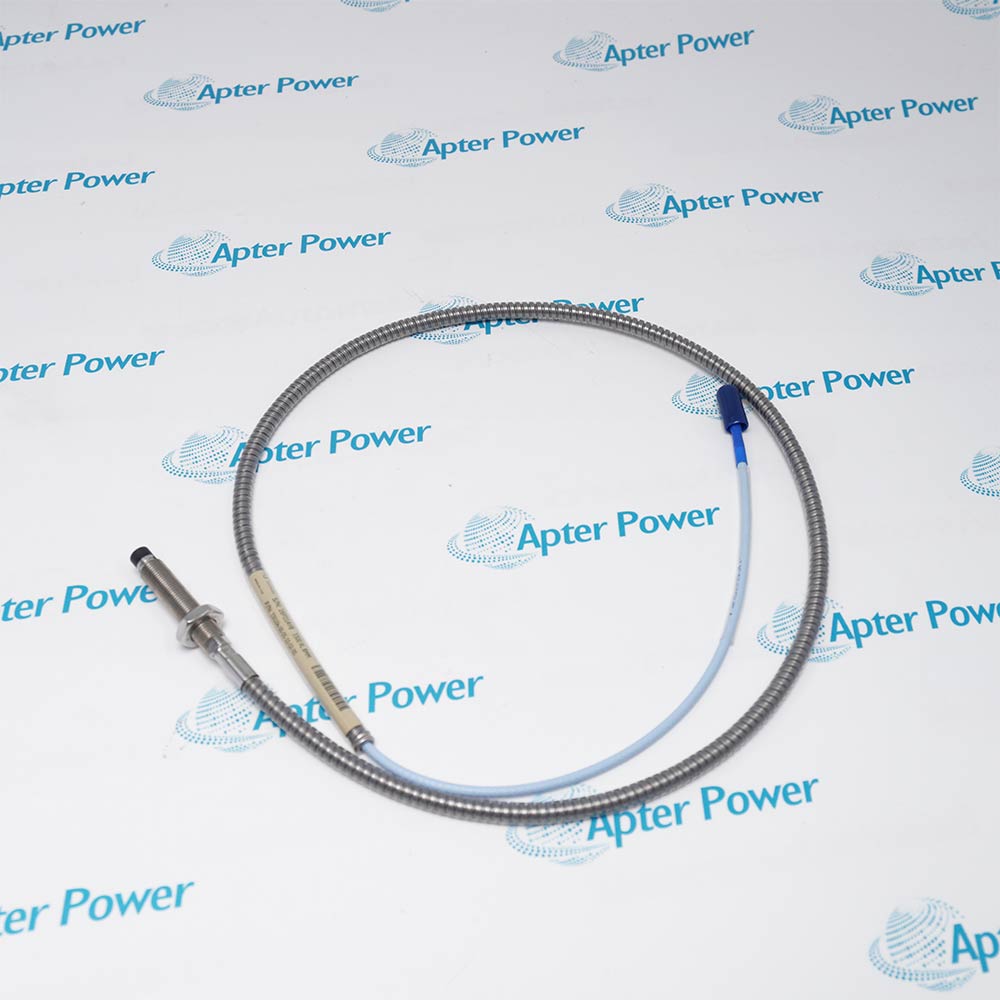
-
Match the complete marking
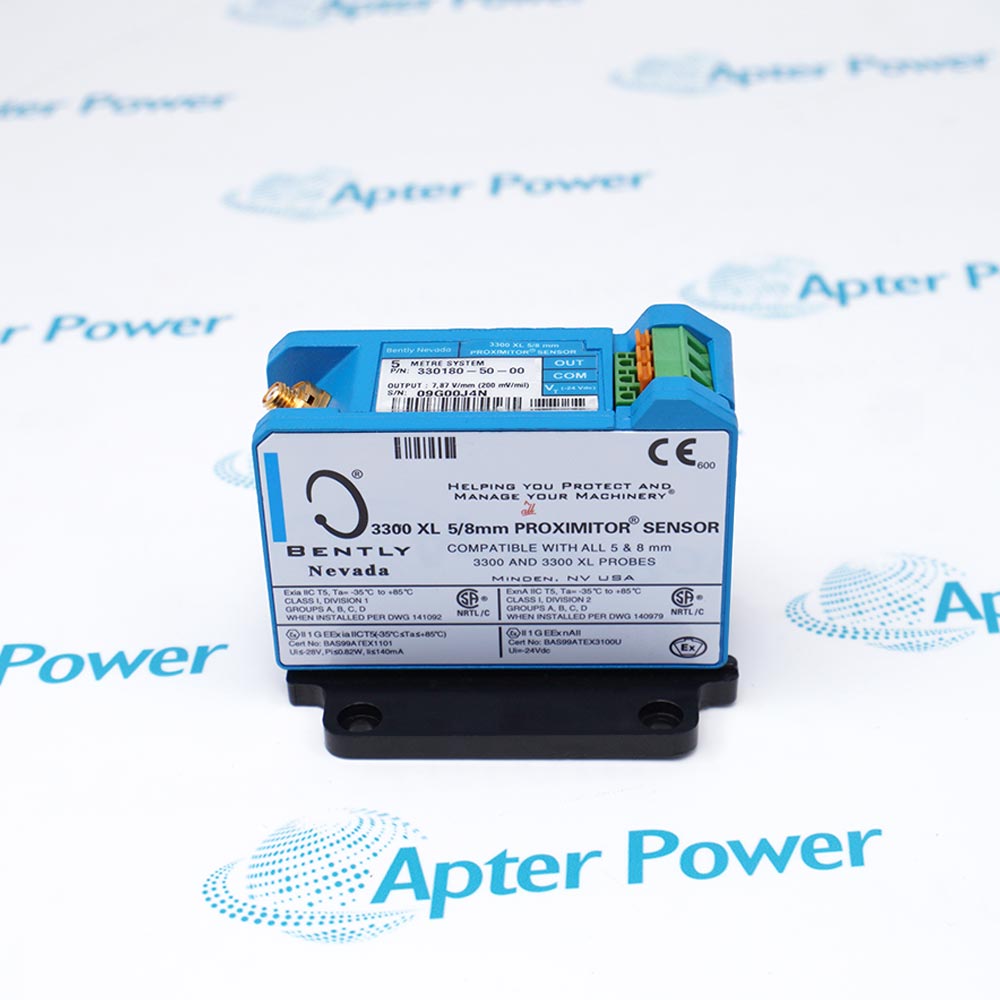
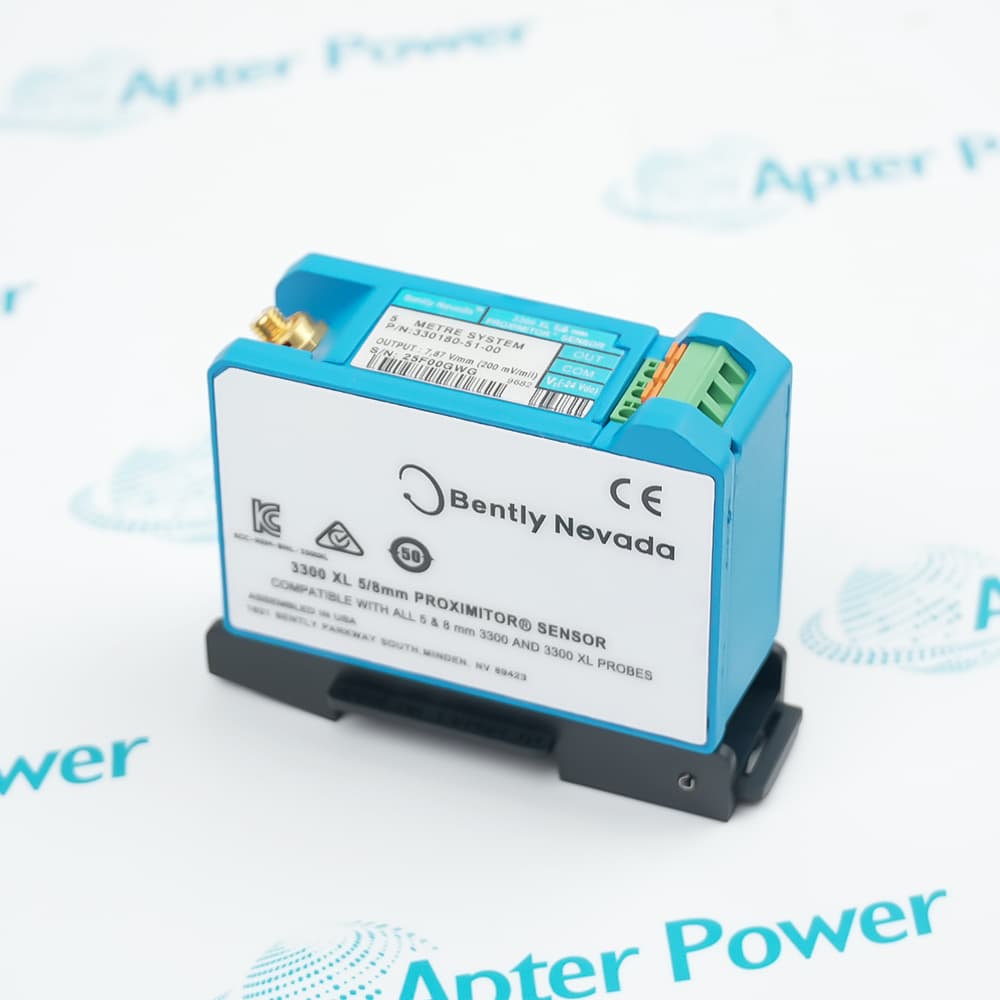
Include 330425-01-CN and any revision or approval marking visible on the supplied sensor. Keep the exact reference on the enquiry and quotation.
-
Check the offered item before ordering
Request available label and connector photos. Have your maintenance team compare the offered 330425-01-CN reference with the installed equipment and applicable Bently Nevada documentation.
Technical specifications for 330425-01-CN
-
Manufacturer:Bently Nevada
-
Product Category:Machinery Monitoring Systems
-
Spare Part Number:330425-01-CN
-
Weight:0.1 kg
-
Tariff Code:8537101190
-
Sensor family:330425 casing accelerometer
-
Mounting option 01:1/4-28 UNF integral stud
-
Approval suffix CN:Country-specific order option; verify supplied marking
-
Sensitivity:25 mV/g ±5% at reference conditions
-
Peak acceleration span:75 g within 10 Hz to 15 kHz
-
Amplitude linearity:±1% to 75 g peak
-
Broadband noise floor:0.01 g rms, 10 Hz to 15 kHz
-
Frequency response, ±3 dB:10 Hz to 15 kHz
-
Frequency response, ±10%:30 Hz to 10 kHz
-
Transverse sensitivity:Less than 5% of axial
-
Mounted resonant frequency:Greater than 30 kHz
-
Input supply:−24 ±0.5 V DC
-
Nominal bias current:2 mA
-
Output bias voltage:−8.5 ±0.5 V DC
-
Case grounding:Isolated
-
Connector:3-pin MIL-C-5015 receptacle
-
Mounting torque:4.1 N·m
-
Operating temperature:−55 to +121 °C
-
Sensor ingress protection:Equivalent to IP68; cable excluded
-
Maximum cable length:305 m without signal degradation
Information
- A casing-mounted accelerometer measures vibration transmitted through the bearing housing; measurement quality depends on the selected location and mounting.
Signal boundary: Match the specified negative DC excitation and monitor input before using the output.
Installation focus: Mounting quality and cable protection preserve measurement response.
Nominal sensitivity is 25 mV/g. The published 75 g peak range applies over 10 Hz to 15 kHz; the ±10% response band is narrower than the ±3 dB band. Trend limits and analysis bandwidth must therefore match the installed measurement channel.
The case is electrically isolated and uses a three-pin receptacle. For the CN ordering option, check the supplied marking and approved installation drawing before applying any hazardous-area approval to the complete installed circuit.
Bently Nevada 330400 / 330425 accelerometers datasheet
Manufacturer datasheet 141638 Rev. AB; order information, performance, electrical and environmental ratings.330425-01-CN engineering guide
Apter Power guide to exact-model identity, mounting, channel checks, diagnostics and acceptance.
Platform applications: The uses below depend on the installed controller configuration and approved system design.
Bearing-housing acceleration
Observe casing vibration at a location that receives the machine fault energy being assessed.Gear-mesh observation
Use the high-frequency acceleration channel where the approved machine monitoring strategy requires it.Condition trending
Trend the same sensor location and bandwidth over time; compare changing values with operating conditions.Replacement service
Retain the mounting location, cable route and monitoring channel setup when exchanging the transducer.
Choose a bearing housing or casing point with representative vibration transfer; document the location.
Prepare the contact face to the manufacturer surface specification before seating the integral stud.
Apply the specified mounting torque with a suitable tool; avoid overtightening or a loose sensor.
Match the three-pin connector and protect the cable; the sensor ingress rating does not certify the cable.
Verify the negative DC excitation and monitor input against the installed wiring drawing before energizing.
After installation, compare bias, noise and operating trend with the approved channel baseline.
Alternative Names
Technical notes
Reference conditions: Manufacturer electrical parameters are specified at +20 to +30 °C and 100 Hz unless stated otherwise.
Mounting relationship: Poor attachment can reduce amplitude and frequency response or produce false vibration signals.
Technical reference: Bently Nevada 330400 and 330425 Accelerometer Acceleration Transducers, 141638 Rev. AB; Approvals Quick Reference Guide, 108M1756 Rev. AL.

FAQ View All FAQ
-
Why could 330425-01-CN show lower high-frequency vibration after replacement?Inspect seating, mounting surface and stud torque, then compare the new location and cable with the original installation. Poor coupling can reduce frequency response even when the sensor is electrically healthy.
-
How can an abnormal bias reading on 330425-01-CN be isolated?Check the sensor supply and output bias at the approved monitor connection, then inspect cable continuity and connector condition. Compare the reading with the installed channel baseline before replacing the sensor.
-
What should be checked if 330425-01-CN reports vibration when the machine is stopped?Review mounting tightness, cable motion, grounding and monitor noise. Isolate the channel according to the site procedure and distinguish electrical pickup from an actual machine response.
-
How should a cable change be assessed for 330425-01-CN?Verify the selected three-socket interconnect, routing and total length against the installed design. Check the channel bias and a known operating trend after reconnecting; the sensor-only ingress rating does not cover the cable.
-
When is the wider response band of 330425-01-CN relevant to a trend?Use the manufacturer’s ±3 dB or ±10% band according to the diagnostic frequency range and monitor configuration. Confirm the same filter and measurement bandwidth before comparing historical values.
-
How can cross-axis motion affect a 330425-01-CN reading?Align the sensitive axis to the intended casing-motion direction and document orientation. If machine motion changes direction, compare orthogonal locations; the published transverse response is limited but not zero.
-
What must be verified before using 330425-01-CN in a hazardous area?Read the exact supplied approval marking and installation drawing, then check the associated circuit entity parameters and cable conditions. The CN order suffix alone does not establish a particular area classification.
-
How should 330425-01-CN be accepted after a sensor exchange?Record the supplied marking and mounting point, verify excitation and output bias, then compare noise floor and operating vibration against an approved baseline under comparable machine conditions.
Supporting new and legacy automation
-
Please try to be as accurate as possible with your search.
-
We can quote you on 1000s of specialist parts, even if they are not listed on our website.
-
We can't find any results for “”.
Related cases and sourcing guidance
View all case studiesYou May Also Like
Product Browsing History
-
Whatsapp: +86 18030235313
Send us a message. -
sales13@apterpower.com
Complete our online form. -
+86 18030235313
Speak to our team in your native language.