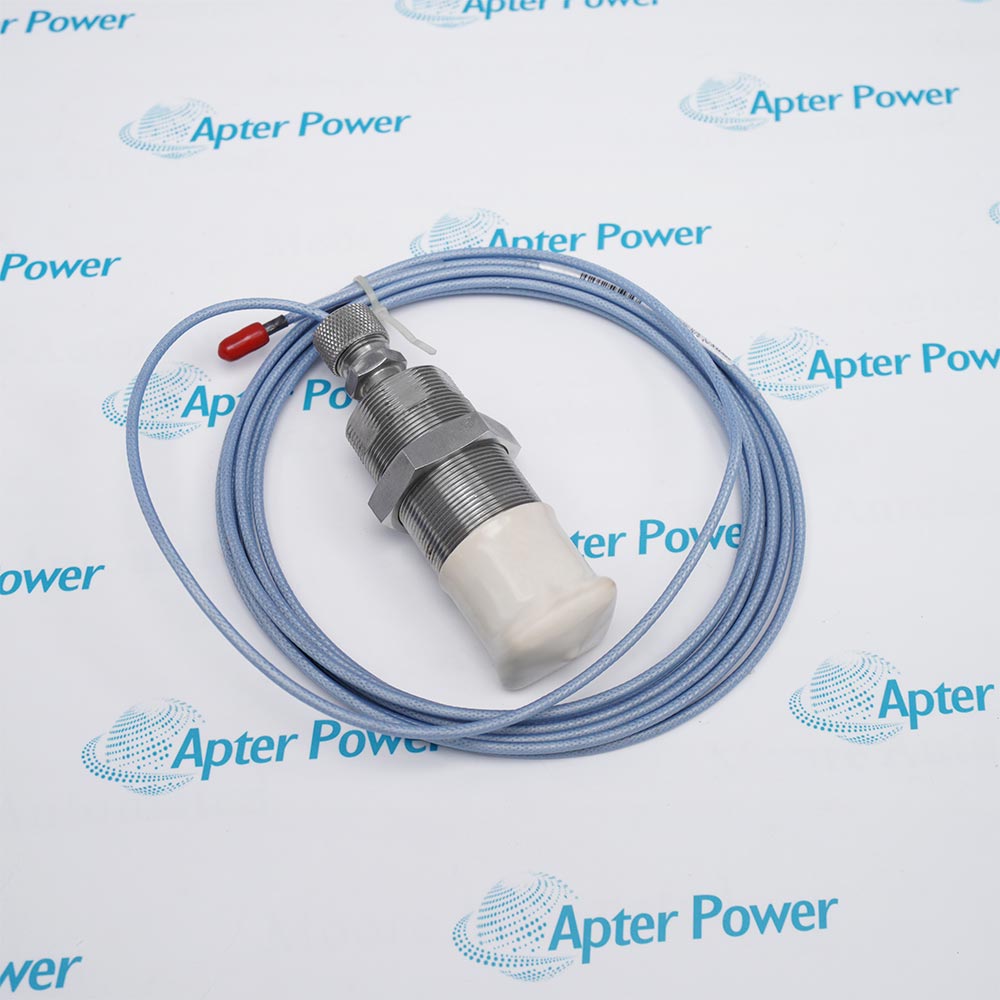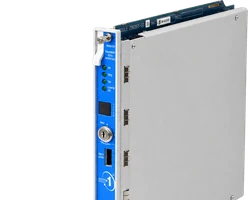
Product image is representative; revision or series may vary. Contact us to request a specific version.
Product Describe:
This is a 200150 general-purpose accelerometer for Trendmaster 2000 or Trendmaster Pro monitoring, supplied with a 3/8-24 to 3/8-24 UNF plate stud.
The piezoelectric accelerometer measures machine-casing vibration and outputs a differential voltage proportional to acceleration along its sensitive axis.
It can be used with the 200100 Dual Acceleration-to-Velocity flexiTIM Module, the 89130-01 Acceleration-to-Velocity TIM, and 1900/25 or 1900/27 monitors.
The device is used for general machine housing measurements where vibration from rotor-related conditions must be captured at the casing.
Bently Nevada 200150-02-CN is a trendmaster 2000 / trendmaster pro accelerometer configured for measurement range +/-245 m/s2 (+/-25 g) and frequency range 10 to 1000 Hz.
Measurement range: +/-245 m/s2 (+/-25 g)
Frequency range: 10 to 1000 Hz
Sensitivity: 10.2 mV/(m/s2)
Stud interface: 3/8-24 to 3/8-24 UNF
Mounted on the machine case or bearing housing, the piezoelectric element converts structural acceleration along its sensitive axis into the electrical input used for vibration trending and assessment.
Configuration control: Match the complete 200150-02-CN code, measurement range +/-245 m/s2 (+/-25 g), frequency range 10 to 1000 Hz and mating hardware before mounting or wiring.
The first link is the Apter Power product reference. The second link opens the manufacturer-published Bently Nevada datasheet for the applicable product family. Confirm the complete part number and installed configuration before use.

10 to 1000 Hz vibration band
200150-02-CN supplies a casing-acceleration signal across the documented frequency range.
3/8-24 to 3/8-24 UNF mounting interface
The selected mounting option couples the sensing base to the machine measurement surface.
Bearing-housing response
Captures structural vibration on pumps, motors, fans, compressors or other rotating equipment.
Condition-monitoring input
Feeds the compatible Trendmaster, 1900-series or applicable acceleration-monitoring channel.
Before installing 200150-02-CN, confirm the complete catalog code, physical nameplate and selected monitoring-channel configuration.
1
Measurement range: +/-245 m/s2 (+/-25 g) is the exact selection for 200150-02-CN
2
Frequency range: Match 10 to 1000 Hz to the mating mechanical or electrical interface
3
Sensitivity: Retain 10.2 mV/(m/s2) when selecting the associated system components
4
Stud interface: Verify 3/8-24 to 3/8-24 UNF before final routing, mounting or commissioning
5
Housing material: Record 316L stainless steel in the channel and installation data for this model
Technical notes
Choose a mounting location that transmits the target machine vibration to the accelerometer base.
What engineering function does 200150-02-CN perform in its monitoring loop?
200150-02-CN converts machine-case acceleration along its sensitive axis into an electrical signal. The monitoring channel uses this signal to trend casing vibration and machine structural response.
Which measurement range applies to 200150-02-CN?
The configured measurement range for 200150-02-CN is +/-245 m/s2 (+/-25 g).
What frequency range must be checked when specifying 200150-02-CN?
Use 10 to 1000 Hz for the frequency range when reviewing this complete model.
How does the sensitivity selection affect 200150-02-CN?
This configuration identifies sensitivity as 10.2 mV/(m/s2); include that value in the installation record.
Which stud interface is associated with 200150-02-CN?
The technical value is 3/8-24 to 3/8-24 UNF for the stud interface of this model.
What companion hardware should be confirmed for 200150-02-CN?
Confirm specified mounting stud or adhesive interface, compatible accelerometer signal cable, acceleration or acceleration-to-velocity monitor input.
What is the first commissioning check for 200150-02-CN?
Choose a mounting location that transmits the target machine vibration to the accelerometer base.
Where is 200150-02-CN applied and what signal behavior should the engineer verify?
The device is used for general machine housing measurements where vibration from rotor-related conditions must be captured at the casing. Verify a stable response at the configured monitoring input before releasing the channel.
Manufacturers
Supporting new and legacy automation
Whether you're maintaining existing equipment or sourcing parts for current systems, we provide fast, dependable supply you can rely on.
Please try to be as accurate as possible with your search.
We can quote you on 1000s of specialist parts, even if they are not listed on our website.