Bently
View products



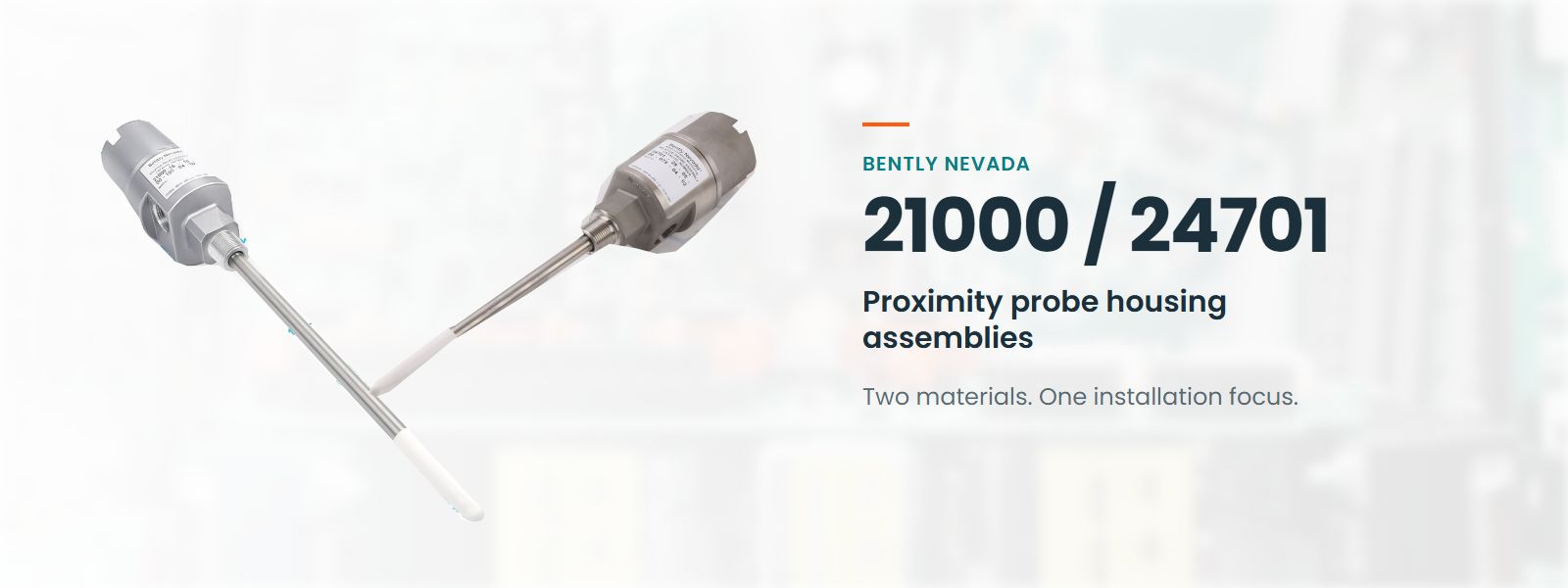
Apter Power brings the Bently Nevada 21000 and 24701 proximity probe housing assemblies together in this maintenance-focused product feature. Original photographs of both families put the material choice, configured identity and installation planning into one practical review for outage preparation.
For a maintenance team preparing a housing replacement, the useful question is how the offered assembly relates to the installed machine. This edition follows that question from the series comparison to the photographed unit and the work pack that travels with it.
Both families provide all-metal assemblies for externally mounting proximity probes. Their designs use a screw-in dome cover, conduit connection ports and a configurable sleeve. The housing body material is the clearest distinction between the two series.
| Series detail | 21000 | 24701 |
|---|---|---|
| Housing body | Aluminum | 303 stainless steel |
| Probe sleeve | 304 stainless steel | 304 stainless steel |
| Typical mass, without fittings | 1.1 kg | 1.8 kg |
| Replacement identity | Complete 21000 order code | Complete 24701 order code |
Start with the installed specification when choosing between them. Review the material requirement together with the mounting arrangement and site environment. A stainless steel body alone does not establish suitability for every process exposure, and a change of series should be reviewed as a configuration decision.
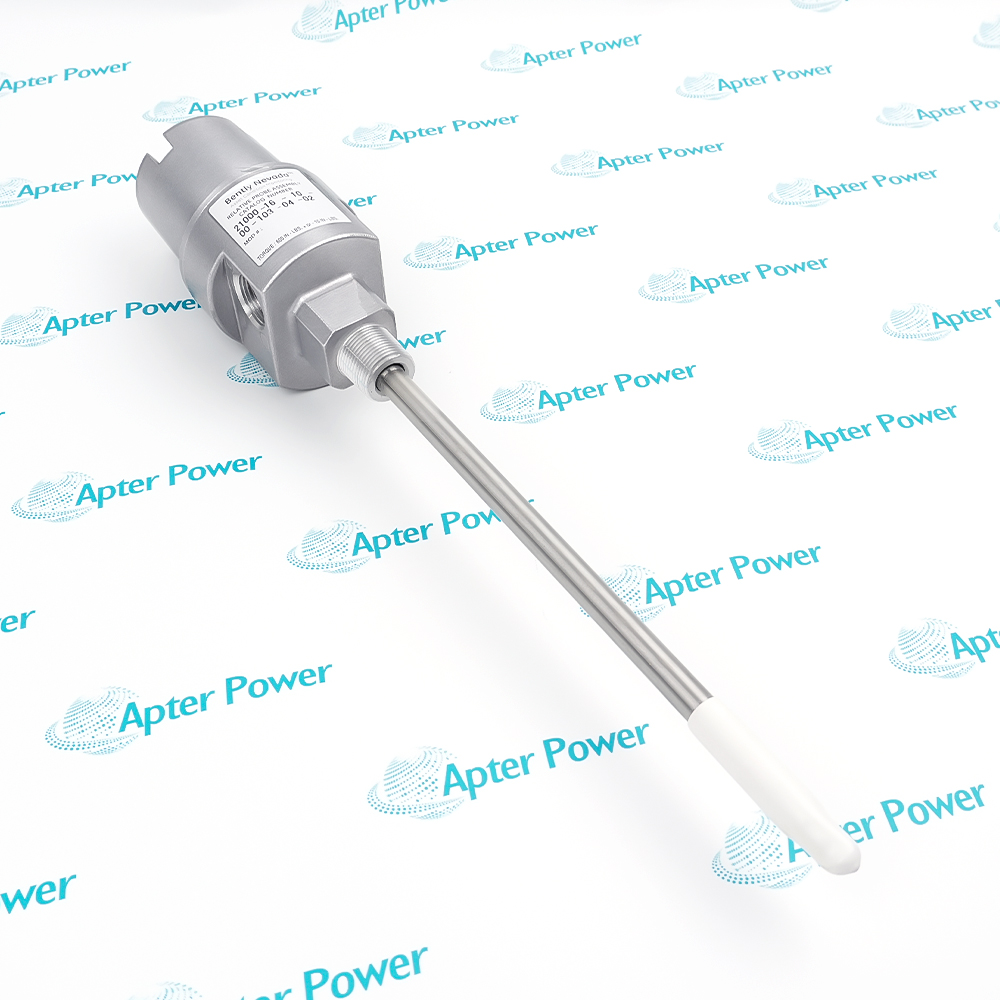
The aluminum-body example used in this feature. Keep its full catalogue number attached to the quotation and work order when discussing this configuration.
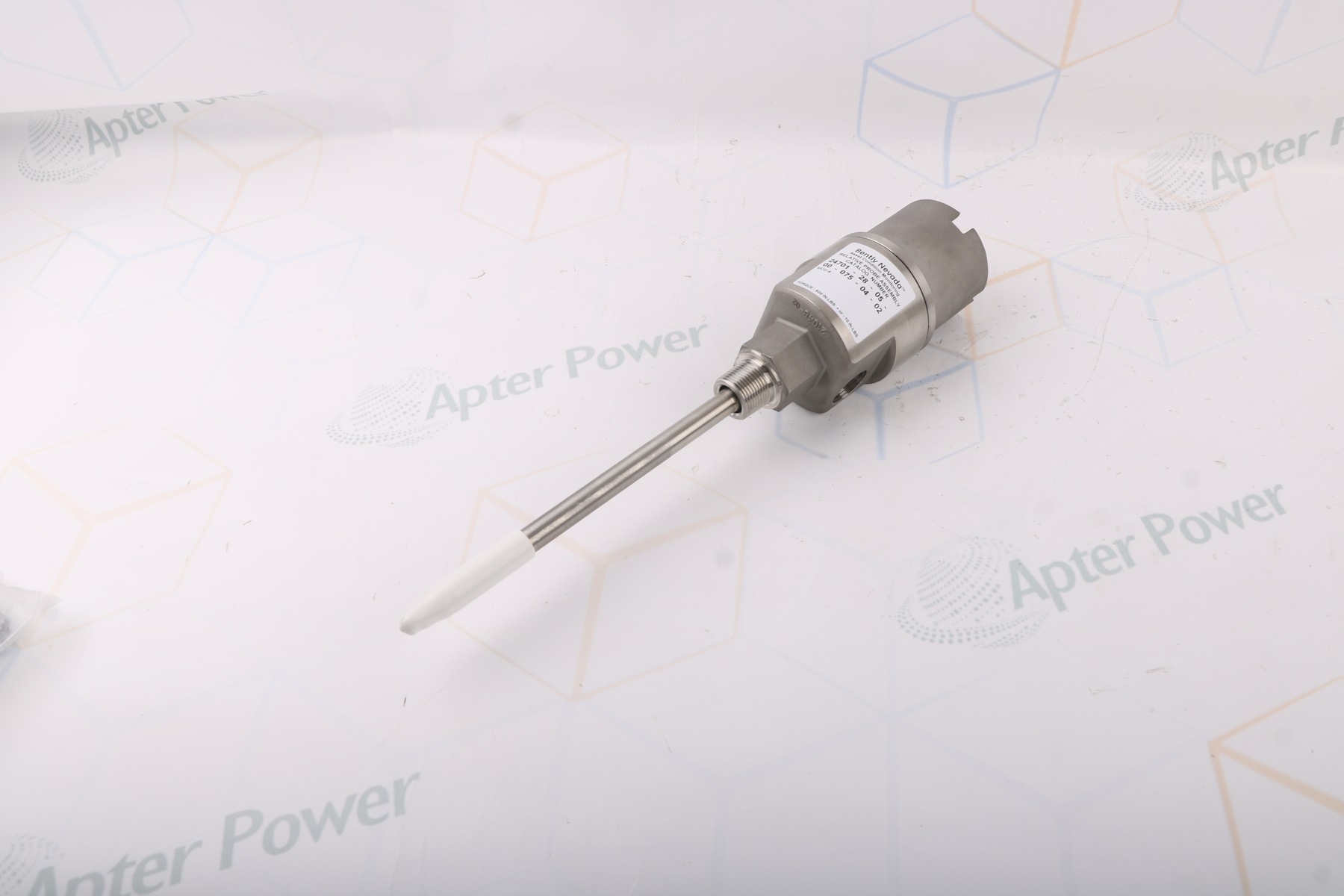
The stainless steel-body example shown alongside it. This is a separate configured reference, not a material-only substitute for the photographed 21000 unit.
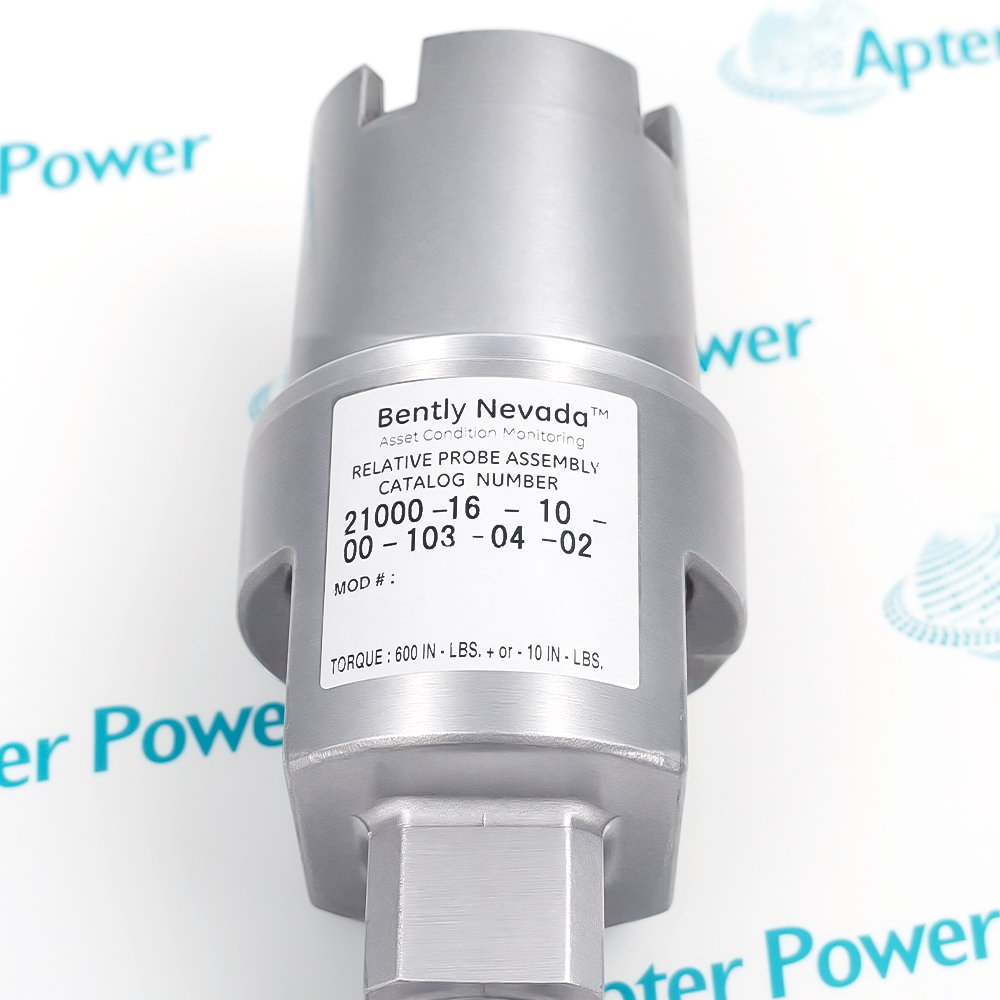
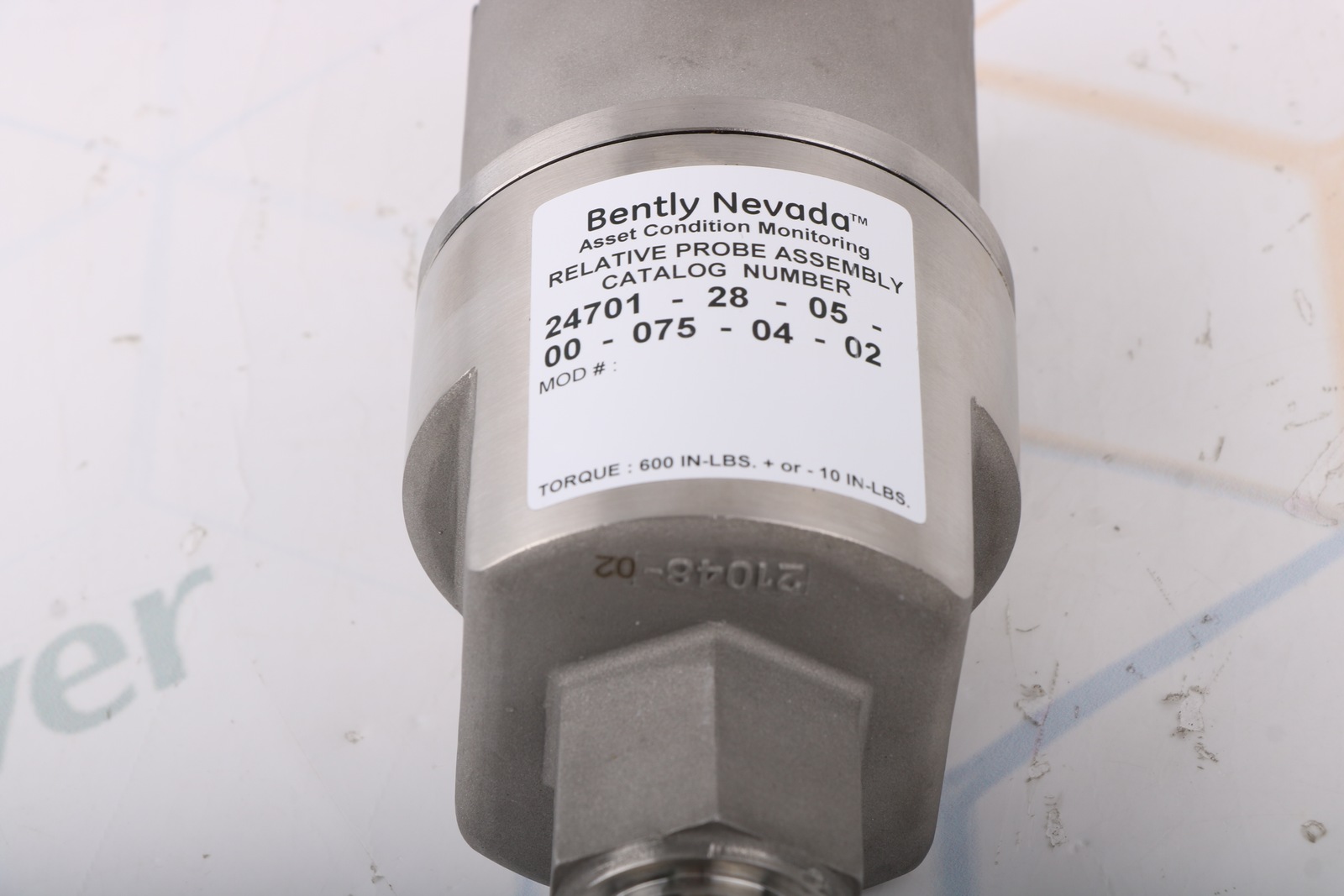
The images document two examples rather than every option available in either family. Perspective, protective end covers and different camera angles make photographs unsuitable as dimensional scales. Use the appropriate drawing for the reference being requested.
For either series, build one work pack that purchasing, stores and maintenance can follow. Include an installed overview, a readable label image and the dimensional drawing. Mark the mounting face, required probe location, cable route and access needed to withdraw the assembly.
| Order-code group | Installation question to resolve |
|---|---|
| A / Probe option | Which probe and connector configuration is required? |
| B / Cable length | Does the requested probe cable suit the documented arrangement? |
| C / Standoff | Is an adapter required at the machine mounting location? |
| D / Penetration | Does the specified penetration match the drawing's reference points? |
| E / Fittings | Which conduit fittings, plug or cable-entry arrangement is included? |
| F / Mounting thread | Does the mounting interface match the installed connection? |
Where access is restricted, record the removal path before fixing the work schedule. Ask the person responsible for the installation to close unresolved dimensional questions before the parts request becomes a committed replacement job.
For these references, the useful comparison extends beyond aluminum versus stainless steel. Reading the B, C and D groups reveals different cable and penetration requirements:
| Configured dimension | 21000 example | 24701 example |
|---|---|---|
| B / Probe lead | 10: 1.0 m | 05: 0.5 m |
| C / Standoff | 00: none | 00: none |
| D / Penetration | 103: 10.3 in | 075: 7.5 in |
| D converted to millimeters | 10.3 × 25.4 = 261.62 mm | 7.5 × 25.4 = 190.50 mm |
The nominal D difference is 71.12 mm. It is a meaningful installation difference even when the housings appear similar in photographs. These conversions explain the catalogue dimensions; they do not establish an as-built measurement or a machining tolerance.
Keep four dimensions separate on the installation drawing: standoff C, penetration D, physical sleeve length and probe-to-target gap. Establish the reference surface for each. A supplier's overall shipping length cannot substitute for a penetration dimension, and a D value does not specify the final operating gap.
The housing fixes the probe mechanically. The 3300 XL 8 mm transducer system comprises the probe, extension cable and Proximitor sensor. It produces voltage related to target distance, supporting static position and dynamic vibration measurements. Housing material does not define electrical sensitivity.
Standard system lengths are 5 or 9 m including the extension cable, or 1 m using the probe alone. For an illustrative 5 m arrangement, a 1.0 m probe lead plus a 4.0 m extension totals 5.0 m; a 0.5 m lead plus a 4.5 m extension also totals 5.0 m. These are length-budget examples, not confirmation of the channel installed on either photographed assembly.
Record the probe, extension and Proximitor part numbers together. Confirm their approved combination and the sensor's system-length designation. The machine-to-cabinet route also includes wiring beyond the Proximitor; that wiring must not be counted as probe-system extension cable. A longer convenient route is a reason to review the combination, rather than insert an arbitrary coaxial cable.
The published nominal scale factor for the 3300 XL 8 mm system is 7.87 V/mm (200 mV/mil). Its specified linear range is approximately 2 mm. These are transducer-system characteristics under the datasheet conditions, not housing performance ratings.
A commissioning record should distinguish the steady DC gap indication from the changing vibration signal. Write down the reference machine condition, measurement point, units and amplitude convention. This makes a before-and-after comparison interpretable when a housing has been disturbed.
In the housing ordering notes, a selected C + D greater than 300 mm (12 in) requires sleeve support near the probe to prevent resonance. The notes also identify possible side-view or rear-view effects for short penetration arrangements. Use the applicable assembly drawing when locating support or reviewing clearance.
Think of the measurement as a relative distance. Movement of the probe mounting can enter that distance just as movement of the observed surface can. During a replacement, inspect the mechanical load path from the machine connection to the sleeve and probe. Document loose connections, an unsupported span or a changed support location before interpreting a new vibration baseline.
Also record what the probe sees: target material, target surface, nearby metal and the relationship to adjacent probes. Reusing the same housing does not prove that the sensing geometry has remained the same. Refer proposed clearance or support changes to the responsible machinery or instrumentation engineer.
Close the job with observable results. Retain the full assembly identity, installed C/D dimensions, support location, probe/extension/Proximitor references, and pre-work and post-work gap readings under a documented machine condition. Record the monitor channel, scale factor, units and channel status alongside them.
| Observation after work | First items to investigate |
|---|---|
| DC gap differs from the recorded baseline | Compare reference conditions, probe setting, mounting position and target position. A changed reading alone does not identify which moved. |
| Vibration amplitude changes after reassembly | Check units, peak-to-peak versus RMS, channel scaling, support arrangement and machine operating condition before drawing a machinery diagnosis. |
| Intermittent or invalid channel indication | Review diagnostic status, connector seating, cable condition and the documented component combination through the approved troubleshooting procedure. |
| Acceptable static reading but inconsistent running trend | Compare like-for-like speed and load, then review mounting stability and the sensing geometry. A static check alone does not demonstrate dynamic performance. |
These checks help structure an investigation; they are not one-to-one fault diagnoses. Finish with the site's approved channel validation and handover, including the disposition of any maintenance inhibit or bypass. Keep the resulting readings with the installation photographs so the next outage starts from a usable baseline.
Similarity does not establish interchangeability. Compare the full configured reference with the installed drawing and have the proposed material and mechanical change reviewed for that application.
No. Keep all suffix groups with the request. The series number identifies the family; the remaining options describe the particular assembly being discussed.
No. The manufacturer's ordering notes distinguish CA housing versions and specified fitting options. Check the exact marking and applicable installation documentation; the fitting alone does not establish approval of the complete installation.
No. Record the mechanical work separately from the approved channel checks. Use the site's commissioning and handover requirements before returning the measurement to service.
Send the complete catalogue number, quantity, readable label photographs, destination and required-on-site date. Include the installed drawing if a configuration needs clarification.


Share your parts list, quantities and required date.
Email your parts list