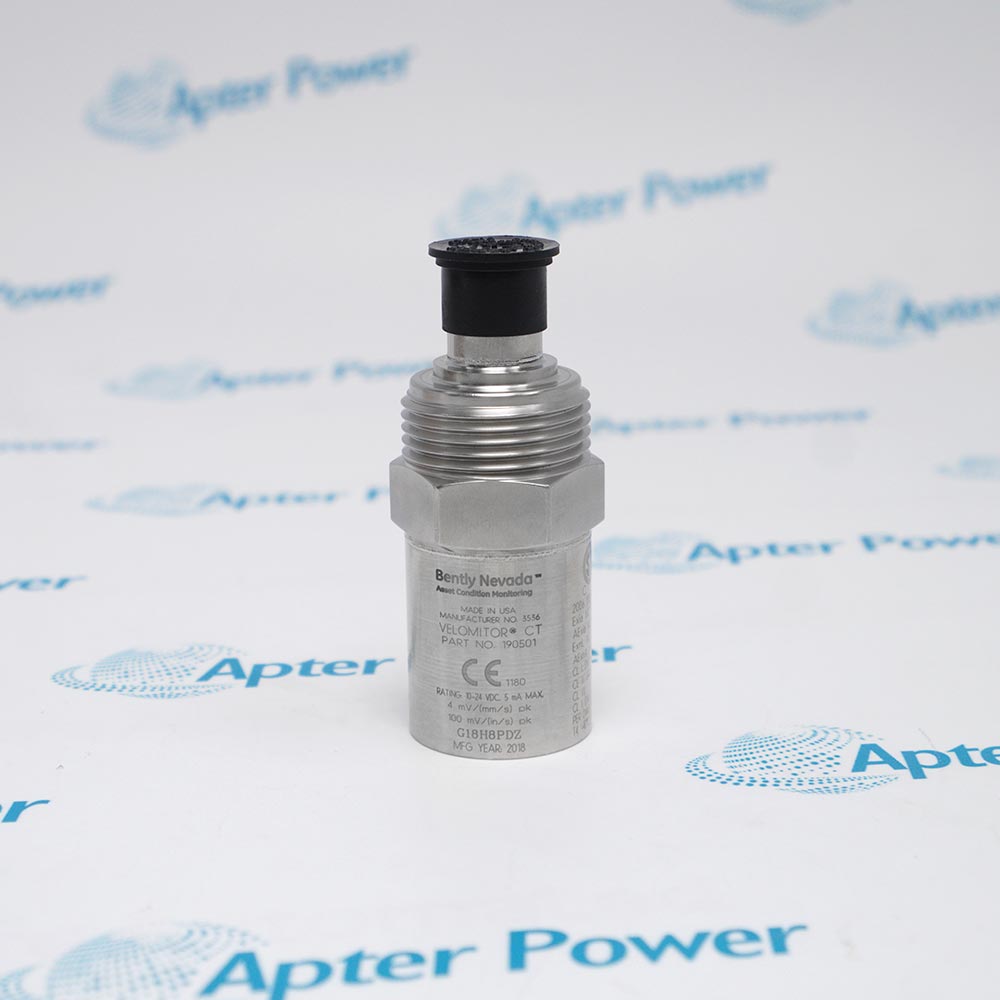
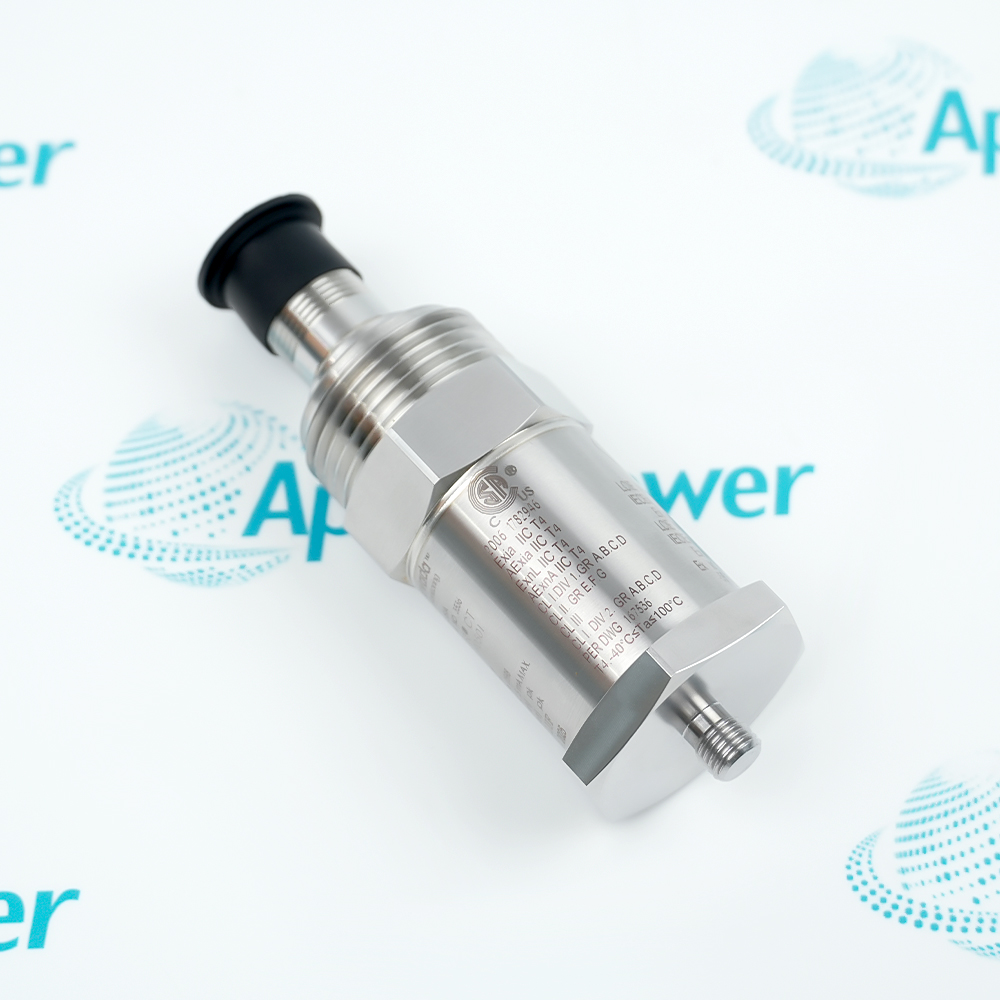
The Bently Nevada 190501-00-00-04 is a Velomitor CT low-frequency piezo-velocity transducer designed for casing vibration measurement on cooling-tower and air-cooled heat-exchanger fan assemblies operating at or above 90 rpm. It measures fan, motor and speed-reducer vibration while providing 3.94 mV/mm/s (100 mV/in/s) sensitivity.
Configuration 190501-00-00-04 means no mounting stud, MIL-C-5015 connection interface and agency-approval option 04. The transducer uses a 316L stainless-steel case, operates from -40°C to +85°C and supports up to 305 m (1,000 ft) of specified interconnect cable.
Product status: Baker Hughes publishes datasheet 141636 Rev. AF dated 2026. The official source does not state that this configuration is discontinued and does not identify an official successor.
Cooling towers: casing vibration monitoring on low-speed fan assemblies operating at or above 90 rpm.
Air-cooled heat exchangers: measurement of vibration generated by the fan rotor, drive motor and speed reducer.
Machinery protection and condition monitoring: velocity input for compatible Bently Nevada monitors when the selected mounting location transmits representative rotor vibration to the casing.
Typical faults monitored include changes associated with rotor unbalance and misalignment. Application suitability and alarm settings require machinery-specific engineering review.
Install the transducer on a properly prepared bearing housing or machine casing. Poor mounting can reduce amplitude and frequency response or create signals that do not represent actual machine vibration.
Suffix 00 includes no mounting stud; select the correct stud or adapter for the machine interface. Apply the published mounting torque of 4.5 N·m ±0.6 N·m.
Verify option 04 hazardous-area certification on the product nameplate and follow the applicable installation drawing and entity parameters.
Use the specified cable and confirm total cable length, monitor input compatibility, grounding, connector integrity and environmental limits before commissioning.
Do not substitute a 330500 or another sensor solely because sensitivity is similar; frequency response and application behavior must also match.


 Videos
 News
News Applications