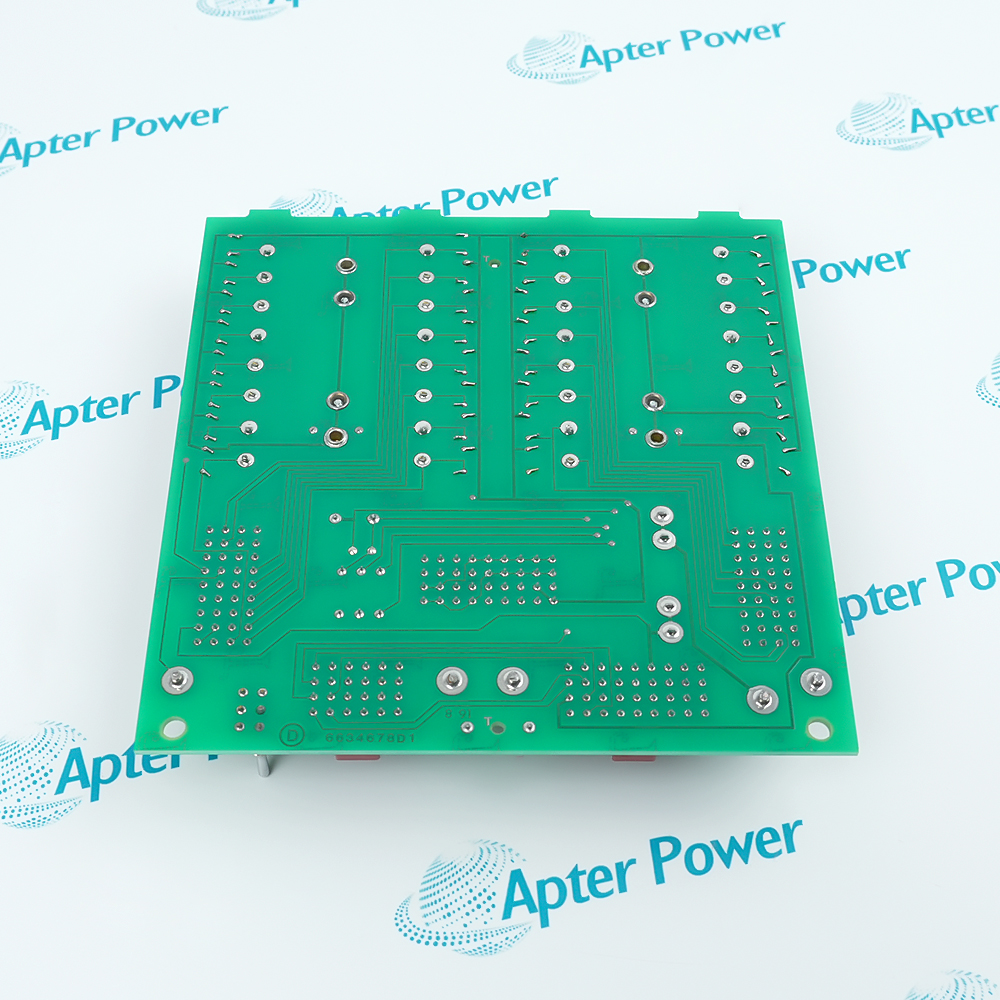
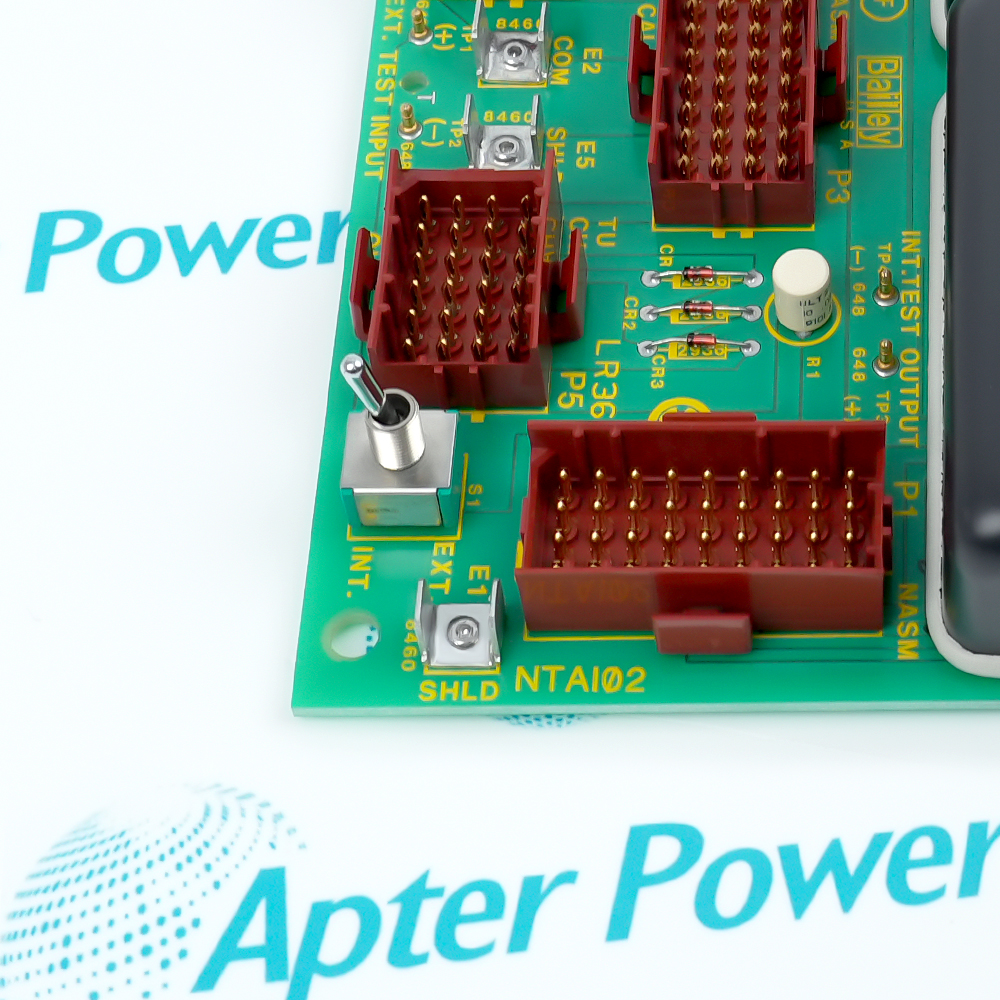
Product image is representative; revision or series may vary. Contact us to request a specific version.
Product Describe:
Analog Input Termination Unit
Connects field thermocouple/millivolt
wiring to the DCS input modules
Thermocouples (TC) and millivolt
signals (-100 mV to +100 mV)
The NTAI02 is an analog input termination unit specifically for distributed control systems. Its core functions include multi-channel signal aggregation, signal conditioning and impedance matching via onboard jumpers, high-reliability electrical isolation and noise suppression, and fast interconnection with main control modules through dedicated pre-fabricated cables.
Multi-channel signal aggregation
Onboard jumper signal conditioning
Electrical isolation and noise suppression
Within the overall network architecture, this unit serves as a critical foundation for the automation system, integrating seamlessly into its proprietary distributed control network environment. It handles the real-time, seamless upload of various complex industrial field parameters to the central control modules, ensuring high-speed synchronization between upper-level decision commands and lower-level status data. Through standard rack-mounted card slots and redundant communication structures, the component achieves high fault tolerance, maintaining uninterrupted communication links even in harsh electromagnetic interference and unstable power environments. Furthermore, its highly modular configuration methods and flexible channel allocation mechanisms grant the control cabinet exceptional expansion elasticity, allowing for easy additions or removals of field measurement points as industrial processes upgrade. This deep system-level integration significantly reduces labor costs for daily maintenance, providing solid engineering support for the long-cycle continuous operations of large-scale modern plants.
Important Notice: Other accessories, manuals, cables, calibration data, software, etc. are not included with this equipment unless listed in the above stock item description.
ABB NTAI02 Analog Input Termination Unit Manuals, Datasheets, Drivers, Link
Important Notice: Other accessories, manuals, cables, calibration data, software, etc. are not included with this equipment unless listed in the above stock item description.
Fossil Fuel Power Generation
Receiving high-temperature and high-pressure steam temperature signals from boiler piping thermocouples, routing weak electromagnetic signals into the main controller for combustion efficiency management.
Nuclear Power
Routing physical hardwires of saturated steam pipe and condensate system temperatures into highly redundant INFI 90 safety control racks within nuclear conventional island loops.
Petrochemical & Refining
Real-time routing of cold-junction compensated thermocouple signals from different temperature zones of crude oil cracking towers, securing long-term temperature tracking within the control cabinets.
Pulp & Paper
Receiving multi-channel temperature probe hardwires from high-temperature alkali reaction zones in digesters and steam heating loops of drying cylinders, uploading data to the primary controller in real time.
Rubber & Plastics Processing
Monitoring hardwired temperatures across multi-stage high-pressure heating barrels of internal mixers and large extruders, transmitting analog values with low latency without interfering with high-speed mixing.
Four critical precautions must be observed when using the NTAI02 termination unit. First, ensure the clips are completely locked when mounting it onto the NFTP01 baseplate to prevent poor contact caused by high-frequency industrial vibrations. Second, when introducing thermocouple and millivolt signals, cold-junction compensation must be strictly calibrated, and the power supply must be maintained at a stable +24 VDC to avoid channel distortion. Third, although it features surge protection compliant with IEEE-472-1974 standards, the physical field hardwires must still be routed away from inverters and high-power electrical cables to prevent noise interference. Fourth, since it is only certified for ordinary safe locations, it is strictly forbidden to expose it directly without proper enclosures to hazardous industrial areas containing flammable and explosive gases.