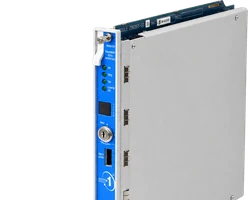
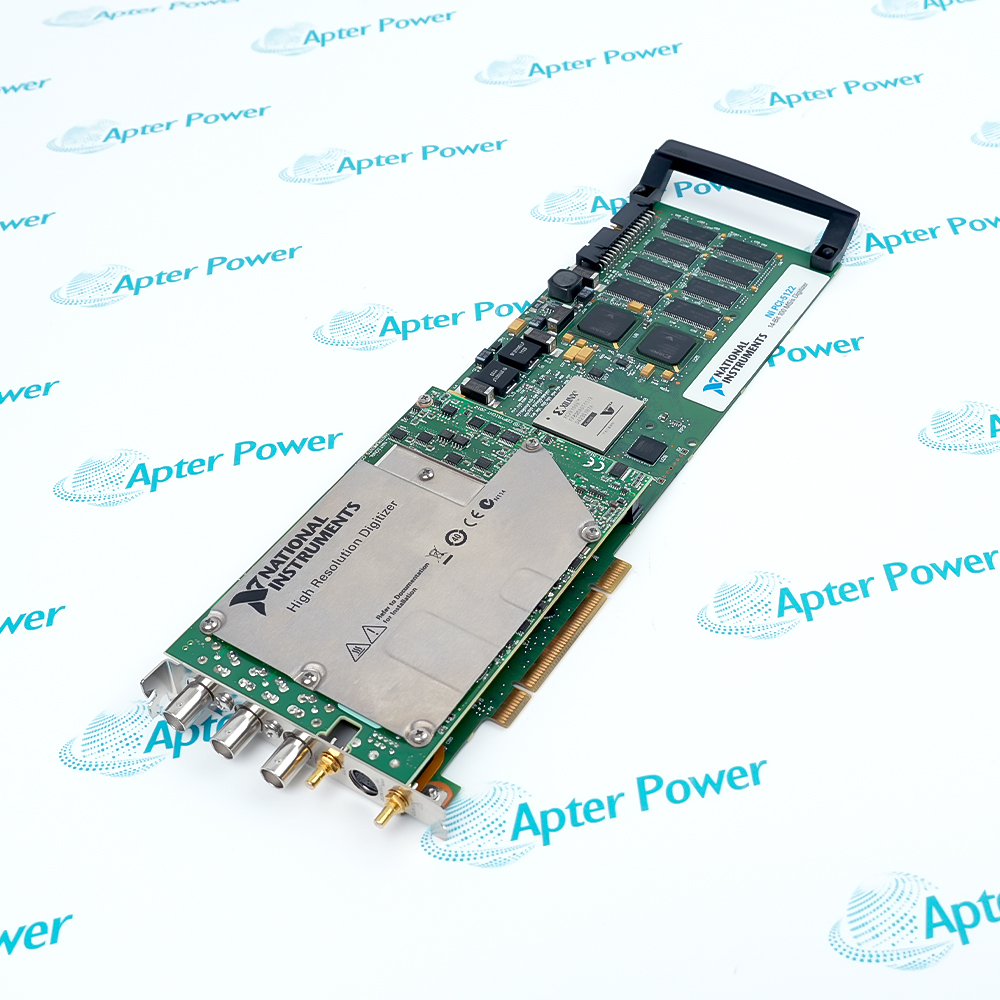
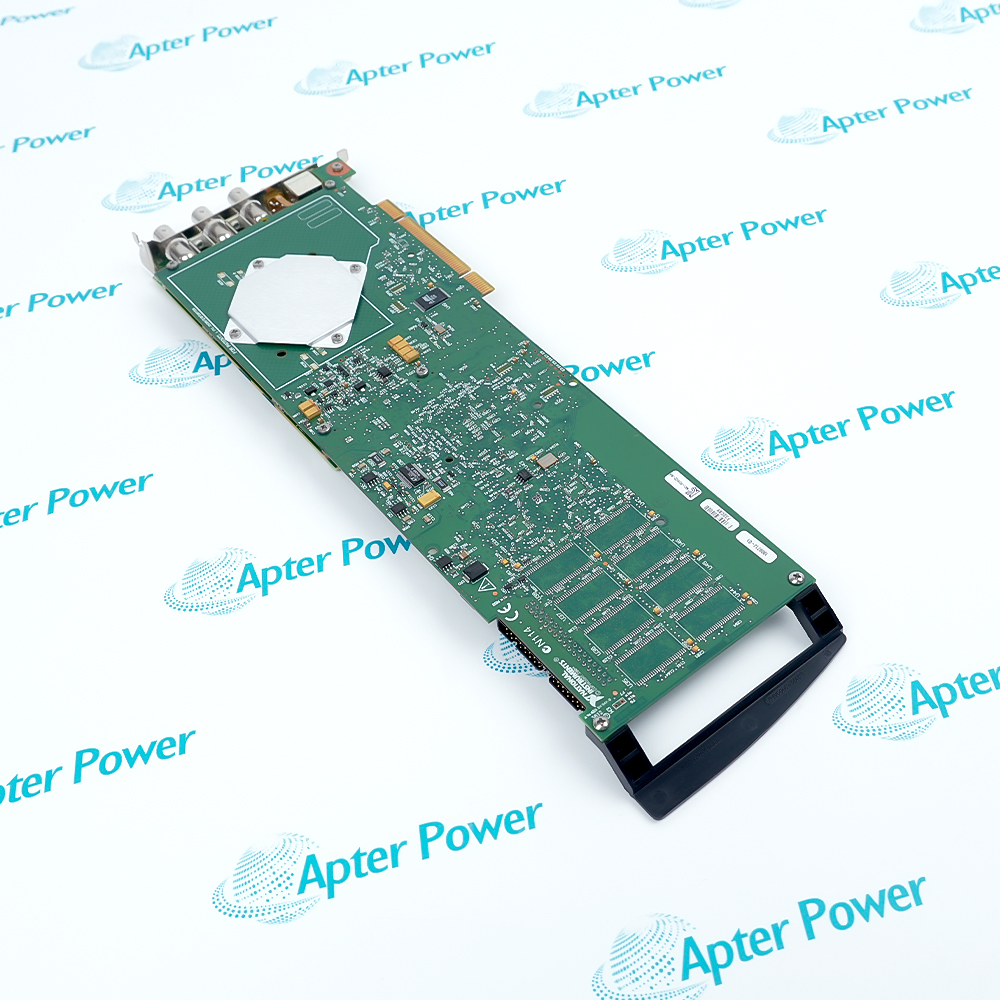
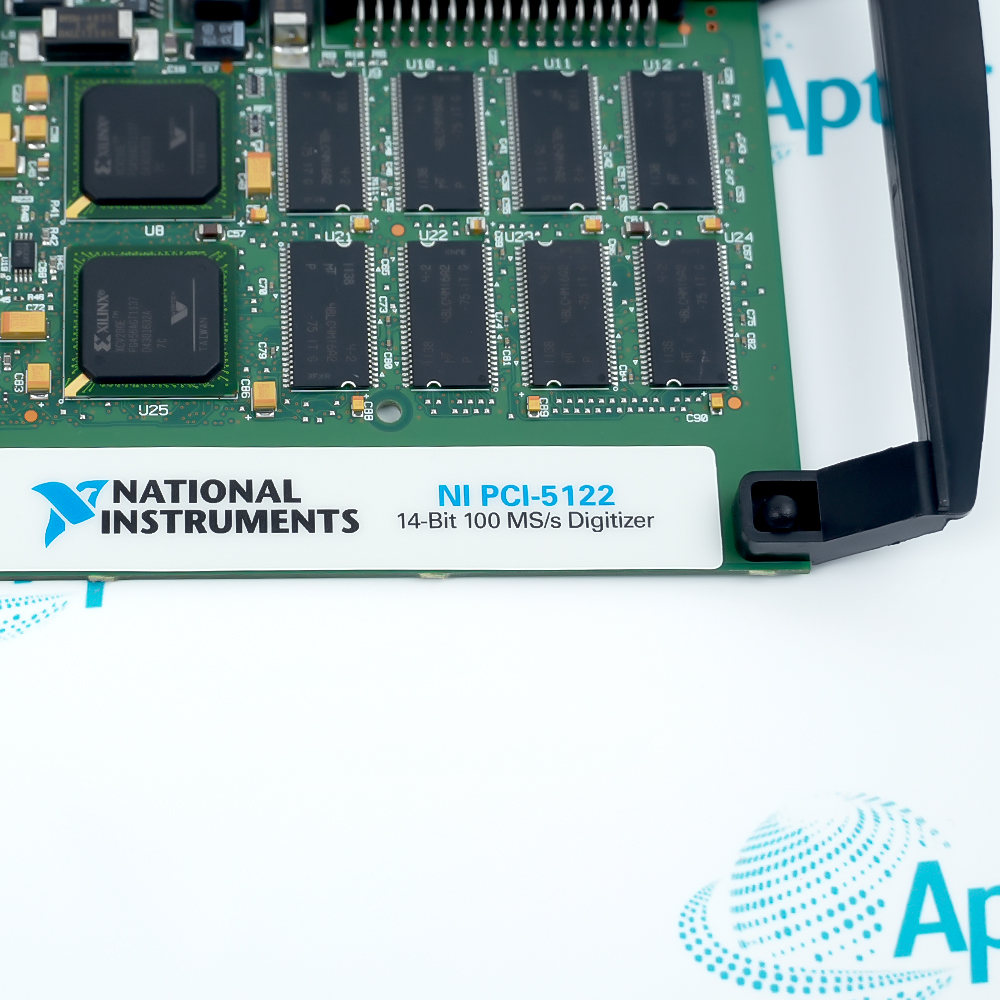
The PCI-5122 is a high-performance, 14-bit, dual-channel high-speed digitizer from National Instruments. It uses a PCI bus interface, provides a real-time sampling rate of 100 MS/s and a 100 MHz analog bandwidth, and is suitable for precise time-domain and frequency-domain signal acquisition in fields such as automotive electronics, communications, and aerospace.
Offers up to 512 MB of deep onboard memory
Supports picosecond-level clock synchronization between multiple PCI-5122 cards
Features excellent Spurious-Free Dynamic Range (SFDR) and a very low noise floor
National Instruments 5122 high-speed digitizers feature two 100 MS/s simultaneously sampled input channels with 14-bit resolution, 100 MHz bandwidth, and up to 512 MB of memory per channel in a compact, 3U PXI Express, PXI, or PCI device. With its high sampling rate and low-distortion front end, an NI 5122 is ideal for a wide range of appli cations in automotive, communications, scientific research, military/ aerospace, and consumer electronics. Using the National Instruments Synchronization and Memory Core (SMC) architecture, you can easily synchronize to other analog and digital instruments to develop high-channel-count or mixed-signal test systems.NI 5122 digitizers use 14-bit analog-to-digital converters (ADCs), low-noise variable-gain amplifiers, and a low-jitter 100 MHz timebase to deliver a 75 dBc spurious-free dynamic range and a 62 dB signal-to noise ratio. The 14-bit data converters have 64 times the resolution of traditional 8-bit instruments, providing more accurate time- and frequency-domain measurements.
Important Notice: Other accessories, manuals, cables, calibration data, software, etc. are not included with this equipment unless listed in the above stock item description.
NI PCI-5122 High-Speed Digitizer Manuals, Datasheets, Drivers, Link
Important Notice: Other accessories, manuals, cables, calibration data, software, etc. are not included with this equipment unless listed in the above stock item description.
Power Generation
Monitoring bearing vibrations of large steam turbines to identify early fatigue cracks via high-resolution waveforms.
Oil & Gas
Condition monitoring for reciprocating compressors, analyzing transient acoustic emission signals from piston impacts.
Precision Machining
Monitoring spindle run-out on high-speed machine tools to prevent tool breakage and errors.
Metal Smelting
Monitoring magnetohydrodynamic (MHD) fluctuations in aluminum electrolysis cells to optimize efficiency.
Pulp & Paper
Monitoring dynamic pressure distribution on paper machine press rolls to ensure uniform paper thickness.
Medical Device Mfg
Pulse-echo analysis in ultrasonic transducer production lines for quality inspection.
Ensure the chassis provides adequate ventilation and cooling, and allow the device to warm up for at least 15 minutes before acquisition to guarantee the measurement accuracy of its 14-bit resolution. Strictly adhere to the input voltage range limits and never apply external signals while the device is powered off to prevent damage to the input circuitry. Additionally, perform regular self-calibration via NI MAX and use well-shielded coaxial cables to leverage its low-noise performance and prevent electromagnetic interference from compromising weak signal capture.