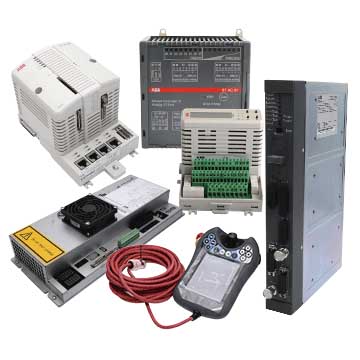
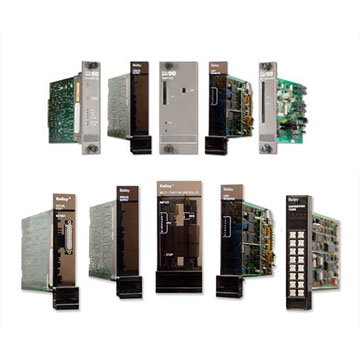
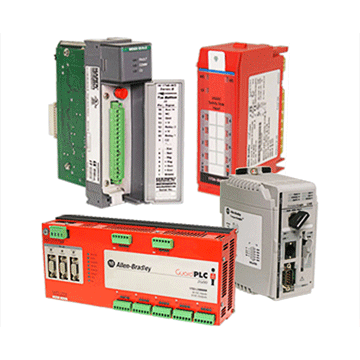
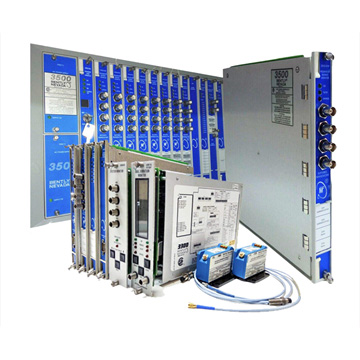
With more than 30.000 high-quality spare parts, they can be sold immediately. Our large inventory allows us to quickly meet customer needs, thereby reducing downtime and protecting production schedules. Our timely delivery time provides you with security and save money.
I/O Transceiver Modules
One leg of triplicated I/O Safetybus
The I/O transceiver modules are TÜV
certified for Risk Class 5 safety
critical applications
The T7310 is an I/O Transceiver Module from the ICS Triplex brand under Rockwell Automation, serving as a core main-chassis component within the Trusted Triple Modular Redundant (TMR) safety control system.
Interfaces processor modules to I/O modules
Three modules per I/O chassis for triple redundant operation
Front panel indicators on each module show active and fault status
I/O transceiver modules provide an interface between the processor modules in the controller chassis and the I/O modules in the I/O chassis. Three I/O transceiver modules are installed in the three left slots of each I/O chassis.This module is built for high reliability in demanding environments, supporting TÜV SIL 3 standards while requiring 8W from the 24V DC backplane. The T7310 facilitates uninterrupted operation through hot-swappable technology and allows for quick, on-site diagnostics, making it essential for critical applications such as ESD and fire/gas monitoring.
Important Notice: Other accessories, manuals, cables, calibration data, software, etc. are not included with this equipment unless listed in the above stock item description.
ICS Triplex T7310 I/O Transceiver Modules Manuals, Datasheets, Drivers, Link
Important Notice: Other accessories, manuals, cables, calibration data, software, etc. are not included with this equipment unless listed in the above stock item description.
Oil & Gas
Routes critical temperature and pressure safety signals from multi-zone cracking reactors to the redundant controller chassis, initiating plant-wide isolation in milliseconds during thermal runaways.
Nuclear Power
Relays highly critical telemetry data within SIL 3 qualified safety boards, maintaining continuous communication between redundant voting channels to oversee containment cooling valves.
Semiconductor
Manages the continuous safety loops that interface with arsine or phosphine gas detectors, closing pneumatic safety shut-off valves instantly if ppm thresholds are breached.
Pulp & Paper
Handles the high-current safety interlocking systems that manage the black liquor recovery boiler, preventing thermal explosions through millisecond-level steam-purge activations.
Pharmaceutical
Ensures continuous data routing for sterile environmental interlocks, avoiding batch contamination and managing emergency nitrogen purging loops during unexpected pressure changes.
Before handling or maintaining the ICS Triplex T7310 transceiver module, technicians must wear an ESD wrist strap to prevent electrostatic damage to the high-density backplane chips. While this module supports hot-swapping within a redundant Trusted system, care must be taken during insertion to align it perfectly with the chassis guide rails, preventing bent pins on the rear connectors. During operation, maintain proper cabinet ventilation to keep the temperature within 0°C to 60°C, and regularly check the front-panel LED indicators for system health status. When connecting expansion cables, secure them firmly using the original locking screws, and never disconnect communication cables under power without a redundant backup in place to avoid system communication loss or nuisance safety trips.
The T7310 is an I/O Transceiver Module from the ICS Triplex brand under Rockwell Automation, serving as a core main-chassis component within the Trusted Triple Modular Redundant (TMR) safety control system.
What is the primary purpose of the T7310 in a system?
It manages and coordinates high-speed internal data communications between the controller main chassis and the remote expansion chassis (I/O companion slots), ensuring a seamless flow of input and output signals across the entire system.
How do you install and use products like the T7310?
It features a plug-in card design and must be inserted into the designated transceiver slots (typically slots 21 or 22) on the right side of the Trusted main chassis, securely locked via backplane connectors, and then connected to other chassis using expansion cables.
What safety certifications does the T7310 hold?
As a dedicated component for Safety Instrumented Systems (SIS), it complies with the international IEC 61508 standard and holds a TÜV functional safety certification up to SIL 3 level.
What do the LED indicators on the front panel of the T7310 mean?
The front panel features multiple LEDs for real-time status monitoring, including Power, Healthy/Run, Active status, and Fault alarm indicators.
Trusted by 5,000+ plants worldwide | Backed by our vast inventory of top-tier control parts, modules and cards, fast shipments are dispatched to cover your urgent needs. ABOUT US >>
Disclaimer: We are not an authorized distributor or distributor of the product manufacturer of this website, The product may have older date codes or be an older series than that available direct from the factory or authorized dealers. Because our company is not an authorized distributor of this product, the Original Manufacturer`s warranty does not apply.While many DCS PLC products will have firmware already installed, Our company makes no representation as to whether a DSC PLC product will or will not have firmware and, if it does have firmware, whether the firmware is the revision level that you need for your application. Our company also makes no representations as to your ability or right to download or otherwise obtain firmware for the product from our company, its distributors, or any other source. Our company also makes no representations as to your right to install any such firmware on the product. Our company will not obtain or supply firmware on your behalf. It is your obligation to comply with the terms of any End-User License Agreement or similar document related to obtaining or installing firmware.


 Videos
 News
News Applications