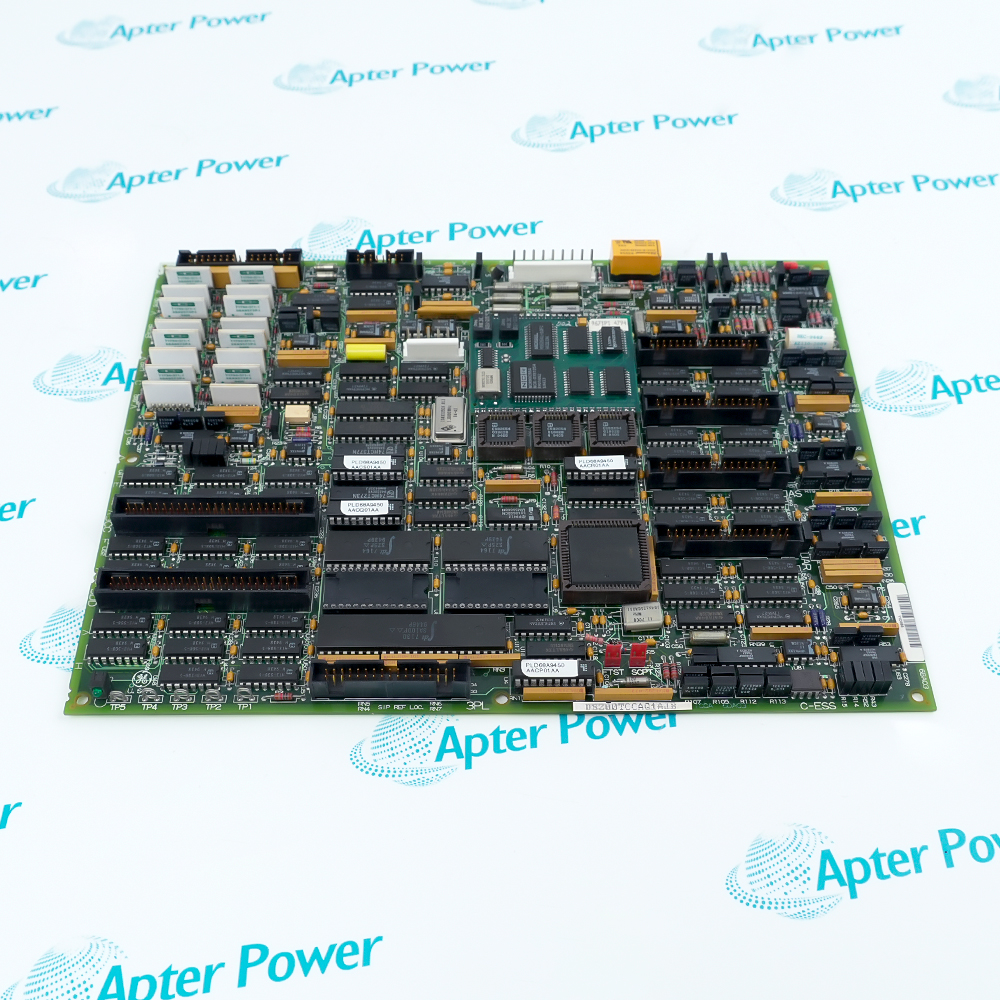
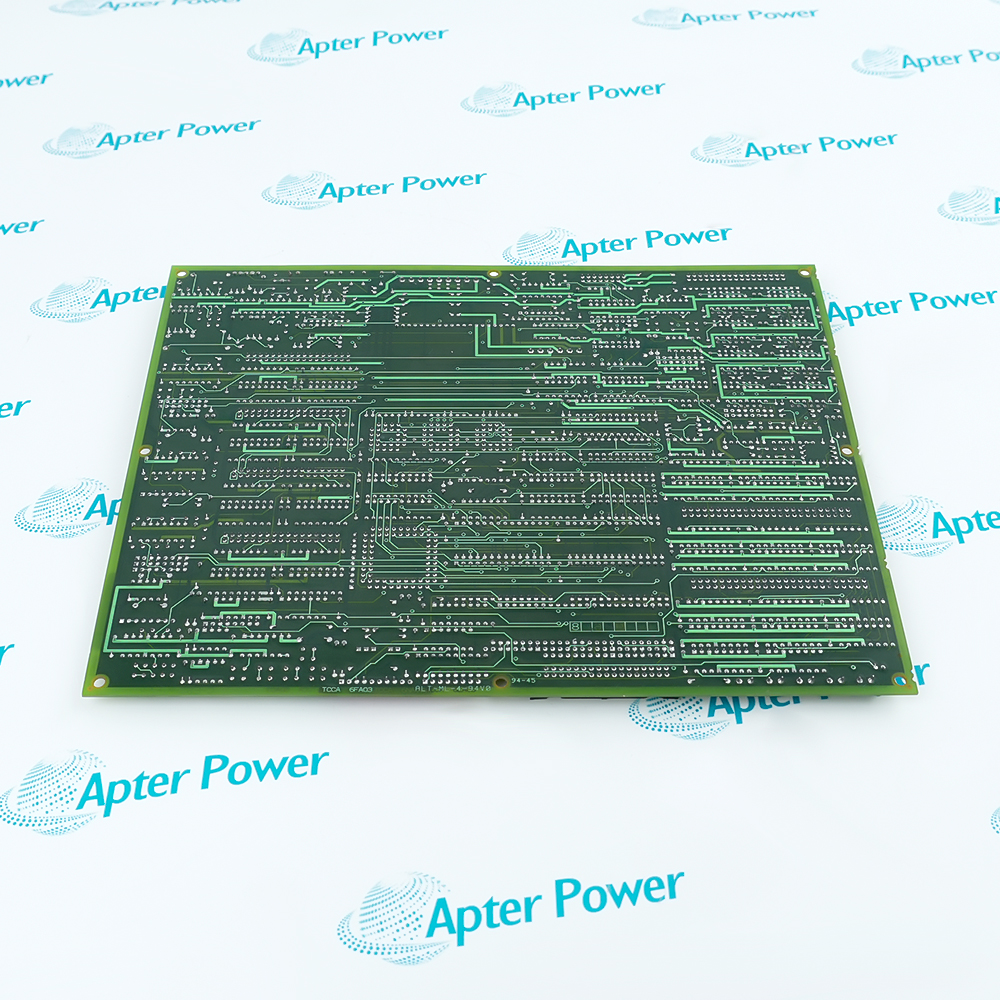
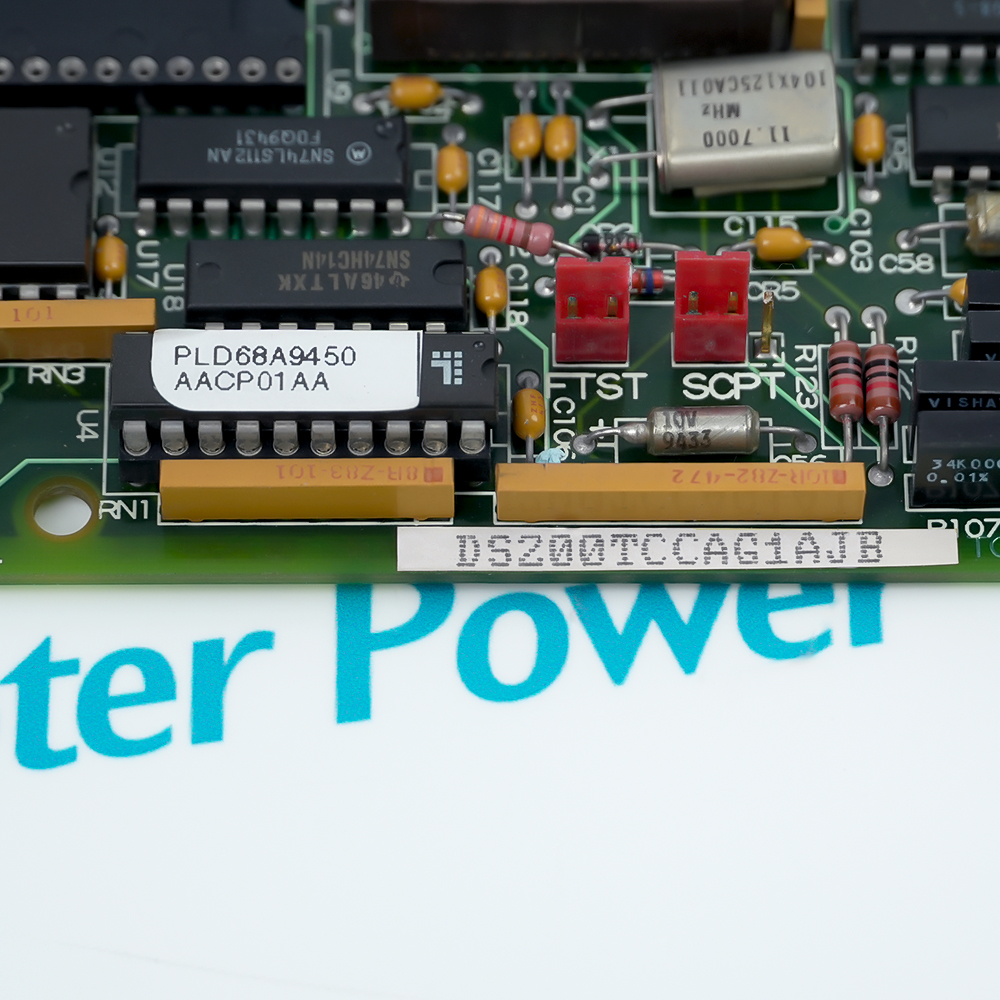
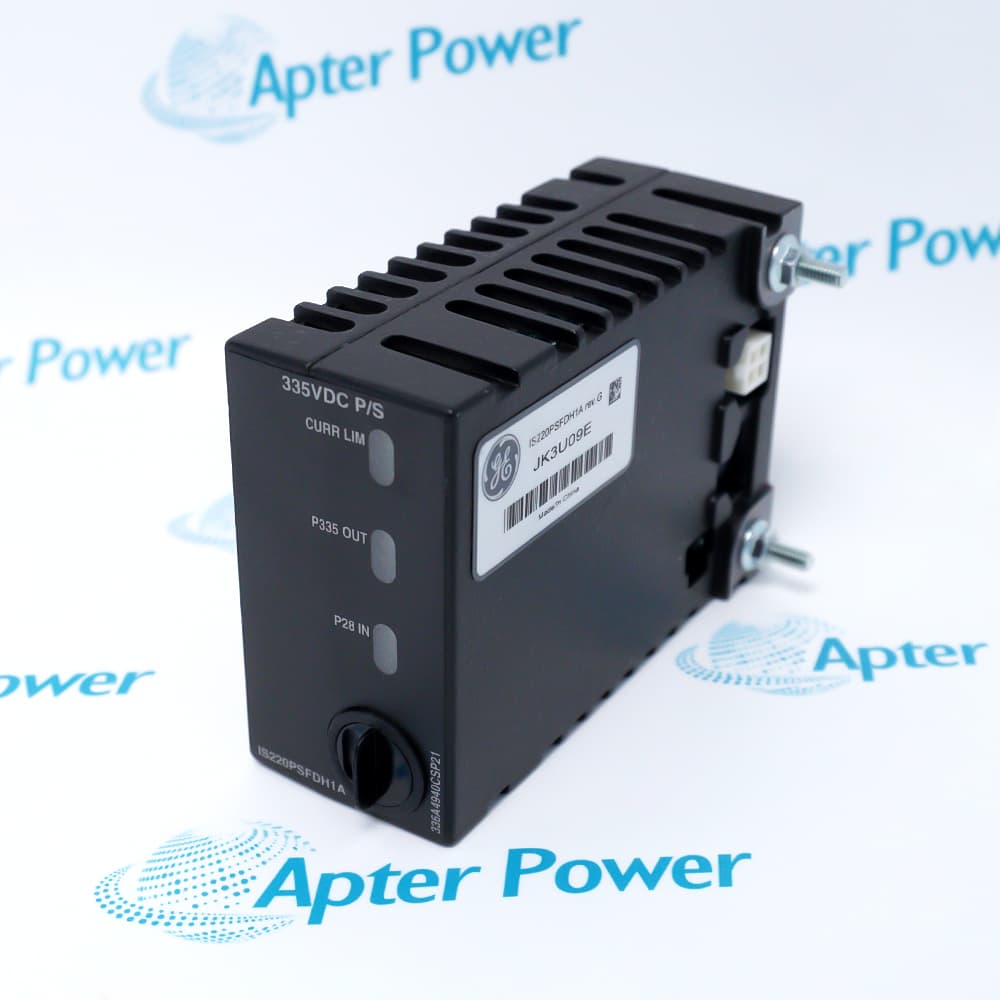
The DS200TCCAG1AJB Common Analog I/O Board, produced by General Electric for Mark V gas turbine control systems, conditions and scales analog inputs from internal CTBA, TBQA, and TBCA terminal boards. This module processes 4-20 mA, RTD, thermocouple, and shaft-related electrical signals before transferring the conditioned data to the STCA board via a 3PL connector.
Utilizes a Standard 3PL Connector
Supports 4-20 mA Current Loops
Onboard Intel 80196 Microprocessor
Functioning inside the core R5 cabinet chassis, this board is driven by an onboard Intel 80196 microprocessor paired with dual EPROM sockets for localized firmware processing. It handles data conversion via selectable 12-bit or 16-bit A/D resolution and incorporates a 1500 V galvanic isolation barrier to protect internal circuits from field-level transient electrical surges. The primary operational task of the TCCA board is to condition, scale, and interface various field variables routed from the CTBA, TBQA, and TBCA terminal boards. It supports multiple input formats, including 4-20 mA standard current loops, thermocouples, and RTDs, while managing specialized monitoring loops for generator shaft voltage and shaft current. Once processed, the board bundles and transmits the structured data to the STCA control logic via a high-density ribbon cable docked at the standard 3PL connector, utilizing onboard micro-jumpers and DIP switches for physical channel allocation.
Important Notice: Other accessories, manuals, cables, calibration data, software, etc. are not included with this equipment unless listed in the above stock item description.
General Electric DS200TCCAG1AJB Common Analog I/O Board Manuals, Datasheets, Drivers, Link
Important Notice: Other accessories, manuals, cables, calibration data, software, etc. are not included with this equipment unless listed in the above stock item description.
Combined Cycle Power
Conditions heavy-duty gas turbine analog variables including servo valve feedbacks, fuel flows, and wheel space temperatures.
Oil & Gas
Conditions pipeline pressures and Inlet Guide Vane (IGV) positions for driving turbines at pipeline compressor stations.
Petroleum Refining
Blocks heavy electromagnetic interference for hydrocracking power turbines via its 1500 V hardware galvanic isolation.
Metallurgy & Steel
Conditions blast furnace gas flows and top pressures within Top Gas Recovery Turbine (TRT) control systems.
Coal Chemical
Performs mixed conditioning of thermocouple and RTD variables on syngas compressor turbines for high-temperature monitoring.
Air Separation & Gases
Executes high-speed self-diagnostics of analog variables via its onboard microprocessor on air separation compressor turbines.
Prior to installing the DS200TCCAG1AJB board, operators must manually mirror the exact positions of all onboard micro-jumpers and DIP switches from the old unit onto the new spare to prevent analog routing failures. Technicians must strictly follow ESD protocols to safeguard the sensitive Intel 80196 microprocessor, ensure that high-density ribbon cables are completely seated into the standard 3PL connector without pin misalignment, and verify that the 1500 V galvanic isolation barrier remains uncompromised by testing cabinet grounding loops regularly during turbine shutdowns.
Driven by an onboard Intel 80196 microprocessor, this board incorporates two dedicated EPROM chipset sockets to execute real-time logical calculations of local firmware data and board-level self-diagnostics. In operational deployments, the board features 8 independent hardware input channels to condition and scale field physical variables—such as 4-20 mA standard current loops, thermocouples (e.g., Type K, J, and T), and RTDs (e.g., 100 Ω Platinum)—supporting selectable 12-bit or 16-bit Analog-to-Digital (A/D) conversion resolutions via hardware configuration adjustments. Beyond conventional industrial signaling, the board integrates dedicated hardware monitoring loops for generator shaft voltage and shaft current to identify early electrical anomalies such as bearing insulation breakdown. Once processed, the structured data is assigned to physical channels using onboard micro-jumpers and DIP switches, then packed and routed to the STCA core board via a high-density ribbon cable docked at the standard 3PL connector. The board supports long-cycle, full-load continuous operations within an ambient temperature range of 0°C to +50°C and a relative humidity range of 5% to 95% non-condensing.
It is the Common Analog I/O Board (TCCA board) within the General Electric (GE) Mark V gas turbine control system, responsible for processing various analog signals originating from the field.
What should be done if the firmware on DS200TCCAG1AJB is corrupted?
The board is equipped with two EPROM sockets, allowing firmware recovery by re-flashing via factory tools or directly swapping the chipsets.
Does DS200TCCAG1AJB require external terminal boards to work?
Yes. It does not connect to external hardwired cables directly; it must interface with terminal boards such as CTBA, TBQA, and TBCA inside the cabinet to receive field data.
What is the most critical precaution when replacing DS200TCCAG1AJB on site?
Technicians must manually duplicate the exact positions of all onboard micro-jumpers and DIP switches from the removed board onto the new one, or it will cause signal reading errors.
Via which interface does DS200TCCAG1AJB transmit data to the main control board?
It utilizes a standard 3PL connector to route structured and conditioned data to the STCA board via a high-density ribbon cable.
Manufacturers
Supporting new and legacy automation
Whether you're maintaining existing equipment or sourcing parts for current systems, we provide fast, dependable supply you can rely on.
Please try to be as accurate as possible with your search.
We can quote you on 1000s of specialist parts, even if they are not listed on our website.