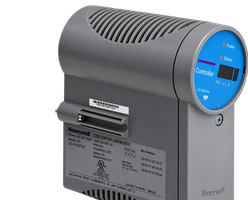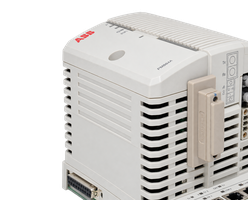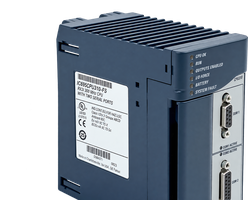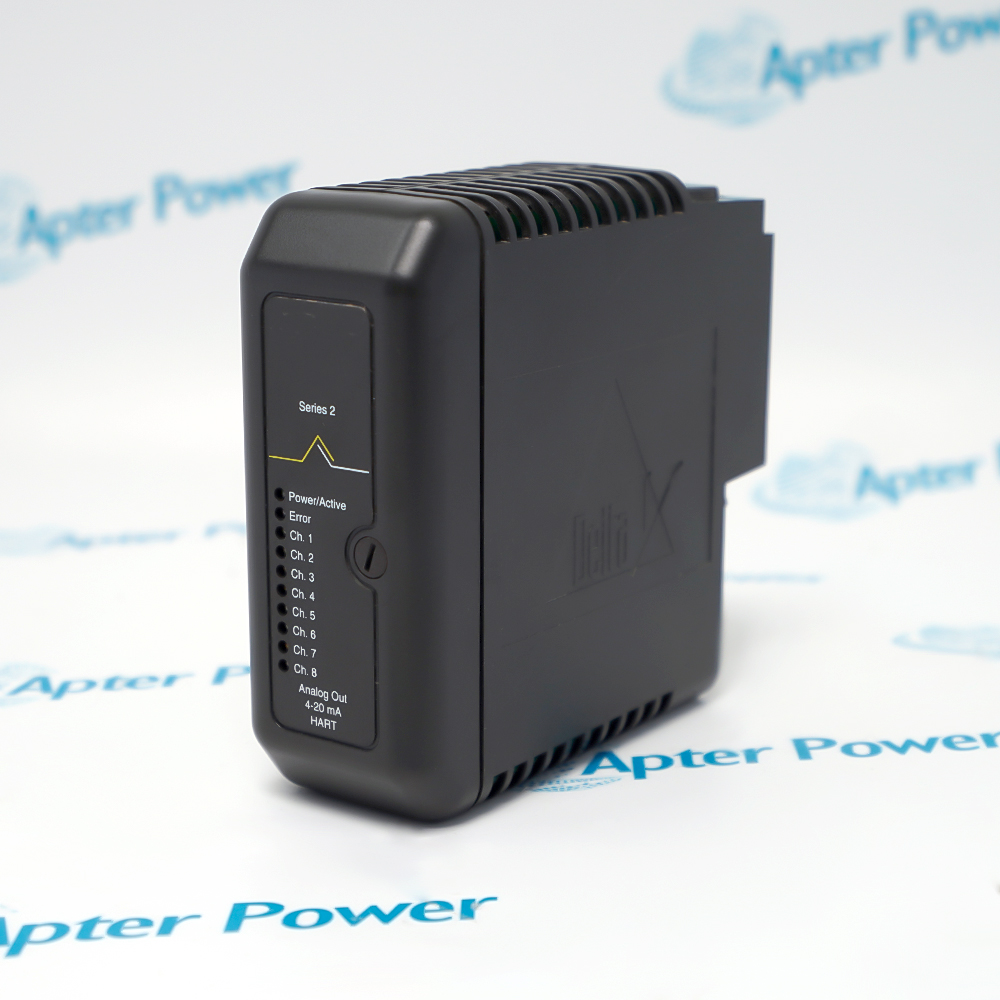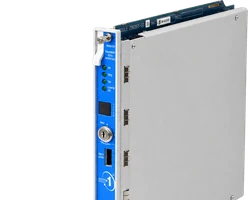
Product image is representative; revision or series may vary. Contact us to request a specific version.
Product Describe:
Emerson KJ4001X1-CH1 12P1811X032 is a rtd/resistance terminal block for two-, three- or four-wire resistance-temperature measurement in the DeltaV M-series I/O subsystem.
Emerson KJ4001X1-CH1 12P1811X032 accommodates two-, three- and four-wire RTD arrangements at one removable terminal interface for temperature and resistance channels.
Terminates eight resistance or RTD input circuits.
Supports two-, three- and four-wire sensor connections.
Preserves lead-compensation wiring at the terminal interface.
Uses C3 keying with the matched RTD card.
KJ4001X1-CH1 12P1811X032 must remain matched to its documented system interface, mating hardware and controlled configuration.
Important Notice: Match the complete KJ4001X1-CH1 12P1811X032 marking and documented interfaces before installation, then verify the intended technical response.
The first document covers the product function, system role and technical selection. The installation guide covers identification, connection checks, commissioning and the acceptance record.

Bearing temperature
Connects RTDs used for rotating-equipment thermal monitoring.
Process vessel temperature
Acquires resistance-temperature measurements.
Motor winding temperature
Terminates multiwire RTD circuits.
Resistance measurement
Supports configured resistance inputs for industrial sensors.
Before installing Emerson KJ4001X1-CH1 12P1811X032, confirm the documented system, interfaces and controlled configuration.
1
Match both identifiers and C3 keying.
2
Record the wire count and terminal assignment for every RTD.
3
Do not interchange lead-compensation conductors.
4
Remove loop excitation before changes.
5
Inspect terminals for oxidation or loose strands.
6
Restore sensor type and wiring mode.
7
Check each channel with a traceable resistance source.
8
Confirm values, open-sensor diagnostics and alarms before release.
Technical notes
Match the complete KJ4001X1-CH1 12P1811X032 marking and documented interfaces before installation, then verify the intended technical response.