Bently
View products



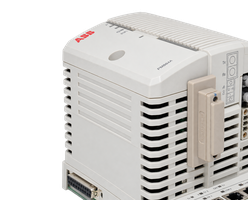
ABB AC31 Series 90 is obsolete, but a failed module does not automatically require an immediate migration. The 07KT98 is a central unit, the 07DI92 is a remote 32-channel digital input module, and the 07AC91 is a configurable remote analog I/O module. They are related spares, not substitutes. A correct replacement depends on the complete ABB order number, installed network, I/O configuration, program backup, wiring, and required recovery time. The base model alone cannot establish compatibility.
The three modules occupy distinct positions in the control system. The ABB Advant Controller 31 Hardware Series 90 manual defines their functions and the configuration details that affect replacement.
| Model | System Role | Documented Function | Main Replacement Risk |
|---|---|---|---|
| 07KT98 | The 07KT98 is the central unit. | The unit executes the application, provides local digital and analog I/O, connects to the CS31 system bus, and supports communication interfaces that depend on the full variant. | A matching base model can still have the wrong network interfaces, and a replacement cannot restore operation without the required application and configuration. |
| 07DI92 | The 07DI92 is a remote digital input module on the CS31 system bus. | The module provides 32 digital inputs at 24 V DC in four electrically isolated groups of eight. | A module with the same input count can still have the wrong bus, isolation arrangement, address usage, or connectors. |
| 07AC91 | The 07AC91 is a remote analog input and output module on the CS31 system bus. | The module supports either eight analog inputs and eight analog outputs at 12-bit resolution or 16 channels configured in pairs at 8-bit resolution. | The wrong operating mode, signal range, switch configuration, or adapter version can change channel behavior. |
At Apter Power, we treat this role map as the beginning of the review. The installed label, system drawings, engineering project, and field configuration determine the actual requirement.
ABB used the 07KT98 designation across several communication combinations, while the shorter 07DI92 and 07AC91 references identify module families rather than complete supplied units. A replacement review therefore needs both the full nameplate identity and the installed configuration.
The 07DI92 and 07AC91 have commonly documented order numbers of GJR5252400R0101 and GJR5252300R0101. Those references remain subject to confirmation from the physical nameplate because a related suffix, revision, modified unit, or adapter has a different compatibility case.
Our part verification process keeps the following records separate:
A catalog image cannot confirm these details. Photographs of the offered unit should show the complete label, front panel, connectors, and any revision markings. Manufacturer documentation should then support the exact variant rather than a visually similar family member.
The communication combination is part of the controller requirement. Documented examples include ARCNET-only versions and variants combining ARCNET with PROFIBUS DP, CANopen, or Ethernet. The installed network determines which interface combination, connector, node setting, and companion hardware must remain available after replacement.
The existing application also depends on that communication design. A replacement with the correct local I/O but the wrong fieldbus cannot resume the same controller role without additional engineering changes.
The nameplate distinguishes the legacy 07AC91 GJR5252300R0101 from the 07AC91-AD and 07AC91-AD2 adapter versions. These devices support different channel arrangements and diagnostics, so their shared base reference does not establish interchangeability.
The 07KT98 replacement carries the highest recovery risk because the unit combines controller execution, local I/O, network interfaces, memory media, and retained system data. The hardware identity and recovery package must be reviewed together.
The full order code should be checked against the physical ports and the network drawings. The review should confirm every interface in use, the controller's bus role, connector type, node or station settings, termination, and any communication coupler attached to the parallel interface.
Unused interfaces still require attention when the site keeps a common spare for several machines. A spare selected for one ARCNET installation may not cover another system that also requires PROFIBUS DP or Ethernet.
A replacement controller does not reconstruct a missing application. The recovery record should identify the current 907 AC 1131 project, user program, retained data, SmartMedia contents, network parameters, I/O map, and any application libraries required by the installed machine.
The condition of the failed CPU affects the recovery path. A site with a verified offline project and recorded parameters can plan a controlled hardware exchange. A site that relies on the failed controller as the only program source first needs a data-recovery assessment and should not assume that a replacement module will solve the outage.
ABB developed AC31 adapter CPUs for several 07KT98 communication combinations, but the adapter path is not a direct transfer of the legacy application. The ABB AC31 adapter guide states that the old AC31 application must be rewritten in Automation Builder because direct import is not available. ABB also notes that the libraries differ and that not every function is supported.
The local digital I/O mix changes as well. The legacy 07KT98 manual lists 24 digital inputs, 16 digital outputs, and eight configurable digital channels. The adapter guide lists 16 digital inputs, 16 digital outputs, and 16 configurable digital channels. The analog count remains eight inputs and four outputs, but the changed digital allocation still requires an application and wiring review.
The 07DI92 performs one defined task, but its replacement still depends on more than the 32-channel count. The module is a remote CS31 input unit, and the controller expects a specific electrical and address arrangement.
The documented 07DI92 contains 32 digital inputs at 24 V DC. The inputs are arranged in four groups of eight, and each group is electrically isolated from the other groups and from the rest of the module. The CS31 bus connection is also electrically isolated from the remaining circuitry.
This grouping can affect field power distribution, fault containment, reference potentials, and wiring. Another 32-input module is not equivalent unless the network, signal voltage, isolation, terminal arrangement, and controller support also match.
The 07DI92 occupies two digital input addresses on the CS31 system bus. The replacement therefore needs the documented module address, bus wiring, controller mapping, and the same relationship between field terminals and application inputs.
An address error can shift or remove input data without changing the physical field wiring. The commissioning check should confirm all 32 channel indications, the controller's input map, module diagnostics, and the process functions affected by those signals.
The 07AC91 requires a configuration-led review because the same legacy module supports two operating modes. The mode determines the number of inputs and outputs, resolution, signal ranges, and address use.
In 12-bit mode, the 07AC91 provides eight analog input channels and eight analog output channels. Each channel can be configured for the voltage or current ranges documented for that mode, including ±10 V and 0 to 20 mA.
In 8-bit mode, the module provides 16 analog channels that are configured in pairs as inputs or outputs. This mode uses 0 to 10 V or 0 to 20 mA ranges. A part number match without the operating-mode record leaves the required channel direction and resolution unresolved.
The module uses DIL switches for operating mode, channel configuration, and addressing. The current switch positions should be photographed and recorded before the existing unit is removed. The field wiring and controller configuration should provide separate confirmation.
An incorrect switch record can assign an output where the application expects an input, select the wrong signal range, or create a different CS31 address. The module may power up while the process values remain invalid, so commissioning must verify each affected loop rather than relying only on the absence of an error LED.
ABB lists two adapter choices for different legacy arrangements. The 07AC91-AD supports a 16-output configuration and does not provide the legacy 16-input option. The 07AC91-AD2 supports eight analog inputs and eight analog outputs. Both adapters also remove the local test button and provide basic diagnostics only.
Neither adapter should be selected from the 07AC91 name alone. The operating mode, channel directions, signal ranges, switch settings, controller configuration, and required diagnostics determine which path deserves engineering approval.
A direct spare makes the most sense when the exact variant is known, a usable backup exists, the surrounding hardware remains serviceable, and recovery speed outweighs future support risk. An adapter or AC500 migration becomes more appropriate as configuration gaps, repeated availability problems, or planned modernization increase the value of engineering change. ABB's AC31 Series 90 lifecycle statement scheduled the product family for transfer to obsolete status after 2015 and recommended migration to AC500.
| Path | Appropriate Situation | Engineering Consequence | Main Risk to Resolve |
|---|---|---|---|
| Verified legacy spare | This path can suit an urgent recovery when the exact variant and a usable backup are known. | The existing software, wiring, and network may require fewer changes when the replacement is genuinely equivalent. | The buyer must resolve condition, traceability, test scope, aging components, included accessories, and future availability. |
| ABB AC31 adapter | This path can suit an installation that needs to retain much of the existing physical arrangement while replacing selected obsolete hardware. | The adapter may preserve the footprint or terminal position, but software, channel behavior, diagnostics, or supported functions may change. | The responsible engineer must review the exact ABB comparison and all documented exceptions. |
| AC500 migration | This path can suit a plant with several exposed AC31 assets, repeated sourcing problems, or a planned modernization window. | The project requires application conversion, hardware design, I/O and network review, testing, commissioning, and updated maintenance records. | The project must control scope, outage time, interface changes, validation, training, and rollback planning. |
The condition label alone cannot establish whether a direct spare is suitable for service. New old stock can still carry age or storage risk, while a refurbished unit may be acceptable when traceability, component condition, inspection scope, functional testing, warranty terms, and actual-unit photographs support the offer.
An adapter can reduce mechanical rework in a documented configuration, but the proposed unit must be reviewed against the exact legacy module. ABB identifies differences in I/O combinations, channel isolation, supported sensor types, diagnostics, interfaces, programming software, and application reuse across the adapter family.
The adapter decision therefore belongs to the site's responsible controls engineer. We can identify and document the proposed hardware, but the installed application and safety requirements determine whether the change is acceptable.
Migration becomes more defensible when several AC31 modules create a common availability risk, an outage window is already planned, engineering files are complete, and the plant can test the converted application before cutover. The migration scope should include every retained field signal, network connection, interlock, alarm, sequence, operator interface, and maintenance procedure affected by the change.
An emergency hardware failure is a poor time to discover that the original project, I/O schedule, or network drawings are missing. A legacy-spares plan and a migration plan can run in parallel, with verified spares protecting near-term operation while engineering prepares the longer-term platform decision.
Apter Power can review a sourcing request more accurately when engineering and purchasing work from the same identification record. Our review begins with the complete part number and then separates configuration evidence from commercial requirements.
A useful RFQ should attach the completed identification record described above and add the commercial requirements that are not part of equipment identification:
The quotation should identify the offered part number, condition, included items, available unit evidence, warranty terms, availability, and estimated dispatch timing. Apter Power can flag an unresolved identifier or configuration difference before the purchasing team releases an order, but final replacement approval remains with the responsible site engineer.
No. The ABB AC31 adapter hardware manual states that replacement devices must not be exchanged under voltage because permanent system damage can result. The work plan should therefore define shutdown, electrical isolation, stored-energy control, ESD protection, wire identification, backup verification, and post-exchange testing according to the applicable ABB manual and site safety procedures.
Only after the card and controller are matched. ABB documents the 5 V 2 MB 07 MC 90 for 07KT98 R01xx and R02xx units, but the 3.3 V 8 MB card only for R02xx units running firmware V5.0 or later. The card order number, voltage, firmware, backup, and media integrity must be confirmed before transfer.
Yes, but only under ABB's replacement conditions. Existing AC31 Series 90 remote I/O can remain with a 07KT98 adapter CPU, but the legacy application must be rewritten in Automation Builder and the local digital I/O allocation changes. Engineering approval should confirm retained modules, CS31 addresses, bus segments, the I/O map, power arrangements, diagnostic functions, and documented exceptions.
Apter Power can review the completed identification record, flag unresolved variant or configuration differences, and document the proposed supply before quotation.
You can send the record and RFQ requirements to sales13@apterpower.com. Our ABB technical resources can support any remaining document checks before the quotation is finalized.


Share your parts list, quantities and required date.
Email your parts list