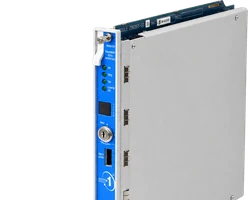
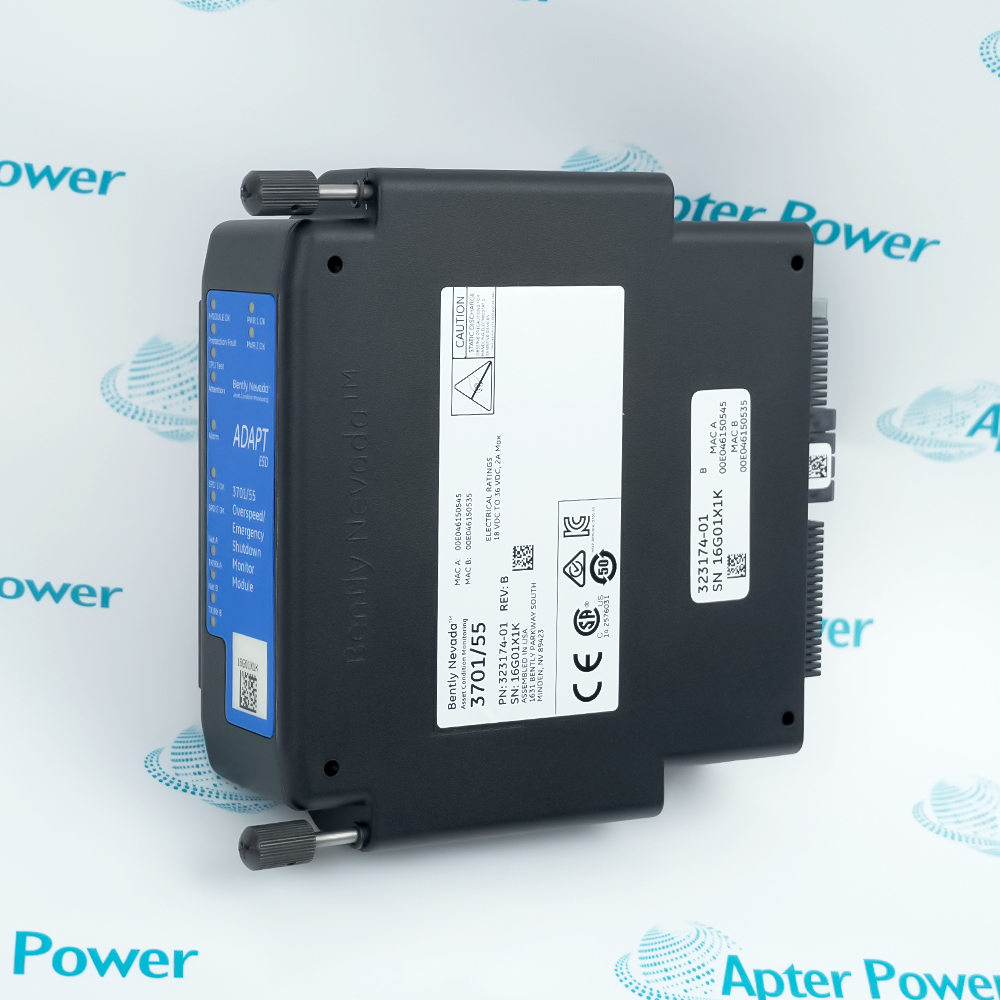
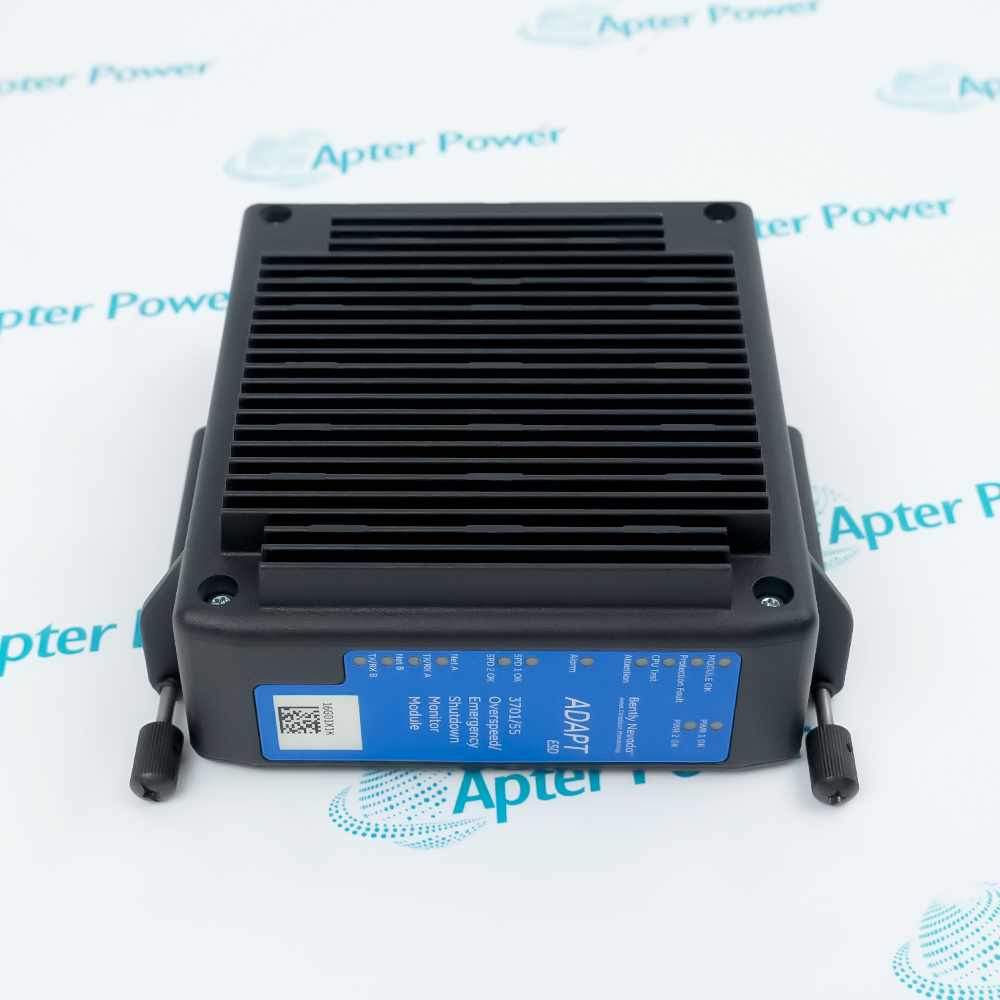
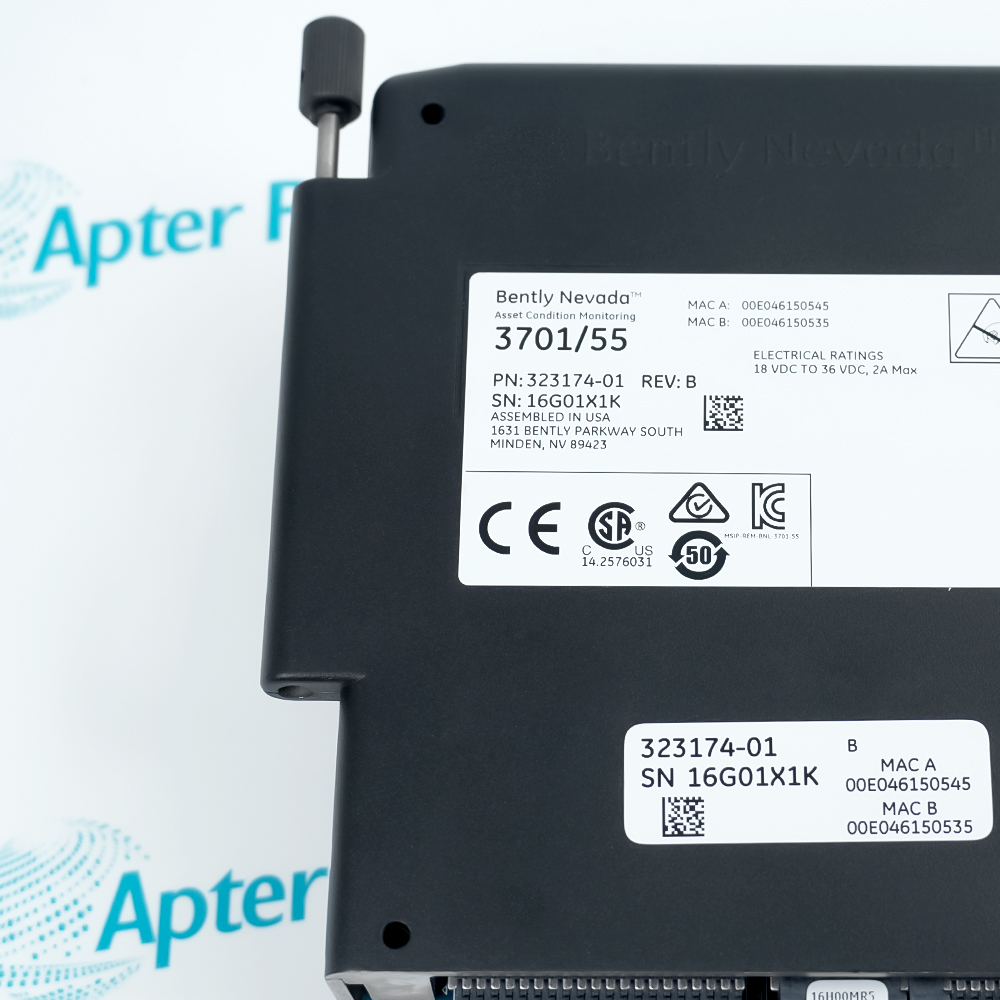
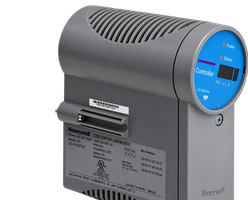
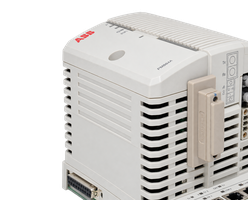
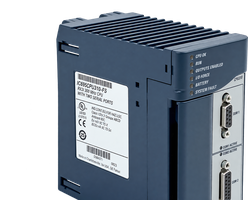
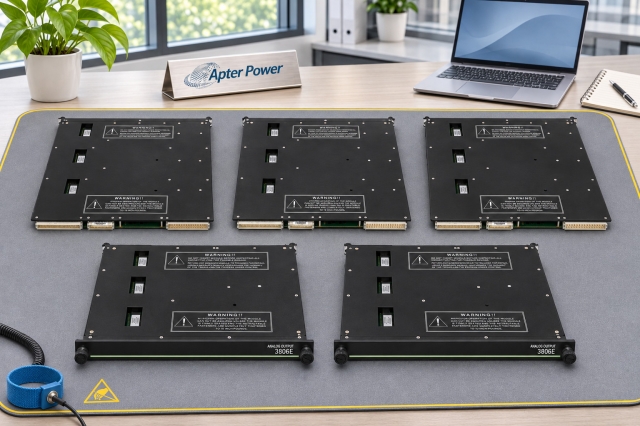
The 3701/55 323174-01 is a high-performance CPU module utilized in ADAPT ESD (Emergency Shutdown) units. It functions as the central processor for the safe emergency shutdown of critical rotating machinery, including steam, gas, and hydro turbines, while delivering exceptionally high availability and fault tolerance.
CE, Machinery Directive
CE, Low Voltage and Electro-Magnetic Compatibility
European ATEX and IECEx Hazardous Area certification pending
The 3701/55 Emergency Shutdown Device, (ADAPT ESD) is a safety PLC with a graphical logic programming interface and integrated overspeed detection. ADAPT ESD is designed for emergency shutdown of rotating machinery such as steam, gas, and hydro turbines, expanders, and other process equipment. ADAPT ESD is a compact, standalone, triple-redundant, safety shutdown device that is designed to meet a broad range of user scenarios and applications. The design offers an electrical and mechanical package with attention to reliability and availability as well as extensive self diagnostics and compliance to industry standards.
Typical (and recommended) applications of the ADAPT ESD will use a triple modular redundant architecture. In this configuration, each processor module physically connects to an array of 32 input channels, 12 of which are configurable as discrete inputs or 4-20 mA analog inputs, as well as two speed inputs. The Bently Nevada Monitor Configuration software allows you to configure large combinations of logic blocks in order to manage the system trip logic.
This logic dictates how the trip mechanisms for the system are driven. The ADAPT ESD system can drive 12 independent trip relays. Of the 12 relays, six of these signals can optionally be configured for two-out-of-three, (2oo3), voting. In the 2oo3 arrangement, the system activates a relay only when any two of the three CPU modules drive to trip. In independent mode, or one-out-of-one voting, any single CPU that drives to trip will cause an assigned relay to activate on the corresponding output card. For the highest safety, the system should be configured in “de energize to trip”, or “normally energized” mode so that loss of power will not result in a machine running unmonitored.
Important Notice: Other accessories, manuals, cables, calibration data, software, etc. are not included with this equipment unless listed in the above stock item description.
Bently Nevada 3701/55 323174-01 ADAPT ESD CPU Module Manuals, Datasheets, Drivers, Link
Important Notice: Other accessories, manuals, cables, calibration data, software, etc. are not included with this equipment unless listed in the above stock item description.
Thermal Power
Serves as the core logic controller for overspeed protection on super-critical steam turbines to execute immediate valve closure during load rejections.
Nuclear Power
Functions as the redundant safety CPU to monitor main feed pumps and execute emergency shutdown sequences under high-safety-integrity regulations.
Petrochemical & Refining
Controls the emergency shutdown sequence of large ethylene cracking gas compressors to mitigate overpressure or mechanical lockup hazards.
Hydroelectric Power
Manages the overspeed sensing and mechanical trip valves of high-head Francis or Pelton water turbines during grid disconnects.
Steel & Metallurgy
Oversees the emergency protection interlocks for blast furnace blower turbines to prevent massive ventilation disruptions.
Geothermal Power Generation
Utilized in geothermal steam expanders to execute rapid fluid diversion and rotor isolation upon high-vibration alarms.
During operation and maintenance, it is critical to ensure the overall system is deployed in the officially recommended Triple Modular Redundant (TMR) physical architecture, with the trip circuits strictly configured in "de-energize to trip (normally energized)" mode to guarantee intrinsic safety.
When performing field logic modifications or commissioning, pay close attention to the status of the built-in hardware configuration lock to prevent accidental trips caused by unauthorized network alterations while the machinery is running.
Furthermore, although this module supports online hot-swapping under the TMR framework, technicians must verify that the remaining two online CPU modules are fully healthy (ensuring a sound 2oo3 voting status) before removal, and the installation environment must be equipped with a high IP/NEMA-rated industrial enclosure to protect the backplane pins from moisture condensation or dust contamination.
The 3701/55 323174-01 is the core central processor module for the Bently Nevada ADAPT ESD emergency shutdown device. Under the officially recommended Triple Modular Redundant (TMR) architecture, each processor physically connects to an array of 32 input channels (12 of which are configurable as discrete inputs or 4-20 mA analog inputs) as well as two speed inputs. Operating through dedicated configuration software to run complex combinations of logic blocks, this module coordinates and drives the system's 12 independent trip relays, six of which support a two-out-of-three (2oo3) safety voting mode (activating only when any two CPU modules drive to trip) or can optionally be configured for independent single-trigger (1oo1) mode. To achieve the highest level of intrinsic safety, the system utilizes a "de-energize to trip" or "normally energized" physical loop strategy, ensuring that the critical machinery is forced into a safe shutdown upon an accidental loss of plant power, thereby eliminating the risk of unmonitored operation.
It is the core CPU processor module for the Bently Nevada ADAPT ESD (Emergency Shutdown Device) system. Operating as the central unit of a safety-certified PLC, it is specifically engineered to provide emergency overspeed protection and failsafe shutdown control for critical rotating machinery like turbines and expanders.
How to correctly install and use safety control components like 3701/55 323174-01?
As part of the ADAPT ESD chassis architecture, this module must be inserted into a dedicated triple-redundant base slot. To utilize it, technicians write graphical 2-out-of-3 (2oo3) trip logic using the Bently Nevada Monitor Configuration (BNMC) software and connect to plant networks via its dual Ethernet ports.
What high-reliability architecture does 3701/55 323174-01 use to guarantee machinery safety?
It supports a Triple Modular Redundancy (TMR) architecture. In an ADAPT ESD system, three identical 323174-01 CPU modules are plugged in to process all inputs and trip logic in parallel, ensuring that the system continues running seamlessly via 2oo3 voting even if one CPU module suffers a physical failure.
How many sensor inputs does a single 3701/55 323174-01 module specifically process?
Within the TMR architecture, each individual CPU module is responsible for independently and parallelly processing all 32 discrete inputs and 12 analog inputs inside the system. Additionally, each single CPU module handles 2 unique speed/overspeed sensor inputs.
How many steps of complex control logic does the 3701/55 323174-01 module support?
Configured via the graphical configuration software, this processing unit can execute up to 500 logic steps, allowing plants to configure highly detailed and complex interlock safety shutdown criteria.
Manufacturers
Supporting new and legacy automation
Whether you're maintaining existing equipment or sourcing parts for current systems, we provide fast, dependable supply you can rely on.
Please try to be as accurate as possible with your search.
We can quote you on 1000s of specialist parts, even if they are not listed on our website.