Speak to a sourcing specialist
sales13@apterpower.com
Get a quick price for CP30
E-mail *
Mobile *
Company
Content *
Quantity *
Upload (gif, jpg, jpeg, png, bmp, doc, docx, xls, xlsx, ppt, pdf, csv)
For more information on how your data is processed and stored by Apterpower please read our privacy policy

What happens after you enquire

  • 1

    Requirement review

    We review the part number, quantity and delivery requirements and ask for any missing details.
  • 2

    Quotation and availability

    We confirm the proposed item, condition, availability, price and estimated lead time in the quotation.
  • 3

    Order confirmation and dispatch

    Once the quotation and purchasing details are agreed, your contact will coordinate the order and available dispatch information.

Technical specifications for CP30

  • Manufacturer:
    Invensys
  • Product Category:
    DCS Systems
  • Spare Part Number:
    CP30
  • Weight:
    1.18 kg
  • Tariff Code:
    8537101190
  • Counliy of origin:
    USA
  • Control functions:
    Regulatory, logic, timing and sequential control
  • I/O connections:
    FBMs, FBCs and supported migration integrators
  • Local Fieldbus:
    Up to 24 FBMs over a redundant bus
  • Extended Fieldbus:
    Up to 64 FBMs through Fieldbus Isolators
  • Diagnostics:
    Power-up, run-time/watchdog and off-line tests

Information

Overview Manuals Common Applications Product Precautions
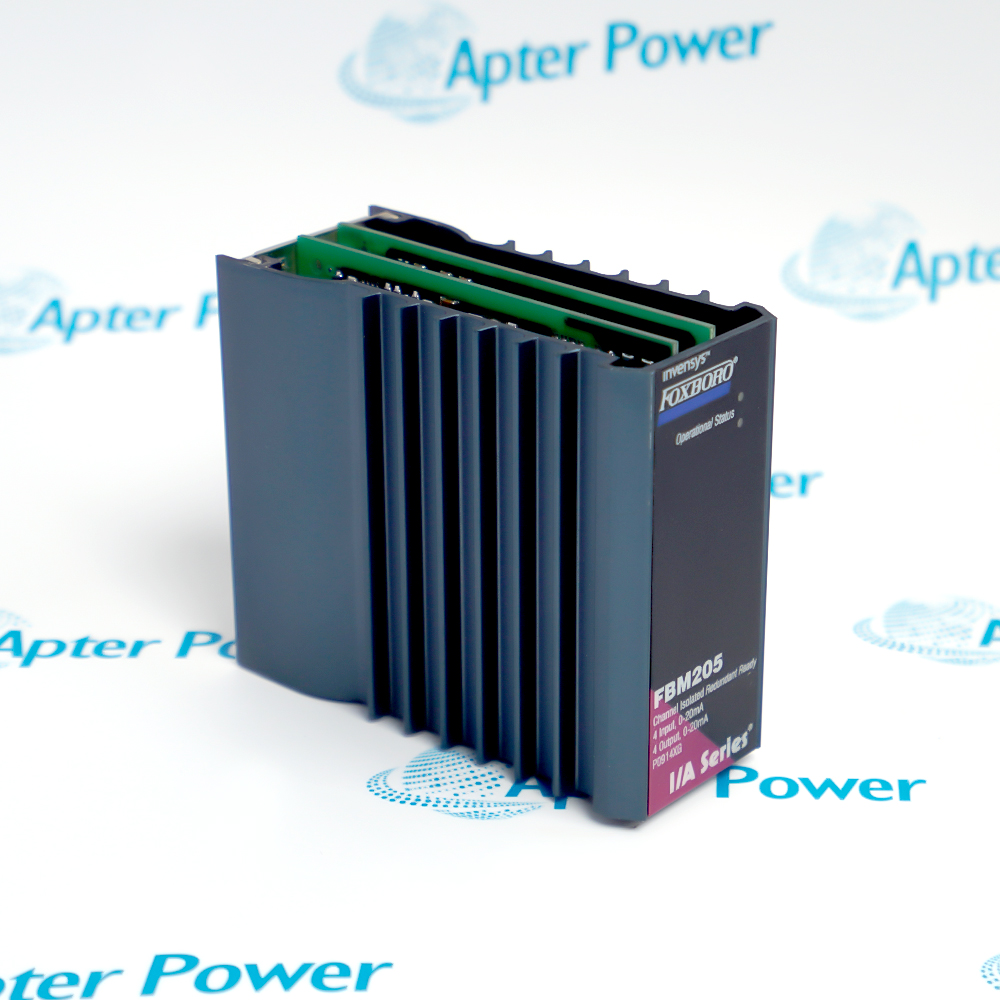
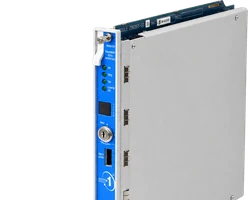
Foxboro CP30 executes regulatory, logic, timing and sequential control while coordinating Fieldbus I/O, alarms and data acquisition.
  • Provides one processor module or an optional fault-tolerant pair for its control processor 30 function.
  • Handles control execution and Fieldbus data through the documented Foxboro system path.
  • Works with the assigned Nodebus and Fieldbus connections.
  • A recessed reset control permits a controlled reboot without removing the module.

The control processor 30 belongs in the controlled Foxboro architecture and works with the assigned Nodebus and Fieldbus connections. Its mating hardware, wiring, database configuration and final response must be checked together before release.

Important Notice: Use CP30 only with the assigned Nodebus and Fieldbus connections; verify every interface and the controlled project configuration before energizing or pressurizing the subsystem.

Foxboro CP30 Manuals & Downloads
Foxboro CP30 Official Technical Reference Excerpt (PDF)Foxboro CP30 Installation & Commissioning Guide (PDF)

The first document covers the product function, system role and technical selection. The installation guide covers identification, connection checks, commissioning and the acceptance record.

System maintenance
Restores the documented control processor 30 function in an existing Foxboro control system.
Signal-path service
Supports controlled testing of control execution and Fieldbus data at the assigned system position.
Planned replacement
Provides an exact-identity replacement path after the assigned Nodebus and Fieldbus connections has been verified.
Commissioning
Allows the responsible engineer to prove configuration, diagnostics and response for one processor module or an optional fault-tolerant pair.
Before installing Foxboro CP30, confirm the documented system, interfaces and controlled configuration.
1
Match the complete CP30 marking to the work order and installed position before removal.
2
Confirm the assigned Nodebus and Fieldbus connections before disconnecting any interface.
3
Keep control execution and Fieldbus data within the documented electrical or pneumatic range.
4
Record terminal designations, polarity, common, shield and cable routing before disconnection.
5
Inspect mounting, connector keying, terminal condition and retention hardware before installation.
6
Restore the controlled database, range, alarm, filter and fail-state settings before energization.
7
Review local indicators and controller diagnostics during the controlled startup sequence.
8
Prove the intended response across one processor module or an optional fault-tolerant pair and record the acceptance result before release.

Technical notes

Use CP30 only with the assigned Nodebus and Fieldbus connections; verify every interface and the controlled project configuration before energizing or pressurizing the subsystem.

FAQ View All FAQ

  • Which control functions run in Foxboro CP30?
    It performs regulatory, logic, timing and sequential control.
  • Which I/O families can Foxboro CP30 coordinate?
    The processor supports Fieldbus Modules, Fieldbus Cluster I/O and the listed migration-integrator families.
  • How many FBMs can connect to the local Fieldbus of Foxboro CP30?
    The redundant local bus supports up to 24 FBMs, excluding expansion modules.
  • What changes when Foxboro CP30 is used in a fault-tolerant configuration?
    Two processor modules operate in parallel with separate Nodebus and Fieldbus connections.
  • Which diagnostics run on the Foxboro CP30 processor?
    Power-up self-checks, continuous run-time/watchdog checks and off-line diagnostics are provided.
  • How is a controlled reboot initiated on Foxboro CP30?
    Use the recessed front reset control according to the approved operating procedure.
  • What configuration data must be preserved before replacing Foxboro CP30?
    Record the station identity, Nodebus and Fieldbus paths, control configuration and fault-tolerant pairing.
  • Which results demonstrate that Foxboro CP30 has returned to service successfully?
    Confirm processor status, I/O communication, alarm handling and execution of the assigned control blocks.
Related reading

Related cases and sourcing guidance

View all case studies
Manufacturers

Product Browsing History

Revisit the products you recently viewed on Apter Power.
SPEAK TO OUR TEAM
Let’s find the right solution for you.
Send us the part number, quantity and delivery destination. Our team will help confirm availability and lead time.
  • Whatsapp: +86 18030235313

    Send us a message.
  • sales13@apterpower.com

    Complete our online form.
  • +86 18030235313

    Speak to our team in your native language.