





Get Parts Quote
Name
Company *
Phone *
Email *
Address
City
State / Province / Region
Zipcode
Country
Quantity *
Part Number *
Manufacturer
Preferred Condition
Additional Information
Cancel
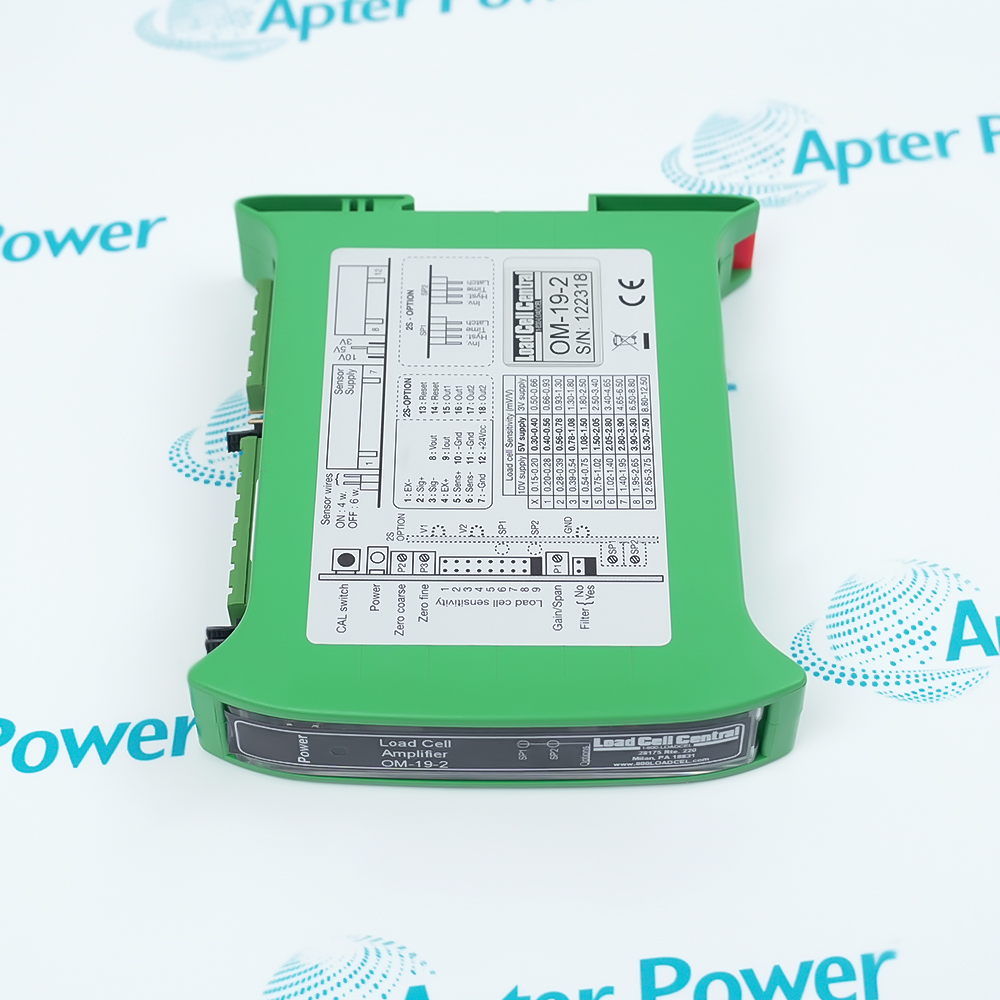
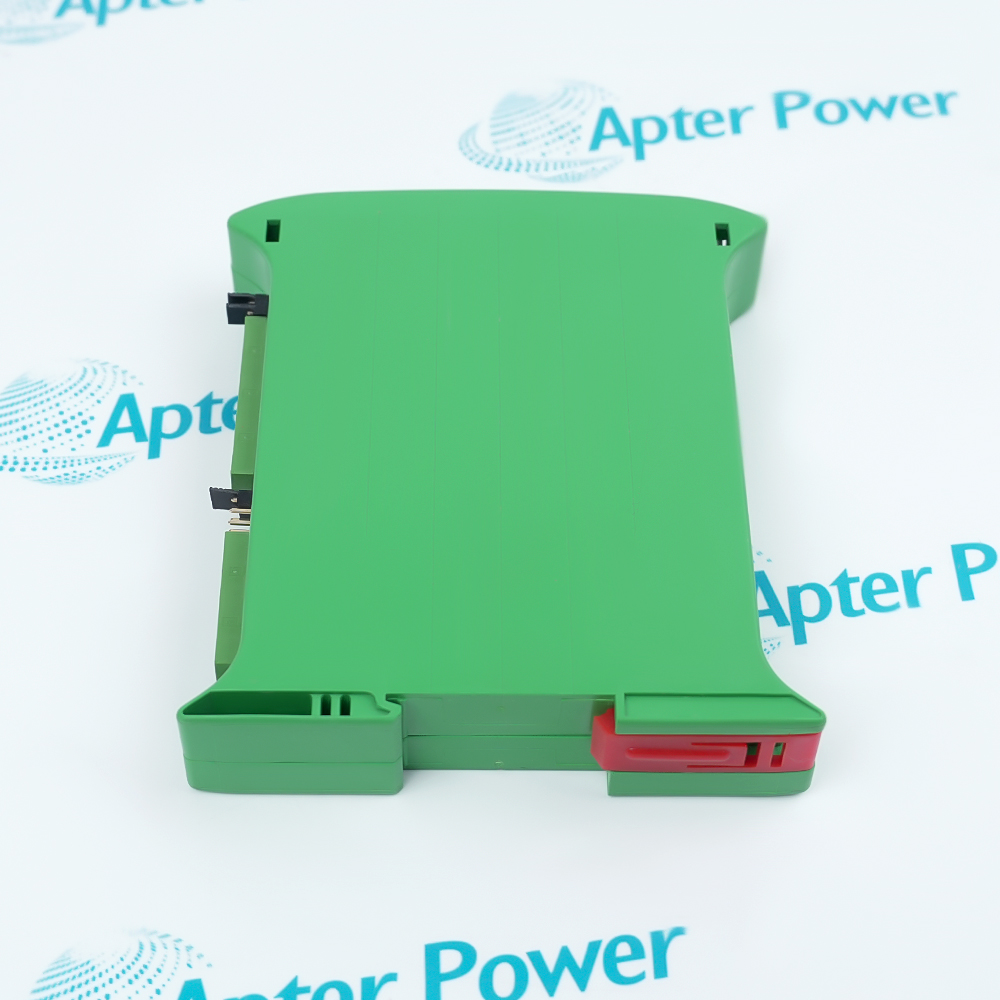
Load Cell Central OM-19-2
Product image is representative; revision or series may vary. Contact us to request a specific version.

OM-19-2

Analog Signal Conditioner
In Stock
Ships by Wednesday, October 14
Fast Shipping Available

Product Describe:

Load Cell Central OM-19-2 is the DIN-rail version of the OM-19 analog signal conditioner for strain-gauge load cells, with voltage and 4-20 mA outputs.

Ask our team:

Get a quick price for: OM-19-2
Quantity*
Upload (gif, jpg, jpeg, png, bmp, doc, docx, xls, xlsx, ppt, pdf, csv)
For more information on how your data is processed and stored by Apterpower please read our privacy policy.

Technical specifications for OM-19-2

Technical specifications for OM-19-2

  • Manufacturer:
    Load Cell Central
  • Product Category:
    General Automation
  • Spare Part Number:
    OM-19-2
  • Estimated shipping dimensions:
    11.8x10x2.2cm
  • Weight:
    0.1 kg
  • Tariff Code:
    8537101190
  • Counliy of origin:
    USA
  • Mounting version:
    DIN rail
  • Sensor technology:
    Strain-gauge load cell
  • Sensor wiring:
    4 or 6 wires
  • Load-cell capacity:
    Up to 4 x 350 ohm; excitation limits apply
  • Standard supply:
    24 +/-4 V DC
  • Maximum supply current:
    120 mA (OM-19)
  • Sensor excitation:
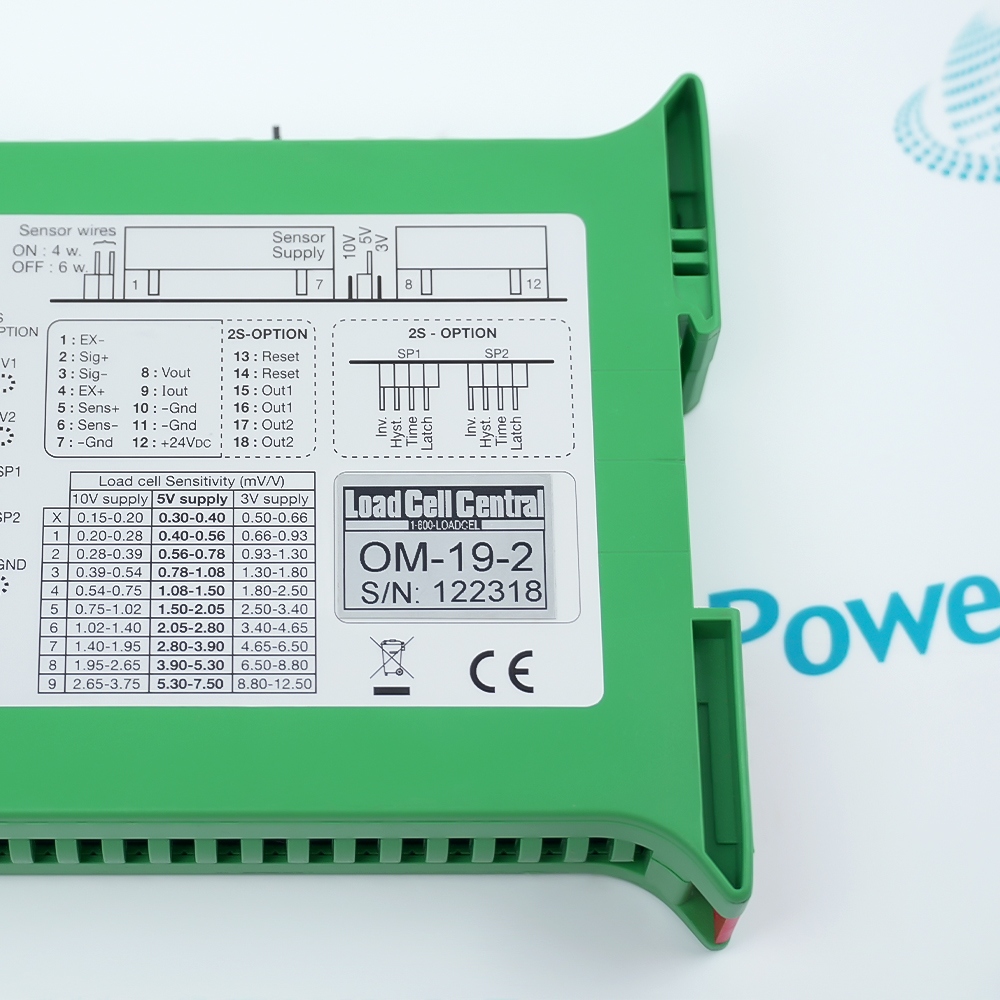
    3, 5 or 10 V DC, jumper selected
  • Minimum bridge impedance at 3/5 V:
    80 ohm
  • Minimum bridge impedance at 10 V:
    160 ohm
  • Span adjustment:
    0.15 to 12 mV/V
  • Voltage output:
    +/-10 V or 0-10 V
  • Current output:
    4-20 mA
  • Voltage-output load:
    At least 2000 ohm
  • Current-output load:
    At most 500 ohm
  • Maximum output capacitance:
    1 nF
  • Accuracy class:
    0.05%
  • Zero temperature effect:
    At most 0.035% FS per degree C
  • Span temperature effect:
    At most 0.02% per degree C
  • Operating temperature:
    0 to +70 C
  • Jumper-selected low-pass filter:
    10 Hz at -3 dB
  • Bandwidth:
    At most 20 kHz
  • Calibration control:
    Shunt-calibration push button

Information

Information

Overview Manuals Common Applications Product Precautions
Load Cell Central OM-19-2 is the DIN-rail version of the OM-19 analog signal conditioner for strain-gauge load cells, with voltage and 4-20 mA outputs.
  • Connects four- or six-wire strain-gauge load cells
  • Provides jumper-selected 3, 5 or 10 V excitation
  • Offers zero, span and sensor-sensitivity adjustments
  • Includes a shunt-calibration push button

The load-cell bridge connects to the sensor input; the conditioned voltage or current signal connects to a receiver with the appropriate input impedance. Excitation and combined bridge impedance must be checked together.

Important Notice: Match the DIN-rail version, sensor wiring, excitation, output load and installed options. Two relay set points belong to the separate OM-192S option; do not assume they are fitted to OM-19-2.

Load Cell Central OM-19-2 Manuals & Downloads
Load Cell Central OM-19-2 Technical Reference (PDF)Load Cell Central OM-19-2 Manufacturer Signal Conditioner Data (PDF)

The technical reference maps the sensor path, excitation limits and configuration decisions. The manufacturer datasheet identifies the DIN-rail version, wiring controls, electrical limits and separately ordered options.

Bridge-signal conditioning
Converts strain-gauge load-cell signals into the supported voltage and current output formats.
Analog receiver interface
Connects to a voltage or current receiver while retaining its corresponding output-load limit.
Multiple load-cell acquisition
Supports up to four 350-ohm cells when the selected excitation and combined impedance remain within limits.
DIN-rail instrumentation
Uses the OM-19-2 DIN-rail construction rather than the board-only or housing variants.
Review the Load Cell Central sensor-connection and setting data before work. Match OM-19-2, the installed supply option and the connected bridge and receiver before applying power.
1
Put the connected measuring process into its approved maintenance state before wiring work.
2
Check the installed supply configuration before applying power: standard 24 +/-4 V DC is distinct from the 12 V option.
3
Match the four-/six-wire selector to the connected strain-gauge sensor.
4
Check the combined bridge impedance against the selected 3, 5 or 10 V excitation.
5
Match the receiving circuit to the voltage or 4-20 mA output and its load limit.
6
Record sensor sensitivity, zero/span settings and the filter-jumper position before changing them.
7
Do not assign OM-192S relay functions to a unit without the separate set-point option.
8
Verify the configured analog response and retain the final settings in the measurement record.

Technical notes

Technical notes

Minimum combined bridge impedance is 80 ohm at 3/5 V excitation and 160 ohm at 10 V. The 12 V supply option limits voltage output to +/-5 V or 0-5 V; it is not the standard 24 V configuration.

FAQS

  • How does excitation selection affect OM-19-2 bridge loading?
    Use a combined bridge impedance of at least 80 ohm with 3 or 5 V excitation. Selecting 10 V raises that minimum to 160 ohm.
  • Can four 350-ohm load cells be connected in parallel to OM-19-2 at 10 V?
    Four equal 350-ohm bridges in parallel present 87.5 ohm. That is below the 160-ohm minimum for 10 V excitation, so the four-cell arrangement must not be treated as valid at that setting.
  • What receiver loading must be checked for OM-19-2 voltage and current outputs?
    The voltage receiver must present at least 2000 ohm; the 4-20 mA circuit must stay at or below 500 ohm. Output capacitance is limited to 1 nF.
  • Does OM-19-2 include two alarm relays as standard?
    No. The two-relay set-point board is identified as the OM-192S option, separate from the OM-19 analog conditioning board.
  • Which OM-19-2 controls are available for calibration adjustments?
    Zero and span adjustments are provided alongside sensor-sensitivity selection. A separate push button applies the shunt-calibration signal.
  • Is the 10 Hz filter permanently enabled on OM-19-2?
    No. Filtering has a Y/N selection and is engaged by a jumper. The selected low-pass characteristic is 10 Hz at -3 dB.
  • How is a six-wire sensor distinguished from a four-wire sensor on OM-19-2?
    The board has a four-/six-wire sensor selector. Match that setting to the connected sensor wiring rather than leaving it unverified.
  • Can the optional 12 V OM-19-2 configuration retain a +/-10 V output?
    No. The 12 V supply option limits voltage output to +/-5 V or 0-5 V; the standard supply specification is 24 +/-4 V DC.
Trusted by 5,000+ plants worldwide | Backed by our vast inventory of top-tier control parts, modules and cards, fast shipments are dispatched to cover your urgent needs. ABOUT US >>
Disclaimer: We are not an authorized distributor or distributor of the product manufacturer of this website, The product may have older date codes or be an older series than that available direct from the factory or authorized dealers. Because our company is not an authorized distributor of this product, the Original Manufacturer`s warranty does not apply.While many DCS PLC products will have firmware already installed, Our company makes no representation as to whether a DSC PLC product will or will not have firmware and, if it does have firmware, whether the firmware is the revision level that you need for your application. Our company also makes no representations as to your ability or right to download or otherwise obtain firmware for the product from our company, its distributors, or any other source. Our company also makes no representations as to your right to install any such firmware on the product. Our company will not obtain or supply firmware on your behalf. It is your obligation to comply with the terms of any End-User License Agreement or similar document related to obtaining or installing firmware.

We’re Here When You Need Us

From product insights to customer service needs, our experienced service team will focus on getting you what you need quickly

Enquire

Complete our online form.

Call Us

Speak to one of our team.

Live Chat

Send us a message.