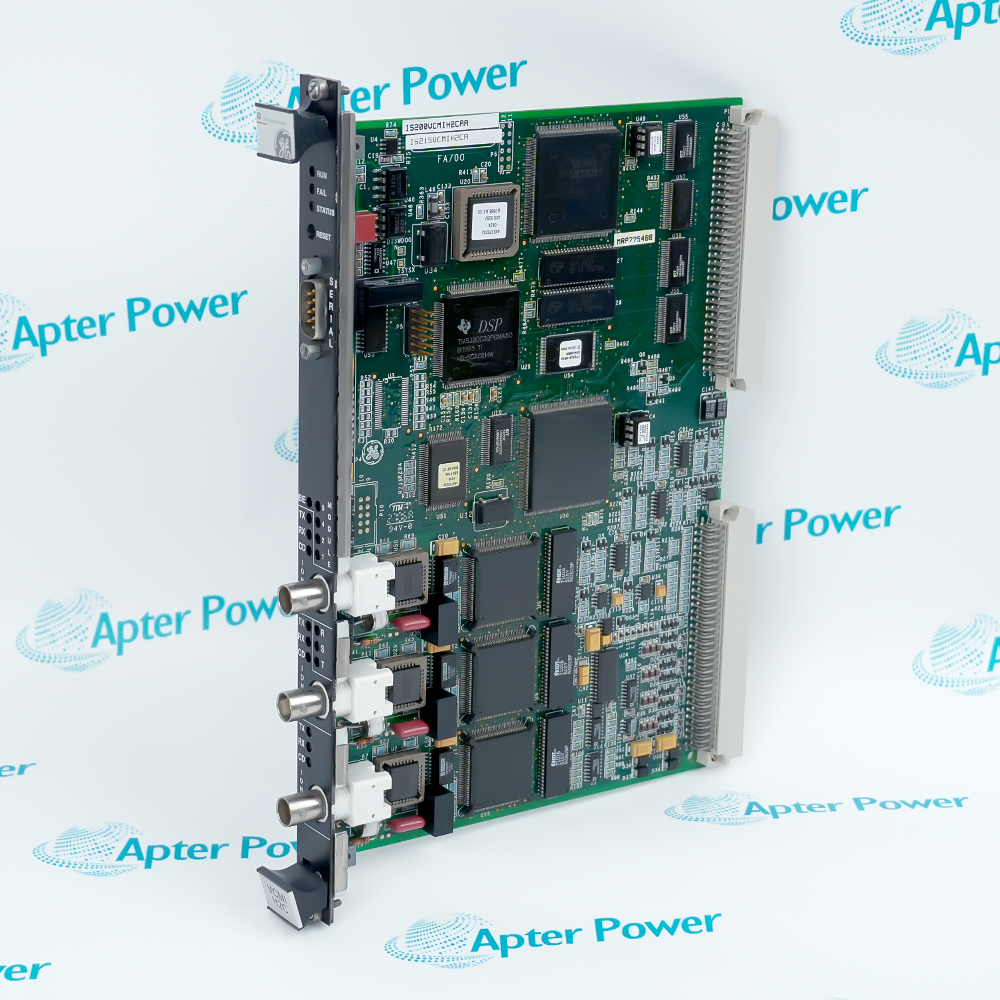
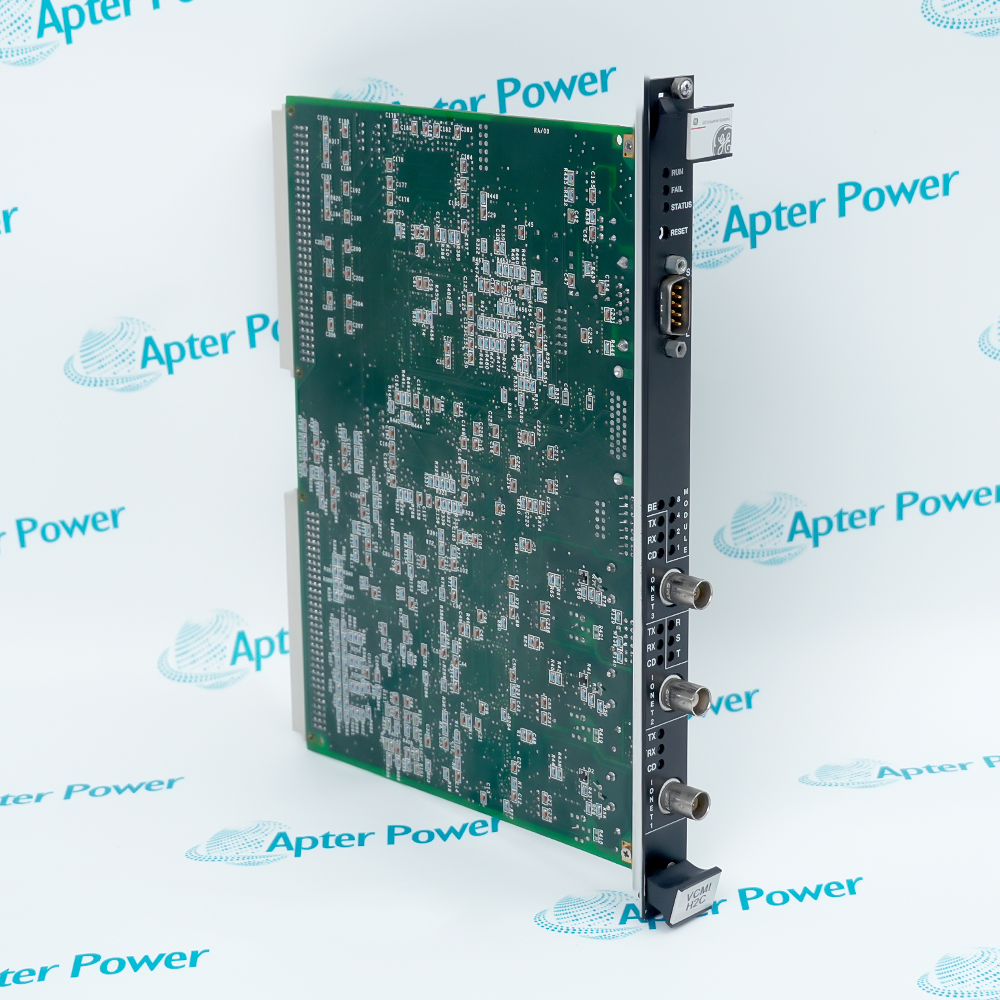
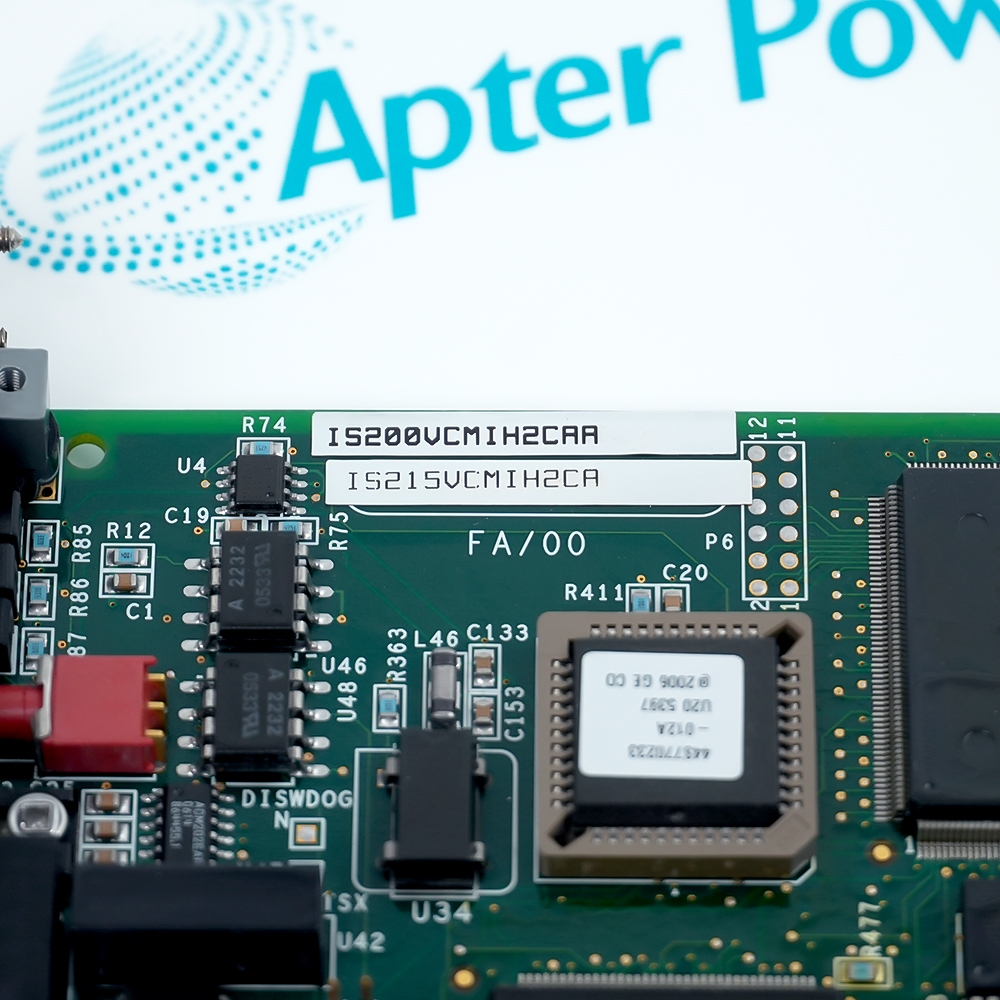
Acts as the Mark VI rack communication coordinator, linking the controller, I/O networks and the VME backplane.
- Signal or energy path: It manages controller-to-I/O message exchange, maintains rack and terminal-board identity information, and provides diagnostic visibility for the communication path.
- Companion components: Use only with the approved Mark VI VME rack, controller hardware, I/O-network devices, terminal boards and coaxial or serial interfaces documented for the project.
- Engineering check: Confirm the complete board label, rack slot, network topology, frame timing and installed redundancy architecture before replacement.
- System boundary: Board compatibility is controlled by the exact Mark VI rack architecture, communication media and redundancy design.
Gas-turbine, steam-turbine and generator auxiliary control systems using the legacy Mark VI platform.
Important Notice: Verify the complete IS200VCMIH2CAA IS215VCMIH2CA nameplate, installed-system documentation, companion hardware and current GE Vernova instructions before installation or replacement.
Apter Power IS200VCMIH2CAA IS215VCMIH2CA Manuals and Guides
Important Notice: The first link is the product-parameters PDF prepared only from the cited manufacturer information; the second link is the Apter Power product manual. Confirm the physical nameplate, current manufacturer documents, and host-system requirements before installation or replacement.
TMR turbine-control rack communication
Provides three IONet paths for the R, S and T channels while exchanging I/O data over the VME backplane.
Local and remote I/O coordination
Links the controller to local I/O and to additional I/O racks on IONet, each remote rack using its own VCMI.
Rack identity management
Manages the IDs of rack boards and their associated terminal boards as part of the configured Mark VI topology.
Power-distribution diagnostics
Monitors internal supply rails and configured PDM/J301 status signals to support control-rack diagnostics.
Read and follow the current GE Vernova documentation and host-equipment instructions before work. Verify the complete physical nameplate and system configuration.
1
Verify the full physical nameplate and do not publish IS200VCMIH2CAA and IS215VCMIH2CA as a guaranteed pair without photographic evidence.
2
Confirm H2 hardware is required; H1 has one IONet port while H2 has three.
3
Match the board ID, firmware, configuration compatibility code, rack number and I/O topology before installation; GEH-6421M lists mismatch and offline alarms for these conditions.
4
Maintain correct 10Base2 IONet cabling and termination for every used R/S/T channel, and investigate rather than mask communication-loss alarms.
5
Treat the unit as legacy Mark VI hardware and use the site-specific GE documentation set and approved outage/replacement procedure.