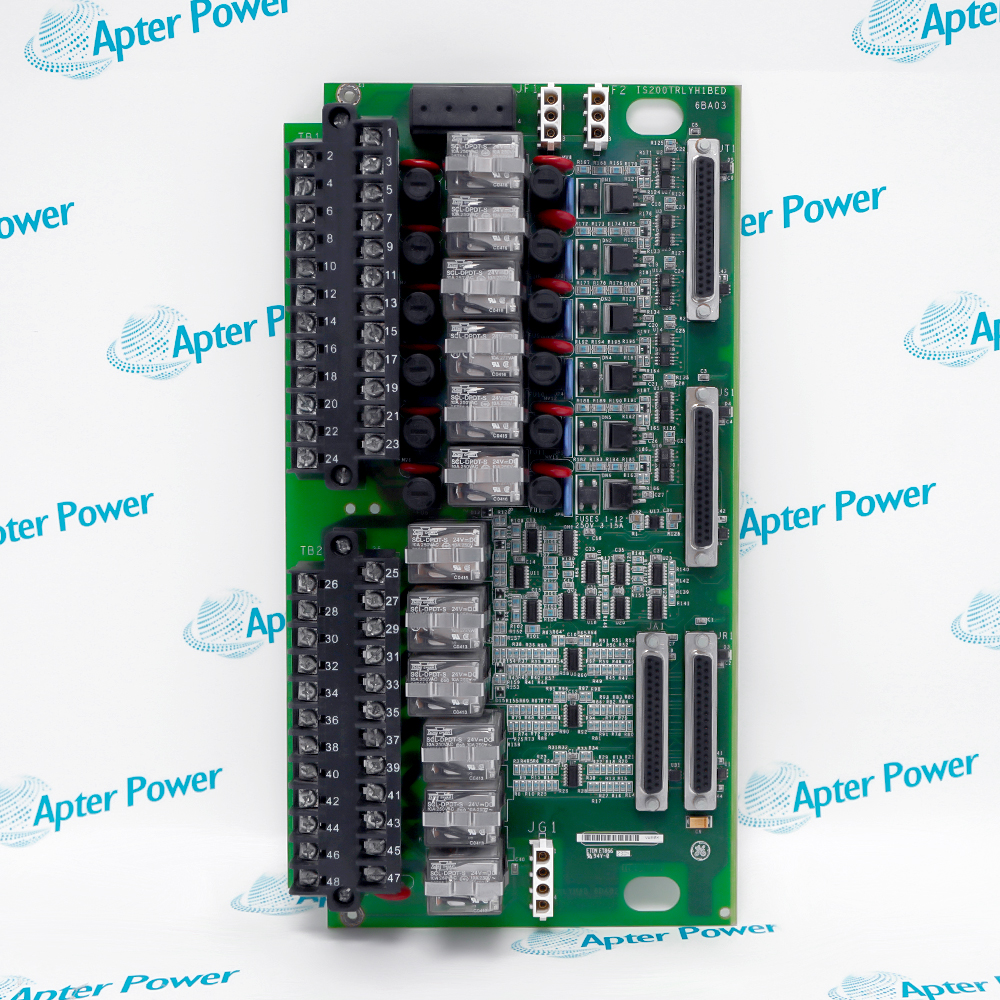
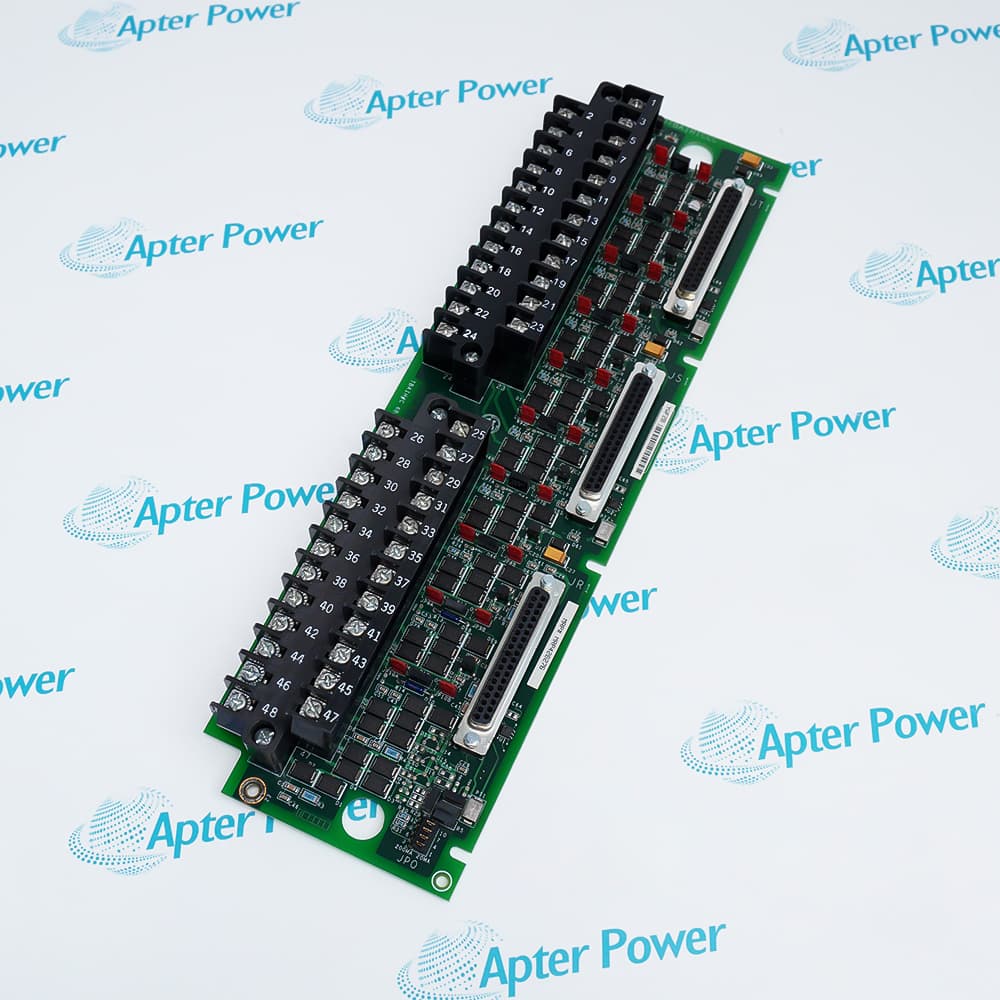
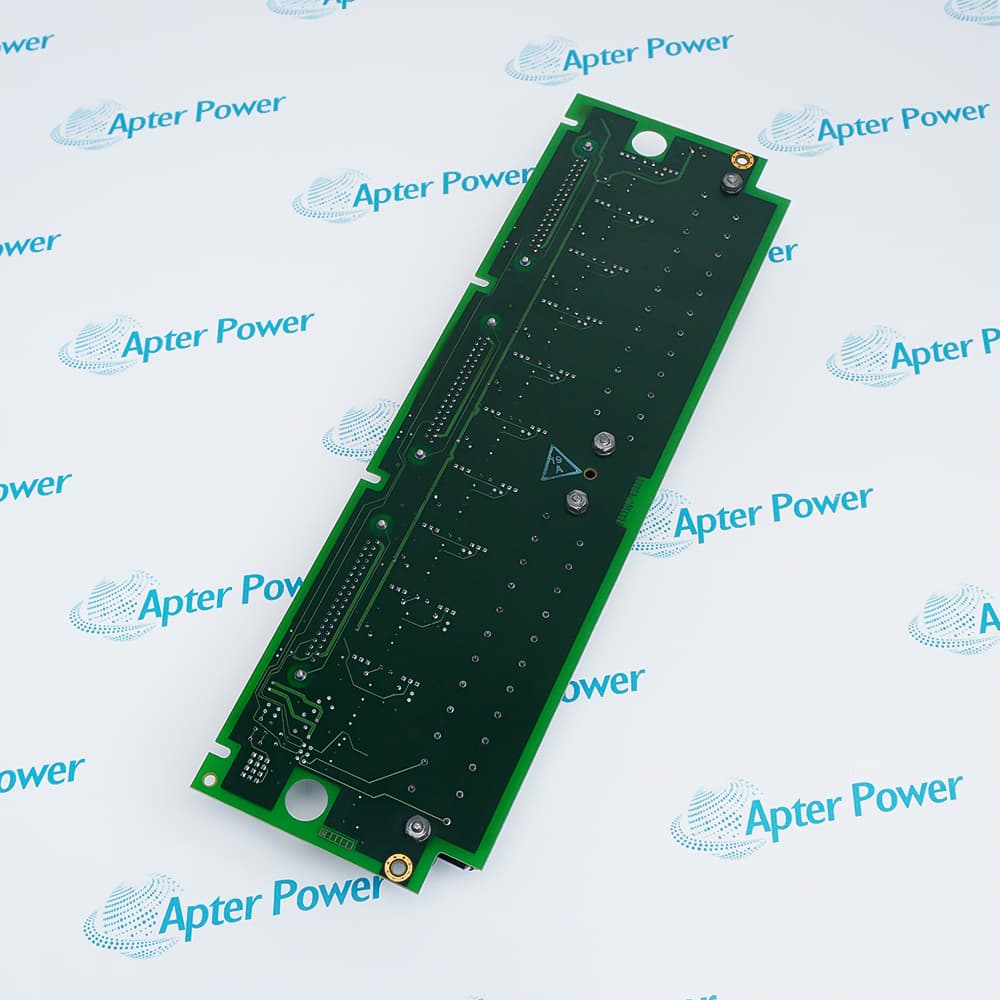
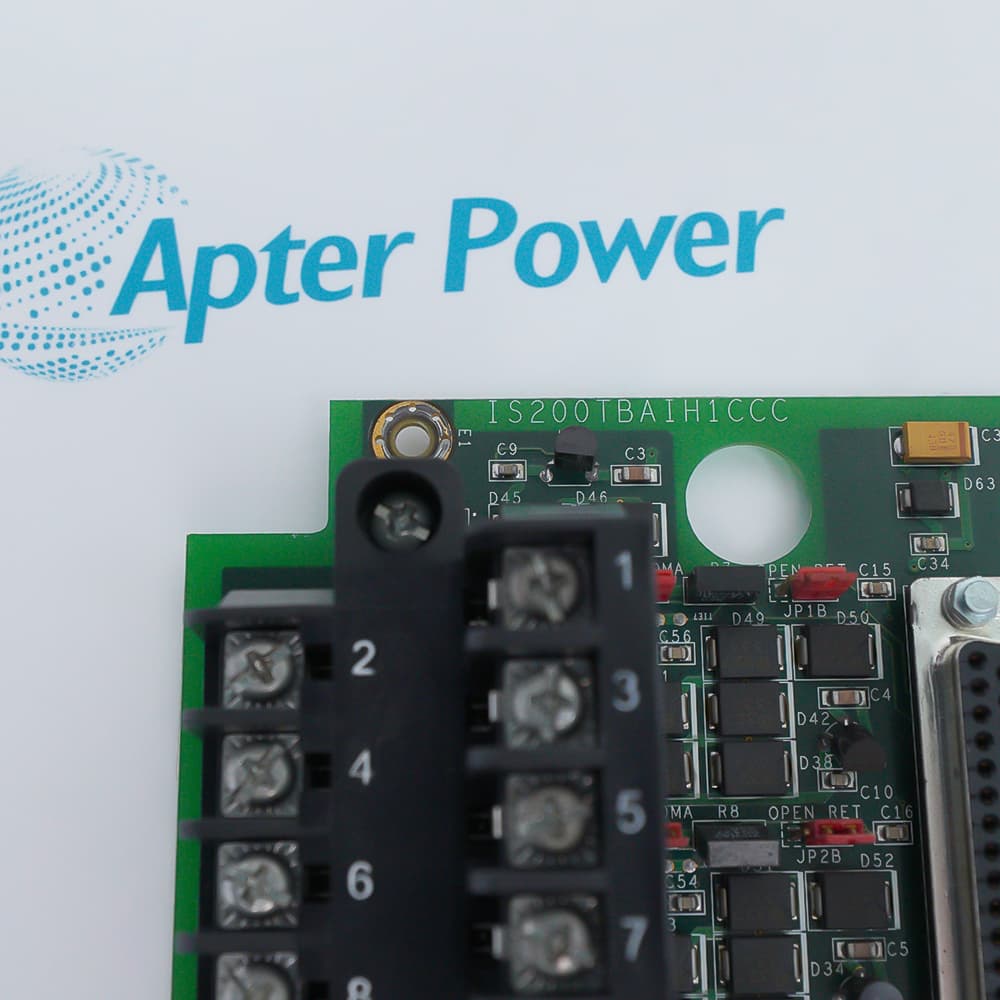
The IS200TBAIH1CCC is an analog terminal board designed by GE for the Mark VI speedtronic system. It serves as an interface for analog input/output signals. These boards are often available as new factory-sealed or refurbished, with availability frequently listed on industrial supply sites.
- Mark VI Speedtronic
- Analog Input Terminal Board
- Noise Suppression and Protection
This terminal board supports multiple analog channels, allowing simultaneous connection of several field devices. Its design maintains signal integrity, reduces interference, and ensures precise data acquisition for process control and automation applications.
Important Notice:
Other accessories, manuals, cables, calibration data, software, etc. are not included with this equipment unless listed in the above stock item description.
GE IS200TBAIH1CCC Analog terminal board Manuals, Datasheets, Drivers, Link
Important Notice: Other accessories, manuals, cables, calibration data, software, etc. are not included with this equipment unless listed in the above stock item description.
This circuit board mainly serves as the interface between field devices and the main controller:
Signal acquisition: Supports up to 10 analog inputs and can receive signals from 2-wire, 3-wire, 4-wire, or externally powered transmitters.
Signal output: Provides 2 analog outputs, typically configured for 0-20 mA or 0-200 mA current output.
Protection and noise resistance: Integrated specialized noise suppression circuit to prevent surge and high-frequency noise interference, ensuring the accuracy of signal transmission.
System cooperation: usually works in conjunction with VAIC analog input cards to process feedback from gas or steam turbine sensors.
By integrating high-frequency noise suppression circuits and magnetic bead filters in each input channel, electromagnetic interference (EMI) in industrial environments is effectively blocked, and overvoltage protection is provided using metal oxide varistors (MOVs) or similar surge absorbing components to prevent transient high voltage impact from damaging the backend I/O processor;
In addition, the board has short-circuit limitation and overcurrent protection functions for on-site transmitter power supply. In TMR redundancy mode, it also uses diode sharing logic to ensure that a single channel power supply does not interfere with each other in case of a fault, thus building a sturdy physical barrier between high-precision analog signal transmission and harsh industrial electrical environments.