Industrial automation thrives on precision. Keeping systems running requires attention to detail and high-quality components. Operators seeking longevity from their control systems must prioritize consistent care. Proper handling of ABB spare parts protects investments and secures continuous production.
ABB Modules in Industrial Automation
Modern industrial landscapes rely heavily on distributed control systems to manage complex processes. The S800 I/O series functions as a critical link between central controllers and field devices. These units handle signals regulating everything from automotive assembly lines to chemical processing plants. Reliability remains non-negotiable in such high-stakes environments. An unexpected failure costs money, halts production, and disrupts supply chains. Keeping these units in prime condition allows facilities to operate without interruption.
The architecture of the S800 system permits installation close to sensors and actuators. Such placement reduces cabling costs but exposes the hardware to harsher field conditions compared to control room environments. Vibration, temperature fluctuations, and electromagnetic interference constantly test the durability of the electronics. Consequently, a proactive maintenance strategy becomes the only way to guarantee consistent performance over a lifecycle that often spans decades.
A Closer Look at ABB DI810 and AI810 Modules
Two specific units appear frequently in control cabinets across the United States. Understanding the engineering behind the DI810 and AI810 helps technicians perform better diagnostics and repairs.
The DI810 functions as a 16-channel digital input module. It features 24 V DC inputs divided into two individually isolated groups of eight. Separate voltage supervision for each group enhances diagnostics. If process voltage disappears in one group, the error signal alerts the operator immediately. Such segregation prevents a single field fault from compromising the entire module. The input channels utilize current sinking logic and feature internal current limiting components. These design choices protect the circuitry from surges, yet external wiring faults can still stress the internal protections.
The AI810 serves as an analog input module with 8 channels. It accepts either voltage or current inputs, offering flexibility for various sensor types. In current mode, the input resistance sits at 250 ohms. A key feature involves the module's ability to withstand short circuits to the transmitter supply up to 30 V DC. Current limiting resistors protect the internal circuitry during such events. The module also includes an optical isolation barrier, which separates the field circuitry from the bus logic. Such isolation is vital for preventing ground loops and maintaining signal integrity in electrically noisy environments.
Common Issues Faced by ABB Modules
Electronic components degrade over time due to physical and environmental factors. Heat builds up in cabinets, drying out electrolytic capacitors. Dust accumulation acts as a thermal insulator, trapping heat further and raising the operating temperature of sensitive chips. High humidity can lead to microscopic corrosion pathways on printed circuit boards, resulting in intermittent short circuits.
For the AI810, a frequent error involves an "overflow" reading. Technicians often mistake the error for a card failure. Usually, an open circuit between the sensor and the module causes the issue. The logic interprets zero current in a 4-20mA loop as an out-of-range value. Verifying the continuity of the field wiring often resolves the problem without requiring a replacement part.
Corrosion poses another silent threat. Industrial atmospheres containing sulfur or chlorine attack gold-plated contacts on the backplane connectors. The S800 series generally carries an ISA-S71.04 G3 corrosion protection rating. However, extreme pollution can still penetrate the casing. Once the backplane connection oxidizes, communication with the controller becomes unstable, leading to random system trips that are notoriously difficult to diagnose.
Proven Maintenance Tips for DI810 and AI810
Routine care prevents most failures before they impact production. Cleanliness constitutes the first line of defense. Dust accumulation creates thermal blankets on components, preventing proper heat dissipation. Using a vacuum with an anti-static nozzle removes debris effectively. Technicians should avoid using compressed air if it contains moisture or oil, as these contaminants can damage the electronics.
Tightening terminal connections prevents intermittent signal loss. Vibration loosens screws on the termination units over time. A scheduled torque check secures the electrical path. For the DI810, verifying the voltage levels on the input channels guarantees the logic distinguishes correctly between a high and low state.
Grounding protocols demand strict adherence. Proper shielding prevents signal noise from interfering with sensitive analog inputs on the AI810. Ground signal cable shields at one end only—typically at the cabinet entry. Grounding at both ends creates a path for circulating currents caused by ground potential differences. These loops introduce noise that the system may interpret as fluctuating process values.
Troubleshooting ABB Modules Effectively
LED indicators on the front panel provide the first clue during a fault. The DI810 displays Fault (F), Run (R), and Warning (W) lights. A lit "F" indicator signals a hard fault, often pointing to an internal failure or a complete loss of communication with the controller. A flashing "R" indicates the module is powered but not yet configured.
If a module behaves erratically, try reseating the unit. Sliding the module out and pushing it back in wipes the backplane contacts, removing minor oxidation layers. If the error persists, swap the module with a known good unit. If the problem stays with the slot, the issue lies in the mounting base or the internal bus wiring. If the problem moves with the module, the unit likely requires replacement.
The S800 system supports hot swapping. Technicians can replace a module while the rest of the cluster runs. Turning the lock switch to the unlock position deactivates the specific unit. Such capability permits maintenance without stopping the entire production line, a crucial feature for continuous process industries.
Preventive Maintenance Strategies to Extend Lifespan
Controlling the operating environment extends the life of electronic hardware significantly. The ambient temperature should stay between 0°C and 55°C. Temperatures exceeding this range accelerate the aging of capacitors and solder joints. Cabinet fans and filters require regular checks to maintain adequate airflow.
Managing humidity prevents condensation. Moisture bridges circuits, leading to shorts. Desiccant packs or cabinet heaters help manage moisture levels in damp environments. Installing corrosion coupons in the rack room allows maintenance teams to monitor air quality. These strips change color if corrosive gases are present. If corrosion is detected, installing chemical scrubbers becomes necessary to preserve the electronics.
Inventory management also plays a role. Storing a DI810 for years without power can degrade its capacitors. Rotating spare stock by installing spare units into the active system periodically keeps the components conditioned. Such practice guarantees the spare will function correctly when needed.
Benefits of Proper ABB Module Care
Taking care of hardware saves money. Preventing an unexpected shutdown preserves production targets and avoids the massive costs associated with lost batches. It also reduces the need for emergency rush orders, which often come with premium shipping fees.
Reliable equipment protects personnel. Malfunctioning inputs can fail to trigger safety interlocks, exposing workers to hazardous machinery. A well-maintained system runs more efficiently, providing accurate data for process control. Accurate analog inputs from the AI810 allow the system to optimize raw material usage and energy consumption, leading to better overall plant efficiency.
How to Choose Reliable ABB Module Suppliers
When a part fails, sourcing a replacement becomes urgent. However, the market contains risks. Counterfeit parts often lack the precise tolerance and safety testing inherent to original equipment manufacturer (OEM) standards. Illicit imitations can introduce unpredictable behaviors, ranging from signal noise to catastrophic thermal events.
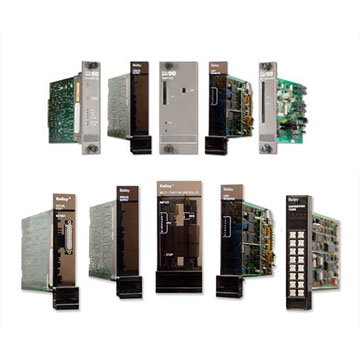
Facilities managers must verify the authenticity of every module introduced into the rack. Suppliers such as Apter Power specialize in securing legitimate automation components. We focus on discontinued and hard-to-find legacy systems, bridging the gap for plants running older architectures. Our inventory includes over 30,000 parts, covering the DI810, AI810, and components for series like Advant OCS and Bailey INFI 90.
Obtaining parts through reputable channels often secures a 12-month warranty. Such a guarantee provides a layer of financial and operational security that gray-market alternatives cannot offer. Apter Power tests refurbished units to verify inputs and outputs function within factory tolerances before shipment. Whether sourcing a legacy processor board or a standard I/O card, supply chain integrity remains as vital as the maintenance procedures themselves. Accessing Apter Power's catalog at connects operators with genuine hardware and expert support.
Why Maintenance Matters for ABB Modules
Consistent attention to hardware details secures long-term productivity. Clean environments, regular inspections, and accurate diagnostic interpretation form the foundation of a healthy automation system. Partnering with trusted suppliers like Apter Power guarantees access to critical inventory and warranty support. Investing time in care today prevents costly failures tomorrow.
FAQs
Q1: How do I resolve an "overflow" error on an AI810 module?
A: The "overflow" message typically indicates an open circuit in the field wiring rather than a module failure. Check the continuity of the cable between the sensor and the terminal block. Also, verify that the sensor is powered and functioning correctly.
Q2: Can I replace a DI810 module while the system is running?
A: Yes, the S800 I/O system supports hot swapping. You must turn the lock switch on the module to the unlock position before removing it. The switch disconnects power to the module logic, allowing safe removal without disturbing the rest of the I/O cluster.
Q3: What is the maximum operating temperature for these modules?
A: The standard operating temperature range sits between 0°C and 55°C. For vertical mounting in compact termination units, the limit drops to 40°C to allow for proper heat dissipation.
Q4: Where can I find replacements for discontinued ABB parts?
A: Specialized suppliers like Apter Power stock a vast range of discontinued and legacy components. They offer both new and refurbished parts with warranties, providing a reliable source for older systems.
Q5: How often should I clean my control cabinets?
A: The frequency depends on the environment. In clean rooms, annual cleaning suffices. In dusty or industrial settings, quarterly inspections and vacuuming are recommended to prevent thermal buildup.


 Videos
 News
News Applications






Leave Your Comment