Industrial processes rely heavily on the continuous rejection of heat. Cooling tower systems facilitate the regulation of these thermal loads, yet their mechanical components present unique diagnostic challenges. The 190501 Velomitor CT overcomes the physical limitations of standard sensors, providing precise data essential for asset protection in these demanding low-frequency applications.
The Physics of Low-Frequency Vibration
Most rotating machinery in an industrial plant operates at speeds between 1800 and 3600 RPM. At these frequencies, standard accelerometers perform admirably, generating strong, clear signals proportional to the forces at play. However, the large fans found in cooling towers operate in a completely different regime, typically rotating between 90 and 300 RPM.
The relationship between acceleration and frequency creates a significant obstacle for standard instrumentation. Acceleration amplitude decreases proportional to the square of the frequency. Consequently, a mechanical fault generating a dangerous velocity level at 100 RPM produces an acceleration signal so weak it often falls below the noise floor of the monitoring system. A standard 100 mV/g accelerometer might output less than one millivolt in response to a serious vibration event at these speeds.
The electrical noise floor of a typical industrial monitoring system sits around 1 to 2 millivolts. When the vibration signal from an accelerometer is also 1 millivolt, distinguishing the machine condition from background static becomes impossible. The 190501 Velomitor CT addresses the issue through its fundamental design as a vibration sensor measuring velocity. Velocity data remains robust at low frequencies. Instead of a fractional millivolt signal, the Velomitor CT outputs a strong voltage—typically 100 mV/in/s (3.94 mV/mm/s)—that stands well above the electrical noise floor. Low-speed measurement demands high signal fidelity, and the device delivers it through internal signal conditioning, granting a signal-to-noise ratio improvement of nearly two orders of magnitude.
Internal Integration: A Superior Approach
Reliability engineers sometimes attempt to use standard accelerometers and convert the signal to velocity within the monitoring software. While theoretically possible, the approach introduces severe data quality issues. Mathematical integration naturally amplifies low-frequency noise. Thermal transients or triboelectric noise generated by cable movement get magnified alongside the vibration signal, resulting in a phenomenon known as "ski-slope" distortion. The spectrum becomes swamped with artificial low-frequency energy, obscuring the true mechanical condition of the fan.
The Velomitor CT utilizes a piezoelectric sensing element coupled with an intricate internal integration circuit. The integration occurs immediately at the point of measurement, before the signal traverses hundreds of feet of cable. The onboard electronics filter out thermal noise and stabilize the output, providing a clean velocity signal that accurately reflects the mechanical energy of the machine. Such a design eliminates the "ski-slope" effect, granting analysts a clear view of the fan's running speed and its harmonics.
Engineered for Corrosive Environments
The interior of a cooling tower represents one of the most aggressive environments in the industrial landscape. The air is saturated with moisture, often reaching 100% humidity. Furthermore, the water treatment chemicals used to prevent biological growth—typically chlorine or bromine—create a corrosive mist that attacks standard metals.
Standard 304 stainless steel, while resistant to rust, often succumbs to pitting and stress corrosion cracking when exposed to chlorides over extended periods. The 190501 housing utilizes 316L stainless steel. The addition of molybdenum to the 316L alloy enhances its resistance to chloride attack, preventing the pitting that compromises lesser materials. The sensor is hermetically sealed, protecting the sensitive internal electronics from the pervasive moisture.
The connection point often serves as the Achilles' heel of any outdoor instrumentation. The 190501 mitigates the risk through the use of a robust 2-pin MIL-C-5015 connector. When coupled with an IP67-rated cable assembly and sealed with silicone grease, the interface becomes impervious to the constant deluge of water. Such attention to detail in the connector design prevents the moisture intrusion that typically leads to intermittent signal faults and "not-ok" alarms.
The Role of Reliable Distribution
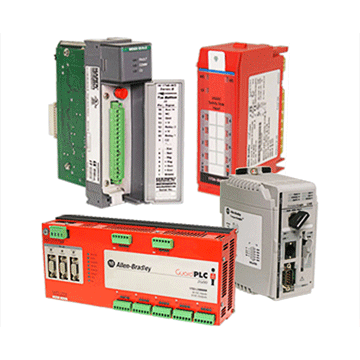
Securing specialized instrumentation often poses a logistical challenge, particularly for facilities managing aging assets or seeking to upgrade legacy monitoring systems. Apter Power functions as a critical node in the global supply chain for industrial automation. As a leading supplier of PLC, DCS modules, and drive components, Apter Power provides the essential link between manufacturers and end-users.
The industrial landscape is constantly evolving, with manufacturers frequently updating product lines. Finding support for older systems or sourcing specific revisions of a sensor can be daunting. Apter Power excels in the research and supply of discontinued and surplus systems, bridging the gap between legacy infrastructure and modern supply availability. Their extensive catalog includes over 30,000 different automated parts, offering a vital resource for engineers tasked with keeping aging plants operational.
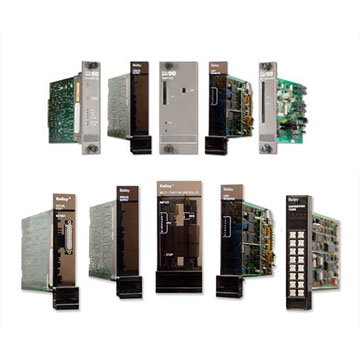
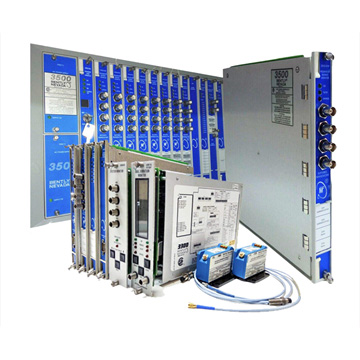
Their mission focuses on delivering automation hardware with excellent quality and rapid transportation methods. For a maintenance manager facing a cooling tower outage, the ability to source a specific vibration sensor like the 190501 quickly is paramount. Apter Power maintains an inventory that supports the urgent needs of the industry, offering a reliable channel for procuring Bently Nevada parts and other automation solutions. Their expertise in handling discontinued and hard-to-find components offers a safety net for plants striving to maintain high availability.
Targeting Cooling Tower Faults
The frequency response of the 190501 is tailored specifically to the kinematics of cooling tower machinery. The device provides a flat frequency response down to 3.0 Hz (180 CPM) and usable data down to 1.5 Hz (90 CPM). Such a range is critical for detecting the most prevalent failure mode: fan unbalance.
Blade degradation, scale buildup, or water ingress into hollow blades can shift the center of mass. As the fan rotates, the heavy spot creates a rotating force vector. On a slow-turning fan, the frequency of the force is equally low. A sensor blind to frequencies below 10 Hz would miss the fault entirely until secondary damage occurred. The Velomitor CT captures the fundamental 1X running speed clearly, allowing for early balancing corrections.
Misalignment across the composite driveshaft is another common issue. The long shafts connecting the motor to the gearbox must accommodate thermal growth and movement. Excessive misalignment generates significant reaction forces, often appearing at 1X and 2X running speed. The sensitivity of the Velomitor CT to these low-frequency velocity components allows maintenance teams to identify alignment drift before it damages the composite couplings or the gearbox input bearings.
While the primary focus often rests on the fan, the gearbox requires equal scrutiny. Gear mesh frequencies appear at much higher ranges, often calculated as the number of teeth multiplied by the RPM. The Velomitor CT offers a frequency response up to 900 Hz (54,000 CPM), sufficient to capture the mesh frequencies of many cooling tower gearboxes alongside the low-speed fan data. The single sensor thus provides comprehensive coverage of the entire drive train.
Solid-State Reliability vs. Moving Coil
Historically, low-frequency monitoring often relied on moving-coil velocity sensors. These electromechanical devices used a magnet suspended on springs inside a coil wire. While effective at generating a velocity signal, moving-coil sensors contain moving parts subject to wear and fatigue. The springs eventually sag or break, leading to calibration drift and sensor failure.
The 190501 Velomitor CT is a solid-state piezoelectric device. It contains no moving parts to wear out. The piezoelectric crystal possesses a theoretically infinite fatigue life, providing stable calibration over years of service. Such reliability reduces the maintenance burden on the instrumentation team, who would otherwise need to frequently access the hazardous interior of the tower to replace failed electromechanical sensors.
Best Practices for Implementation
Maximizing the benefit of the sensor requires correct installation. The gearbox represents the primary monitoring point, as it endures the forces from both the fan and the motor. Sensors should be stud-mounted directly to the gearbox casing, positioned to measure in the radial direction relative to the shaft. Stud mounting ensures the precise transmission of mechanical energy from the machine to the sensor, avoiding the dampening effects associated with magnetic mounts or adhesives.
Grounding also demands attention. Ground loops can induce 50 or 60 Hz hum into the signal, obscuring the vibration data. The 190501 features an isolated case design, electrically separating the internal electronics from the machine ground. Technicians must connect the cable shield to the instrument ground at the monitor end only, preventing circulating currents from contaminating the measurement.
Hazardous Area Compliance
Safety regulations in petrochemical and power generation facilities often classify cooling towers as hazardous locations due to the potential presence of flammable gases. The 190501 carries multiple agency approvals, including CSA Class I, Division 1 and 2, and ATEX Zone 0/1. These certifications verify that the device will not act as an ignition source, allowing for safe deployment in volatile environments where standard industrial sensors would violate safety codes.
Why Low-Frequency Velocity Sensors Are Essential for Cooling Towers
Effective condition monitoring hinges on capturing accurate data. The 190501 Velomitor CT provides the low-frequency sensitivity and environmental robustness required for cooling towers. Through internal signal integration and durable construction, the device transforms imperceptible movements into actionable insights. Sourcing these critical components from dependable partners like Apter Power guarantees that facilities can maintain the vigilance necessary to prevent costly downtime and secure long-term operational success.


 Videos
 News
News Applications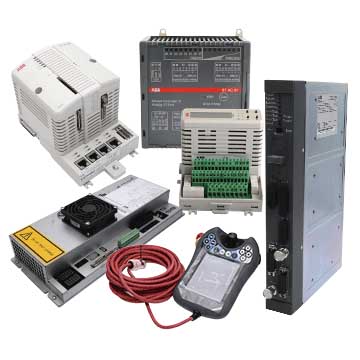







Leave Your Comment