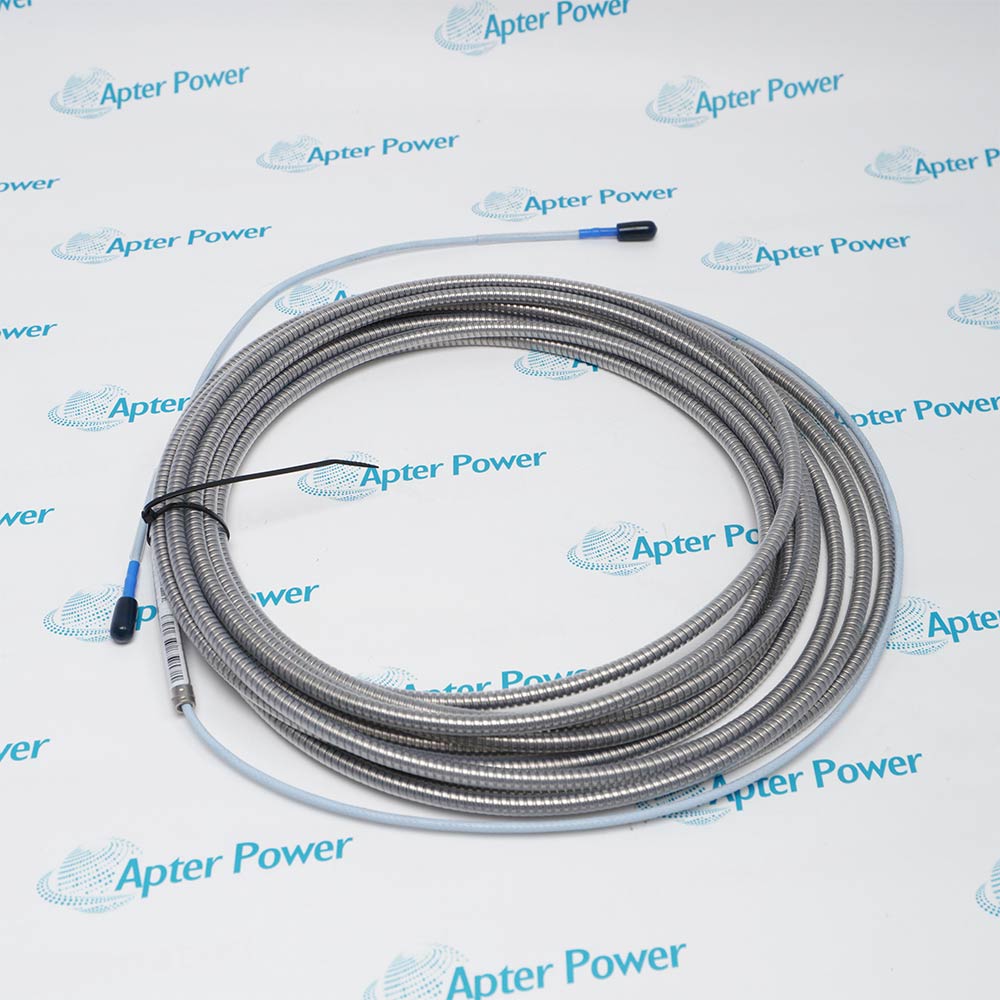
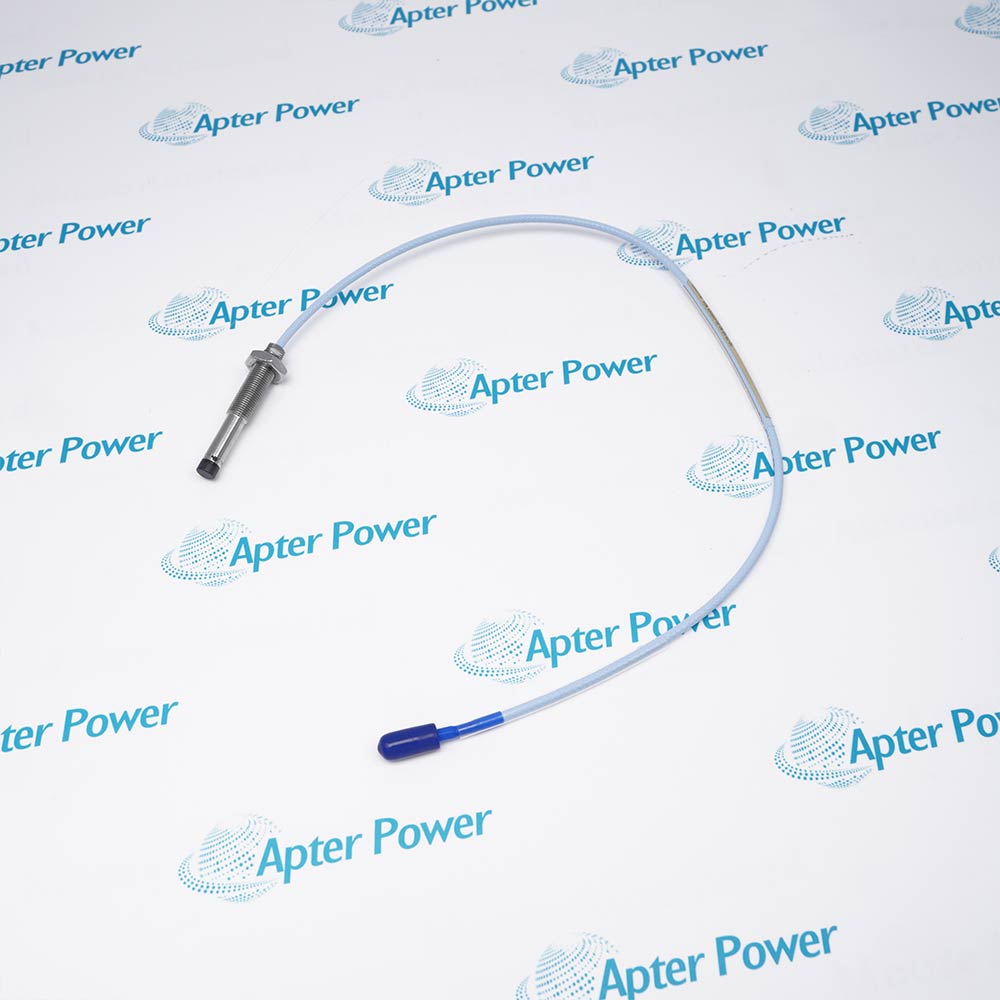
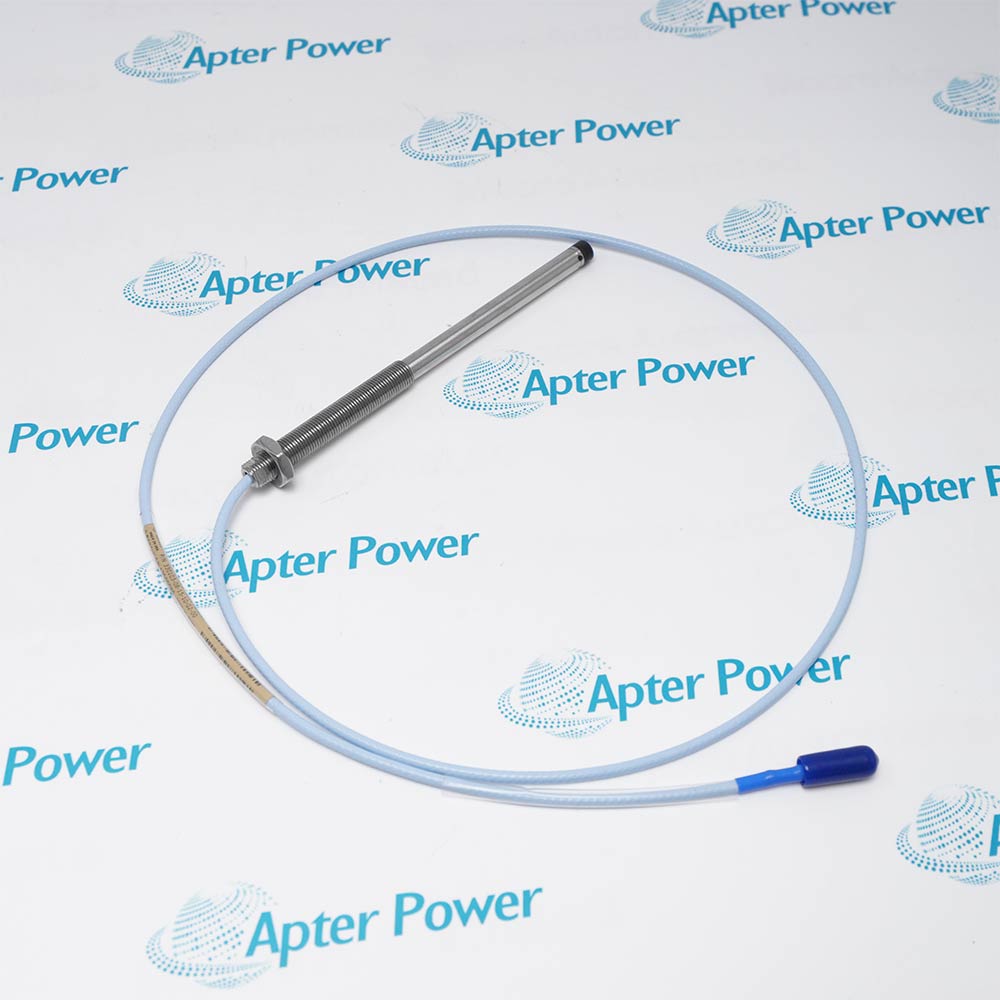
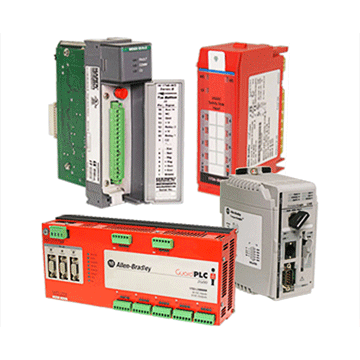
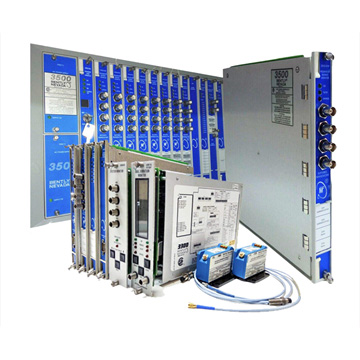
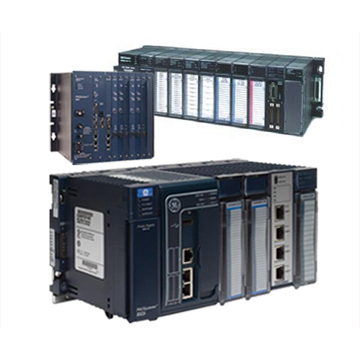
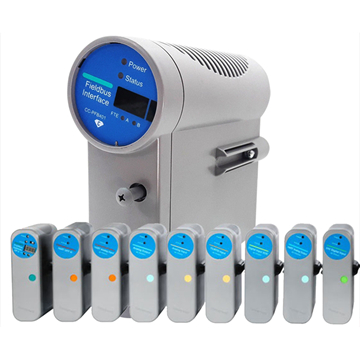
With more than 30.000 high-quality spare parts, they can be sold immediately. Our large inventory allows us to quickly meet customer needs, thereby reducing downtime and protecting production schedules. Our timely delivery time provides you with security and save money.
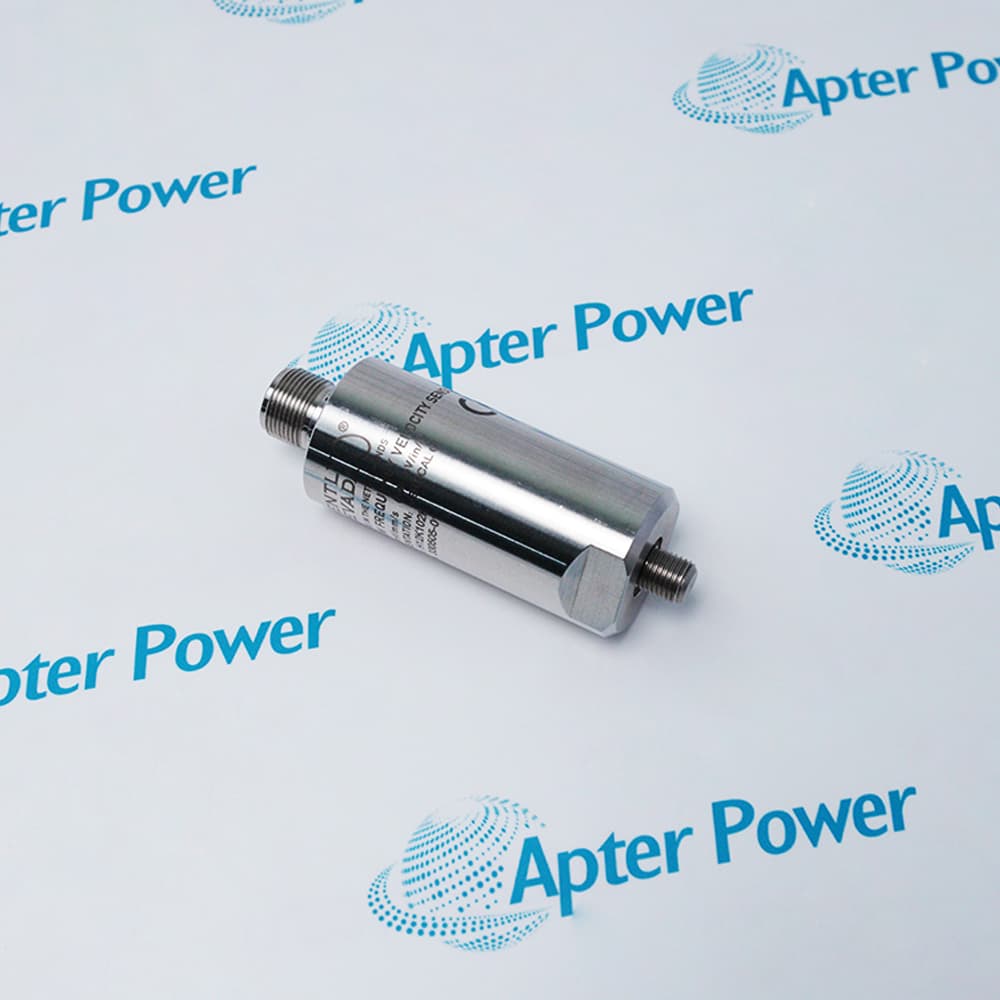
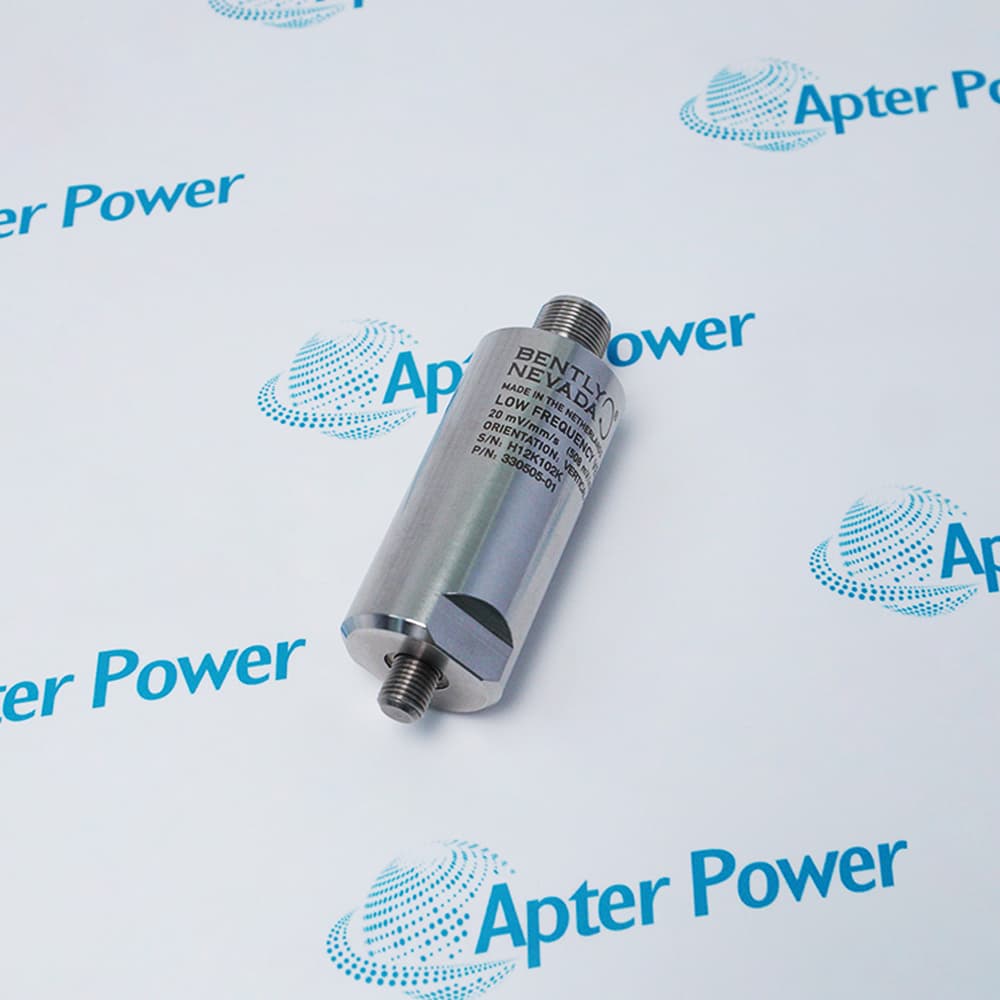
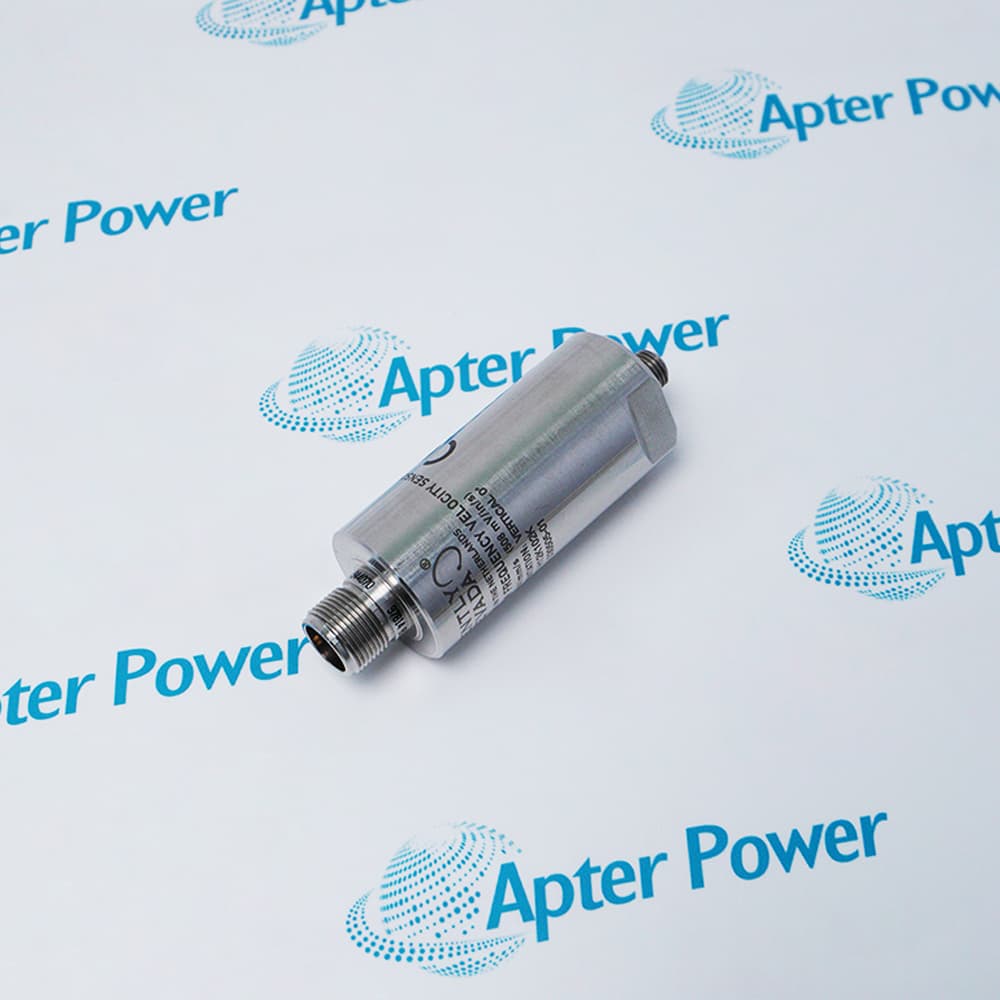
The 330505-01-02-02 is a low-frequency velocity sensor manufactured by. This component functions in low-speed industrial machinery, such as hydro-generator sets, to monitor the low-frequency mechanical vibration of non-rotating parts, including casings, bearing housings, and stator cores.
Utilizes a specific moving-coil technology
Attenuation-free long-distance transmission enabled by embedded signal conditioning
The entire enclosure housing is constructed of 300-series stainless steel with a hermetically sealed, fusion-welded encapsulation
The Bently Nevada 330505 Low Frequency Velocity Sensor is specifically designed for hydroelectric turbines where slow rotating speeds require detecting a low signal to noise ratio. It detects vibration of the stator core, stator frame, and bearing housing supports. It is designed to provide early warning of pending machinery problems and to help you diagnose problems before they become serious.
The sensor measures absolute vibration within the 0.5Hz to 1.0kHz range. Its two-wire design uses moving-coil technology and embedded signal conditioning circuitry to provide a voltage output directly proportional to the vibration velocity. Stator core and stator frame vibration can cause fretting and damage to the winding insulation.
To detect these problems before serious damage occurs, mount a 330505 sensor on the outer diameter of the stator core and frame. Bearing housing vibration can distort levels of vibration measured by shaft-observing proximity probes. To detect premature failure of machine components and prevent significant machine problems, place 330505 sensors in locations that measure both shaft-relative and bearing absolute vibration signals. You can mount 330505 sensors to the bearing housing either as a stand-alone measurement or in the same orientation as existing proximity sensors.
Important Notice: Other accessories, manuals, cables, calibration data, software, etc. are not included with this equipment unless listed in the above stock item description.
Bently Nevada 330505-01-02-02 Low Frequency Velocity Sensor Manuals, Datasheets, Drivers, Link
Important Notice: Other accessories, manuals, cables, calibration data, software, etc. are not included with this equipment unless listed in the above stock item description.
Hydroelectric Power Generation Industry
Monitors low-frequency absolute vibration of non-rotating frameworks in hydro-generator units to evaluate structural foundation stability.
Thermal Power Generation Industry
Measures the horizontal or vertical absolute vibration velocity of bearing housings on steam turbine-generator sets.
Nuclear Power Generation Industry
Serves as the physical interface to extract absolute vibration characteristics of structural components on conventional island steam turbines and core circulating water pumps.
Wind Power Generation Industry
Monitors low-frequency swaying of low-speed main shaft bearing housings and towers in direct-drive or large doubly-fed wind turbine units.
Petrochemical and Refining Industry
Measures the mechanical vibration velocity of machinery casings on large centrifugal compressors, reciprocating compressors, and unit foundation platforms.
Iron and Steel Metallurgy Industry
Performs foundation vibration analysis for blast furnace high-pressure centrifugal blowers, sintering fans, and gearbox casings.
When installing the 330505-01-02-02 low-frequency velocity sensor, it must be strictly maintained within the nominal vertical or horizontal inclination range of 0° ±10° and tightened to the officially recommended torque. The target component surface must be flat and rigid to ensure accurate 20 mV/mm/s signal transmission.
Because this component integrates internal active conditioning circuitry, technicians must verify that the monitoring system provides a matching -24 VDC power supply prior to field wiring rather than a conventional passive coil configuration. The single-ended bias voltage must be kept within the -12 ±1 VDC specification.
For operation and maintenance, the electrical cable must ensure the 2-pin Mil-C-5015 stainless steel connector is fully hermetic and self-locked with no pulling on the wires. Additionally, as it contains internal spring-mass mechanical assemblies, exposing the device to instantaneous mechanical shock exceeding 981 m/s² (100g) is prohibited. The operating temperature must be locked within the limits of -40 °C to +100 °C.
The Bently Nevada 330505-01-02-02 is a 2-pin moving-coil low-frequency velocity sensor providing a 20 mV/mm/s output across 0.5Hz–1kHz, complete with an M8x1 mounting stud for hydro-turbine stator and bearing housing absolute vibration tracking under ISO 10816-5 criteria.
It is a low-frequency velocity sensor hardware configured for slow-rotating machinery like hydroelectric turbines, with this specific configuration code featuring an M10 x 1.25 thread adapter, multi-national Ex approvals, and a 2-pin top electrical connector.
How to use products like the 330505-01-02-02?
Rigidly secure the sensor onto the surface of the stator core, stator frame, or bearing housing supports via its integrated M10 threads, then route the analog voltage signal output to an upper condition monitoring instrument using the 2-pin connector plug.
What is the basic operational principle of the 330505-01-02-02?
The component operates on a two-wire moving-coil technology combined with embedded signal conditioning circuitry to directly convert captured physical vibration velocity into a proportional analog voltage signal output.
What kind of low signal-to-noise ratio field environments can the 330505-01-02-02 handle?
The hardware is capable of isolating background noise from the ultra-low speed rotating, high-amplitude mechanical events inherent in hydro turbines to accurately capture weak low-frequency absolute vibration signals.
Why should the 330505-01-02-02 be mounted on the stator core and frame?
The purpose is to monitor the absolute vibration of these non-rotating components in real-time, preventing fretting and physical breakdown of the winding insulation layers due to excessive vibration.
Trusted by 5,000+ plants worldwide | Backed by our vast inventory of top-tier control parts, modules and cards, fast shipments are dispatched to cover your urgent needs. ABOUT US >>
Disclaimer: We are not an authorized distributor or distributor of the product manufacturer of this website, The product may have older date codes or be an older series than that available direct from the factory or authorized dealers. Because our company is not an authorized distributor of this product, the Original Manufacturer`s warranty does not apply.While many DCS PLC products will have firmware already installed, Our company makes no representation as to whether a DSC PLC product will or will not have firmware and, if it does have firmware, whether the firmware is the revision level that you need for your application. Our company also makes no representations as to your ability or right to download or otherwise obtain firmware for the product from our company, its distributors, or any other source. Our company also makes no representations as to your right to install any such firmware on the product. Our company will not obtain or supply firmware on your behalf. It is your obligation to comply with the terms of any End-User License Agreement or similar document related to obtaining or installing firmware.