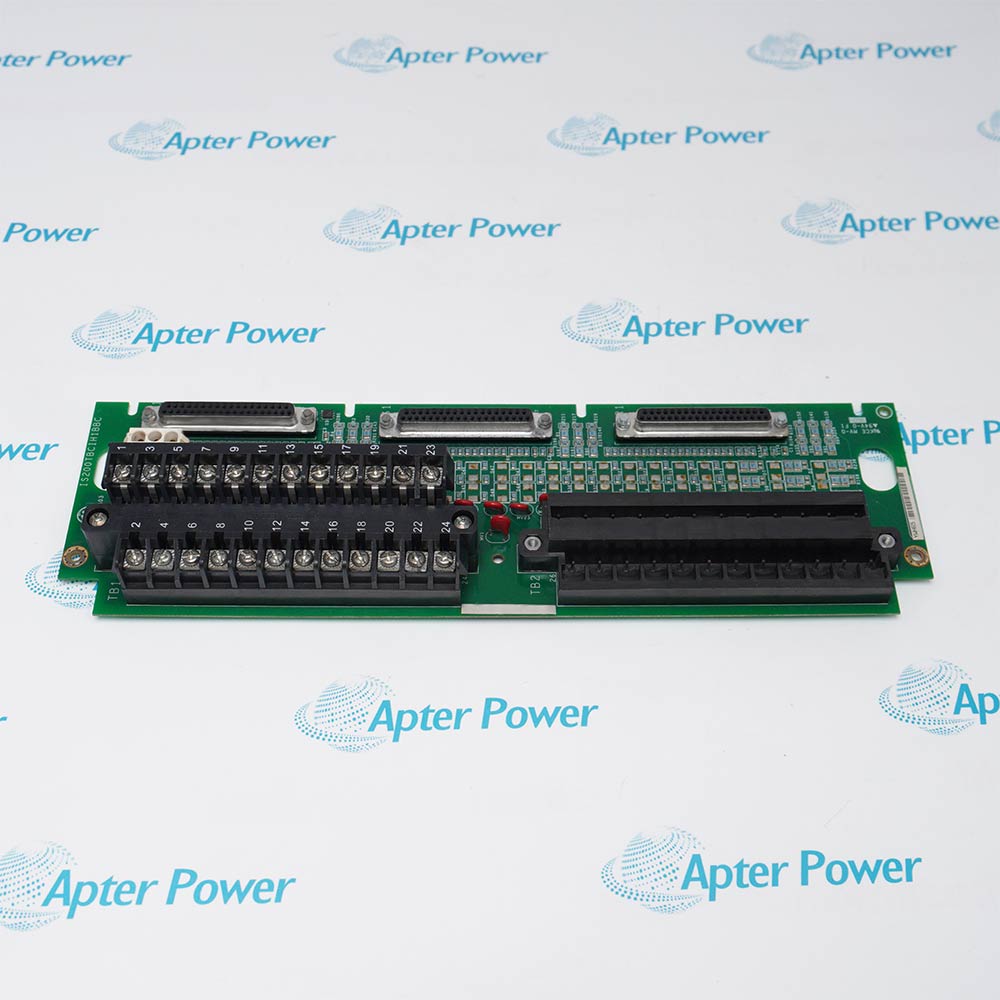
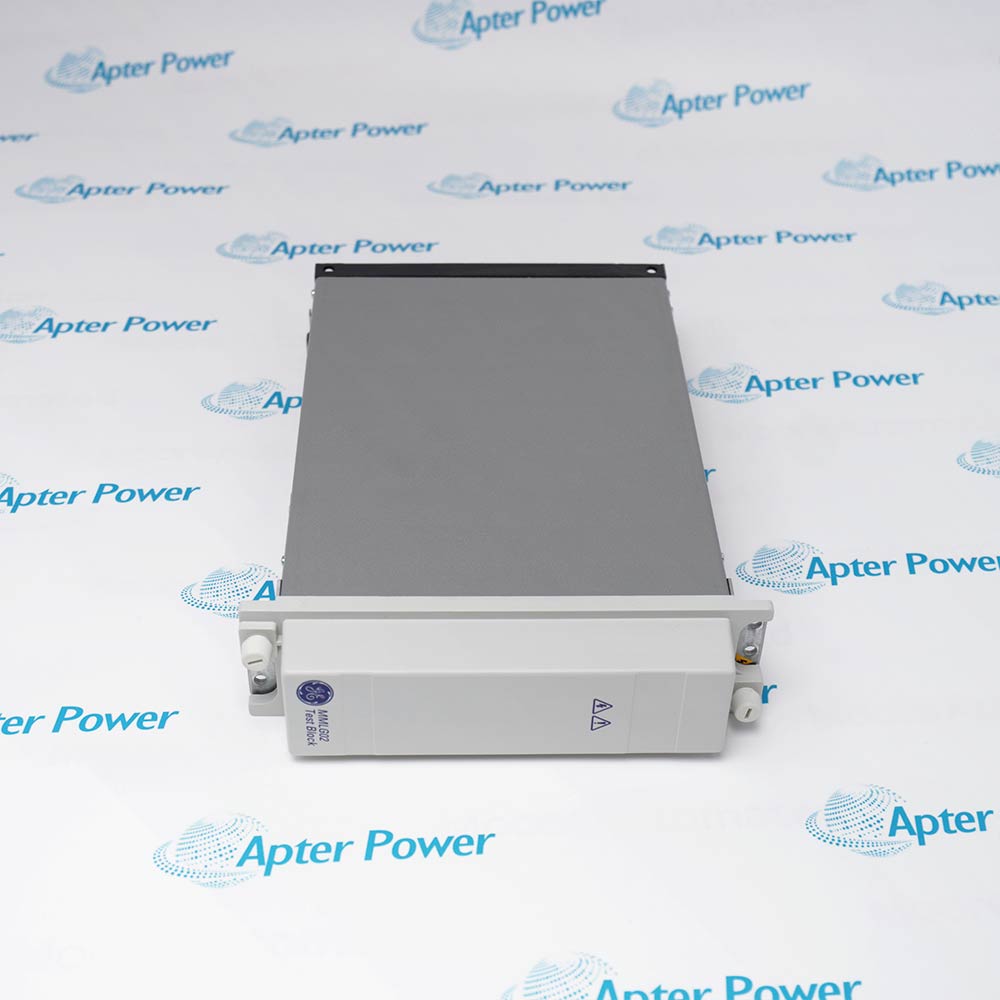
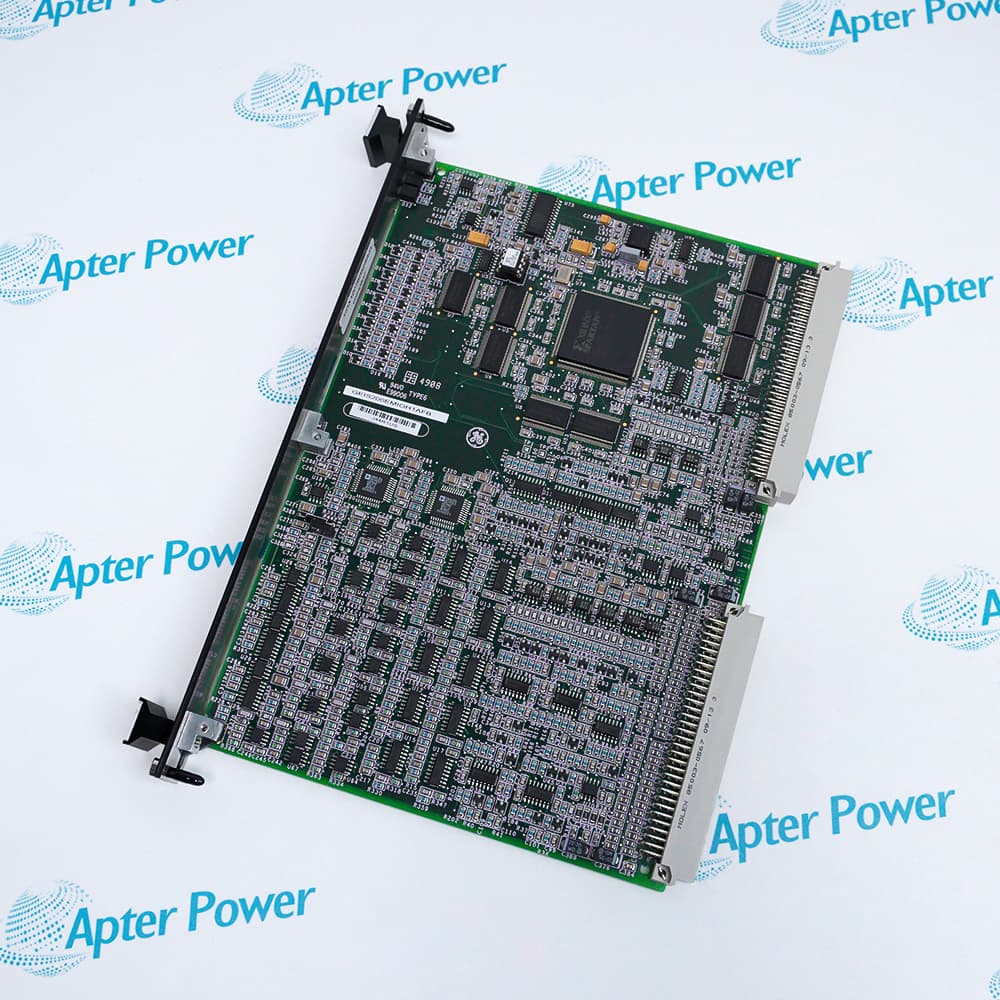
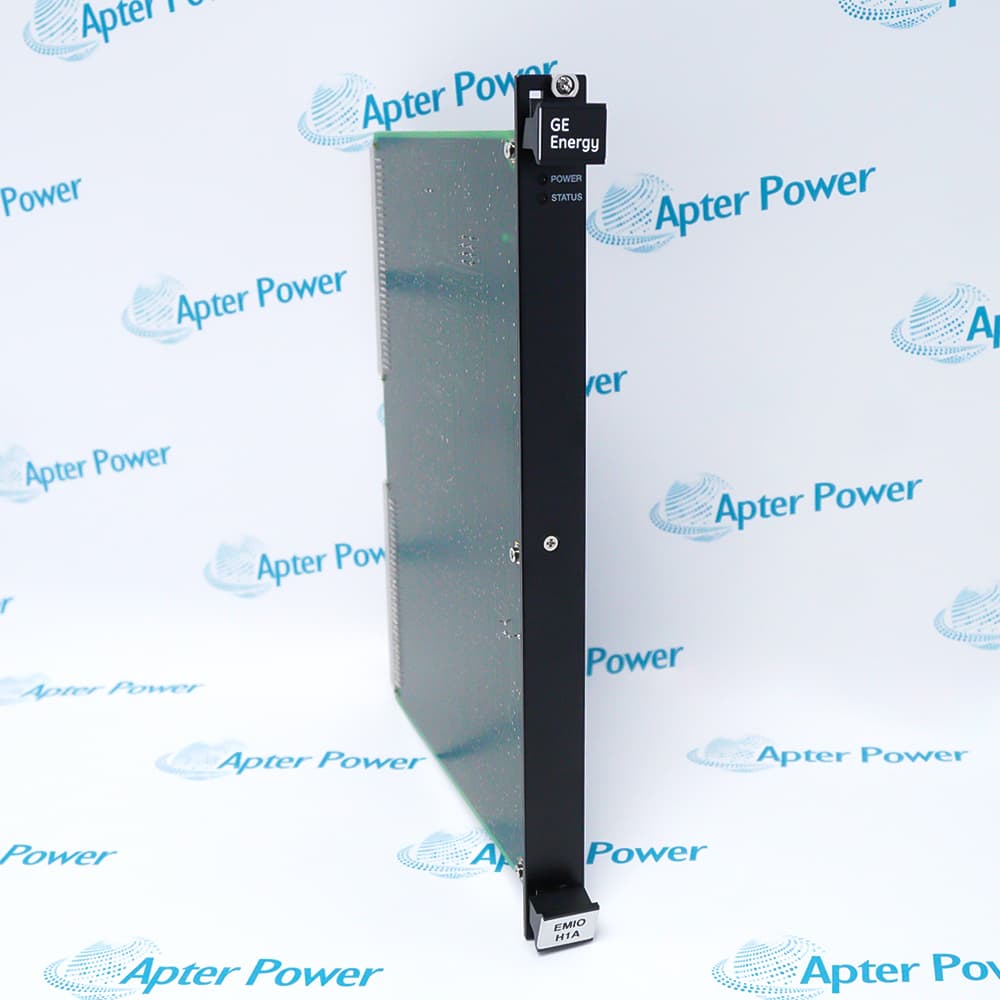
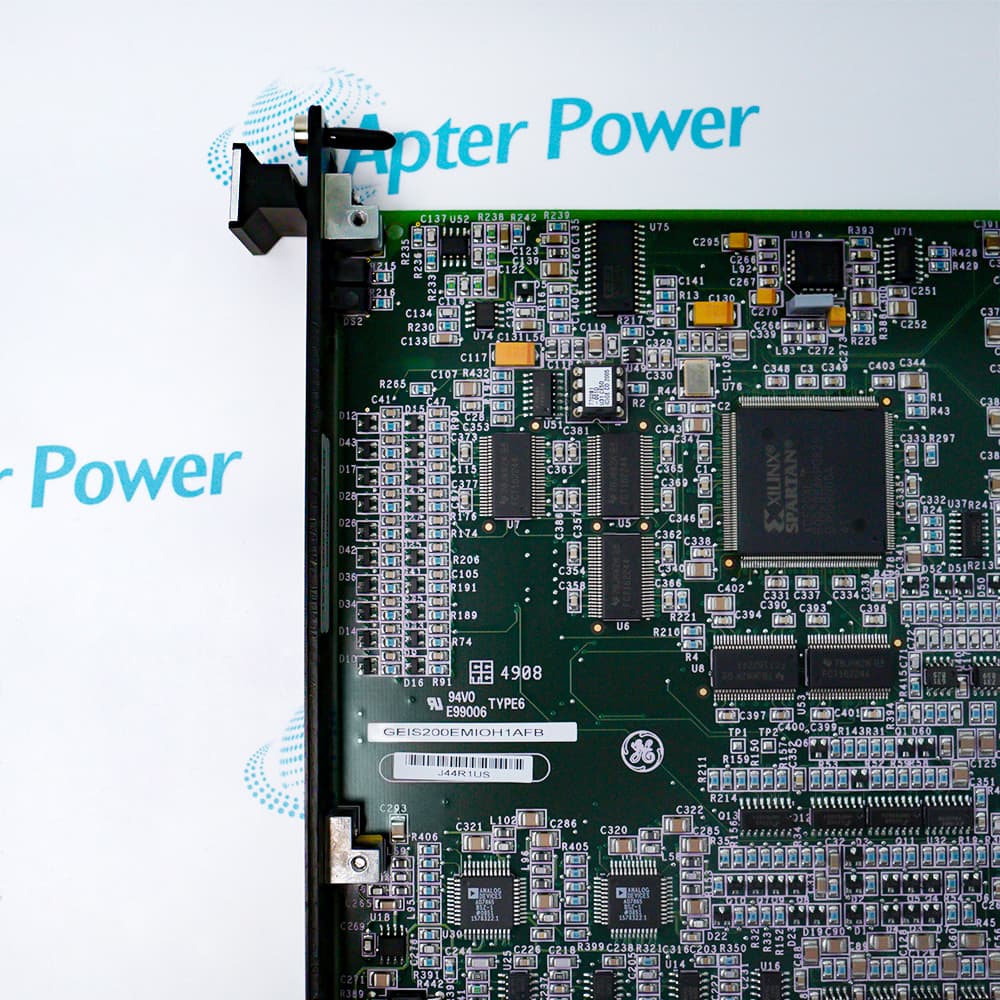
The IS200EMIOH1AFB is a General Electric (GE) Mark VI Speedtronic control system Excitation Main I/O board. It serves as a key component for managing input/output, relay drivers, and PT/CT signals in excitation systems. This module is typically used with Mark VI turbine control systems, often supplied as new surplus.
- EX2100 Main I/O Card
- Speedtronic Mark V control system
- Printed circuit board
The IS200EMIOH1AFB is a high-performance Main Input/Output (I/O) board developed by GE Industrial Systems for the EX2100 and EX2100e excitation control systems. Referred to by its functional acronym EMIO, this board acts as a central interface for analog and digital signals between the exciter controller and external devices.
Important Notice:
Other accessories, manuals, cables, calibration data, software, etc. are not included with this equipment unless listed in the above stock item description.
GE IS200EMIOH1AFB I/O Board Manuals, Datasheets, Drivers, Link
Important Notice: Other accessories, manuals, cables, calibration data, software, etc. are not included with this equipment unless listed in the above stock item description.
I/O management: This board is responsible for managing the input/output signals of multiple terminal boards (such as ECTB, EACF, EPCT, and EXTB).
Signal processing: Supports PT (voltage transformer) and CT (current transformer) signal processing, with an analog sampling rate of 2000 times per second.
Pulse emission: One of its main functions is to send gate pulse signals to the ESEL board through the backplane, which are then transmitted to the EGPA.
Relay driver: includes contact input, output/pilot trip relay driver functions.
Signal Interface Center: As the core I/O interface of the excitation control cabinet, it is responsible for handling the communication between external feedback signals (such as voltage and current sensing) and control logic.
Excitation control: It integrates channels for measuring generator terminal voltage, field current, and field voltage, and provides trigger pulse signals for the thyristor bridge.