SCADA programming has moved from “nice to have” visualizations to the nervous system of serious industrial and commercial power systems. When you are responsible for UPS plants, inverters, switchgear, and power protection equipment, the difference between a well‑implemented SCADA project and a poorly implemented one is often the difference between clean transfers and blackouts, between controlled failures and expensive, reputation‑damaging incidents.
From the field side, SCADA looks like sensors, breakers, rectifiers, and batteries. From the control side, it is PLCs and RTUs. From the business side, it is dashboards, alarms, and reports. This guide walks through SCADA programming step by step, using practices echoed by sources such as Schneider Electric, Inductive Automation, DPSTele, and Control Engineering, and grounded in what actually works in power and critical infrastructure projects.
As a power system specialist, the focus here is always the same: protect uptime, protect equipment, and give operators information they can act on in seconds, not minutes.
SCADA Fundamentals for Power and UPS Systems
SCADA, or Supervisory Control and Data Acquisition, is the software‑centric layer that monitors and supervises industrial processes. Articles from industrial players like Codra, Maple Systems, and RTEng describe the same pattern: field devices feed PLCs or RTUs, those controllers communicate over wired or wireless networks, and a central SCADA server plus HMI presents data, alarms, and control to operators.
In a data center, that might mean measuring bus voltages, UPS loads, battery strings, breaker positions, transformer temperatures in °F, and generator status, then pushing that data into graphics, trends, and alarm panels operators can trust. In a utility substation or large commercial campus, it extends to feeders, reclosers, capacitor banks, and energy meters spread across many miles.
Several sources emphasize that most SCADA work is configuration rather than writing low‑level code. DPSTele points out that vendors write the core software in languages like C, while integrators configure points, logic, and screens using vendor tools. That is encouraging if you come from a power background rather than a pure software background: you are wiring logic using domain knowledge you already have.
Core components in a power‑focused SCADA
Across sources like Maple Systems, ControlSoft Canada, and RTEng, the same core components appear in every SCADA implementation:
Field devices include sensors for voltage, current, frequency, power factor, temperature, and status contacts on breakers, transfer switches, and UPS modules. They are the “eyes and ears” of the system. For power quality, add meters that can capture harmonic distortion and events such as sags and swells.
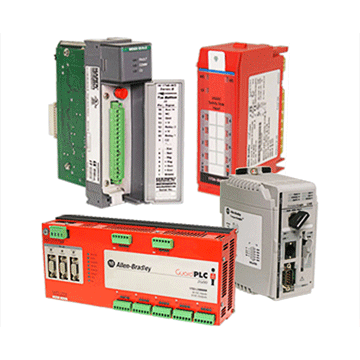
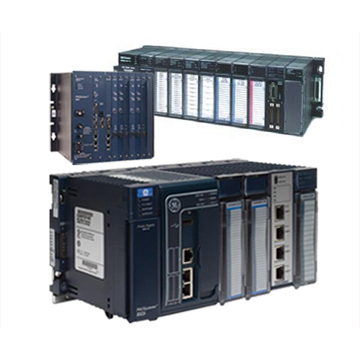
Field controllers are usually PLCs or RTUs. Empowered Automation describes PLCs as rugged industrial computers that continually read inputs, execute a control program, and drive outputs. In power infrastructure, they might sequence switchgear interlocks, manage generator start logic, or control static transfer switches. DPSTele notes that RTUs are often used at remote sites to gather data and execute local logic, such as valve or pump control over several miles of pipeline; the same idea applies to remote switching stations or solar fields.
The communication network carries data using protocols like Modbus, DNP3, or SNMP, sometimes wrapped in secure transport such as TLS, as highlighted by Maple Systems and CSE‑Icon. Physical media might be fiber, Ethernet over copper, licensed radio, or cellular.
The SCADA server and HMI layer collects, stores, and visualizes data. It may include a historian database, alarm engine, reporting tools, and web or mobile interfaces. Modern platforms like Ignition, Wonderware (AVEVA), Siemens WinCC, and others referenced in industrial articles provide that supervisory stack.
Enterprise integration layers extend SCADA data into MES, ERP, or asset management systems, as described in papers from Eoxs, Racoman, and Razorback. For power systems, that might mean pushing load data and outage events into a CMMS or energy reporting platform.
PLCs vs SCADA: who does what?
SolisPLC and Empowered Automation both stress a simple rule: PLC is hardware control, SCADA is supervisory software. That distinction matters for reliability.
A PLC or RTU is the first line of control. It closes breakers, opens contactors, regulates inverters, and implements permissives and interlocks with deterministic scan times. If a PLC stops, your process stops.
SCADA connects to one or more PLCs and aggregates “non‑raw” information: calculated kW and kVAR, bus load trends, alarm summaries, and manual overrides. In a UPS plant, the PLC might implement the fast logic that decides when to switch from bypass to inverter. SCADA logs every event, alerts the operator, and allows supervised manual actions like “take UPS 2 to maintenance bypass.”
The following table, based on guidance from SolisPLC and DPSTele, summarizes the roles.
| Aspect | PLC / RTU | SCADA |
| Primary role | Real‑time control of I/O | Supervision, visualization, analytics |
| Typical location | Panel or field enclosure | Control room server or data center |
| Programming focus | Ladder logic, FBD, structured text | Tag configuration, graphics, alarms, scripting where needed |
| Failure impact | Direct loss of control; process stops | Loss of visibility and history; process may continue locally |
| Suitable for | Millisecond‑level protection and sequencing | Multi‑site overview, reporting, operator workflows |
Discussion threads on soft PLCs running directly on SCADA servers, such as those reported on the Inductive Automation community forum, show skepticism about replacing dedicated PLCs in serious industrial control. Practitioners report challenges around deterministic behavior and diagnostics when relying on general‑purpose operating systems. For critical power systems, that is a strong signal: keep real‑time protection and transfer logic in proven controllers and use SCADA where it is strongest.
Planning Your SCADA Programming Project
SCADA programming succeeds or fails long before anyone draws a screen or writes ladder code. Multiple vendors, including Eoxs, Schneider Electric, and Control Engineering, stress that you begin with clear goals, a good architecture, and solid standards.
Step 1 – Define objectives and scope
Eoxs and RTEng both start implementation with a simple question: what do you need SCADA to achieve? In a power context, that usually boils down to several objectives.
You may need higher availability and fewer unplanned trips. That means using SCADA data to detect abnormal temperatures in transformers or battery strings, excessive breaker operations, or repeated inverter overloads before they become outages.
You may want better situational awareness. Schneider Electric and Control Engineering both discuss “situational awareness” as HMI design that helps operators see abnormalities instantly instead of hunting through decorative graphics. For a switching station, that might be a single line diagram where abnormal feeders or UPS modules stand out clearly.
You may have compliance or reporting requirements. Articles from Maple Systems and Racoman highlight SCADA as a source of audit trails and historical records. If you need to demonstrate uptime or maintenance history for insurance or regulatory purposes, that will shape historian configuration and data retention periods.
You may want cost and energy optimization. Racoman notes that SCADA‑based energy management can deliver measurable reductions in energy costs by tracking patterns and identifying waste. For a large campus with a mix of utility feeds, onsite generation, and UPS, that may include peak shaving strategies and better load distribution.
Define which systems are in scope. Decide whether you will cover just the main switchgear, or also downstream PDUs, cooling, fuel systems, and building management. Eoxs recommends clarifying integration with existing ERP or MES early; for power systems, that may also include integration with a BMS or existing data center infrastructure management system.
Step 2 – Choose architecture and components
Eoxs describes three common SCADA architectures: monolithic, distributed, and networked. Maple Systems and RTEng describe similar layers in their SCADA hierarchy.
For a single site such as a medium data center, a monolithic or compact distributed architecture may suffice. This could mean one SCADA server, a hot standby, and several operator workstations, with PLCs and RTUs on redundant Ethernet rings.
For multi‑site utility or commercial portfolios, distributed or networked architectures are better. Each site might have a local SCADA node for autonomy, with aggregated data pushed to a central control room or cloud system. Codra and others note that cloud‑enabled SCADA makes it easier to centralize storage and extend secure remote access.
Component choices should follow requirements, not the other way around. ControlSoft Canada highlights three key system design components: RTUs, HMIs, and communication protocols, plus overarching factors like scalability, security, data storage, and resilience to failure. Empowered Automation adds the PLC selection perspective: make sure controllers can tolerate your ambient temperature, electrical noise, and power conditions, and have the ports and protocols your SCADA platform needs.
When you design power systems, always ask how SCADA will behave in failure modes. If the SCADA server crashes, PLCs must still protect feeders. If one communication path fails, alternate routes should keep critical data flowing where practical.
Step 3 – Standardize data and alarm philosophy
Control.com’s analysis of SCADA pitfalls emphasizes that many large projects fail because teams start with screens before they standardize data. They recommend “standardize, then divide and conquer.” That principle applies directly to power SCADA.
Define a common tag naming convention. Maple Systems and Novotek both stress that consistent naming reduces errors and speeds deployment. For example, decide that every UPS breaker status tag will share a consistent structure, including site, switchboard, feeder, and phase where relevant.
Standardize engineering units, scaling, and data types. Voltage in volts, current in amps, temperature in °F, power in kW and kVAR. Ensure your PLC and SCADA agree on ranges and scaling so that a 0–10 V signal truly maps to the same quantity at both ends.
Define alarm classes and priorities up front. Inductive Automation’s alarming guidance suggests using distinct priority levels from diagnostic through critical, so operators can distinguish a minor issue like a noncritical fan fault from a serious event like loss of redundancy on parallel UPS modules.
Schneider Electric and Control Engineering highlight that alarm overload and poorly structured data severely degrade operator performance. If every breaker sends dozens of low‑value alerts, operators will miss the one alarm that actually matters.
Implementing SCADA: A Practical Programming Workflow
Once you know what you want and what hardware and software you will use, the programming work becomes a structured workflow. The following steps combine recommendations from DPSTele, Empowered Automation, SCADA vendors, and control‑system case studies.
Step 4 – Develop and test PLC or RTU logic
Even in a SCADA‑centric project, the first technical programming step usually happens in the PLC or RTU. Empowered Automation describes the typical PLC workflow: define I/O, write and download the control program, then test.
In a power system, the PLC logic handles duties such as interlocking feeders, controlling automatic transfer switches, sequencing diesel generators, and coordinating UPS static switches. Choose the programming languages that suit your team and application. Ladder logic is intuitive for relay‑style interlocks. Function block diagrams work well for more complex functions such as load sharing. Structured text is better for sophisticated calculations or data manipulation.
DPSTele emphasizes that RTUs act as microcomputer hubs at remote sites, aggregating sensor and status data and running local logic before forwarding it to a master station. For remote substations or rooftop PV arrays, that principle reduces bandwidth consumption and improves resilience.
Test control functions thoroughly in the PLC environment before you connect SCADA. That includes normal sequences, manual overrides, and fault scenarios such as utility loss, generator failure, or UPS over‑temperature. If the logic cannot be trusted alone, SCADA will not rescue it.
Step 5 – Configure communications and tag database
With controllers stable, you configure SCADA communications. DPSTele recommends selecting systems that support multiple communication protocols, including SNMPv3, Modbus, and others, because this flexibility improves diagnostics and simplifies integration. Maple Systems and CSE‑Icon underline the need for secure variants such as modern DNP3 or MQTT with TLS.
In practice, you install and configure SCADA drivers for each protocol, set IP addresses or serial parameters, and test connectivity with a handful of points. Then you build the tag database, mapping each PLC register or RTU point to a SCADA tag with a clear name, unit, scale, and description.
This is where the earlier standardization work pays off. If your naming is consistent, you can template many tags and screens, drastically reducing engineering time. Racoman and Novotek both note that standardized models enable easier navigation and organization‑wide data browsing.
Step 6 – Design high‑performance HMI screens
Here, the best advice from Schneider Electric, Control Engineering, and Novotek converges: design for operator effectiveness, not for pretty graphics.
Control Engineering recounts a hydroelectric plant operator who preferred a simple HMI with a handful of key variables instead of a highly animated display. The takeaway is clear. Screens must make abnormal conditions stand out. High‑performance HMI practices, aligned with ISA‑101, favor neutral backgrounds, limited color, and strong emphasis on clarity.
For a power system SCADA, that might mean a one‑line diagram where normal breakers are shown in muted tones, and only abnormal states, alarms, or out‑of‑service conditions are highlighted in strong colors. Instead of dozens of gauges, embed small trend graphs near key analog values, as recommended in Control Engineering’s best‑practice articles, so operators can see how bus voltage or transformer temperature has been behaving over the last few minutes.
Schneider Electric’s material on situational awareness stresses that modern SCADA tools now embed many of these best practices directly. Libraries of graphics and alarm objects help you build screens where the operator’s eye is drawn to what matters. Use those to standardize the look across switchgear rooms, UPS rooms, and generator plants so that an operator can move between screens without confusion.
Step 7 – Build intelligent alarming
Inductive Automation notes that as systems embrace Industry 4.0, SCADA alarming becomes more critical and more complex. Their best practices begin with a simple rule: an alarm should always represent an abnormal condition that requires attention. A notification that a UPS is operating normally does not deserve alarm status.
They also advocate explicit alarm priority levels, from diagnostic through critical. In a power system, critical might mean loss of redundancy on a Tier III or Tier IV data center UPS, unexpected opening of a main breaker, or transformer over‑temperature exceeding safe limits. Medium could cover noncritical cooling issues or loss of a monitoring device when redundancy remains intact. Diagnostic level might include communication loss with a redundant sensor.
Inductive Automation describes additional techniques such as alarm shelving, where operators temporarily hide nuisance but known alarms to focus on higher priorities, and on‑call rosters and pipelines that send notifications only to on‑duty personnel and escalate intelligently if alarms are not acknowledged. Those patterns directly reduce alarm fatigue, which is essential when a single operator oversees multiple UPS plants, switchgear lineups, and mechanical systems.
Alarm aggregation and careful color use, as Schneider Electric points out, enable operators to find the real problem instead of drowning in nuisance signals. To do this well, define alarm sources and expected operator responses during the design phase, not as an afterthought.
Step 8 – Add historian, reports, and analytics
Codra, Maple Systems, and RTEng all highlight historians as strategic components rather than optional extras. SCADA historians capture both live and historical data, enabling trend analysis, performance benchmarking, and forensic investigation after incidents.
For power systems, historians support efforts such as identifying chronic overloads on particular feeders, correlating UPS temperature rises with HVAC behavior, or documenting generator test runs over months and years. Racoman reports that organizations have quantified reductions in energy costs and downtime by using SCADA to track key performance indicators such as throughput and equipment availability.
You configure which tags to log, at what rate, and with which deadbands. Then you build reports for daily, weekly, and monthly perspectives. In a commercial campus, that might include energy use by building, UPS loading profiles, and outage statistics. In a utility, it may include feeder reliability metrics and fault counts. Use historian data to drive predictive maintenance programs, which, according to Pacific Blue Engineering, can deliver significant savings compared with purely time‑based maintenance, particularly by avoiding unplanned outages.
Step 9 – Secure the system by design
Several references, including Inductive Automation’s security articles and CSE‑Icon’s SCADA security best practices, warn that today’s SCADA systems are no longer isolated. With connectivity to corporate networks, cloud platforms, and IoT devices, they are exposed to cyber risks.
CSE‑Icon emphasizes network segmentation and isolation using firewalls and access‑control lists, so that even if attackers compromise one segment, they cannot easily move into critical SCADA zones. They also recommend strong role‑based access control and multi‑factor authentication to reduce insider risks and limit the impact of stolen credentials.
Inductive Automation and others add practical measures. Diagram all network traffic so you know exactly how PLCs, HMIs, databases, and external systems connect. Encrypt any connection that can be encrypted, using technologies like TLS, and strongly secure those that cannot. Deploy intrusion detection systems where appropriate and monitor logs. When systems and devices reach end of support, plan either for migration or additional safeguards.
Industrial frameworks such as ISA/IEC 62443 and the NIST Cybersecurity Framework, cited across several security discussions, offer structured approaches to risk assessment, control selection, and continuous improvement. For critical power systems, treat them as design inputs, not optional reading.
Step 10 – Test, train, and hand over
Implementation articles and training guidance from Inductive Automation highlight a common trap: organizations treat SCADA training as an afterthought or a one‑time class. That is a mistake.
From a programming perspective, testing begins with a controlled environment. Simulate I/O where possible. Walk through normal operating modes, transfers, failure scenarios, and power restoration sequences. Verify that alarms fire at the right thresholds, that HMI screens clearly indicate abnormal conditions, and that historian records what you expect.
For operator training, blend different styles. Some staff prefer written documentation and online manuals; others learn best by doing. Inductive Automation’s Quick Start concepts, where systems launch with prebuilt templates that users can explore, demonstrate the power of hands‑on learning. Plan for ongoing training whenever the SCADA platform or process changes, not just during initial commissioning.
Inductive Automation also points out that the largest cost of training is often the opportunity cost of not having a well‑trained team. In power systems, that cost can show up as slow responses to alarms, missed warning signs before an UPS fault, or incorrect manual switching during an incident.
Example Walkthrough: Small UPS Plant SCADA
To make these steps concrete, imagine programming SCADA for a single building with two parallel UPS systems feeding a main distribution board, backed by a generator. The underlying patterns match the guidance from DPSTele, SolisPLC, and RTEng, even though the process is power rather than pumping or manufacturing.
You start by defining objectives. You want operators to see UPS and generator status at a glance, receive timely alarms on loss of redundancy or overheating, and generate monthly reports on uptime and energy use. Scope includes UPS modules, battery strings, static switches, main breakers, and the generator.
Architecture is simple: one PLC panel near the switchgear handling breaker interlocks and generator start logic, plus networked interfaces to the UPS and generator controllers. A SCADA server in the control room runs the HMI and historian. Communications rely on Modbus TCP/IP to the UPS and generator, discrete and analog I/O into the PLC, and Ethernet between PLC and SCADA.
PLC programming sets interlocks for the main breakers, defines generator start and stop sequences, and provides safe manual control points. It also concentrates alarm contacts and analog feeds for bus voltage, load, temperatures, and fuel level.
SCADA programming then maps all PLC and device registers into a tagged database with consistent names and units. HMI screens show a simplified single line diagram with UPS, generator, and main board. High‑performance HMI practices keep backgrounds neutral and use strong color only for alarms and out‑of‑service states.
Alarming follows a clear philosophy. Critical alarms include both UPS modules down, generator fail‑to‑start during an outage, and inadvertent open on the main tie. Medium alarms might include single UPS on bypass or high UPS room temperature above a safe °F limit. Diagnostic alarms cover sensor failures or communication losses where redundancy exists.
A historian logs key parameters such as UPS load, battery voltages, generator run hours, and ambient temperature. Weekly reports highlight unusual peaks and support predictive maintenance on batteries and generator.
Finally, security includes a segmented network, authenticated HMI sessions, and restricted remote access via VPN with multi‑factor authentication, reflecting practices recommended by CSE‑Icon and Inductive Automation.

Pros and Cons of SCADA‑Centric Power Monitoring
Vendors and integrators such as Empowered Automation, Pacific Blue Engineering, and Racoman broadly agree that SCADA is a powerful tool, but not a silver bullet. It helps to see the tradeoffs clearly.
| Dimension | SCADA‑centric power monitoring – advantages | SCADA‑centric power monitoring – limitations |
| Visibility | Centralized view across UPS, generators, switchgear, and loads | Risk of information overload if design ignores situational awareness |
| Reliability | Supports predictive maintenance and rapid fault detection | Adds complexity; misconfigured SCADA can obscure critical alarms |
| Efficiency | Enables energy monitoring and process optimization, as Racoman notes | Benefits depend on disciplined use of historian and analytics |
| Cybersecurity | Can centralize security controls and monitoring | Expands attack surface if poorly segmented or maintained |
| Cost and scalability | Scales from single sites to multi‑site portfolios, especially with cloud options described by Codra | Requires ongoing licensing, maintenance, and training investments |
The key is to keep real‑time protection in dedicated controllers and use SCADA to orchestrate information, not to replace core protection logic with screen‑driven decisions.
Short FAQ
Q: Is SCADA programming “real coding” or mostly configuration?
A: As DPSTele explains, the SCADA vendor usually writes the core software in languages like C. Integrators and engineers spend most of their time configuring controllers, defining tags, designing graphics, and setting up alarms. Some platforms support scripting for advanced features, but in power projects, domain knowledge and good configuration discipline matter more than software engineering tricks.
Q: Can I move all control logic into the SCADA server instead of PLCs?
A: Discussion on soft PLC approaches, such as those reported in the Inductive Automation community, suggests being very cautious. While it is technically possible for simpler processes, practitioners report concerns about deterministic behavior and logging when control runs in general‑purpose operating systems. For critical power systems, keep fast protection and transfer logic in dedicated PLCs or UPS controllers and let SCADA supervise.
Q: How do I scale from a small project to an enterprise‑wide SCADA?
A: Articles from Eoxs, Racoman, and Razorback emphasize treating the first deployment as a starting point, not the final word. Standardize tag naming, alarm philosophy, and graphics; choose a platform that supports distributed or networked architectures; and integrate with historians and enterprise systems in a way that can grow. Build in scalability at the hardware level as well, for example by choosing expandable PLC chassis and reserving SCADA licenses and server capacity for future feeders and sites.
SCADA programming for power systems is not about drawing pretty lines on a screen; it is about engineering a supervisory layer that lets your UPS, inverters, and protection equipment do their job with fewer surprises. If you approach it step by step—clarifying objectives, choosing sound architectures, programming controllers carefully, designing high‑performance HMIs, and treating security and training as first‑class requirements—you turn SCADA into a reliability tool, not a risk. As you plan your next project, design every tag, screen, and alarm with one question in mind: will this help an operator keep the power on when it matters most?
References
- https://codra.net/en/news/2025/02/11/scada-how-to-control-industrial-processes-effectively/
- https://www.empoweredautomation.com/best-practices-for-implementing-automation-plc-solutions
- https://www.solisplc.com/scada
- https://www.ace-net.com/blog/advancing-scada-application-with-best-practices
- https://www.controleng.com/advanced-scada-applications-part-3-scada-system-development-best-practices/
- https://www.cse-icon.com/scada-security-best-practices/
- https://www.dpstele.com/scada/programming-concepts.php
- https://www.expertia.ai/career-tips/tips-and-tricks-for-streamlining-scada-operations-a-guide-for-scada-leads-66595h
- https://inductiveautomation.com/blog/6-quick-ways-to-optimize-scada-alarming
- https://pacificblueengineering.com/control-system-integrators-optimize-scada-systems/


 Videos
 News
News Applications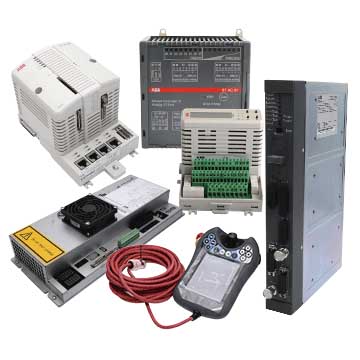






Leave Your Comment