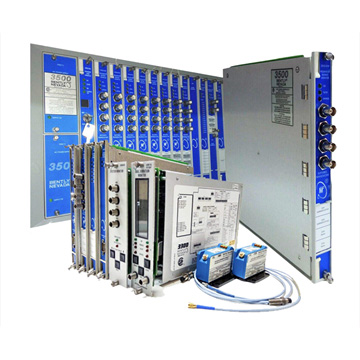
Bently Nevada–style vibration and condition monitoring systems sit right on the fault line between rotating machinery and control. When they work correctly, they protect critical assets and avoid catastrophic failures. When they misbehave, they can cause spurious trips, mask real faults, or quietly degrade protection margins. In many plants the root cause is not a failed sensor or a fancy algorithm, but something far more mundane: an error in the rack configuration or its supporting power and network infrastructure.
From a reliability advisor’s perspective, verifying rack configuration is one of the highest‑leverage steps you can take to stabilize a machinery protection system. It is also one of the least glamorous, because it involves crawling through cabinets, opening documentation, and reconciling what should be there with what is actually wired and powered in the field.
This article walks through how to think about Bently Nevada system fault diagnosis from the perspective of rack configuration verification, drawing on proven rack and cable best practices from data centers and applying them to industrial power and protection environments. The goal is straightforward: fewer surprises, fewer trips, and better confidence when your protection rack says a machine is healthy or in trouble.
Why Rack Configuration Matters So Much
In a modern plant, the monitoring rack functions a lot like a server rack in a data center. It aggregates sensors, distributes power, hosts communication interfaces, and presents data to higher‑level systems. Data center operators have learned the hard way that sloppiness in rack configuration wastes energy, complicates troubleshooting, and increases failure risk. AnD Cable Products summarizes this very neatly by saying that time, money, and expertise are the only real currencies in a data center, and good rack practices protect all three.
Industrial machinery protection racks live under similar constraints, but with higher safety stakes. If configuration is wrong, several classes of faults become more likely.
First, protection integrity is at risk. A probe wired to the wrong channel, or a relay output mis‑terminated, can leave a critical trip path inoperative. In my own experience reviewing machinery protection incidents, it is depressingly common to find that a rack “fault” was actually a miswired or undocumented change.
Second, nuisance trips multiply. Poor cable management, unstable grounding, and overloaded power distribution can produce intermittent contact resistance, crosstalk, or unexpected reboots. These can masquerade as legitimate machine faults. Data center sources such as RackSolutions emphasize how disorganized racks increase thermal stress and electrical risk; the same physics applies when Bently Nevada modules are crammed into a poorly ventilated cabinet powered from a noisy bus.
Third, diagnosis becomes slow and expensive. Cisco Learning Network highlights that in complex networks, structured troubleshooting and good fault management are essential to maintain availability. A monitoring rack is effectively a small, mission‑critical network of sensors, modules, and communications. If documentation, labeling, and configuration records are poor, every fault investigation takes longer and consumes more expert time.
In other words, rack configuration is not an afterthought. It is part of the protection design itself.
What “Rack Configuration Verification” Really Means
It is tempting to think of configuration purely as software: module parameters, alarm setpoints, and channel mappings in a configuration tool. In practice, verifying configuration for a Bently Nevada–style rack spans several layers that must be coherent with each other.
At the physical layer, the rack and cabinet must be mechanically sound, properly grounded, and laid out for safe access. Research and best‑practice guides on server racks, such as those from Sysracks and ServerRackCabinets, stress fundamentals like proper environment, structural support, and weight distribution. These fundamentals are equally relevant in an MCC room or turbine enclosure.
At the power layer, the rack must receive clean, stable power backed by appropriate UPS, inverters, and protective devices. Sysracks explicitly recommends installing UPS units to guard against outages and sudden shutdowns, and similar logic applies to any rack hosting protection electronics. For high‑consequence machinery, integrating UPS and power conditioning into the rack plan is not optional; it is part of the safety case.
At the wiring and labeling layer, every sensor input, buffered output, relay contact, and communication port needs to be traceable. AnD Cable Products points to the ANSI/TIA‑606‑B labeling standard in data centers, emphasizing permanent, legible labels at both cable ends, consistent nomenclature, and good records. Plants that adopt comparable discipline for machinery racks spend far less time hunting for the “mystery cable” during a trip investigation.
At the network and integration layer, the rack must communicate reliably with historians, DCS, and vibration analysis platforms. Cisco Learning Network stresses the value of structured troubleshooting methods, proactive fault notification, and central monitoring via SNMP or similar mechanisms. Monitoring racks that export basic health metrics and event logs into plant monitoring systems are far easier to diagnose than racks that function as isolated “black boxes.”
Finally, at the logical layer, module positions, channel assignments, and software configuration must exactly match the physical build and the intended protection philosophy.
When I talk about rack configuration verification with plant teams, I mean verifying all of these layers together, not just looking at a configuration file on a laptop.
Physical Rack and Cabinet Integrity
A Bently Nevada rack usually sits inside a cabinet or panel. From a reliability standpoint, that cabinet is as important as the electronics it protects.
Server and network infrastructure vendors repeatedly highlight that poor environment and physical layout drive many avoidable failures. Sysracks, for example, notes that excessive dust, poor ventilation, and weak structural support can all lead to overheating and hardware damage. Similar conditions in a turbine building or compressor hall can quickly compromise monitoring hardware.
During verification, attention should be paid to several physical aspects.
The cabinet location should provide adequate ventilation and clearance. Hot air must be able to escape, cool air must reach rack inlets, and there must be enough space for technicians to open doors and work safely without stretching over energized busbars or piping. Data center practices such as hot and cold aisle containment may not translate directly into a plant, but the principle of respecting airflow paths certainly does.
The rack and cabinet must be mechanically secure and appropriately loaded. Camali’s discussion on rack and stack practices points out that standard racks often support around 2,000 to 3,000 pounds of static load and less dynamic load when rolling. In industrial cabinets, the total weight is usually lower, but the same rule applies: heavy components belong low, and mounting hardware must be correctly installed to avoid long‑term deformation or vibration‑induced loosening.
The internal layout should respect equipment ventilation patterns. Many servers and UPS units pull air front‑to‑back; protection modules may rely on convection and side ventilation. RackSolutions and TrueCABLE both emphasize that leaving small gaps and ensuring unobstructed vents significantly improves temperature stability. When a monitoring rack shares a cabinet with UPS units, network switches, or marshalling terminals, poor layout can create hot spots that shorten electronic component life.
These physical checks are not glamorous, but they prevent “phantom faults” where an overheating module periodically resets or misbehaves and the root cause is simply trapped warm air behind a tangle of cables.

Power Architecture, UPS, and Protection
For any machinery protection rack, the power design is a primary risk driver. Even a perfectly configured Bently Nevada system will misbehave if its power is dirty, unstable, or improperly protected.
Data center guidance from RackSolutions stresses that energy efficiency and robust power infrastructure strongly influence reliability and operating cost. In industrial settings, the focus extends from efficiency to safety and fault tolerance. Several themes recur across successful installations.
The supply should be stable, redundant where required, and appropriately sized. At the rack level, this typically means dedicated feeds through industrial‑grade power distribution units, coordinated with upstream protection so a fault in one rack segment does not black out unrelated control equipment. Camali notes that poor planning of circuit distribution and PDU capacity can deform racks or damage equipment; in a monitoring context, it can also cause nuisance trips.
UPS and inverter integration must be deliberate, not ad hoc. Sysracks recommends UPS deployment to protect data center servers from outages and sudden shutdowns. For a Bently Nevada rack guarding a critical compressor or generator, UPS sizing and configuration should support orderly shutdown, survival through short disturbances, and ride‑through of transfer events between sources or inverters. The UPS itself becomes part of the protection system and should be monitored and maintained with the same rigor.
Grounding and bonding require particular attention. TrueCABLE’s guidance on shielded Ethernet systems highlights that simply relying on three‑prong power cords is not sufficient to manage ground potentials and noise. In machinery protection cabinets, disparate grounds from drives, switchgear, and instrumentation can introduce loops and noise if not carefully bonded. Following relevant grounding standards and involving qualified power engineers or BICSI‑trained specialists is essential.
Finally, power quality and loading should be monitored. RackSolutions points to power usage effectiveness (PUE) as a key indicator in data centers; in industrial racks, simple measurements of bus voltage, disturbance counts, and module power consumption trends can reveal overloading, bad contacts, and failing power supplies before they manifest as system faults.
When you diagnose “weird” monitoring behavior, never skip the power checks. Many intermittent faults that look like software glitches or sensor issues ultimately trace back to a sagging DC bus, a loose neutral, or an undersized UPS.
Cabling, Labeling, and Signal Integrity
If there is one area where data center practice can transform industrial reliability, it is cable management and labeling.
AnD Cable Products warns that cables hanging “like a curtain,” unsupported and disorganized, lead to broken conductors, worn connectors, blocked airflow, and higher energy use. TrueCABLE goes further, citing Communications Cable and Connectivity Association testing which found that 322 of 379 offshore Cat6 patch cords failed TIA 568‑C.2 performance requirements, while none of 120 cords from well‑known North American manufacturers failed. That is more than 75 percent of imported cords in the sample failing basic electrical criteria.
Translating those findings into a Bently Nevada rack context leads to several practical imperatives.
Permanent wiring from sensors to marshalling terminals and from terminals to monitoring modules must follow recognized structured cabling practices. Solid conductor cable with proper terminations should form the permanent backbone. Patch leads, whether copper or fiber, should be high‑quality, standards‑compliant, and treated as replaceable components rather than permanent fixtures.
Cable routing should be deliberate, with separation of power and signal paths where practical. Avoid pulling sensitive proximity or velocity probe wiring in parallel with high‑di/dt motor leads or inverter outputs. Small gauge cables in crowded spaces, which AnD Cable notes help airflow in server racks, can also assist in protection cabinets, but only if they meet the required electrical specs and shielding needs.
Labeling must be consistent and maintained. The ANSI/TIA‑606‑B standard, cited by AnD Cable, recommends permanent labels at both cable ends, legible text, color coding, and centralized records of labeling protocols and physical locations. Plants that adopt a similar scheme for monitoring racks, even if they do not rigidly follow every clause, see immediate benefits during commissioning and fault diagnosis. The phrase “I wish I had labeled that” should disappear from the vocabulary.
Cable management hardware such as horizontal managers, D‑rings, and Velcro straps can preserve bend radius and relieve strain. TrueCABLE strongly advises against over‑tightened nylon zip ties because they create pressure points and can damage cable jackets and conductors; hook‑and‑loop wraps are safer and easier to rework. In my own field visits, the best‑performing racks almost always use structured routing with gentle bends and ample strain relief, even in cramped cabinets.
Every misrouted or unlabeled cable becomes a hidden fault waiting for a vibration shutdown or a missed alarm. Rigorous cable management is one of the cheapest ways to cut those risks.
Networking and Communications Health
Modern Bently Nevada systems rarely operate in isolation. They stream waveform and status data to vibration analysts, pass alarms into the DCS, and expose configuration interfaces over Ethernet. Network faults therefore appear as monitoring faults, even when the rack hardware is healthy.
Cisco Learning Network’s discussion on troubleshooting complex infrastructures introduces structured approaches such as top‑down, bottom‑up, and follow‑the‑path, and stresses the role of proactive fault management. Those principles adapt well to monitoring rack networks.
First, treat the monitoring rack network interfaces as first‑class assets. Assign them documented IP addresses, keep them in dedicated VLANs where appropriate, and ensure they are visible in the plant’s network monitoring suite. Tools based on SNMP or flow monitoring can build baselines so that deviations—such as increased latency, packet loss, or unreachable nodes—are spotted early.
Second, use a consistent troubleshooting method rather than ad hoc “click and hope.” For example, when a Bently Nevada rack appears unresponsive to the central historian, start at the application layer to confirm that the client is working, then step down through transport and network layers, following the path with traceroute‑style tools to identify where the traffic is dropped. Cisco’s examples demonstrate how misconfigured firewalls or routing changes can block critical flows without obvious local symptoms.
Third, use remote monitoring as a force multiplier. AnD Cable notes that remote monitoring and automation reduce the number of technicians walking into the data hall and allow problems to be spotted before physical damage is visible. In a plant context, giving reliability engineers access to rack health summaries and alerts reduces the need to open cabinets for every concern, which improves both safety and uptime.
Network problems can cause monitoring alarms, configuration failures, and misleading status indications. Verifying rack configuration therefore must include confirming that the network design and implementation around the rack can support the intended data flows with adequate availability and security.

Common Rack‑Related Fault Patterns
Once you start looking critically at monitoring racks, certain fault patterns repeat across facilities and industries.
Cabling mismatches are frequent. A probe wired to the wrong channel, a buffer output mis‑terminated to an incorrect DCS analog input, or a relay wired to the wrong trip loop all produce confusing symptoms. A vibration alarm from the wrong bearing, or a trip relay that does not operate when the system thinks it does, can mislead operators and analysts. These faults usually trace back to deviations from as‑built drawings during late‑stage construction or maintenance.
Power issues are another major category. Undersized or heavily loaded UPS units, shared control power circuits without proper coordination, and poor DC distribution create voltage sags and transients. Modules may reboot, lose configuration, or report spurious faults. Without power trend data, these events can be misdiagnosed as random hardware failures.
Thermal and environmental stress cause intermittent behavior. Cabinets located near hot process equipment, exposed to dust or corrosive atmospheres, or lacking adequate airflow will see higher failure rates and more unexplained faults. RackSolutions notes that improving airflow and avoiding blocked vents lowers energy use and improves reliability; the same measures protect machinery protection modules from thermal cycling and over‑temperature events.
Network and integration faults present as missing data, frozen values, or configuration errors. A link flap on a switch, a firewall rule change, or a mis‑configured VLAN can isolate a protection rack. Since the rack itself may show “healthy” locally, diagnosing such issues requires a view of the broader network.
In every case, thorough rack configuration verification—comparing reality to design, checking labeling, and validating power and network paths—shortens the time from symptom to root cause.
A Structured Workflow for Rack Configuration Verification
To make rack verification practical and repeatable, it helps to adopt a structured workflow rather than a one‑time ad hoc review. While every site is different, an effective process usually follows several stages.
The first stage is preparation and documentation. Before touching the rack, gather current drawings, I/O lists, network diagrams, and configuration exports. Sunbird’s work on server rack asset and space tracking emphasizes the value of a centralized database as a single source of truth, and the same principle applies here. If no reliable documentation exists, one of your outcomes should be to create it.
The second stage is visual and physical inspection. Open the cabinet, verify rack mounting, look for obvious damage or modifications, and assess cable routing and bundling. Pay attention to airflow paths and check for dust accumulation or blocked vents. Compare the number and type of modules against documentation. Note any temporary wires, jumpers, or handwritten labels; these often signal undocumented changes.
The third stage is power and grounding verification. Confirm incoming feed sources, protective devices, UPS or inverter presence and settings, and DC distribution to modules. Measure supply voltage under typical load and, if possible, during simulated disturbance conditions. Verify grounding and bonding connections against site standards, looking for unintentional parallel paths or floating shields.
The fourth stage focuses on module layout and configuration coherence. Cross‑check each module’s physical slot position against the design and the software configuration. For example, ensure that the channel designated as “Compressor 1, radial X” is indeed wired to that machine and that the configuration file maps that slot and channel accordingly. This step sounds basic, but it is where many subtle errors are found, especially after retrofits.
The fifth stage is field wiring and labeling verification. Pick a sample of critical channels—particularly trip‑related ones—and physically trace them from sensor or relay through marshalling terminals into the rack. Confirm labels at each termination, and reconcile any discrepancies immediately. TrueCABLE’s emphasis on creating and maintaining clear port maps and labeling schemes is especially relevant here.
The sixth stage addresses networking and integration. Check that all expected network connections are present, intact, and labeled. Confirm link speeds, duplex settings, and VLAN assignments. From a test workstation, verify connectivity to the rack, and exercise the primary protocols used for data acquisition and configuration.
The final stage is functional validation. Where safety and process constraints allow, perform controlled tests to provoke known alarms and verify that the rack responds as designed, that trip signals reach their destinations, and that data propagates correctly into the DCS and analysis systems. Concepts from design‑for‑test in network chip architectures, as surveyed in professional publications, reinforce the idea that built‑in testability and deliberate fault injection are key to confirming correct behavior.
This workflow takes time and coordination, but it turns rack verification into a disciplined process instead of a sporadic reaction to incidents.
Monitoring and Data Analytics as Diagnostic Allies
Static verification is necessary but not sufficient. The most robust monitoring racks pair sound configuration with continuous measurement and intelligent analysis.
Data center literature, including RackSolutions and Sunbird, describes the use of DCIM systems and AI or machine learning to monitor power, temperature, and utilization. In the power and protection domain, research published in journals such as IEEE Access and other electrical engineering outlets has explored combining signal enhancement, image‑based analysis, and logical reasoning to diagnose equipment status. While those works often focus on transmission systems or air‑conditioning equipment, the underlying idea carries over: richer data and better models yield better fault discrimination.
For a Bently Nevada rack, practical steps include monitoring its own health parameters. Log power supply voltages, internal temperatures, module status bits, and communication statistics. Store these trends in a historian alongside machine vibration and process variables. When an incident occurs, this context can reveal whether the rack experienced power dips, thermal excursions, or network instability at the same time.
Another powerful approach is to define and monitor baselines. Cisco Learning Network advocates exporting device and traffic statistics to build baselines, making deviations easier to spot. For a monitoring rack, baseline metrics might include normal reboot frequencies (ideally zero in steady operation), typical traffic volumes to the DCS, and expected alarm rates during normal operation. An unexpected increase in configuration change frequency, for instance, might signal risky activity or a need for tighter management of change control.
Modern plants increasingly adopt analytics that correlate mechanical, electrical, and network indicators. When a machine trips on vibration, tools can automatically retrieve recent rack health metrics and network logs as part of the incident record, allowing teams to quickly distinguish between a true mechanical problem and a monitoring or infrastructure fault.
Pros and Cons of Deep Rack Verification
A common question from plant managers is whether deep rack verification is worth the effort compared with lighter visual checks and relying on vendor commissioning. Experience and available research suggest a nuanced answer.
Thorough verification demands time, expertise, and occasionally downtime windows. It may expose deficiencies that require capital or project work to correct, such as inadequate UPS capacity or noncompliant grounding. For organizations stretched thin, the temptation is strong to defer such work until after a major incident.
However, both data center and industrial reliability experience point in the opposite direction. RackSolutions emphasizes that improving rack efficiency and reliability reduces total facility energy use and extends equipment life. Camali reports that pre‑assembled and carefully validated racks can cut deployment time dramatically and lower operational risk. Sunbird describes how better asset tracking and capacity management enable organizations to avoid unnecessary purchases and stranded capacity.
Translated into the machinery protection context, rigorous rack verification lowers the likelihood of both spurious and missed trips, reduces the number of “unknown cause” failures, and shortens incident investigations. For high‑criticality equipment, the avoided cost of a single major failure or extended outage usually dwarfs the effort invested in a structured verification program.
In smaller or lower‑criticality systems, a scaled‑down approach focusing on the worst risks—power, grounding, and trip path integrity—may be more appropriate. The key is to make the decision explicitly, based on risk and consequence, rather than by default.
Practical Advice from the Field
Working with plants that rely on Bently Nevada–style systems, several practical lessons recur.
Never assume that as‑found equals as‑designed, especially after years of incremental changes. Moves, additions, and temporary workarounds accumulate. AnD Cable observes that disorganized server racks often begin as well‑organized ones that suffered unplanned changes. Protection racks follow the same pattern. When in doubt, verify.
Treat rack configuration as part of your management of change process. Any modification to wiring, module layout, power feeds, or network connections should trigger review, documentation updates, and, ideally, targeted regression testing. This aligns with the structured fault management philosophy promoted in network chip design and complex network operations.
Invest in good cable and labeling materials. TrueCABLE’s statistics on failing offshore patch cords are a reminder that trying to save a few dollars on cables can undermine the entire system. Buy from reputable manufacturers, match or exceed the required Category rating, and avoid nonstandard patch cord gauges. For labels, use durable, legible materials that survive the cabinet environment.
Do not ignore the power path. UPS batteries age, breakers are replaced, and new loads appear on existing circuits. Periodic power audits around critical monitoring racks, including testing UPS autonomy, measuring voltage under load, and checking panel schedules, prevent unpleasant surprises during grid disturbances or plant upsets.
Finally, train technicians and engineers to think holistically about rack faults. When a vibration alarm looks wrong, the instinct may be to blame the sensor or the configuration file. Encourage teams to add questions about power, environment, wiring, and network to their initial diagnostic checklist. Cisco Learning Network’s emphasis on structured troubleshooting applies perfectly here.
Short FAQ
How often should a Bently Nevada rack configuration be verified?
For high‑criticality assets such as large turbines, compressors, or generators, a comprehensive verification every few years, combined with targeted checks after any change, is a reasonable starting point. Major plant turnarounds are natural opportunities to perform deeper verification. For lower‑criticality equipment, annual visual inspections with periodic spot checks of wiring, power, and network connectivity can be sufficient, provided that change control is robust.
Does every monitoring rack need its own UPS and power conditioning?
Not every rack requires a dedicated UPS, but every critical protection rack should have a clearly defined power path with sufficient ride‑through capability. In many cases, this means a UPS shared among several protection and control racks fed from a clean source, sized to handle transient disturbances and allow controlled shutdown. The key is to ensure that a power disturbance affecting the protection rack is at least as rare and as well‑managed as one affecting the process equipment it protects.
What is the difference between commissioning checks and ongoing verification?
Commissioning checks are focused on confirming that a newly installed or modified system meets design requirements at a point in time. Ongoing verification recognizes that systems drift due to maintenance, small changes, and environmental stresses. It includes not only checking that configuration remains aligned with design, but also that power quality, environmental conditions, and network context still support the intended operation. Both are essential; one does not replace the other.
When you treat rack configuration as an integral part of a Bently Nevada–style protection system, not just a hardware detail, fault diagnosis becomes faster, clearer, and more reliable. The combination of robust power protection, disciplined cabling and labeling, sound networking, and structured verification turns the rack from a hidden risk into a dependable foundation for machinery protection.
References
- https://pmc.ncbi.nlm.nih.gov/articles/PMC11243780/
- https://ieeexplore.ieee.org/iel8/6287639/10820123/10891614.pdf
- https://www.researchgate.net/publication/357902844_Twisted_Pair_Cable_Fault_Diagnosis_via_Random_Forest_Machine_Learning
- https://www.sunbirddcim.com/blog/server-rack-best-practices-tracking-assets-and-space-utilization
- https://andcable.com/rack-management/server-rack-configuration-best-practices/
- https://camalicorp.com/news/rack-and-stack-in-data-centers-complete-guide/
- https://learningnetwork.cisco.com/s/article/troubleshooting-and-fault-management-of-a-complex-network-infrastructure
- https://www.design-reuse.com/article/61600-fault-management-and-design-for-test-strategies-in-network-chip-architectures/
- https://patents.google.com/patent/US10897407/en
- https://obkio.com/blog/how-to-diagnose-network-problems/


 Videos
 News
News Applications








Leave Your Comment