Industrial and commercial power systems live or die on the reliability of their protection and monitoring layers. When you are running large UPS systems, static or rotary inverters, and critical backup generators, you do not find out about a problem from a tripped breaker or a blacked‑out data hall. You find out from the first abnormal vibration, a subtle efficiency drift, or an alarm in your Bently Nevada monitoring system.
Most plants put a great deal of effort into monitoring asset health. Far fewer treat the health of the monitoring modules themselves with the same rigor. As a power system specialist, I have seen more than one incident where the asset was blamed, but post‑event analysis showed the real problem was a sick monitor: misconfigured channels, degraded sensors, or a server that stopped calculating key performance indicators at the worst possible moment.
This guide focuses on Bently Nevada environments, drawing on guidance from Baker Hughes Orbit articles, plant asset management practices from Plant Engineering, equipment health index work, and condition‑monitoring case studies. The goal is practical: help you systematically assess monitor and module health, diagnose faults quickly, and keep your protection and monitoring chain as robust as your UPS and inverter hardware.
Why Monitor Module Health Matters in Power Protection Architectures
In process‑intensive operations, Bently Nevada platforms are used on gas and steam turbines, centrifugal compressors, pumps, and generators that sit at the heart of your power architecture. Baker Hughes reports that System 1 was shaped by studying several hundred users in multiple countries, all looking for plant‑wide machinery management that keeps operations safe, efficient, and compliant. When those monitored machines feed your critical power buses, any blind spot in the monitoring stack propagates directly into power risk.
Machine condition monitoring, as described in industrial case studies from MachineMetrics, shifts plants away from reactive and purely calendar‑based maintenance. Instead of waiting for a UPS transformer to run hot or a generator bearing to fail, you monitor vibration, load, temperature, and performance to catch degradation early. Plants that implement robust condition monitoring have reported significant improvements in overall equipment effectiveness and tens of thousands of dollars in annual savings per machine.
However, this entire strategy assumes that your monitors are healthy. A failed vibration module, a stale thermodynamic model, or a misbehaving OPC tag pushes you back into the world of reactive maintenance, even if the hardware itself is perfectly instrumented. For power‑sensitive environments with tight uptime and power‑quality commitments, treating monitor health as a first‑class reliability topic is non‑negotiable.
From Asset Condition Monitoring to Monitor Health
Condition monitoring is the continuous assessment of machine health over time, using data on efficiency, wear, defects, and usage to detect issues early. Plant Engineering describes plant asset management systems as having functional blocks such as data registers, data harvesting, indicator calculation, condition monitoring, health analysis, and maintenance alerting. All of those blocks depend on one thing: trustworthy data from healthy measurement modules.
In the broader reliability literature, equipment health is often expressed as a quantitative health index or health value. Research summarized in journals such as Machines and Machines‑focused MDPI articles describes this health index as a scalar that aggregates multiple condition indicators into a single interpretable score. Another article on the Equipment Health Index key performance indicator lists vibration, temperature, fluid condition, pressure, power consumption, noise, performance metrics, and critical alarms as inputs, with weights tuned to safety, reliability, and financial impact.
Although those works focus on mechanical equipment, the conceptual approach applies equally well to monitoring modules. A Bently Nevada monitor has its own health indicators: self‑diagnostic flags, communication status, configuration consistency, calculation performance, and alarm behavior. By borrowing health‑index thinking from the equipment side and applying it to the monitoring stack, you can convert scattered diagnostic signals into a structured module health assessment.

Inside a Bently Nevada Monitoring Stack
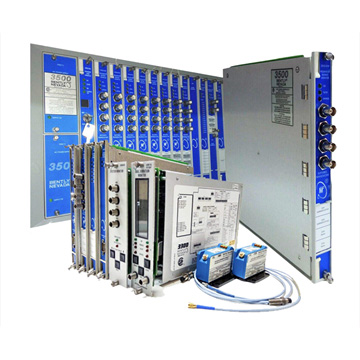
Bently Nevada solutions are designed as part of a larger machinery management platform. The System 1 software ingests high‑resolution vibration and process data from devices like 3500 racks, Orbit 60 systems, Ranger Pro wireless sensors, and Scout data collectors. It can also consume around twelve thousand process tags per server through interfaces such as OPC, with Modbus connectivity added in more recent versions to broaden coverage.
On top of this data, System 1 adds analytics. The Bently Performance module performs online thermodynamic performance monitoring for rotating equipment such as gas and steam turbines, centrifugal compressors, pumps, and generators. It calculates key performance indicators grounded in test‑code methodologies, such as actual and expected performance, corrected actual performance normalized to standard conditions, and corrected expected performance adjusted to actual operating conditions. These calculations run against trend data that can be stored at up to once per second, with performance key performance indicators typically updated every thirty seconds.
Before those calculations are accepted, the Bently Performance engine performs tag health checks, unit conversion, and consistency checks using appropriate equations of state for process gases. Outputs are then range‑checked and written back into the System 1 database. System 1’s Decision Support module allows user‑defined diagnostic rules across mechanical, auxiliary, and process data, with multiple alarm levels per trend and options for time delays, latching, and suppression.
All of this makes Bently Nevada monitors both powerful and complex. A single module may be ingesting thousands of samples per second, interacting with protection systems, and feeding dashboards that operations and reliability teams rely on. Diagnosing its health means understanding not just whether the electronics are powered, but whether data quality, analytics, and alarms are behaving as designed.
The table below summarizes the main layers of a typical Bently Nevada monitoring stack and where health issues often surface conceptually.
| Layer | Examples from practice | Typical health concerns |
| Sensing and transduction | Proximity probes, accelerometers, process transmitters | Mounting, cabling, overheating, wrong sensor type, dynamic range |
| Rack and module electronics | 3500 and Orbit 60 monitoring modules | Power, module status, configuration integrity, self‑diagnostics |
| Data transport and integration | OPC, Modbus, historian tags | Tag quality, time stamps, dropped or delayed data |
| Analytics and key performance indicators | Bently Performance, Decision Support rules | Model validity, tag health flags, equation failures, overload |
| Visualization and alarm management | System 1 plots, alarm lists, color status, plant asset management tools | Alarm storms, missing alarms, incorrect audience levels |
Understanding how these layers fit together is the first step toward systematic module health assessment.
Common Monitor and Module Fault Mechanisms
Module health problems rarely appear as a neat “Module Failed” message. They usually surface as suspicious alarms, missing data, or inconsistent trends. The underlying causes can be grouped into a few recurring themes.
Instrumentation Chain Issues Masquerading as Module Faults
Baker Hughes emphasizes that when a condition‑monitoring alarm triggers, the first question is whether the alarm is real or a nuisance. Many nuisance alarms come from instrumentation issues rather than true machine faults. Typical issues include measuring the wrong point, loose or broken cables, mis‑mounted or overheated sensors, choosing the wrong sensor type, operating outside the sensor’s dynamic range, and using incorrect measurement settings. Another simple cause is that the alarm level was set too low in the first place.
These same issues are often blamed on the monitor. A vibration module is not misbehaving when a proximity probe loses contact; it is correctly reporting a low signal. System 1 can help by exposing sensor diagnostics, such as accelerometer bias voltage or proximity probe gap voltage, allowing you to distinguish true module faults from upstream sensor problems.
Guidance from OSHA’s technical equipment manual reinforces this idea. OSHA notes that portable instruments are highly sensitive to how sensors are mounted and how battery and calibration conditions are maintained. If a monitor has just returned from the shop without a current calibration sticker, or if batteries are near end‑of‑life, it is wise to treat those as potential sources of apparent faults before suspecting deeper electronic failure.
Power, Environment, and Network Factors
Monitoring modules are electronic products operating in environments that may be hot, electrically noisy, or even hazardous in the explosion‑protection sense. OSHA’s discussion of hazardous locations highlights that power‑driven devices can become ignition sources if not properly approved and that battery changes must be done outside classified areas. For Bently Nevada hardware located near gas turbines or other flammable processes, power anomalies, ground faults, and improper maintenance in classified areas can introduce intermittent module behavior that looks like random faults.
From the data side, Plant Engineering describes how plant asset management systems rely on continuous data harvesting and long‑term archives, often spanning several years of measurements. If the network path between racks, System 1 servers, and downstream historians is unstable, trend gaps and late data will appear as degraded monitor behavior. Tag health checks in the Bently Performance engine, for example, will start failing when inputs are missing or out of expected range. That is a module health issue manifesting as a data infrastructure problem.
Configuration and Data‑Quality Problems
As condition monitoring systems grow in sophistication, configuration mistakes become a leading cause of monitor “faults.” Baker Hughes points out that alarm governance is critical and that organizations must clearly define who has authority to change alarm levels. When multiple teams independently raise and lower thresholds on the same measurements, the result is a monitor whose behavior no longer matches the intended philosophy.
Similarly, System 1 Decision Support rules and Bently Performance models depend on correct mapping of process tags, correct units, and accurate representation of machine curves. If a compressor curve is updated by the original equipment manufacturer but the performance model is not adjusted, discrepancies appear between actual and expected key performance indicators. From the plant floor, this looks like a module that is “always saying something is wrong.” In reality the electronics are fine; the model is out of date.
The following table illustrates how some of these fault mechanisms typically manifest.
| Fault mechanism | Symptom seen in System 1 or similar tools | Likely root cause |
| Sensor or cabling issue | Sudden drop to zero, saturated values, noisy or flat traces | Loose connector, broken cable, mis‑mounted sensor |
| Power or environment disturbance | Intermittent module resets, brief data gaps | Brownout, ground issue, maintenance in hazardous location |
| Network or interface problem | Tag quality bad, delayed trends, gaps in archives | OPC server failure, overloaded network, historian downtime |
| Configuration or model mismatch | Frequent false alarms, persistent performance “deviation” | Incorrect alarm limits, outdated curves, wrong units |
| Alarm governance failure | Operators see too many low‑value alarms or none at all | Over‑tuned thresholds, inconsistent settings across teams |
Recognizing these patterns allows you to focus module health assessment where it counts, instead of replacing hardware unnecessarily or, worse, ignoring alarms that actually matter.
Designing a Module Health Assessment Framework
Public‑health surveillance and industrial equipment reliability face similar challenges: too much data, not enough structured indicators. Work led by Africa CDC and US CDC on event‑based surveillance describes a comprehensive indicator framework with inputs, activities, outputs, outcomes, and impacts, each with clearly defined metrics. A World Health Organization tool on monitoring refugees and migrants emphasizes standardizing core variables and making data disaggregated, accessible, and trusted.
You can adapt that logic directly to monitoring modules. Rather than treating “Module OK” as a single binary state, create a framework that considers several dimensions.
Inputs might include power quality to the rack, environmental conditions in the cabinet, and firmware and configuration baselines. Activities could be scheduled verification routines such as automatic self‑tests, calibration checks, and configuration audits. Outputs would be the module’s immediate products: valid measurements, computed key performance indicators, and alarm evaluations. Outcomes would represent the impact of those outputs on reliability, such as early detection of faults or avoided trips. Impacts would be the higher‑level reliability and power‑quality benefits, like reduced unexpected outages and better planning of UPS and inverter maintenance.
In parallel, the equipment health index literature suggests building a composite health score by aggregating multiple indicators. For monitoring modules, potential indicators include data completeness, percentage of tags with good quality, frequency of self‑diagnostic warnings, time since last successful calibration, alarm hit rates relative to expected patterns, and configuration drift compared with a golden template. The Equipment Health Index approach recommends setting indicator weights based on safety impact, operational reliability, environmental consequences, downtime risk, and financial implications, then revisiting those weights as the operation evolves.
An example conceptual health‑assessment table for a Bently monitoring module might look like this.
| Indicator category | Example metric for a monitor module | Interpretation for reliability teams |
| Data integrity | Percentage of assigned channels with good quality values | Low values indicate sensor, wiring, or electronics issues |
| Diagnostic status | Count and duration of module self‑diagnostic warnings | Persistent warnings suggest impending module degradation |
| Configuration health | Deviation from approved configuration template | Large deviations indicate unauthorized or risky changes |
| Analytics validity | Fraction of performance calculations passing tag health checks | Failures suggest input or model mapping problems |
| Alarm behavior | Ratio of alarms confirmed as real faults versus nuisance | Poor ratios signal alarm strategy or instrumentation issues |
| Maintenance history | Time since last calibration or verification test | Long intervals may increase drift and undetected failures |
By tracking these indicators over time, you can trend module health the same way you trend vibration or bearing temperature. A declining module health index is treated as a reliability risk that competes with other jobs in your maintenance backlog.
Alarm Strategy for Module Health and Diagnostics
Alarm levels are central to Bently Nevada’s condition monitoring philosophy. According to Baker Hughes guidance, many industry standards and original equipment manufacturer documents define thresholds based on overall readings such as vibration severity expressed as velocity over a certain frequency band. These standards work well for acceptance testing and protection systems but cover only a portion of condition‑monitoring needs.
For ongoing monitoring, operators often rely on multiple alarm levels. System 1 Evo supports four alarm levels per trend, although many users configure two or three levels in practice. A typical pattern is to reserve the top levels for control room use, where high and high‑high alarms trigger immediate actions or trips, and use lower levels as early warnings for condition monitoring specialists.
Alarm levels can be set in several ways. Manual approaches use practitioner judgment to place thresholds in sensible locations based on experience. Baseline‑based approaches set alarms relative to an initial healthy state, using either fixed offsets or multipliers. Statistical and learning‑based methods analyze historical data to define thresholds, for example by using the mean plus a multiple of the standard deviation for various alarm levels, sometimes combined with more advanced analytics that incorporate process conditions.
These concepts apply directly to module health indicators. If your indicator is the percentage of tags with good quality, you might define a baseline from the first months of reliable operation and set an advisory alarm if the indicator drops a small amount below that baseline and a higher alarm if it drops further. For diagnostic warning counts, you might use statistical analysis across a fleet of similar modules to find what “normal” looks like and set automated thresholds accordingly.
Alarm governance is as important for monitor health as it is for vibration or temperature alarms. Baker Hughes warns against situations where multiple stakeholders independently alter alarm settings, leading to inconsistent and confusing behavior. For module health indicators, define ownership clearly, document the philosophy, and treat changes as controlled configuration events rather than ad hoc tweaks.
Practical Diagnostic Workflow When a Bently Monitor Fault or Alarm Occurs
When a Bently Nevada monitor raises a fault or health‑related alarm, the temptation is to immediately suspect the module and order a replacement. A more disciplined workflow reduces unnecessary replacements and, more importantly, reveals systemic issues that might otherwise recur.
The first step is to confirm whether the alarm reflects a genuine monitor health issue or a problem elsewhere in the chain. Review the trend and waveform data for channels feeding the alarm. If the problem is a sensor or cabling issue, you will often see sudden step changes, flat lines, or obviously saturated signals. Comparing with redundant measurements or nearby sensors in System 1 helps distinguish sensor failure from module failure.
The second step is to check instrumentation and configuration. Baker Hughes recommends verifying that the correct measurement point is being monitored, that sensors are mounted and oriented properly, and that the sensor type and range match the configuration. Examine accelerometer bias voltages and proximity probe gap voltages where available; abnormal values point to sensor or wiring issues rather than module electronics. Confirm that alarm limits have not been recently changed in a way that would cause a flood of alerts.
The third step is to verify power and environmental conditions. Inspect the rack’s power supplies and grounding, and review any plant disturbance records that might line up with the fault time. OSHA guidance on equipment in hazardous locations serves as a reminder that battery replacement and other maintenance must occur outside classified areas and that only approved devices should be used in such zones. If a monitor is located in an area with flammable gases, confirm that any work followed intrinsic‑safety requirements and that no improvised power modifications were made.
The fourth step is to review data transport and analytics. Look at tag quality, time stamps, and historian data. If gaps in data align with network maintenance, historian outages, or changes to OPC or Modbus configurations, the module may be healthy but starved of input or unable to transmit outputs. Check Bently Performance tag health flags and equation failure rates; these can show whether performance calculations are failing systematically or only under certain process conditions, which often hints at a configuration mapping issue.
Finally, if these checks still point toward the module itself, use a structured maintenance path. Confirm calibration status and service intervals against your central technical center or equivalent. OSHA’s recommendations call for verifying calibration stickers and, where required, performing field calibration checks. If a module fails these checks, escalate to your central reliability or instrumentation support team for repair or replacement.
Throughout this workflow, keep in mind that a machine trip is usually a sign that condition monitoring did not provide actionable warning early enough. After any trip or serious alarm, use the high‑resolution data stored in System 1 to reconstruct what the monitor saw in the minutes and hours before the event. This serves both root‑cause analysis and monitor health evaluation.

Using Thermodynamic and Mechanical KPIs to Validate Monitor Health
One of the strengths of Bently Nevada’s ecosystem is the ability to combine thermodynamic key performance indicators with mechanical and process data in a single platform. The Bently Performance module calculates indicators such as efficiency, head, and gas power for compressors and turbines, using inputs like suction and discharge pressures and temperatures, flow, machine speed, driver power, and gas composition.
In practice, this means you can use thermodynamic behavior to cross‑check mechanical or monitor anomalies. Baker Hughes describes ethylene plant cases where performance monitoring detected steam‑turbine fouling and compressor fouling despite the presence of anti‑fouling coatings. In those examples, deviations between corrected actual performance and corrected expected performance indicated degradation that was later confirmed by inspection and showed improvement after maintenance.
If your vibration module suddenly reports a jump in overall vibration for a compressor, while thermodynamic KPIs remain perfectly aligned with expected performance, that mismatch may suggest an instrumentation or module issue rather than an immediate mechanical fault. Conversely, when both vibration indicators and thermodynamic efficiency drift in a consistent direction, you can be more confident that the monitor is responding to real machine degradation.
System 1’s ability to visualize vibration, process, and control data together at high time resolution is valuable here. Joint sessions between machinery engineers and operators, sometimes called cross‑functional diagnostics, benefit from seeing both monitor outputs and process behavior on the same time axis. This makes it easier to decide whether a monitor fault is masking a real problem, whether a real problem is being correctly revealed, or whether both monitor and asset are affected by an upstream disturbance such as a fuel quality issue or grid event.
Integrating Monitor Health into Your Power Reliability Program
Monitor health assessment should not live in a silo. It belongs inside the same reliability and power‑assurance program that tracks UPS autonomy, inverter transfer performance, breaker operation, and generator readiness.
Plant asset management systems, as described in Plant Engineering, already structure equipment health around data registers, harvesting, key indicator calculation, condition monitoring, health analysis, and alerting. Bently Nevada monitors feed those systems with high‑value condition data. If a monitor’s health index is low, that should show up in the same dashboards and maintenance workflows as any other reliability risk.
From the manufacturing side, MachineMetrics highlights that condition monitoring supports lean manufacturing by reducing downtime, improving production efficiency, enabling better spare‑parts planning, and boosting metrics such as uptime and overall equipment effectiveness. Examples include manufacturers achieving around twenty percent increases in overall equipment effectiveness and significant annual savings per machine from improved monitoring and predictive maintenance.
For power‑critical facilities, the same logic applies. A degraded monitor on a key generator or motor can erode those gains by causing false alarms, masked faults, or late detection. Incorporating module health indicators into your maintenance planning means you plan work on monitors, sensors, and data infrastructure with the same seriousness as work on UPS strings, inverter cabinets, and switchgear.
In practical terms, this can mean adding monitor health to regular reliability reviews, defining spare monitor strategies for critical racks, and linking monitor health alarms to your computerized maintenance management system so that they generate work orders rather than getting lost in alarm lists.

FAQ
Q: How often should I formally assess the health of Bently Nevada monitors? A: Many organizations align monitor health assessments with their existing calibration and maintenance cycles. Given that OSHA recommends annual calibration for many field instruments and Bently Performance calculations typically operate continuously, a structured review at least annually is reasonable, with lighter monthly checks focused on data completeness, diagnostic flags, and alarm behavior for critical modules.
Q: When a monitor alarm appears, how can I quickly tell if it is a nuisance or real? A: Start by comparing the alarmed measurement with neighboring channels and related process variables in System 1. If only one channel shows a sudden step change while process conditions and thermodynamic performance remain normal, suspect instrumentation or module issues. If multiple indicators and performance key performance indicators line up with the alarm, treat it as a likely real fault and proceed with asset diagnostics.
Q: Should I suppress monitor health alarms if they are known and under investigation? A: Baker Hughes emphasizes that alarm suppression should be controlled and time‑limited. If you need to prevent alarm flooding while working on a known issue, configure suppression with a clear time boundary and ensure that systems remind users of suppressed alarms on login. Once the underlying issue is resolved, restore original alarm settings so that monitor health alarms resume their role as an early warning.
Q: How does module health assessment support UPS and inverter reliability? A: In many plants, the rotating machines monitored by Bently Nevada are upstream of your UPS and inverter systems. Early and reliable detection of mechanical, thermodynamic, or process issues on those machines reduces the likelihood of abrupt power disturbances or trips that stress the downstream power protection chain. Healthy monitors are therefore part of your overall power‑assurance strategy, not just a convenience for rotating‑equipment engineers.
In the end, Bently Nevada monitors are not passive observers; they are active guardians of your critical power assets. Treating their health with the same rigor you apply to turbines, compressors, UPS systems, and inverters is one of the most effective ways to keep your facility reliable, efficient, and ready for whatever the grid or your process throws at it.
References
- http://files.icap.columbia.edu/files/uploads/Module_14_-_PM_Adolescent.pdf
- https://pmc.ncbi.nlm.nih.gov/articles/PMC11348395/
- http://www.osha.gov/otm/section-2-health-hazards/chapter-3
- https://openknowledge.worldbank.org/bitstreams/f87d81cf-54e9-5a35-ab9e-dc24fc61f85a/download
- https://www.assp.org/docs/default-source/psj-articles/bpayers_0823.pdf?sfvrsn=e66e6946_0
- https://www.data4impactproject.org/wp-content/uploads/2019/09/tr-17-167c-1.pdf
- https://www.fhi360.org/wp-content/uploads/drupal/documents/Monitoring%20HIV-AIDS%20Programs%20(Facilitator)%20-%20Module%206.pdf
- https://www.measureevaluation.org/resources/publications/fs-17-213/at_download/document
- https://msh.org/wp-content/uploads/2013/04/MEGUIDE2007.pdf
- https://www.researchgate.net/publication/360915232_Overview_of_Equipment_Health_State_Estimation_and_Remaining_Life_Prediction_Methods


 Videos
 News
News Applications






Leave Your Comment