The Mill Reality: Compete, Modernize, Or Drift Backwards
Pulp and paper mills today are being squeezed from both sides. On one side, demand is shifting toward packaging and tissue, with tight specifications for strength, softness, and printability. On the other, mills are facing higher raw material costs, water and energy constraints, and tougher environmental limits. Several industry analyses describe automation in pulp and paper as moving from “nice to have” to “operational necessity,” with technology investments in the sector expected to grow around 9.2 percent per year from 2024 to 2033 according to figures cited by ProcessMiner.
At the same time, many mills still run critical processes on aging control hardware, patched-together PLCs, or legacy DCS platforms that are increasingly hard to support. A case study from ACE describes a pulp mill running a Moore MYCRO system from the 1980s, struggling with spare parts, shrinking expertise, and growing downtime risk, before undergoing a staged migration to a modern control architecture. That story is not unique.
Rockwell Automation positions its pulp and paper offering around the idea of a “connected mill,” using integrated control and information systems to lift reliability, productivity, and visibility from the wood yard through finishing and shipping. In my work as a power system specialist and reliability advisor, designing UPS, inverters, and power protection around these systems, I see the same pattern: the mills that win are the ones that treat control and power infrastructure as strategic assets, not as sunk cost.
This article looks at Rockwell-style control systems for pulp and paper through that lens. It draws on published experience from Rockwell Automation, ABB, Emerson, ACE, ProcessMiner, and others to answer the questions mill leaders actually wrestle with: where a connected control platform delivers real value, how advanced control and AI fit in, what modernization projects look like when they succeed, and how to protect all of this with a robust electrical backbone.
Why Connected Rockwell Control Systems Matter
Business Pressure: Do More With What You Have
Multiple sources agree on the same macro trend. Emerson describes pulp and paper as a highly competitive industry where mills must increase production and quality while cutting energy, chemicals, and downtime. Rockwell Automation emphasizes the need to “extract more value from existing assets” rather than relying solely on new capital projects.
Advanced analytics firms cited by ProcessMiner and McKinsey report that mills implementing modern automation and advanced control can see throughput gains on the order of 5 to 10 percent, yield improvements up to about five percentage points, and meaningful reductions in material, chemical, and energy costs. Another survey summarized on ScienceDirect reports that advanced control projects typically reduce variability in key quality variables by roughly 20 to 50 percent, with several‑percent reductions in specific energy and chemical consumption and payback times between about six and twenty‑four months.
To make that concrete, consider a mill spending $10,000,000 per year on process chemicals. If advanced control and better visibility enable even a 5 percent reduction in chemical usage, that is $500,000 per year in savings. If similar several‑percent gains appear in energy and yield, it is easy to see how a multi‑million‑dollar controls and power reliability project can justify itself within a couple of budget cycles.
What a “Connected Mill” Really Is
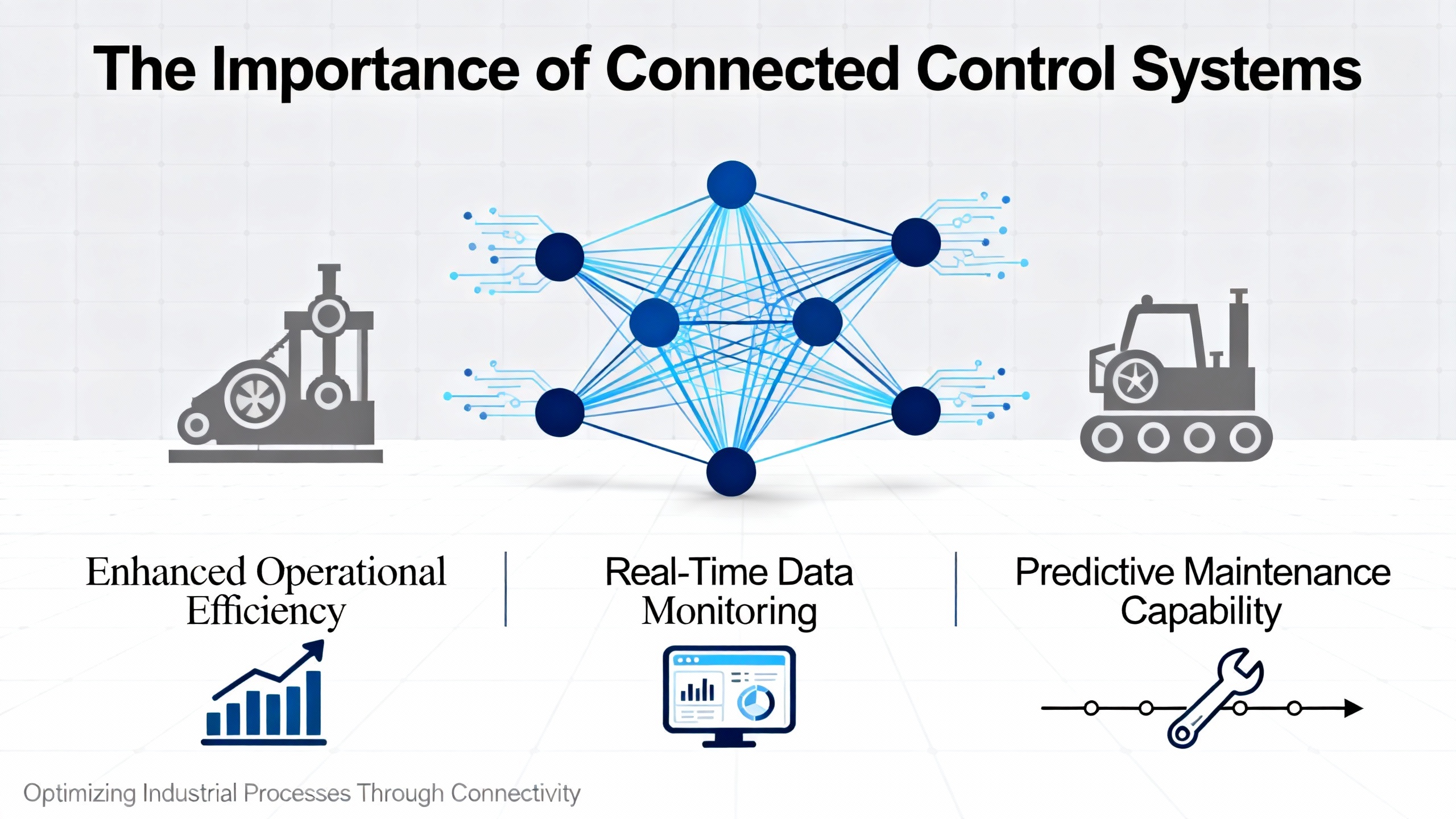
Rockwell Automation describes a connected mill as one where smart systems and digital technologies integrate and automate key stages of production, increasing real-time visibility and enabling better decisions. Similar concepts appear in ABB’s mill‑wide optimization platforms and Emerson’s pre‑engineered application packages and asset management tools. The underlying idea is consistent: break down the islands of automation and move from unit‑by‑unit firefighting to coordinated, mill‑wide performance management.
In practice, a connected Rockwell mill means that:
The basic regulatory control for digesters, lime kilns, paper machines, utilities, and wastewater all run on a coherent control platform rather than a patchwork of orphaned controllers.
Quality and production data stream into historians and analytics tools, much like the OSIsoft PI historian that ACE preserved while modernizing their DCS, allowing you to see cause‑and‑effect across the entire process rather than staring at a single trend screen.
Decision support and optimization layers can sit on top of this foundation, echoing the hierarchical structures discussed in the ScienceDirect survey and ABB’s advanced process control offerings: stable regulatory loops at the bottom, multivariable advanced control in the middle, and economic or production optimization above.
From a power and reliability perspective, a connected mill also raises the stakes. When most key loops and logic reside on one platform, a voltage sag or short interruption that resets controllers can ripple across the entire operation, not just a single machine. That is why I treat control and information layers as critical loads that deserve engineered power protection, not just “whatever is left” on the plant distribution system.
Where Rockwell Control Systems Deliver the Most Value
Fiberline and Pulp Quality: Stabilize Kappa, Stabilize Everything
Pulping and bleaching are natural first candidates for advanced control on a Rockwell platform. ABB’s OPT800 Cook/C solution for continuous digesters, for example, uses advanced process control to estimate and stabilize Kappa number, residual alkali, chip level, and blow consistency. Reported outcomes include reduced Kappa variability and lower steam and alkali consumption, which also cut downstream bleaching costs.
The ScienceDirect survey on advanced control in pulp and paper emphasizes that these units are multivariable, nonlinear, and subject to long dead times. Traditional single‑loop PID control struggles to keep up with wood variability, load changes, and disturbances. Model‑based multivariable control and inferential measurements (soft sensors) for Kappa and other fiber properties are described as enabling technologies.
From a reliability and power perspective, I see two practical implications when deploying Rockwell control in the fiberline. First, measurement quality becomes non‑negotiable. ABB explicitly notes that advanced process control depends on accurate sensors, robust actuators, and a reliable DCS; with poor measurements, even the best algorithms underperform. Second, controller and network uptime directly affects chemical usage and pulp quality. A sag that resets a digester controller may not only trip a unit but also drive up chemical usage for hours as operators fight to re‑stabilize the line.
As an example calculation, imagine a fiberline producing 1,000 tons of pulp per day. If advanced control and connected Rockwell automation let you increase effective throughput by just 5 percent, echoing the McKinsey range cited by ProcessMiner, that is an extra 50 tons per day without new major equipment. If the contribution margin is even $100 per ton, that is $5,000 per day, or about $1,825,000 per year, before counting chemical and energy savings.
Lime Kiln, Recovery, And Energy: Taming Major Consumers
Lime kilns and recovery systems are notorious energy consumers and sources of variability. ABB describes lime kilns as having issues such as low thermal efficiency, high fuel use, ring and dust build‑up, refractory overheating, poor lime quality, and increased emissions. Their OPT800 Lime advanced control solution combines model predictive control with operator laboratory results to optimize lime production rate, cut energy consumption and emissions, and improve process visibility.
The ScienceDirect advanced control survey similarly points to recovery boilers and kilns as units where multivariable control and real‑time optimization can deliver several‑percent energy savings. Emerson also highlights reducing energy consumption as a key target for its pulp and paper control solutions.
When you port that thinking to a Rockwell‑based architecture, the technical control algorithms may differ, but the requirements are consistent. You need stable, high‑availability controllers in protected power zones, clean measurement signals, and robust communication networks. You also need power distribution and protection coordinated so that a motor feeder trip does not take down the control system that is supposed to manage the upset.
From a power specialist standpoint, I often recommend separating control power for these areas from large motor feeders, using UPS‑backed panels and appropriate isolation. It is far better to ride through a short grid disturbance and let advanced control handle a kiln upset than to force operators into manual recovery after every flicker of the lights.
Wet End And Paper Machine Quality: From Partial View To Full Sheet Insight
On the paper machine, variability at the wet end shows up as sheet defects, web breaks, and rejected rolls. ABB points out that traditional quality control based on manual lab tests and operator intuition provides only a partial view and misses fast sheet variations. Modern automated quality testing can capture around ten times more data points per reel than manual methods, giving a full‑sheet view of strength, basis weight, and fiber orientation.
ABB’s Wet End Control advanced process control monitors and analyzes wet‑end processes with the goal of reducing downtime, chemical additive usage, and production costs while maximizing throughput. The ScienceDirect survey supports this focus, emphasizing that advanced multivariable control of basis weight, moisture, and caliper can significantly cut variability and broke.
Rockwell Automation’s vision of a connected mill dovetails with this. With integrated controls and data flows, you can correlate wet‑end disturbances with upstream fiberline events and downstream finishing issues, rather than treating each as an isolated puzzle. Emerson’s commentary on mill‑wide optimization, and ABB’s description of platforms such as ABB Ability Plant Optimizer, underline the same shift from local to system‑level decisions.
Imagine a paper machine running 3,000 tons per day of packaging board. If advanced control and full‑sheet quality measurement let you safely reduce average basis weight by even a small margin while staying within strength specs, higher‑frequency data and automated feedback can turn into hundreds of thousands of dollars per year in fiber savings. Those gains show up only when your control, measurement, and power systems stay online and synchronized.
Utilities, Water, And Wastewater: Hidden Levers For Compliance And Cost
Utilities and water systems are often treated as side projects, but their control matters. In the ACE case study, modernization extended beyond pulping and bleaching to wastewater, where PCS 7 controllers and new HMIs replaced older equipment. The modernization added functions such as caustic addition, pH control, CO₂ addition, scrubber control, and residence‑time management to maintain environmental discharge quality. The project reduced both production and wastewater treatment chemical usage while improving compliance.
Rockwell Automation and its partners highlight similar “balance of plant” coverage, from utilities and water to emissions and finishing. RPPaperImpex and Haber both note that automation and AI can optimize energy and water consumption, reduce waste, and support environmental performance.
From my perspective, these areas are also where power quality is sometimes weakest, with long feeder runs, mixed loads, and ad‑hoc expansions. When tying Rockwell control into utilities and water treatment, I look first at segmentation: which MCCs and panels truly need ride‑through, which HMIs and controllers need UPS‑backed power, and how to avoid nuisance trips that could jeopardize environmental compliance. A short loss of control in a wastewater plant may not stop production immediately, but it can lead to permit issues and expensive rework.
Designing A Rockwell-Based Architecture: Lessons From Modernization Projects
From Obsolete DCS To Modern, Redundant Platforms
The ACE modernization story illustrates challenges that many mills face before moving to a Rockwell or similar platform. Their pulp mill relied on an obsolete DCS with limited spare parts and a shrinking pool of engineers who understood its configuration. The solution was a staged migration to a modern distributed control architecture with redundant controllers, redundant communication, diverse I/O, and redundant HMI servers and clients.
They retained the existing OSIsoft PI historian, repointing its tags from the legacy DCS to the new controllers so that PI continued to store both historical and new data. The upgrade proceeded in four phases, handling on the order of thousands of I/O points across digesters, washers, bleaching, chemical systems, brown stock washers, powerhouse, and wastewater recovery.
The lessons carry directly into Rockwell projects. First, a phased approach reduces outage risk and spreads capital cost. Migrating hundreds of I/O points at a time, as ACE did, allows parallel testing and learning before committing the whole mill. Second, preserving historians and data structures where possible maintains continuity for engineers and analysts. Mills that rip out everything, including naming conventions and historian data, often underestimate the cost of re‑learning operational patterns that were visible in the old system.
Third, redundancy matters. Rockwell Automation’s connected mill vision assumes high availability. That means paired controllers where justified, redundant networks, and HMI servers that can fail over gracefully. The goal is not zero faults, which is unrealistic, but graceful degradation: a controller or switch failure should not take down half the mill.
Project Execution: Outages, Scope, And Radical Accountability
Revere Control Systems, which delivers mill‑wide automation and control across brown stock, recovery, utilities, water treatment, and finishing, emphasizes that on‑time delivery is the dominant success metric in paper projects. Every hour of downtime is direct financial loss, and unplanned outages can permanently damage vendor relationships.
Revere describes a front‑end loading (FEL) approach, progressing from discovery to design and using that process to clarify scope, costs, risks, and return on investment. They also highlight heavy pre‑outage preparation, from network design and equipment testing to safety reviews and go‑or‑no‑go meetings, so that when the outage window starts, uncertainty is minimal. Automation and instrumentation are often the last steps before restart, and Revere explicitly takes accountability for that final deadline.
If you standardize on Rockwell Automation for your mill, this mindset is just as critical. A beautifully engineered Rockwell architecture on paper means little if your outage plan is rushed, your MCC feeders are not ready, or your operators see the new system for the first time on startup day. The best projects I see invest early in network diagrams, power single‑line updates, SAMA‑style control loop documentation, and operator training materials so that the commissioning week is execution, not improvisation.
Advanced Control, AI, And Rockwell: What Is Realistic Today
Building Blocks: From PID To MPC And Real-Time Optimization
The advanced control survey summarized on ScienceDirect defines “advanced control” mainly as model‑based, multivariable, constraint‑handling approaches such as model predictive control, state estimation, soft sensors, and real‑time optimization, in contrast to traditional single‑loop PID control. It describes a hierarchical structure: basic regulatory control at the field level, multivariable advanced control coordinating interactions and constraints, and supervisory optimization layers aligning operation with economic objectives.
ABB’s lime kiln and digester applications embody this architecture, combining model predictive control with laboratory feedback and reliable measurements. Emerson’s pulp and paper offering similarly combines DeltaV technologies with pre‑engineered application packages and asset management, supported by lifecycle services to sustain benefits.
On a Rockwell platform, the same hierarchy applies. Field devices and drives execute fast regulatory loops. Upper layers (whether implemented through Rockwell software, partner applications, or third‑party packages) handle multivariable coordination and optimization. A connected mill with good data is the prerequisite; advanced algorithms are the multiplier on top.
The ScienceDirect survey reports that such advanced control projects, when executed well, can cut variability by around 20 to 50 percent and deliver several‑percent reductions in specific energy and chemical consumption, with project paybacks ranging between about six and twenty‑four months. That range aligns with McKinsey’s reported throughput and yield improvements cited in the ProcessMiner analysis.
AI-Driven Chemistry Optimization And Mill-Wide Analytics
Chemical dosing is one of the most obvious use cases for AI and advanced analytics in paper mills. ProcessMiner describes AI‑driven autonomous chemistry optimization that continuously monitors variables such as pulp consistency and bleaching bath pH, then adjusts chemical dosing in real time. The goal is to reduce operator guesswork and manual sampling while avoiding defects like clogged equipment or uneven bleaching.
Haber describes its eLIXA device, an AI‑based solution that integrates real‑time sampling, statistical decision‑making, and chemical dosing to increase efficiency and sustainability. Both sources stress that these systems can improve energy conservation, quality control, and overall operating expenses when deployed on top of existing control infrastructure.
For mill‑wide optimization, ABB notes that modern systems can track material flows and quality‑critical variables across units, supporting system‑level decisions and root‑cause analysis rather than isolated fixes that might harm overall performance. ABB also characterizes these tools as a digital mentor in the face of retiring expertise, embedding best practices and providing decision support.
For a Rockwell‑centric mill, that means two things. First, your Rockwell control platform and historian must provide clean, well‑governed data streams. ProcessMiner warns that many mills still suffer from siloed, unconnected process data, which limits the ability of AI and optimization algorithms to perform. Second, operator trust and transparency matter. ABB notes that operator acceptance hinges on being able to see and understand APC decisions. AI that appears as a black box can quickly be sidelined in favor of manual workarounds.
Pros, Cons, And Adoption Barriers
The benefits of advanced control and AI are compelling: more accurate chemical dosing, faster response to process changes, improved energy conservation, higher and more uniform product quality, and reductions in waste and off‑spec product. ProcessMiner cites industry analyses indicating that automation investments are now more necessity than luxury. Automation providers like RPPaperImpex and Haber add that automation can also improve worker safety by taking over hazardous tasks and enabling predictive maintenance.
However, the challenges are real. ProcessMiner highlights high upfront capital costs for software, hardware, and skilled personnel, along with complex integration and training requirements that can disrupt production if mishandled. Cybersecurity risk increases as mills rely on connected systems, requiring robust protections to avoid unauthorized access and process disruption. Effective AI also needs high‑quality data; scattered, poorly governed data sources are a common limiting factor.
The ScienceDirect survey and ABB’s experience stress organizational factors: operator training, clear performance metrics, systematic model maintenance, and plant ownership of advanced control applications are critical to sustaining benefits. Without them, the initial gains can degrade over time.
In my experience, the mills that succeed with Rockwell‑based advanced control start with a focused pilot on a high‑impact area such as a digester or a paper machine wet end, define explicit KPIs, and keep scope tight enough that they can iterate. This approach mirrors ProcessMiner’s recommendation to use pilot programs and platforms like Solenis OPTIX Applied Intelligence (mentioned as an example) to validate value before full deployment.
Power Reliability And Protection: The Forgotten Foundation
Why Power Quality Matters More In A Connected Mill
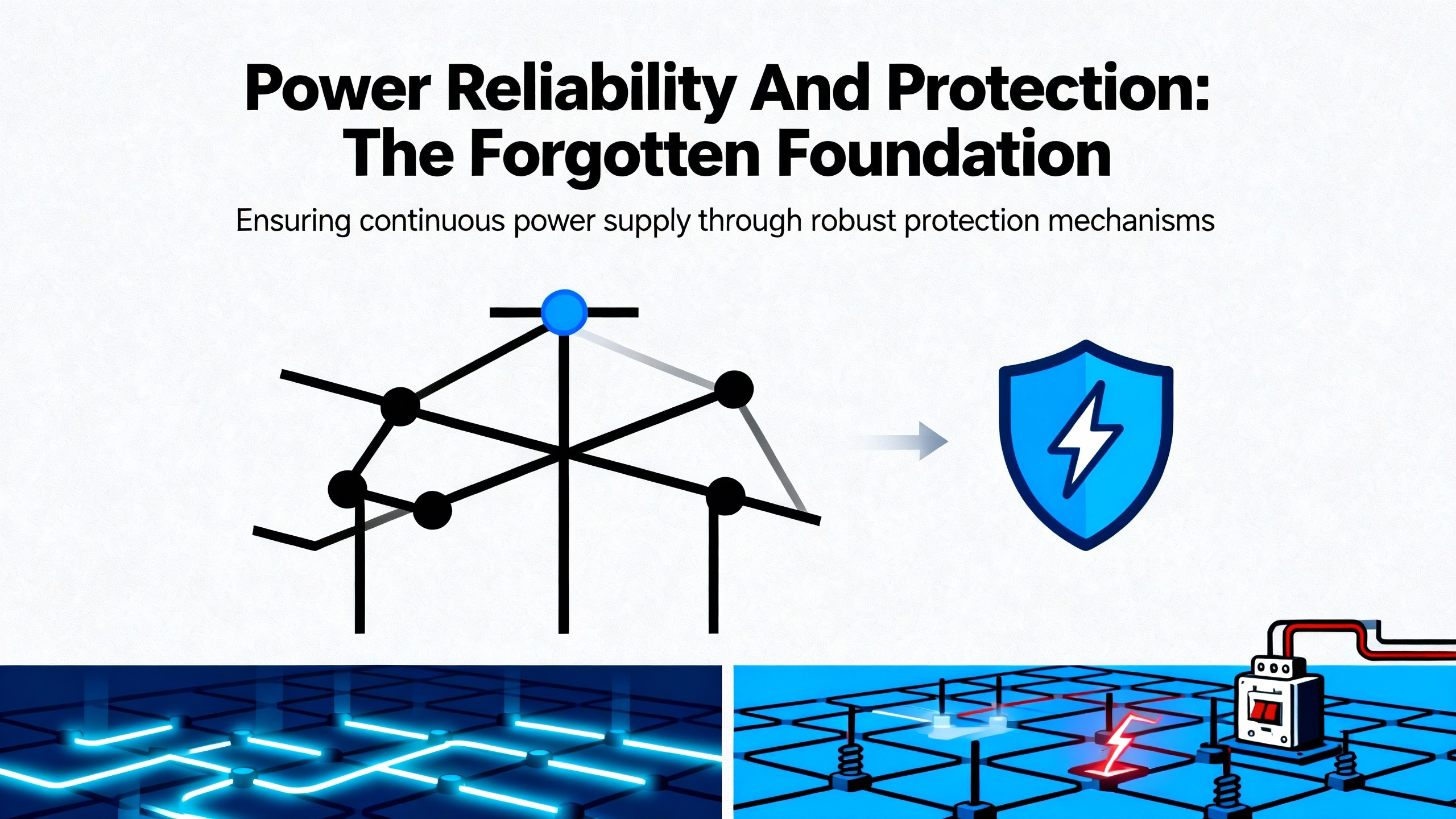
All of the benefits described above assume one basic condition: the control system stays powered and stable. ABB makes clear that advanced process control depends on reliable measurements and a reliable DCS. Emerson emphasizes asset management and lifecycle support to maintain reliability. Rockwell Automation’s connected mill concept implicitly assumes that controllers, HMIs, and servers are available when needed.
From the power side, a connected Rockwell mill is a more fragile asset if it rides directly on a noisy, disturbance‑prone plant grid. Voltage sags, brief interruptions, and protection mis‑coordination can cause control system resets, communication faults, or inconsistent analog readings, which advanced control applications often interpret as plant upsets. The result can be unplanned trips, quality swings, or cautious operators switching sophisticated applications into manual after a handful of bad experiences.
As mills add more automation, AI, and APC, the value of every minute of continuous operation increases. The same McKinsey figures that suggest 5 to 10 percent throughput gains also imply that losing those gains for several hours due to a preventable control power issue is very expensive.
Practical Power-System Design Around Rockwell Controllers
When I sit down with a mill planning a Rockwell Automation upgrade, I start with a few simple reliability design principles. These are grounded in power system practice rather than the automation sources themselves, but they are essential to making any advanced control investment pay off.
First, treat control and information equipment as critical loads. Controllers, HMIs, data servers, and key network switches should be fed from UPS‑supported panels with sufficient ride‑through for common disturbances and short outages. The goal is not to run the entire mill on UPS, but to keep the brains of the operation alive long enough to either ride through or shut down gracefully.
Second, separate noisy, high‑inrush loads from sensitive control power. Large drives and motors introduce voltage dips and harmonics that can affect control electronics if they share poorly designed feeders. A connected Rockwell mill with widespread variable‑speed drives and servo systems needs coordinated protection and filtering so that a fault on one feeder does not propagate into control power.
Third, coordinate protection for selective tripping. In a well‑designed system, a downstream fault on a pump motor trips the pump, not the substation breaker feeding the entire paper machine. This sounds basic, but legacy systems often accumulate decades of changes that break the original coordination. Whenever you modernize control systems, it is an ideal moment to revisit the power single‑line diagrams and protection settings as well.
Fourth, design for maintainability. Redundant controllers and networks are valuable only if plant staff can test failover, replace modules, and understand alarm behavior under degraded conditions. This extends to the power side. Bypass arrangements for UPS units, clear labeling, and documented procedures for transferring critical loads between sources are all part of a robust design.
None of these principles are vendor‑specific, but they become more important as you consolidate more of the mill’s logic and data on a Rockwell platform. The more value you extract from a connected mill, the greater the financial risk of a power‑related control failure.
A Practical Roadmap For Mill Leaders
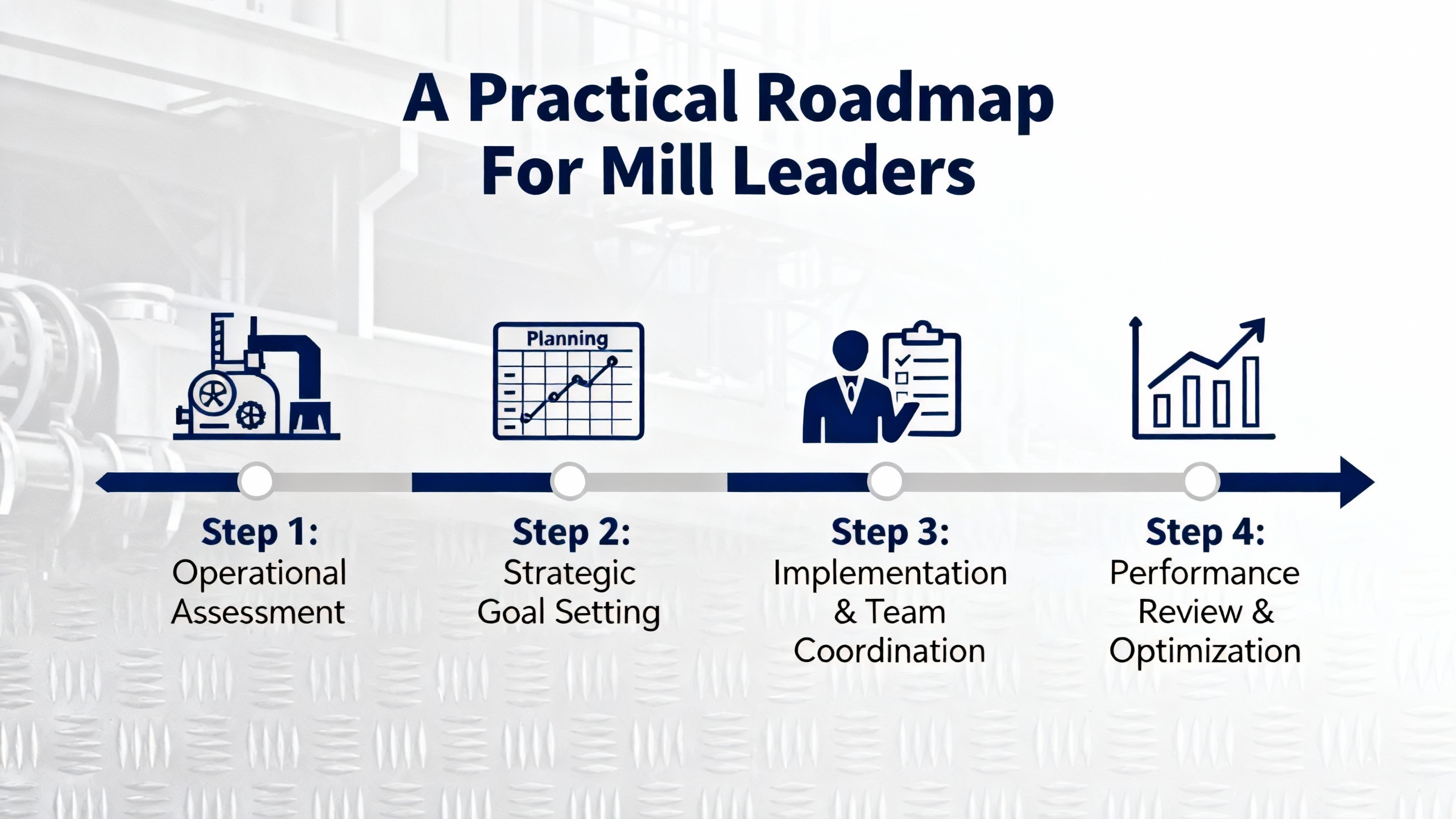
The decision to standardize on Rockwell Automation for a paper mill is not purely a technology choice. It is a business decision about where to focus capital, how to manage risk, and how aggressively to pursue advanced control and digitalization. Based on the industry experience captured by Rockwell Automation, ABB, Emerson, ACE, Revere, ProcessMiner, Haber, and others, several practical decision questions emerge.
The first is where to start. Both the ScienceDirect survey and ABB recommend prioritizing high‑impact, disturbance‑sensitive units such as continuous digesters and paper machines for initial advanced control deployments. Rockwell Automation’s connected mill messaging and Emerson’s experience suggest that these units are also where performance and reliability improvements translate most clearly into economic benefits.
The second is how to phase modernization and advanced control. The ACE case shows that staged DCS migration with historian continuity is a feasible pattern, while Revere’s project model underscores the need for thorough front‑end planning and outage discipline. Combining these insights, a Rockwell‑based roadmap often begins with network and power foundation work, followed by phased controller and HMI replacement, then progressive layering of advanced control and AI applications.
The third is how to embed reliability and cybersecurity into the plan. ProcessMiner warns about increasing cyber‑security risk with connected systems, while RPPaperImpex and Haber point to predictive maintenance and monitoring as benefits. For Rockwell deployments, that means treating network segmentation, secure remote access, patch management, and continuous power monitoring as core project deliverables, not optional extras.
The table below summarizes how these decision areas align with evidence from the broader industry and typical first steps for a Rockwell‑centric mill.
| Decision area | What you need to clarify | Evidence from industry | Typical first move on a Rockwell platform |
| Initial focus units | Which lines dominate profit and quality complaints | ScienceDirect survey and ABB both highlight digesters and paper machines | Pilot Rockwell‑based advanced control on a digester or wet end |
| Modernization approach | Appetite for outage risk and capital phasing | ACE used multi‑phase DCS migration with historian continuity | Plan staged controller/HMI replacement with PI or similar historian |
| Advanced control and AI adoption | Data quality, operator mindset, and analytics skill set | ProcessMiner, ABB, and Haber stress data governance and transparency | Clean up tags, historian, and KPIs; launch a narrow AI or APC pilot |
| Reliability and power protection | Current power quality, critical loads, and coordination state | ABB and Emerson stress DCS reliability; Revere stresses uptime KPIs | Segment control power, add UPS where needed, and review protection |
| Cybersecurity and lifecycle support | Who owns systems after startup and how they will be maintained | Emerson emphasizes lifecycle services; ProcessMiner highlights security | Define internal ownership, external partners, and maintenance cadence |
For example, suppose your mill’s bottleneck is a continuous digester feeding two board machines. You might first confirm that controller power, networks, and historian infrastructure are ready for increased reliance. Next, you could migrate the digester’s control logic to Rockwell hardware in a carefully planned outage, preserving historian tags where possible. Only then would you deploy multivariable control for Kappa and alkali, followed by AI‑assisted chemical optimization, and finally connect this to production planning and mill‑wide optimization. Each step builds on the last, and each has clear KPIs.
Brief FAQ For Mill Teams Considering Rockwell Automation
How fast can a Rockwell Automation modernization pay back in a paper mill?
Industry sources provide ranges rather than guarantees. The advanced control survey summarized on ScienceDirect reports payback times between about six and twenty‑four months for projects that reduce variability and cut energy and chemical use. ProcessMiner, citing McKinsey, notes throughput and yield improvements that can add several percent to effective capacity. When you multiply those gains by your mill’s tons per day and unit margins, it is common to see credible payback estimates within a couple of years, provided the project is tightly scoped and executed.
Do we need to standardize on a single vendor like Rockwell, or can we mix platforms?
In practice, most mills live with some mixed environment, especially during transition periods. However, Rockwell Automation, ABB, and Emerson all advocate for integrated, mill‑wide control and information platforms because they simplify support, reduce integration risk, and make advanced control and AI deployments easier. The ACE project shows that even when modernizing to one main DCS, they retained a common historian to integrate data. From a reliability and power perspective, fewer, better‑understood platforms make it much simpler to design coordinated power protection and recovery procedures.
Where should we start if our control and power infrastructure are both aging?
The best starting point is usually an honest diagnostic. Use the FEL‑style thinking described by Revere to assess process bottlenecks, control system health, and power system weaknesses at the same time. Then pick one or two lines where Rockwell modernization, combined with power and protection upgrades, will clearly move the needle on tons per day, cost per ton, or environmental compliance. Align that scope with a carefully planned outage and include UPS, segmentation, and protection coordination in the same work package as the controller and HMI upgrades. That way, your first Rockwell project demonstrates not only better graphics and faster loops, but visibly higher reliability.
Closing
A connected Rockwell Automation mill is not just a new control cabinet; it is a strategic shift in how you run pulp and paper operations. The experience reported by ABB, Emerson, ProcessMiner, ACE, Revere, and others shows that modern control, advanced process control, and AI can deliver real gains in throughput, quality, and cost when built on solid power, measurement, and organizational foundations. As a power system specialist, my advice is simple: if you are going to trust your mill to a connected Rockwell platform, give it the power reliability, protection, and disciplined execution it deserves. That is how control systems become profit centers rather than just another line item in the maintenance budget.
References
- https://www.academia.edu/10700713/Application_of_advanced_control_methods_in_the_pulp_and_paper_industry_A_survey
- https://www.epa.gov/sites/default/files/2015-12/documents/pulpandpaper.pdf
- https://do-server1.sfs.uwm.edu/mirror/86M021528E/lib/46M398E/process__control-fundamentals__for-the-pulp__and__paper-industry_0101r249.pdf
- https://www.tappi.org/content/PRESS/TOC/0101R249.pdf
- https://blog.processminer.com/challenges-and-benefits-of-ai-driven-autonomous-chemistry-optimization-for-the-pulp-paper-industry
- https://www.ace-net.com/resources/improving-a-pulp-mills-production
- https://www.duplointernational.com/article/how-automation-transforming-printing-industry
- https://www.haberwater.com/post/automation-in-the-pulp-and-paper-industry
- https://praxie.com/automation-in-paper-and-pulp-manufacturing/
- https://www.pulpandpaper-technology.com/articles/the-role-of-automation-in-modern-paper-mills


 Videos
 News
News Applications





Leave Your Comment