Summary: Modern pulp and paper mills need tightly integrated automation and rock-solid power infrastructure to squeeze more tons, better quality, and lower energy use out of every production line without sacrificing reliability.
From Islands of Control to a Connected Mill
The pulp and paper industry is brutally energy- and capital‑intensive, so every minute of uptime and every kilowatt saved matters. Studies from North Carolina State University show that basic efficiency and reliability upgrades alone can cut mill energy use by roughly 20%, with 10–30% greenhouse‑gas reductions from simple loss elimination.
Vendors like ABB, Emerson, Rockwell Automation, and Valmet now design mill‑wide automation platforms that go far beyond standalone PLCs. Their distributed control systems, advanced process control (APC), and analyzer packages span the entire flow: woodyard, pulping, recovery, utilities, paper machine, and finishing.
ARC and other analysts highlight a clear trend: new greenfield megamills are specified as “connected mills” from day one, while mature plants pursue brownfield modernization—layering advanced control, analytics, and energy management onto existing assets. In both cases, a coherent architecture beats patchwork upgrades.

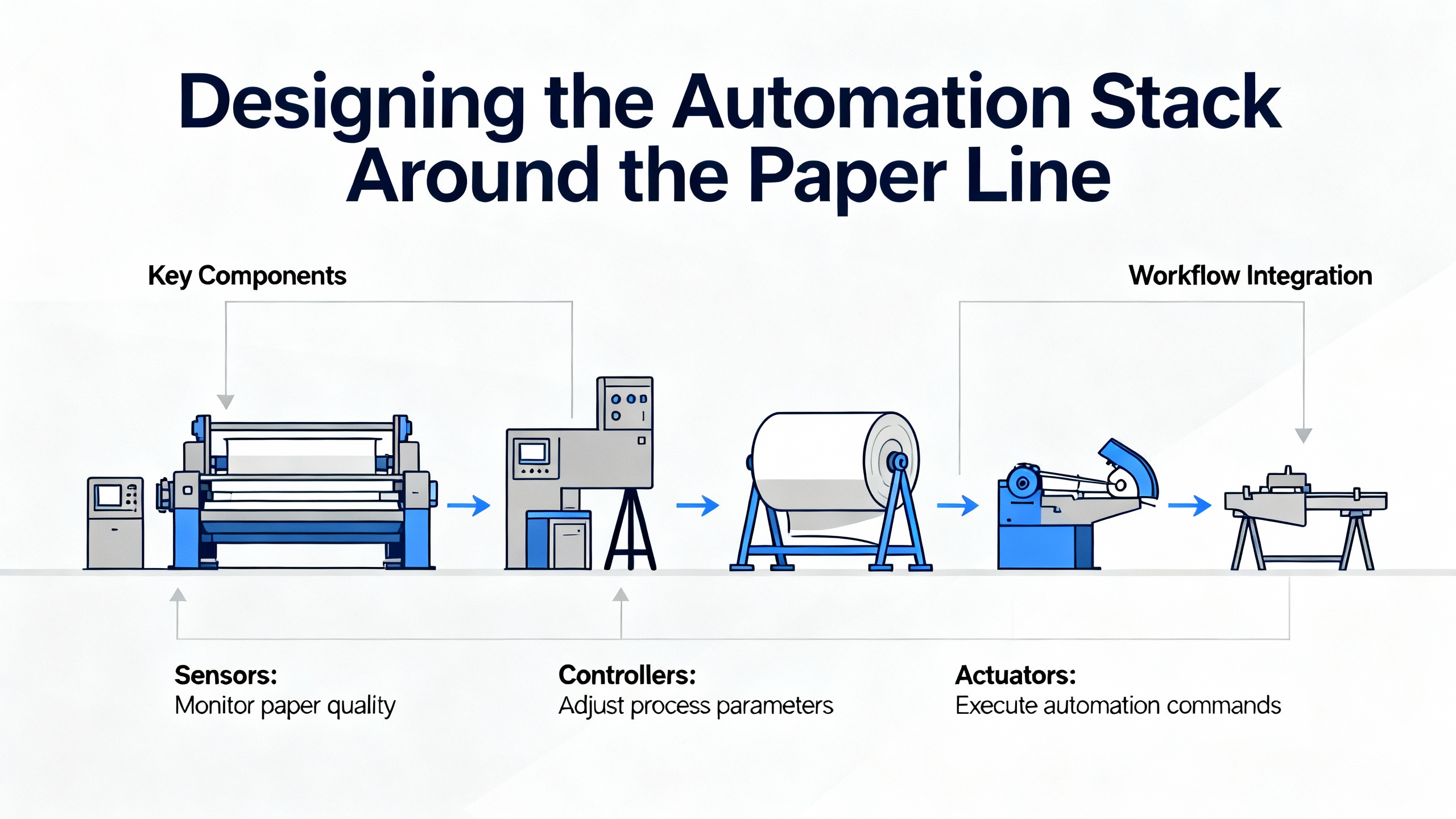
Designing the Automation Stack Around the Paper Line
Complete systems start with good front‑end engineering. ABB and ANDRITZ, for example, use simulation tools and FEED studies to validate process concepts and control strategies before hardware is ordered. ANDRITZ’s IDEAS simulator is widely used in kraft mills to test process design and control logic so startup is faster, smoother, and safer.
On the shop floor, the core stack typically includes:
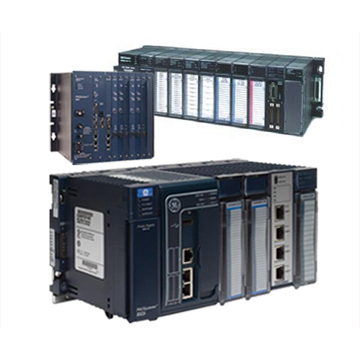
- PLCs and DCS for equipment and process control from woodyard to winder.
- Standardized industrial Ethernet (such as Converged Plantwide Ethernet) for deterministic, cyber‑secure networking.
- HMI/SCADA systems with industry‑specific libraries so operators see consistent graphics, alarms, and interlocks.
- APC layered on top of basic control once the line is stable, to push constraints and trim variability without new hardware.
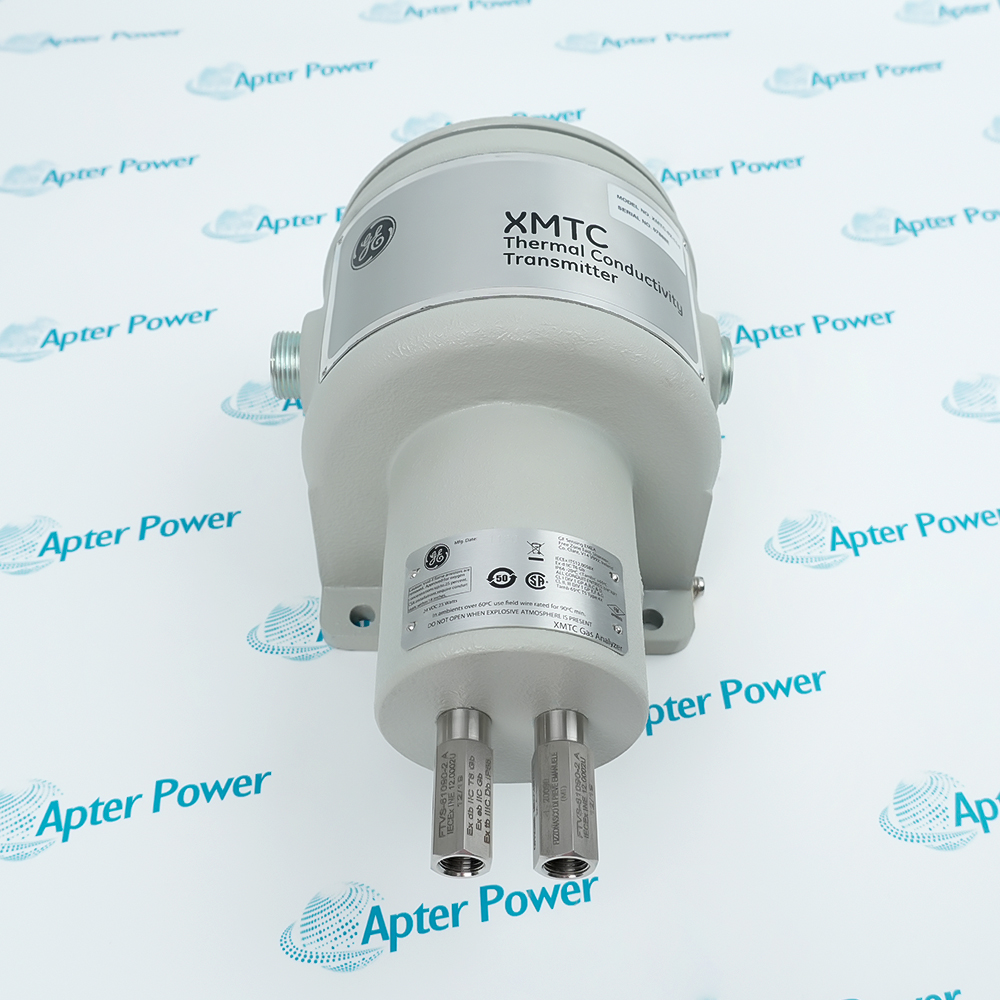
Woodyard projects documented by EOSYS show how migrating obsolete PLCs to modern ControlLogix platforms, redesigning networks, and updating HMI graphics can radically improve visibility and reliability before a single new motor or conveyor is installed. In parallel, analyzers and real‑time quality measurements (moisture, basis weight, chemical concentrations) close the loop on product quality.
As a power systems engineer, I’ve seen that the most successful projects insist on first proving control logic in simulation, then in an isolated factory acceptance test, before touching the running paper machine. That discipline saves both downtime and burned motors.
Power Reliability: The Hidden Enabler of Automation
None of this automation delivers value if the electrical supply is unstable. A typical paper mill can burn through as much as half the heating value of incoming biomass just to generate steam and power; another large fraction is purchased from the grid. North Carolina State’s review notes that 40% of sector energy losses stem from equipment inefficiency and 28% from distribution systems—exactly where power quality and protection live.
Modern mills are steadily upgrading to high‑efficiency motors, intelligent MCCs, and variable‑frequency drives, as seen in projects using Rockwell IntelliCENTER and ControlNet‑connected VFDs. That cuts frictional losses—often 15–25% of total mill energy—while giving fine‑grained speed and torque control for web handling.
Equally important is protecting the automation layer itself:
- UPS systems for DCS, PLCs, analyzers, and safety systems so a brief sag or outage doesn’t crash control.
- Industrial inverters and ride‑through solutions for critical drives (fans, pumps, vacuum) to avoid trips on voltage dips.
- Segmented power distribution so a fault in a noncritical area does not propagate and drop the entire machine.
In my mill projects, a properly engineered UPS and power‑quality scheme routinely pays for itself in avoided forced shutdowns. One unplanned paper machine stop, plus restart waste, often costs more than a decade of UPS maintenance.

Digitalization, People, and Continuous Improvement
Automation hardware is only half the story; data and people determine whether you capture its value. A Kaizen Institute case in pulp, paper, and packaging reported a 20% reduction in unplanned stoppages, 26% fewer planned stoppages, and over €1.7 million in annual savings by combining lean methods, root‑cause analysis, and standardized work.
Digital tools—AI, machine learning, and analytics—are being adopted across mills, as described by the UMaine Pulp and Paper Foundation and Vector Solutions. Predictive maintenance, real‑time monitoring, and connected‑worker platforms help teams spot micro‑stoppages, lubrication issues, level‑measurement problems, and quality drifts before they become outages.
There is a nuance: global surveys cited by Vector Solutions show large manufacturers have realized only a fraction of the revenue and cost benefits they expected from digital and AI initiatives. The gap usually traces back to weak change management, poor data discipline, and undertrained operators.
For a resilient, high‑performance paper mill, the recipe is consistent across the best performers:
- Design an integrated automation and power architecture, not isolated “point fixes.”
- Use simulation, staged testing, and robust UPS/protection to make controls reliable from day one.
- Embed continuous improvement and operator training so the data from your systems drives real, sustained gains in uptime, energy efficiency, and product quality.

References
- https://bioresources.cnr.ncsu.edu/resources/energy-efficiency-challenges-in-pulp-and-paper-manufacturing-a-tutorial-review/
- https://umaineppf.org/2024/06/06/embracing-the-digital-era-trends-in-the-pulp-and-paper-industry/
- https://blog.processminer.com/the-future-of-pulp-paper-manufacturing
- https://www.valmet.com/
- https://www.arcweb.com/our-expertise-industries/top-technology-trends-pulp-paper


 Videos
 News
News Applications








Leave Your Comment