Summary: ABB variable frequency drives combine wide electrical ratings, advanced control modes, and robust environmental protection to deliver efficient, reliable motor control—provided you match the specs carefully to your load, environment, and power system.
Electrical Ratings That Define an ABB VFD
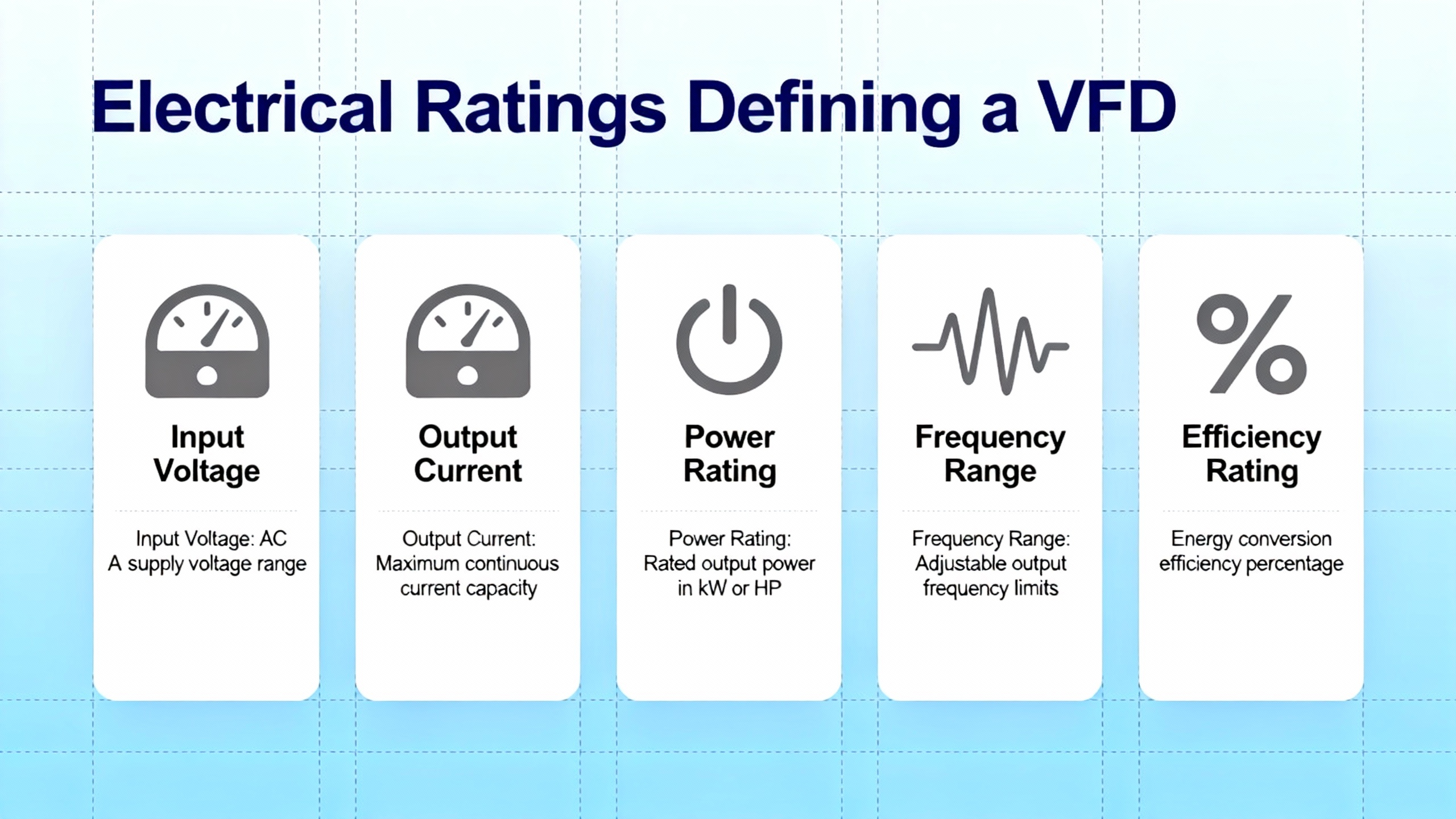
When you size an ABB VFD, the first filter is basic electrical ratings: voltage, horsepower, and current. Across the ACS family alone, you can cover everything from fractional horsepower OEM machines to multi‑megawatt process drives.
Micro drives such as the ACS255 typically span about 0.5–20 hp on 115–600 V systems with simple V/Hz or sensorless vector control, ideal for small pumps, fans, and conveyors. General‑purpose ACS580 drives extend up to roughly 500 kW, while high‑performance ACS880 systems reach into the multi‑megawatt range for cranes, mills, and heavy process lines, as highlighted in Drives & Controls.
Overload capability is just as critical as continuous rating. Check that the selected ABB drive can deliver roughly 150% of rated current for around 60 seconds and up to 200% for brief peaks, as noted in selection guides from SHCKE and ABB partners. If your duty cycle includes frequent starts, jams, or high breakaway torque, you may need to step up one frame size to protect both motor and drive.
Short‑circuit ratings are often overlooked at the specification stage. For example, the ACS550 family features short‑circuit current ratings around 65 kA according to Industrial Gearbox Solutions. Your upstream protection, bus bracing, and drive SCCR must align, or you risk a noncompliant and unsafe installation.
Control, Motor Compatibility, and Dynamic Performance
From a process and reliability standpoint, the control method you choose matters as much as the nameplate amps. ABB gives you a spectrum: scalar V/Hz, sensorless vector, and high‑end Direct Torque Control (DTC) in the ACS880 series.
Scalar control is perfectly adequate for non‑critical variable‑torque loads like standard building pumps and fans. When you need fast speed response, tight tension, or high starting torque—think winders, hoists, and high‑speed machinery—vector or DTC is the right tool, as emphasized in ABB’s drive comparison materials.
Motor compatibility is broad. The ACS380, for instance, can run induction, permanent magnet, and synchronous reluctance motors with multiple torque control modes. In food and beverage, the ACH580 Food Safe variants offer 1–350 hp at 380–480 V with Safe Torque Off, hygienic stainless housings, and conformal‑coated boards to survive aggressive washdown, while still delivering precise speed control.
Environmental and Mechanical Specifications for Reliability
In the field, most premature VFD failures I see track back to environment, not silicon. ABB’s own guidance calls for typical operating ranges around 32–104°F for standard indoor drives, with some families (such as ACH580 Food Safe) designed to operate from about 5–131°F. If you run near the top of that range, derating or forced cooling stops nuisance trips.
Altitude limits are just as important: many ABB drives are rated up to roughly 3,300 ft without derating. Above that, thinner air reduces cooling, and you must apply the manufacturer’s derating curves or risk thermal stress on DC bus capacitors and IGBTs.
Ingress protection (IP) ratings should match the real world, not the datasheet wish list. IP20 or IP21 suits clean electrical rooms; dusty or washdown zones push you toward IP54, IP55, or IP66 options found in ACS255, ACS580, and ACH580 families. SHCKE notes that the smallest ABB units can be roughly 4 × 2 × 5 in and about 2–3 lb, but cabinet‑mounted systems can exceed 200 lb—so plan structure, airflow paths, and service access early.
Clearances matter for thermal reliability. Industrial Gearbox Solutions recommends around 8 in above and below and about 2 in on the sides of typical wall‑mounted ABB drives to maintain airflow. Cramming drives into undersized enclosures is one of the fastest ways to shorten service life.
Integration, Safety, and Practical Selection
From a power‑system perspective, a VFD is another intelligent load on your network. ABB drives support a wide set of fieldbuses—Modbus, BACnet, PROFIBUS, PROFINET, EtherNet/IP, and others—so you can supervise energy, alarms, and trends from your plant SCADA or building automation system. In HVACR applications, ABB reports energy savings on the order of 20–60% in variable‑torque services when drives are properly applied.
Safety functions are embedded, not bolt‑on. Even compact ACS255 and ACS380 models include Safe Torque Off certified up to SIL 3 in many variants, with the ACS880 adding safe speed and other advanced options. Properly wired, these functions let you meet machine safety standards without over‑relying on contactors that introduce mechanical failure points.
When I advise teams on ABB VFD selection, I usually walk through four checkpoints:
- Match voltage, hp, and overload to the motor and worst‑case duty.
- Confirm control mode and motor type (induction vs permanent magnet vs synchronous reluctance).
- Validate environment: temperature, altitude, IP rating, and cooling clearances.
- Check system fit: SCCR, harmonics strategy, and required communications.
One nuance: some third‑party technical PDFs (for example, from Precision Electric) sit behind security checks and were not accessible in this research, so always verify final numeric ratings against the latest ABB datasheet for your exact catalog code.
Done right, ABB VFD specifications become more than catalog numbers—they become a design tool to lock in motor reliability, power‑system resilience, and measurable energy savings over the full life of the drive.
References
- https://www.inverterdrivesystems.com/abb-drives-acs580-or-acs880-what-are-the-differences
- https://vfds.com/abb?srsltid=AfmBOopQD-0PEulFcFiYzvzDZOpvGxdjtGXN4HGclWvKpXVZ9T7rdAVB
- https://new.abb.com/drives/what-is-a-variable-speed-drive
- https://www.controleng.com/top-5-vfd-parameter-changes-explained/
- https://cdn.logic-control.com/media/ACS350REV_C.pdf


 Videos
 News
News Applications






Leave Your Comment