Programmable logic controllers, or PLCs, have quietly become the control backbone of modern oil and gas facilities. From scattered well pads to dense refinery units, these rugged industrial computers watch every pressure, temperature, and flow signal, then decide in milliseconds whether to open a valve, trip a pump, or start an emergency shutdown. In parallel, they increasingly share data with power systems, UPS-backed control rooms, and enterprise analytics that decide how to balance safety, production, and energy cost.
Automation specialists in sectors such as oil and gas, petrochemical, and power generation now treat PLC-based control as essential infrastructure rather than a nice-to-have upgrade. Petrotech, for example, emphasizes that advanced control of turbomachinery and process equipment is now central to competitiveness, not an optional add-on. Market data from LS Electric America shows the PLC market growing from roughly $12.52 billion in 2021 toward more than $22 billion by 2030, a sign that this technology is mature, widely adopted, and still expanding into new applications.
In this article, written from the perspective of a power system specialist and reliability advisor, the focus is on how PLC systems enable reliable control in upstream and downstream oil and gas operations, how they interact with power quality and UPS infrastructure, and what it takes to keep them safe, available, and maintainable over decades of service.
PLC Fundamentals in an Oil and Gas Context
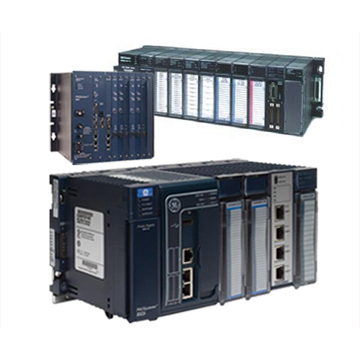
At its core, a PLC is a hardened industrial computer that monitors inputs, executes logic, and drives outputs to control equipment. RL Consulting and Empowered Automation describe a typical architecture with three critical building blocks: input and output modules that collect signals from sensors and push commands to actuators, a central processing unit with programmable memory that runs the control logic, and communication interfaces that link the controller to HMIs, SCADA, and other controllers.
PLCs are deliberately built for harsh environments, using solid-state electronics in place of mechanical relays. This design gives them the durability, vibration tolerance, and temperature resilience that industries such as oil and gas demand. Albireo Energy notes that each PLC executes a rapid scan cycle: first reading inputs, then executing its program, then updating outputs, and finally performing diagnostics and communications. This loop repeats in milliseconds, giving PLCs the deterministic, real-time behavior needed for process safety and tight control.
Programming is typically done using the IEC 61131‑3 family of languages. Crow Engineering, RL Consulting, and LS Electric highlight Ladder Diagram, Function Block Diagram, Structured Text, and Sequential Function Charts as the main choices. Ladder logic, which visually resembles relay schematics, remains popular in oil and gas because many technicians come from electrical backgrounds. Function block and structured text are often used for more complex calculations, sequencing, and data handling.
In practice, a PLC system in oil and gas does more than basic logic. It is the chassis for integrated safety interlocks, predictive maintenance rules, energy management routines, and alarm handling. It also becomes the front-line interface to power protection equipment such as UPS units and redundant DC supplies that keep control functions alive when the grid or generator does not.
Upstream Operations: PLCs at the Well Pad and Beyond
Upstream oil and gas brings a unique mix of challenges: dispersed assets, harsh environments, and a mix of production, injection, and safety functions that must run reliably with limited human presence. The PLC has proven well suited to this domain.
The PLC maintenance guide from eWorkOrders points out that in oil and gas, each well pad with roughly one to six wells typically has its own PLC. That controller coordinates local process measurements, communicates with field devices, and integrates with higher-level SCADA or DCS systems. LS Electric notes that in oil and gas specifically, PLCs are responsible for precise control of drilling, pressure and temperature, pipelines, refining steps, and gas compression and storage. At the well pad, that translates into logic for flow and level control, separation, gas lift or artificial lift, and wellhead safety valve management.
In upstream service, PLCs are expected to operate twenty-four hours a day, seven days a week, often with downtime allowed only during planned maintenance or reservoir interventions. E2G, a consulting firm focused on instrumentation and control reliability, stresses that instrumentation and control systems in process industries are designed for continuous operation with outages reserved for planned turnarounds. For well pad PLCs, that requirement is amplified by difficult access and weather exposure.
The safety dimension is particularly acute upstream. Industrial Automation Co. describes safety PLCs used in emergency shutdown (ESD) systems for oil and gas facilities, where the controller must detect hazardous conditions and move the plant to a predefined safe state. E2G ties this into regulatory expectations under OSHA’s process safety management rules, where emergency shutdown systems, interlocks, and safety instrumented systems must be part of mechanical integrity programs with written procedures, documented test intervals, and defined replacement criteria.
In practical terms, an upstream PLC implementation that supports reliability and safety will:
Configure robust input filtering and plausibility checks on key instruments such as pressure and temperature transmitters, to avoid spurious trips.
Include safety interlocks and ESD sequences in a dedicated safety PLC or logic solver, designed and documented in accordance with ANSI/ISA 61511 safety requirements.
Run on power supplies that are themselves backed by UPS or redundant DC sources, so that brief voltage dips or generator trips do not create unsafe transitions.
And integrate with remote SCADA systems that provide a consolidated view of many well pads while keeping local PLCs capable of safe autonomous operation if communications are lost.
The goal is a control architecture where a single well or small cluster is fully manageable locally, but also forms part of a larger, coordinated automation strategy for the field.
Downstream and Midstream: Refining, Pipelines, and Terminals
If the upstream domain is defined by distance and weather, downstream is defined by density and complexity. Refineries, petrochemical complexes, pipelines, and marine terminals combine hundreds or thousands of control loops, advanced analytics, and demanding safety functions in relatively small footprints. Here too, PLCs play a central role.
LS Electric emphasizes that in regulated process industries such as oil and gas, PLCs maintain precise control over temperature, pressure, mixing, dosing, packaging, drilling, pipelines, refining, and gas compression and storage. In downstream plants, the PLC is often paired with a distributed control system or SCADA platform, but its function is the same: deterministic control of motors, valves, burners, and subsystems such as loading racks, tank farms, and unit operations where discrete and batch logic dominate.
A useful example comes from Petrotech’s description of integrated automation for gas turbines, steam turbines, compressors, generators, and pumps. Their control solutions demonstrate how PLC-based systems can either replace or augment older DCS-based controls, particularly for turbomachinery and rotating equipment that demand specialized protection logic. The focus is on improving equipment reliability, reducing downtime, and increasing overall operational efficiency without mandating a full replacement of existing plant systems.
SCADA-focused research summarized by ScienceDirect shows how PLC and SCADA combinations provide real-time monitoring and control in critical infrastructures such as power systems, water treatment, and transportation. These architectures have evolved from centralized to networked and, more recently, to IoT-based forms that give operators and engineers richer data about assets. The same concepts translate directly to downstream oil and gas, where refinery control rooms already rely on PLC–SCADA networks for tank level monitoring, transfer control, flare systems, and boiler management.
Midstream pipelines and terminals place additional emphasis on remote supervision and condition monitoring. LS Electric highlights the role of PLCs in pipelines and gas compression. Predictive maintenance guidance from PDF Supply shows how PLC-connected sensors can feed vibration, temperature, pressure, flow, and electrical current data into edge or cloud platforms for advanced analytics, helping operators detect leaks, equipment faults, or abnormal operations before they develop into outages or safety incidents.
In all of these applications, PLCs sit at the intersection of safety, production, and power quality. A refinery burner management PLC, for example, must be robust against electrical noise from large motors and drives while remaining trustworthy enough to meet safety integrity targets.

Standard PLCs, Safety PLCs, and Functional Safety
Oil and gas facilities cannot treat control and safety as separate worlds. Control logic that pushes throughput must coexist with safety logic that protects people, equipment, and the environment. Here, the distinction between standard PLCs and safety PLCs matters.
Industrial Automation Co. explains that a safety PLC is an industrial control device with built-in safety features such as fault detection, redundancy, and fail-safe logic, designed to keep machinery and processes in a safe condition during faults or emergencies. These platforms are engineered to meet international functional safety standards such as IEC 61508 and ISO 13849, and often IEC 62061. They typically include redundant processing channels, self-checking diagnostics, and certified function blocks for safety actions such as emergency stop, two-hand control, and light curtain monitoring.
Standard PLCs, by contrast, focus on automation and productivity. They may implement some basic diagnostics, but they are not inherently designed to maintain a defined safe state under all fault scenarios or to satisfy specific safety integrity levels.
The distinction can be summarized as follows.
| Aspect | Standard PLC | Safety PLC |
| Primary purpose | Automation and productivity | Functional safety and safe shutdown |
| Fault response | May alarm or stop; behavior depends on program | Forces system to predefined safe state on detected faults |
| Architecture | Single CPU path is common | Typically redundant channels and self-checking diagnostics |
| Standards focus | General industrial control | IEC 61508, ISO 13849, IEC 62061, and related safety standards |
| Typical oil and gas use | Process control, sequencing, data acquisition | ESD, burner management, high-integrity protection systems |
E2G’s work on instrumentation and control reliability reinforces that safety instrumented systems, emergency shutdown systems, and interlocks must be included in mechanical integrity programs. The ANSI/ISA 61511 standard, referenced by E2G as recognized good engineering practice, calls for each safety instrumented function to have a documented safety requirements specification that covers operations, maintenance, proof testing intervals, and replacement criteria. Hidden failures in safety systems, which only become apparent during a demand, must be managed with periodic testing based on consequence severity.
Industrial Automation Co. further advises that, when specifying safety PLCs, components should be selected based on required safety integrity level rather than brand or price. They also stress the importance of version-controlled safety logic, regular simulation of fault conditions, proof testing, and operator training on system behavior and alarms.
For oil and gas operators, this means safety PLCs should be treated as critical protection layers with dedicated design, UPS-backed power, independent communication paths where feasible, and disciplined lifecycle management.

Power Reliability: PLCs, UPS, and Power Protection
From a power system perspective, PLCs are only as good as the electricity feeding them. A clean, stable DC supply is mandatory if you expect controllers to make correct decisions and maintain safe behavior during grid disturbances, generator transients, or switching events.
Solution Control Systems notes that PLC panels must operate within specified environmental and electrical limits, with adequate ventilation and clean power. They warn that brownouts and power spikes can damage components and lead to malfunction. Mochuan Drives, in their integration guidance, emphasizes fault-tolerant strategies that include redundant power supplies, redundant PLCs, and redundant I/O modules so that the system can continue operating despite component failures.
In practice, reliability-focused oil and gas sites extend this approach by placing critical PLCs and networking equipment on uninterruptible power supply systems and, where warranted, on independent battery-backed DC buses. For safety PLCs controlling ESD or burner management, the design objective is clear: the controller must either remain fully functional through short power disturbances or move the plant to a safe state in a controlled way. A well-designed UPS, paired with appropriate surge protection, isolation transformers, and grounding practices, provides the time needed for controllers to execute their shutdown logic rather than collapsing unpredictably.
Allied Reliability’s discussion of PLC maintenance highlights another power-related risk: contamination and seemingly minor hardware issues can lead to intermittent failures that are difficult to diagnose. They describe a case where metallic dust inside a PLC backplane caused random deletion of program sections. While not strictly a power quality issue, this example underscores that control hardware must be physically protected during panel modifications, switching gear work, or any activity that can introduce debris or moisture into cabinets.
From a reliability advisor’s perspective, any PLC design for oil and gas should address power protection explicitly:
Locate PLC and safety PLC cabinets in areas with controlled temperature and humidity, with ventilation and filtration that reflect the dust and chemical exposure of the site.
Feed critical PLCs from industrial-grade UPS systems sized to cover the longest credible power disturbance needed to reach a safe state.
Use redundant power supplies and distribution paths for controllers that support safety functions or critical production, consistent with best practices described by Mochuan Drives.
Monitor DC voltage, UPS status, and breaker positions from the PLC itself, and tie these into alarms and maintenance notifications so that power protection is treated as part of the control system, not an afterthought.
This tight coupling between PLCs and UPS-backed power systems is a recurring pattern in modern oil and gas facilities and is central to resilient operation.
Keeping Control Systems Healthy: Preventive and Predictive Maintenance
Once installed, PLC systems tend to be taken for granted. Yet multiple sources stress that neglecting PLC maintenance can lead to costly downtime and safety risks.
The maintenance guide from eWorkOrders describes PLCs as rugged industrial computers that act as the core of predictive maintenance systems. At the same time, it warns that they require structured preventive maintenance programs. Solution Control Systems outlines practical tasks: back up PLC programs regularly so that configurations can be restored quickly after a hardware failure; check LED indicators for power and battery status; ensure environmental conditions such as temperature and humidity stay within manufacturer limits; clean filters to maintain airflow; and inspect for warped, discolored, or damaged components and any signs of overheating such as burnt odors.
Allied Reliability builds on this with a strong case for formal preventive or predictive maintenance plans supported by checklists and good data. They highlight how PLCs, once installed, often receive little attention until a failure occurs, at which point unplanned downtime, emergency repair costs, and safety exposure rise sharply. They recommend combining historical data such as mean time to failure with predictive techniques so that maintenance actions are taken at the right time, not too late and not unnecessarily early.
The Solution Control Systems article also describes the broader concept of preventive maintenance: scheduled inspections, cleaning, adjustments, and part replacements to prevent unexpected failures and extend equipment life. They distinguish between time-based, usage-based, predictive, and condition-based strategies. For oil and gas PLCs, a hybrid approach often makes sense: certain checks such as cabinet cleaning and visual inspection can be calendar-based, whereas component replacements and program backup verification can be scheduled by operating hours or environmental stress.
PDF Supply’s article on using PLCs for predictive maintenance explains how modern architectures collect and analyze data from sensors connected to PLCs and edge devices. Common techniques include vibration analysis, infrared thermography, oil analysis, and motor circuit analysis. For hydrocarbon industries, they emphasize that high-quality data, well-designed databases, and robust anomaly detection algorithms are essential. They also note that PLCs are traditionally optimized for binary control rather than rich analytical data collection, so many predictive maintenance implementations supplement PLCs with dedicated IoT or edge computing devices that sit alongside them.
E2G’s reliability-centered maintenance guidance helps prioritize where to focus effort. They advocate consequence-based and risk-based maintenance that prioritizes instruments and systems with the highest safety, environmental, or commercial consequences. In practice, that means focusing PLC hardware and logic that supports SIS, ESD, and critical production, while allowing some noncritical assets to run to failure where appropriate.
For oil and gas operators, combining these perspectives leads to a few practical principles: treat PLCs as critical assets with their own maintenance strategy, manage software and firmware versions as carefully as physical components, integrate PLC-related work orders into the site’s CMMS, and connect PLC data to predictive maintenance analytics where it offers clear value.
Integration, Data, and Energy Efficiency
PLCs rarely operate alone anymore. They sit in a web of SCADA systems, HMIs, historian databases, and energy management platforms. Integrating these layers well can unlock significant efficiency and reliability gains.
JHFoster’s work on commissioning complex manufacturing systems illustrates the benefits of integrating many PLCs into a unified SCADA platform. In their case study, a bakery integrated PLCs from thirty-five equipment manufacturers plus plant utilities into a single SCADA environment with recipe management, plant-wide alarms, and a process historian. The outcome was standardized operations, centralized data, and improved decision-making. The same pattern applies naturally to refineries, gas plants, and terminals, where each unit may have its own PLCs that need to contribute to a plant-wide picture.
ScienceDirect’s review of SCADA and PLC in energy and infrastructure underscores that SCADA–PLC combinations now form the backbone of power systems, water treatment, renewable energy, and transportation. Architectures have evolved to IoT-based designs that support remote monitoring and high-resolution data, with examples such as hydropower stations and wind turbines using SCADA data for both state estimation and condition-based maintenance. The lesson for oil and gas is that the same SCADA and analytics techniques that improve grid reliability can be applied to pipeline leak detection, compressor station performance, and flare system monitoring.
LS Electric emphasizes that PLCs integrate with SCADA, HMI, DCS, and IIoT devices via industrial networks and newer protocols such as MQTT with Sparkplug B for efficient, wide-area data distribution. For oil and gas operators consolidating data from remote pads, offshore facilities, and downstream plants, these architectures can reduce bandwidth use and simplify enterprise-wide access to control data.
Energy management is another emerging area where PLCs shine. PLC Department’s article on energy management and efficiency shows how PLC-based control can reduce energy waste and costs by turning off equipment when not needed, shedding loads during peak tariffs, and prioritizing cleaner power sources such as solar over diesel generators. Case studies cited in their work report energy consumption reductions of roughly 15 to 25 percent in various industrial and commercial applications after PLC-driven energy management projects.
Although those examples come from outside oil and gas, the principles translate directly. Compressors, pumps, HVAC systems, and even flare gas recovery units can be scheduled and modulated based on real-time process needs and power prices, without compromising safety. This is where the intersection of PLCs and power systems becomes most obvious: control logic, backed by reliable power and UPS protection, directly governs how electricity is used in the field or plant.
Mochuan Drives adds a crucial layer to this integration story: cybersecurity. As more PLCs are connected to networks and remote access is enabled for diagnostics, they warn that secure communication protocols, strong authentication, network segregation, regular security audits, and timely firmware updates are necessary. ScienceDirect’s review similarly notes that increasing automation and interconnection make SCADA systems less isolated and more exposed, raising the importance of PLC and SCADA-based mechanisms for detecting and responding to cyber threats. In oil and gas, where cyber incidents can have safety and environmental consequences, this is not optional.

Pros and Cons of PLC-Centric Control in Oil and Gas
Taken together, the research and field experience point to a clear conclusion: PLC-centric control architectures bring major benefits to upstream and downstream oil and gas operations, but they also introduce challenges that must be actively managed.
On the positive side, PLCs deliver high reliability and determinism in harsh environments, as Allied Reliability and Empowered Automation both emphasize. They allow fast reconfiguration and scaling as reservoirs, unit operations, or market demands change, as highlighted by Duplico and LS Electric. When combined with SCADA and HMIs, they provide operators with real-time visibility and control from centralized control rooms and remote locations. Integrated safety PLCs, when properly designed and maintained under standards such as IEC 61508 and ANSI/ISA 61511, deliver robust, auditable safety functions. PLC-based energy management and predictive maintenance architectures can reduce downtime, extend equipment life, and cut energy cost.
The downsides are equally real. Industrial Automation Co. notes that safety PLCs typically carry a higher upfront cost, even if their long-term cost of ownership is favorable. PDF Supply and E2G show that designing predictive maintenance and reliability-centered maintenance around PLC data requires skilled personnel, quality data, and careful modeling. Mochuan Drives and ScienceDirect warn that cyber exposure increases as PLCs become more connected, making security architecture and maintenance a continuing workload. Allied Reliability and Solution Control Systems remind us that neglecting basic PLC maintenance such as cleaning, environmental control, and program backups can quietly erode reliability until a high-impact failure occurs.
The net message is that PLC systems are powerful enablers for oil and gas, but they must be treated as strategic assets with dedicated attention to power quality, safety, cybersecurity, and lifecycle maintenance.
Brief FAQ
How do PLC systems differ from a traditional DCS in oil and gas plants?
PLCs excel at high-speed, discrete, and machine-level control, while distributed control systems traditionally handle large numbers of continuous control loops and provide broad plant-wide coordination. In many modern oil and gas facilities, the two coexist: PLCs manage packaged equipment such as compressors, pumps, burner management systems, and loading racks, while the DCS orchestrates overall unit operations. Petrotech’s description of advanced control systems replacing or augmenting existing DCS-based controls reflects this blended architecture, where PLCs handle specialized equipment-level logic and interface with the higher-level system.
When should I consider a safety PLC instead of a standard PLC?
A safety PLC should be considered whenever the control logic performs safety instrumented functions with significant safety, environmental, or commercial consequences. Industrial Automation Co. and E2G both emphasize that emergency shutdown, burner management, and other high-integrity protection functions are best implemented using safety PLCs designed to meet standards such as IEC 61508 and governed under ANSI/ISA 61511 with documented safety requirements, proof-test intervals, and replacement criteria. Standard PLCs are appropriate for non-safety functions such as basic sequencing, monitoring, and production control.
What is a practical starting point for modernizing PLC systems on existing well pads or units?
A pragmatic starting point is to inventory existing PLC hardware, software versions, communication links, and power supplies, then assess them against current reliability, safety, and cybersecurity expectations. E2G recommends leveraging existing hazard analyses to understand criticality, while Allied Reliability and Solution Control Systems highlight the need for formal preventive maintenance plans and verified program backups. From there, operators can prioritize upgrades for the most critical assets, introduce UPS-backed power and redundant power supplies where missing, adopt safety PLCs for ESD and burner management functions, and integrate PLC data into SCADA and predictive maintenance platforms, as described by JHFoster, PDF Supply, and LS Electric.
A well-designed PLC architecture, powered and protected by robust UPS and power systems, becomes one of the most effective tools available to oil and gas operators seeking safer, more reliable, and more efficient upstream and downstream operations.
References
- https://www.empoweredautomation.com/automation-plc-how-it-transforms-industrial-processes
- https://www.mochuan-drives.com/a-news-best-practices-for-integrating-plc-controllers-into-industrial-systems
- https://www.alliedreliability.com/blog/the-case-for-proper-plc-maintenance
- https://www.controleng.com/plc-projects-programming-best-practices-part-1-platform-history-and-differences/
- https://duplico.com/blog/industrial-automation-through-plc-control-system
- https://www.lafayette-engineering.com/understanding-controls-engineering-the-backbone-of-modern-automation/
- https://pacificblueengineering.com/integrating-plcs-with-plc-experts/
- https://www.palmoilmachin.com/news/the-crucial-role-of-plc-control-systems-in-palm-oil-production-and-advanced-fault-prediction-technologies.html
- https://www.palmoilpresses.com/news/how-plc-control-systems-boost-efficiency-in-palm-kernel-oil-production-lines-key-operational-tips-for-automated-equipment.html
- https://petrotechinc.com/automation-in-the-oil-and-gas-industry/


 Videos
 News
News Applications





Leave Your Comment