Programmable logic controllers sit at the heart of most industrial and commercial power systems. In a large UPS plant, inverter line, or static transfer scheme, the PLC CPU module is the “brain” that ties together breakers, contactors, sensors, and protection logic. When that controller processor is stuck in a long lead-time queue, your entire reliability strategy can quietly move from a controlled plan to a gamble.
In this article, I will look at PLC CPU module lead time from a power-system reliability perspective: how to define it correctly, why it is often measured in weeks or months, and what practical steps you can take so controller delivery never becomes the bottleneck that undermines your UPS and inverter availability.
Why PLC CPU Lead Time Matters So Much In Power Systems
In a typical critical-power installation, the PLC CPU sits in the middle of several high-consequence decisions. It supervises static transfer switches, coordinates UPS modules in parallel, sequences generator start and loading, and often provides the interlocks around bypass, maintenance switches, and load shedding.
When that CPU fails during operation, you are suddenly asking whether the power system will continue to behave safely and predictably while you wait for a replacement. When it is on backorder during a project, you are asking whether the control system will be ready for site acceptance testing while the rest of the plant is physically complete.
Manufacturing and supply-chain research makes it clear that “lead time” is more than just how long shipping takes. Fishbowl Inventory defines lead time as the total interval between initiating and completing a process, and in manufacturing that covers both the time to receive inventory into your warehouse and the time to get a customer order into the customer’s hands. MRPeasy takes a similar view and describes lead time as the total elapsed time from order confirmation to customer delivery, the core number planners use to schedule production and delivery promises. Mathison Manufacturing stresses that many people make the mistake of equating lead time with only production time, ignoring design, procurement, finishing, packaging, and shipping.
When you translate those concepts into the PLC CPU context, “lead time” is not just the weeks shown on a distributor’s website. It is everything from internal specification and approval, through the vendor’s backlog and electronics component constraints, to warehouse handling and final delivery to your site.
If your electrical outage window is seven days, but the true end-to-end lead time for your controller CPU is closer to twelve weeks, then the controller is on your critical path whether you acknowledge it or not.
What Lead Time Really Means For Controller Processors
To manage PLC CPU module risk effectively, you need to split lead time into components that match how the control hardware actually moves through its life cycle.
Fishbowl breaks lead time into stages such as pre‑processing, processing, waiting, storage, transportation, and inspection. MRPeasy distinguishes among procurement lead time (from supplier purchase order to material receipt), manufacturing lead time (from work order release to finished goods in the warehouse), and customer lead time (from order confirmation to customer receipt). On top of these, both MRPeasy and Fishbowl highlight cumulative lead time: the full end‑to‑end duration if nothing is in stock.
Applied to PLC CPU modules, those ideas map cleanly.
| Lead-time type | What it means for PLC CPU modules |
| Procurement lead time | Time from your purchase order to when the CPU module arrives in your storeroom |
| Manufacturing lead time | Time the OEM needs to assemble, test, and configure modules before they are ready to ship |
| Customer lead time | Time from your confirmed order (with the final spec) until the module is on your dock |
| Cumulative lead time | Total time from an engineering decision that a CPU is required until it is installed and proven |
Mathison Manufacturing points out another subtle pitfall: different suppliers define “lead time” differently. One integrator might quote six weeks “to ship,” while another quotes four weeks “through production” and assumes another ten days in transit. Fishbowl underlines that each stage, including storage and inspection, can introduce its own delays.
For PLC hardware, that ambiguity shows up when a vendor tells your buyer “ten weeks lead time” without clarifying whether that is to the distributor warehouse or your plant, and whether the clock starts at quote, order entry, or payment. MRPeasy stresses the need to standardize measurement rules such as calendar versus working days and exact start/stop points, otherwise your planning data becomes misleading.
On real projects, the difference between “ten weeks to ship” and “ten weeks to site ready for installation” can be an entire commissioning window. As a reliability advisor, I always insist on a stage‑by‑stage breakdown of controller lead time before we lock in any outage or cutover dates.
Why PLC CPU Modules Often Sit On Long Lead Times
General manufacturing data over the last few years helps explain why controller processors so often land on the long‑lead‑time list.
MRPeasy notes that raw material lead times increased from about 65 days to 81 days after recent global disruptions, roughly a 25% increase. They also highlight that electronics components frequently have lead times in the range of 12 to 40 weeks, with some capacitors around 34 weeks and automotive semiconductors around 13 weeks. Those are the same kinds of components that live inside a PLC CPU module.
At the same time, MRPeasy reports that supply disruptions cost manufacturers around 8% of annual revenue on average. ThroughPut describes operational bottlenecks and waste as a global problem worth an estimated $12 trillion in lost value. Fishbowl points out that material lead time has become more volatile in the United States due to geopolitical events, and that long lead times often hide inefficiencies across planning, sourcing, and logistics.
When you look at PLC CPU modules through this lens, several drivers of long lead times emerge.
First, the manufacturing strategy of the controller vendor matters. MRPeasy explains that make‑to‑order and engineer‑to‑order models carry inherently longer and more variable lead times than make‑to‑stock approaches. A standard CPU module for a mass‑market PLC family is more likely to be stocked, while a special version with conformal coating, extended temperature ratings, or specific communication options behaves much more like an engineer‑to‑order product.
Second, there is wide variation between manufacturers. Mathison Manufacturing emphasizes that lead times differ significantly between contract manufacturers depending on order volume and complexity, production model, supply chain, and capacity. Their examples involve things like custom enclosures and intricate weldments, but the same logic applies to controller hardware. One automation vendor may run high‑volume, relatively simple CPUs through lean, repeatable lines, while another builds a niche redundancy module only in small batches.
Third, upstream material and logistics constraints are real. Fishbowl notes that labor shortages, supplier disruptions, and inefficient tools all lengthen lead time, while Milliken cites a study showing that average machine uptime in some industries is only about 67% of scheduled time, underscoring how often production stops. Every time a PCB assembler stops for a component shortage or maintenance event, another day gets added to the queue for your PLC CPU.
Finally, warehousing and distribution can either amplify or dampen these delays. Pesmel describes an automated high‑bay warehouse concept centered on a warehouse management system with an embedded digital twin that can simulate and optimize materials flow. They show that simulating around ten days of operations in a few hours lets planners identify bottlenecks ahead of time and reduce start‑up delays and capacity issues. Unilever’s Dove facility in Mannheim demonstrates the upside of that kind of investment: a modern warehouse management system with automation supports a customer case fill on time rate of around 99.8%, much higher than common logistics benchmarks.
A controller vendor or distributor using that sort of digitally optimized warehouse and simulation capability is far better positioned to deliver PLC CPUs predictably than one relying on manual spreadsheets and reactive planning. The gap between the two becomes very visible to you as a buyer when one supplier’s promised ten weeks actually behaves like ten weeks, while another supplier’s “ten weeks” drifts into fifteen without warning.
The Reliability Risk When Controller Delivery Slips
Lead time is not just a procurement headache; in a UPS or inverter system it is a reliability risk.
Fishbowl stresses that long lead times indicate hidden inefficiencies and can cause stockouts that damage customer satisfaction. MRPeasy quantifies how disruptions translate into revenue loss. Milliken shows how low average machine uptime exposes plants to frequent interruptions. All of those effects become more severe when the component in question is not a generic relay but the sole PLC CPU module that runs your power system.
Consider three specific exposure points.
First, there is outage duration after a catastrophic CPU failure. Control‑systems literature summarized in our research describes PLC response time as the delay between input change and output reaction, and emphasizes the need for fast behavior in high‑speed or safety‑critical applications. If the CPU fails outright rather than responding slowly, your system may revert to failsafe states, maybe locking breakers open or forcing manual bypass. From that moment until you can replace and re‑commission the CPU, you are operating in a degraded configuration. If procurement lead time is measured in weeks and you have no spare processor, your mean time to repair is no longer driven by technician skill; it is dominated by the supplier’s supply chain.
Second, there is project delay. MRPeasy notes that robust scheduling must combine backlog and production lead time. Their example illustrates that a three‑week backlog plus a two‑week production lead time requires quoting at least five weeks. Mathison warns that initial lead time estimates at the request‑for‑quote stage rarely stay fixed, because design changes, bill‑of‑materials updates, supplier delays, and calendar effects like holidays all shift dates. For a UPS upgrade, that means you may have a complete switchgear lineup, installed UPS modules, and ready‑to‑test battery strings, but be unable to perform final integrated testing because controller CPUs or redundancy modules are still in transit or stuck with a contract manufacturer.
Third, there is the compounding effect of poor diagnostics and coding. R.L. Consulting highlights that poorly structured, undocumented PLC code makes troubleshooting much slower and more error‑prone. They emphasize that strong diagnostics, clear alarms, and accurate representation of real processes are essential to system reliability. If your current controller code tends to produce ambiguous faults that look like hardware failures, your team may prematurely condemn CPUs, consuming the few spare modules you have on the shelf and plunging you into supply‑chain risk sooner than necessary.
In high‑criticality sites I advise, a long lead time on PLC CPUs is always treated as a reliability issue, not just a purchasing nuisance. It must be addressed with the same seriousness as transformer delivery or generator overhaul slots.
Planning Strategies To Bring PLC CPU Lead Time Under Control
The positive news from manufacturing and supply‑chain research is that lead times are not immutable. Anvyl shows that brands using modern supply chain tools saw measurable improvements such as a 41% increase in on‑time shipments and a 53% reduction in purchase order revisions. Mathison lists proven levers like Kanban, blanket orders, and design for manufacturability. Fishbowl, MRPeasy, Milliken, and ThroughPut all describe concrete methods to shorten or stabilize lead times.
For PLC CPU modules, the same families of strategies apply, but they need to be tailored to the critical‑power context.
The first step is definitional clarity. Mathison urges buyers to ask exactly what suppliers mean by “lead time” and to request breakdowns by phase. MRPeasy recommends standardizing measurement rules. In practice, that means you insist that your PLC vendor or panel builder provide separate durations for order entry, manufacturing, test, shipment to the distributor, shipment to your site, and any local configuration or inspection. Once you have that, you can align controller CPUs with planned outages or commissioning windows, instead of assuming that “ten weeks” means the same thing across vendors.
The second step is supplier and sourcing strategy. Anvyl reports that around 71% of brands already use multiple suppliers for the same item and another 71% plan to add more, mainly to improve pricing, quality, and capacity to meet demand spikes. Fishbowl recommends diversifying the supplier network, especially through nearshore providers, to reduce exposure to global shocks. MRPeasy advocates favoring closer, more reliable suppliers even at higher part cost, because that can reduce inventory and enable more responsive operations.
For PLC CPUs, that translates into considering second‑source or alternative‑platform strategies where the risk justifies it, or at least ensuring that you have more than one stocking distributor for your chosen platform. It can also mean working directly with a regional panel builder who inventories CPU modules under blanket orders, rather than relying exclusively on factory shipments for every project.
The third step is inventory and safety stock. Fishbowl highlights the role of safety stock and backup partners as contingency measures. MRPeasy explains that longer procurement lead times force higher safety stocks and tie up more cash. Unilever’s Mannheim facility demonstrates how a well‑run distribution center with a large pallet capacity and automation can maintain an exceptionally high customer case fill on time rate, meaning the right products are actually available when needed.
For a PLC CPU that may take many weeks to procure, holding at least one spare per critical subsystem is often a reasonable hedge, provided it is budgeted and managed correctly. The exact quantity depends on your failure history, installed base size, and risk tolerance, but the key is to account for controller lead time explicitly when you set spare‑parts policies, not to treat CPUs like inexpensive fuses.
A simple example illustrates the logic. Suppose your installed base of a particular PLC CPU spans eight UPS systems across two campuses, and your vendor’s documented procurement lead time is twelve weeks door‑to‑door under normal conditions. If your maintenance team sees CPU‑level failures or obsolescence replacements roughly once every few years, your risk of needing at least one spare before the end of that period is quite real. Holding one or two modules on the shelf may tie up some capital, but it also prevents a failure from turning into a twelve‑week reliability event. That kind of trade‑off discussion belongs in your reliability planning, and the inputs come directly from the lead‑time breakdowns discussed earlier.
The fourth step is internal process improvement. Milliken’s work on reducing manufacturing lead time emphasizes people, maintenance, and digital tools. Their “People Power” approach engages, educates, and empowers frontline staff so they can identify and fix bottlenecks. They point out that average machine uptime around 67% shows how much opportunity there is to eliminate avoidable delays. Fishbowl recommends mapping processes to identify bottlenecks before they cause disruptions. ThroughPut stresses the value of mapping the entire supply chain, targeting waste, and using analytics to make day‑to‑day decisions based on real‑time data instead of intuition.
In the PLC CPU context, these ideas align with tightening your internal workflows for specifying, approving, ordering, and tracking controller hardware. That might mean automating purchase order entry, as Anvyl suggests, so that once an engineer approves a CPU type and quantity, the purchasing step is not delayed by paperwork. It might mean tracking vendor key performance indicators for on‑time CPU delivery and eliminating consistently unreliable suppliers, something Anvyl also recommends. It certainly means ensuring that your own stores, documentation, and configuration management processes are efficient enough that a spare CPU can be located, loaded with the correct firmware and program, and installed without administrative friction.
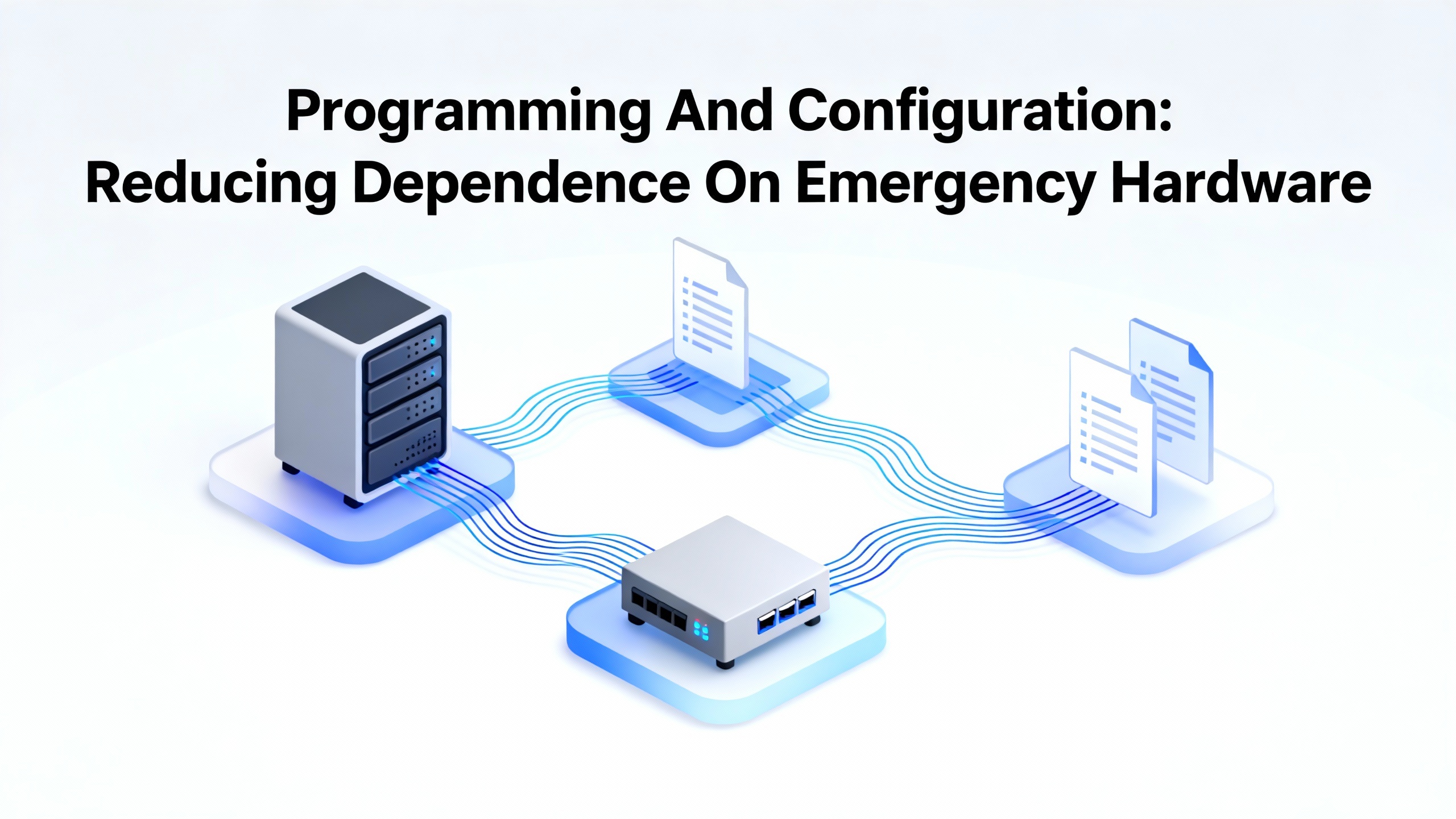
Programming And Configuration: Reducing Dependence On Emergency Hardware
While you work to shorten PLC CPU lead times, you can also reduce how often you need urgent replacements by improving the reliability of how those CPUs are used.
R.L. Consulting emphasizes that what strengthens a PLC system most is how well the programming is structured, documented, and supported over time. Clear and logical program structure, consistent naming, and accurate representation of real processes help operators and maintenance teams troubleshoot faster and prevent minor issues from turning into long outages. Strong diagnostics and fault‑handling routines that capture and categorize fault conditions reduce guesswork and help avoid unnecessary hardware swaps.
Control‑systems literature summarized in the research highlights that PLC response time is influenced by input sampling, program execution, communication delays, and output updates. Reducing unnecessary tasks and optimizing program structure not only improves response but also tends to reduce the chance that the CPU will appear “hung” or unstable under load.
From a power‑system reliability angle, three practices are particularly valuable.
The first is designing meaningful alarms and fault codes. Instead of a single “PLC fault” alarm that sends technicians hunting, R.L. Consulting recommends detailed status tags and fault‑capture routines. In a UPS plant, that might mean separate alarms for network loss, I/O card failure, watchdog timeout, program mismatch, or power supply issues. When a fault is clearly identified as a communications or I/O problem, you are much less likely to consume a CPU spare unnecessarily.
The second is mirroring real sequences and interlocks accurately. When PLC logic reflects actual equipment behavior, operators can trust the system and interpret its responses correctly. This reduces mis‑operations that might otherwise be blamed on hardware. R.L. Consulting notes that accurate representation of real steps and timing supports predictable behavior and makes troubleshooting more straightforward. In a static transfer scheme, for instance, if transfer times, permissive checks, and overlap limits are faithfully implemented and documented, you reduce the risk of nuisance trips or unexpected lockouts that lead to emergency interventions.
The third is planning for graceful degradation. Even with long lead times, you can design PLC programs and system architectures that allow temporary manual or semi‑automatic operation while a CPU issue is investigated. Safety interlocks and predictable sequences, as R.L. Consulting stresses, are central to this. In practice, that might involve redundant CPUs in high‑end systems, or at least predefined manual bypass procedures that keep loads protected while control hardware is inspected.
Every hour of downtime avoided through better programming practices is an hour that does not depend on whether your controller procurement lead time is ten weeks or twenty.
Using Data And Digital Tools To Forecast Controller Lead Times
Across industries, digital tools are shifting lead‑time management from guesswork to evidence‑based planning. ThroughPut describes supply chain optimization as configuring the end‑to‑end chain from procurement to distribution to maximize business performance under constraints. They stress that optimization is a data and model‑driven process, increasingly enabled by cloud, IoT, and AI, and report case studies where companies cut inventory by about 15% and improved labor productivity by around 5% using AI‑driven demand sensing and product‑mix optimization.
Pesmel’s Material Flow How concept goes further by embedding a digital twin in the warehouse management system. They show that simulating days of operations in a few hours allows identification of bottlenecks before they impact live production. Their digital twin can forecast equipment utilization ratios, predict dispatching times, and model probabilities of shipment cancellations or unplanned shipments, giving early warning of potential material shortages or capacity issues.
In the context of PLC CPUs, these same ideas can be applied even if you do not operate a large distribution center.
MRPeasy explains that modern ERP systems can automatically calculate lead times based on current inventory, production schedules, and supplier data. When you treat controllers as distinct items in such a system, with accurate procurement lead times and variability parameters, you can generate more reliable delivery promises for projects and better stocking policies for spares.
Anvyl describes how automating order entry and processing reduces human error, miscommunication, and lost orders, while generating tracking data that improves lead‑time estimates over time. Their example of a customer achieving a 41% increase in on‑time shipments and a 91% improvement in supplier engagement underscores how digital visibility can change behavior on both sides of the supplier relationship.
Unilever’s Mannheim site shows what happens when these concepts are fully operationalized: a large distribution center that handles tens of millions of units annually, with a 99.8% customer case fill on time rate, underpinned by a modern warehouse management system and continued investment in automation.
For a power‑system owner, the practical takeaway is that PLC CPU modules should be pulled into the same digital planning environment as batteries, transformers, and power electronics. That might mean configuring your ERP or asset‑management system to track CPU consumption and lead time, using analytics to identify which CPU families represent the greatest risk, and periodically simulating scenarios where you model how many spares you would need to cover certain failure modes and procurement delays.
Even simple analysis helps. If you can simulate, based on historical consumption and vendor performance, the likelihood that your CPU stock will hit zero in the next year, you can make a conscious decision to adjust safety stock, diversify suppliers, or redesign systems before that risk materializes during a live event.
FAQ: Practical Decisions Around PLC CPU Lead Time
How many spare PLC CPU modules should we hold for a critical UPS plant?
There is no universal number, but modern lead‑time guidance suggests a structured approach. MRPeasy highlights that cumulative lead time and variability drive safety‑stock needs, while Fishbowl recommends using safety stock and pre‑vetted backup partners as buffers against lead‑time volatility. Start by quantifying the true end‑to‑end procurement lead time for each CPU type, including any observed variability, and then combine that with your installed base and failure history. If a specific CPU family has a documented procurement lead time measured in many weeks, even under stable conditions, it makes sense to hold at least one spare for every cluster of systems where a failure would be operationally intolerable. A reliability engineer can then refine that number using your own downtime costs and risk appetite.
Is it always more expensive to shorten PLC CPU lead time with rush orders?
Manufacturing research suggests that shorter lead times do not always cost more in a straightforward way. Mathison points out that efficient manufacturers with lean processes and flexible scheduling can often support quick‑turn orders without extreme premiums, especially if they can slip your order into existing runs. Anvyl notes that working with local or domestic suppliers may reduce transit times and customs-related delays, sometimes offsetting higher material prices. However, if a PLC CPU is constrained by upstream electronics supply with long component lead times, expedite fees may add cost without significantly cutting duration. The best practice is to discuss realistic options with your vendors early, understand whether the constraint is capacity or materials, and compare any expedite premiums with the real financial impact of extended downtime in your facility.
Should we standardize on a single PLC platform or diversify to manage lead‑time risk?
There is a trade‑off. Anvyl reports that many brands intentionally use multiple suppliers for the same item to reduce risk and improve resilience, which argues for diversification. Multiple PLC platforms can reduce the chance that a single vendor’s component shortage will affect your entire fleet. On the other hand, MRPeasy and R.L. Consulting underscore the value of standardization for documentation, training, and maintainability. A single platform allows deeper expertise, simpler programming standards, and more flexible use of spare modules across systems. In critical‑power practice, a common compromise is to standardize within logical groups, such as one platform per campus or facility type, while maintaining at least one alternative platform in less critical applications. That way you capture the reliability benefits of standardization without being completely exposed to a single supplier’s lead‑time shocks.
Reliable power systems are built on more than transformers and switchgear; they depend just as much on the availability and stability of their control hardware. Treat PLC CPU module lead time as a design parameter, not an after‑thought, and bring it into the same disciplined planning, digital tracking, and continuous improvement that you apply to the rest of your supply chain. When you do, controller delivery stops being a hidden constraint and becomes a manageable variable in your overall power‑system reliability strategy.
References
- https://www.researchgate.net/publication/237252069_On_reducing_PLC_response_time
- https://www.plctalk.net/forums/threads/maximizing-plc-scan-rate.92903/
- https://automationforum.co/how-to-optimize-plc-scan-time-for-better-automation/
- https://www.fictiv.com/articles/optimizing-supply-chain-management-strategies
- https://www.fishbowlinventory.com/blog/lead-time-what-it-is-and-5-strategies-to-reduce-it
- https://www.intellichief.com/strategies-to-reduce-the-lead-time/
- https://mathisonmfg.com/what-most-people-get-wrong-about-manufacturing-lead-times-and-what-you-can-do-about-it/
- https://ocadointelligentautomation.com/insights/how-to-optimize-your-supply-chain-to-increase-quality-and-reduce-risk
- http://bluebox.ippt.pan.pl/~bulletin/(56-3)229.pdf
- https://rlconsultinginc.com/plc-programming-best-practices-that-improve-system-reliability/


 Videos
 News
News Applications






Leave Your Comment