Industrial and commercial power protection systems live in the background, but they decide whether a plant keeps running when the lights flicker. UPS systems, static inverters, automatic transfer switches, and protective relays quietly absorb surges, ride through outages, and coordinate with generators. The components inside those systems are not all equal, and the choice between OEM and aftermarket automation parts is one of the most leveraged decisions you make for reliability, safety, and lifecycle cost.
In this article, I will look at OEM versus aftermarket parts through the lens of UPS and inverter-based power protection. I will draw on evidence from automotive, heavy equipment, and industrial sectors, then translate those lessons into practical guidance for maintenance and engineering teams running mission‑critical power systems. The focus is on real-world behavior, not brand slogans: what actually fails, what tends to last, and where aftermarket parts genuinely make sense.
OEM, Genuine, and Aftermarket: Getting the Terms Straight
The terminology around parts sourcing is often confused, which leads to poor decisions. Several of the sources referenced here make useful distinctions that also apply in power electronics and automation.
Genuine parts are components sold in the equipment manufacturer’s own box and brand. In the automotive example from Diag.net, a technician with more than twenty years at a BMW dealer described genuine BMW parts as extremely reliable, with an estimated failure rate under about four to five percent within a two‑year warranty period. In our world, a genuine part would be a UPS manufacturer’s control board, static switch assembly, or fan kit sold under its own brand.
OEM (Original Equipment Manufacturer) parts are made by the same company that manufactured the original component, but sold through a different channel. Accio explains this clearly in the vehicle context: automakers often outsource components to specialized suppliers that also sell those same parts unbranded as OEM. The same pattern exists in power electronics. The IGBT module, fan, or relay used in a UPS may come from a third-party vendor; that vendor might sell essentially the same design as its own OEM part, sometimes at lower cost.
Aftermarket or non‑OEM parts are produced by independent third-party manufacturers that did not supply the original system. Sureway Group, Gregory Poole, and others note that aftermarket parts are built to perform the same function as OEM components, sometimes via reverse‑engineering. Some of these parts are engineered very well and can match or exceed OEM performance. Others are built to minimum acceptable cost and show wide variation in materials, fit, and quality.
Counterfeit parts are a different and more serious category. As Acviss highlights, counterfeit components are deliberately misrepresented items carrying fake branding or documentation. They are an increasing threat in sectors where safety and precision matter, including industrial machinery and electronics. In power protection, that can mean a “name‑brand” IGBT module or breaker label on a low-grade clone that has never seen a real stress test.
Understanding these distinctions is essential. Not every unbranded part is low quality, and not every branded part is well made, but genuine and OEM parts share a controlled design chain, while aftermarket spans a much broader spectrum. Counterfeits are a separate, high‑risk problem that must be managed explicitly.
What Independent Evidence Actually Says About Quality
Most of the hard comparative data we have comes from automotive and heavy equipment, not from UPS rooms directly. Still, the physics of quality, tolerance, and fit do not change when the enclosure says “static transfer switch” instead of “transmission.”
Genuine and OEM: Not Always Identical
The Diag.net BMW technician’s experience is a useful caution. In his dealership work, genuine BMW parts almost never failed early. Once he opened an independent shop and began using OEM and aftermarket components to keep customer bills manageable, he observed a very different pattern. He estimated genuine parts failing within the warranty period at under roughly four to five percent, compared with about fifty to sixty percent failure over two to three years for the OEM-branded equivalents in his independent shop’s mix. He also noted that quality from the same OEM supplier varied over time, with strong and weak production years.
He put forward a theory, not proven but plausible in many industries: parts may be sorted by tolerance as they leave the production line. Units that meet the tightest specifications go into the genuine boxes, parts that are close to spec become OEM, and outliers end up in the wider aftermarket under other brands. Whether or not that exact mechanism is in play for your UPS manufacturer, the practical lesson is clear. “OEM” does not always equal “exactly the same as genuine,” even when the marketing claims it does. Tolerances and quality windows matter.
In contrast, Capital Reman’s analysis of engine components argues that quality from reputable aftermarket suppliers can rival OEM, while OEM parts cost about sixty‑five percent more on average. They also point to research from insurers and the Insurance Institute for Highway Safety showing no systematic safety gap between OEM and certified aftermarket body panels in crash tests. The nuance is important: when aftermarket suppliers are held to strong standards, the gap can close; when they are not, it opens wide.
Heavy Equipment and Process Machinery
For heavy rotary process equipment such as dryers and kilns, FEECO reports that OEM parts are engineered to exact specifications, including critical properties like surface hardness for interacting components. In their field work, mismatched hardness in aftermarket trunnion wheels and tires accelerates wear dramatically, drives misalignment, and cascades into larger failures.
They also emphasize that some parts are really assemblies with precise installation procedures. A trunnion wheel is not just a ring of steel; it is sweat‑fit to a shaft with specific tolerances and bearing installation practices. OEMs factor plant capabilities into their replacement recommendations, while aftermarket vendors may sell a standalone component and leave fitment risks to the buyer.
This maps directly to power protection. A static switch assembly is not just a group of SCRs on a heat sink; it is a carefully integrated package with gate drivers, snubbers, busbars, and thermal interfaces tuned together. An aftermarket subassembly that treats those pieces as generic may work in the short term but push stress into surrounding components.
Gregory Poole and Thompson Tractor, both focused on heavy equipment, reinforce the pattern. They observe that OEM parts typically deliver more predictable fit, durability, and performance, while aftermarket options offer lower upfront price at the cost of increased variability. When machines operate in harsh conditions, their experience is that OEM components carry a reliability edge, especially for critical systems.
Certifications and Standards as Quality Filters
In a crowded aftermarket, paper is one of the few objective signals you have. PDM Automotive underscores the role of certifications such as ISO 9001, ISO/TS 16949, and independent bodies like CAPA, NSF International, and SAE standards in differentiating high‑quality aftermarket parts. ISO 9001 requires a documented and continuously improving quality management system. ISO/TS 16949 (developed by the International Automotive Task Force and ISO) drives defect prevention and reduction of variation in automotive supply chains. CAPA and NSF test and certify collision parts to meet or exceed OEM specifications. SAE standards define performance and dimensional benchmarks.
These frameworks do not guarantee perfection, but they significantly raise the floor. For automation parts in UPS and inverter systems, an aftermarket supplier operating under robust ISO‑style quality systems and referencing recognized industry standards is in a different league from an anonymous brand selling the lowest price on a marketplace.
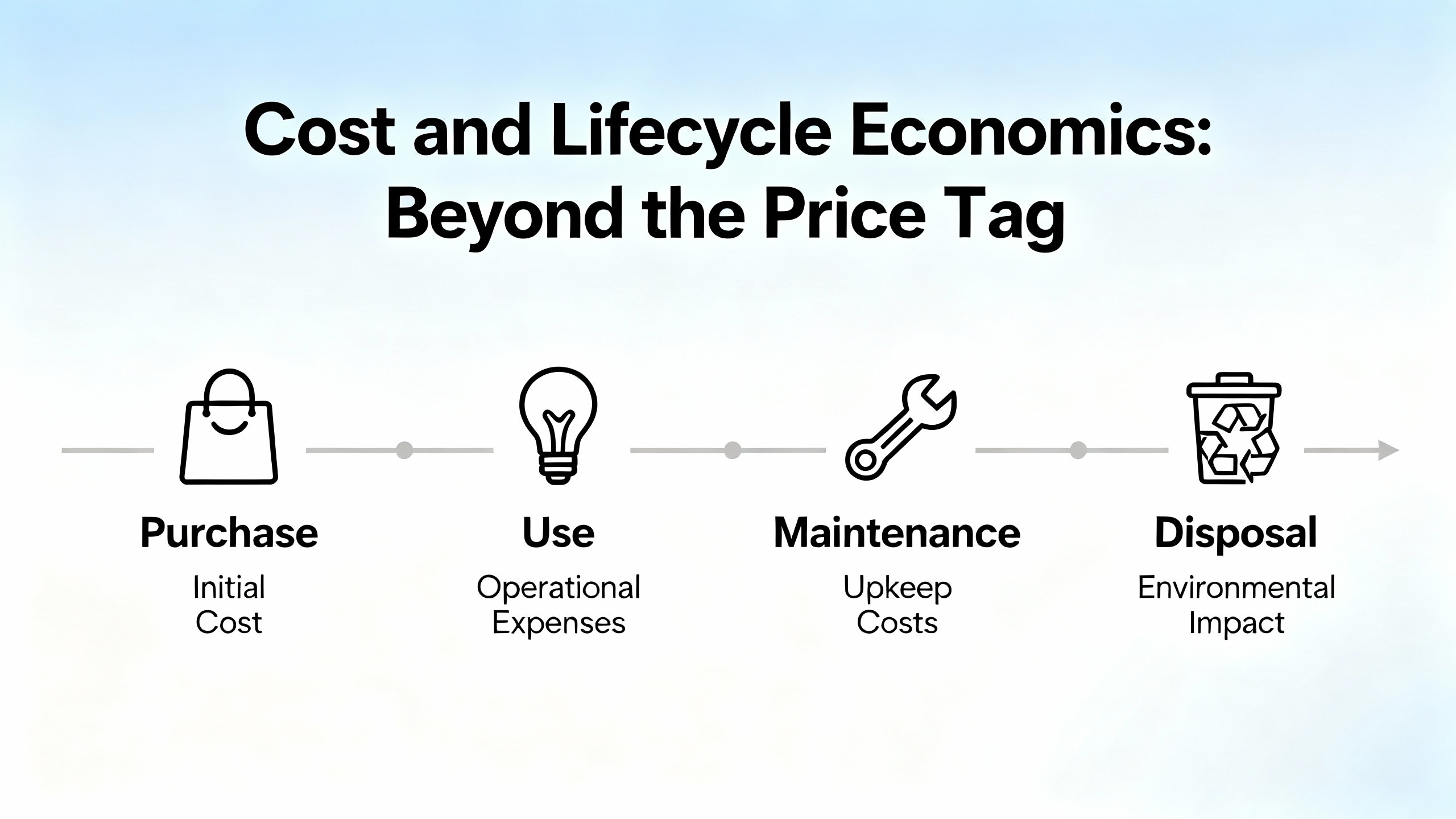
Cost and Lifecycle Economics: Beyond the Price Tag
Most teams begin the OEM versus aftermarket conversation with the purchase price. That is understandable; the gap can be large. Sureway Group reports OEM parts at roughly sixty percent above comparable aftermarket on average. Capital Reman sees about sixty‑five percent premiums in engine components. Across a large installed base of power equipment, that difference adds up quickly.
However, the purchase price is only the first line in the spreadsheet. The real leverage sits in total cost of ownership: how often the part fails, what it damages when it does, how long the system is down, and how warranties and service contracts respond.
McKinsey & Company looked across thirty industries and found that aftermarket services often deliver average earnings‑before‑interest‑and‑taxes margins around twenty‑five percent, compared with about ten percent for new equipment sales. That explains why many OEMs are increasingly focused on service contracts, spare parts, and upgrades. For them, the aftermarket is a profit engine.
The same McKinsey analysis introduces aftermarket lifetime value, the total undiscounted service revenue earned over a product’s life, expressed as a percentage of the original sales price. They report that in some sectors, aftermarket lifetime value approaches the full original cost of the product, while in others it is far lower. Heavy‑duty trucks show around thirty percent aftermarket lifetime value, whereas power‑generation gas turbines reach roughly seventy‑five percent. The difference is driven by downtime cost, parts availability, competition from independent service providers, and equipment life.
Industrial UPS and inverter systems behave much more like gas turbines than like light trucks. Downtime for a hospital, data center, or semiconductor line is costly, and the equipment tends to stay in service for many years. That means OEMs have strong incentives to structure parts and service pricing for recurring revenue. For the asset owner, it means the financial impact of a failed control board or IGBT module goes far beyond the cost of the part itself.
When you view OEM versus aftermarket through this lens, the key question becomes: where does a cheaper part actually reduce lifecycle cost, and where does it simply move cost from today’s purchase order into tomorrow’s downtime and repair budget?
How These Trade‑offs Play Out in UPS and Inverter Systems
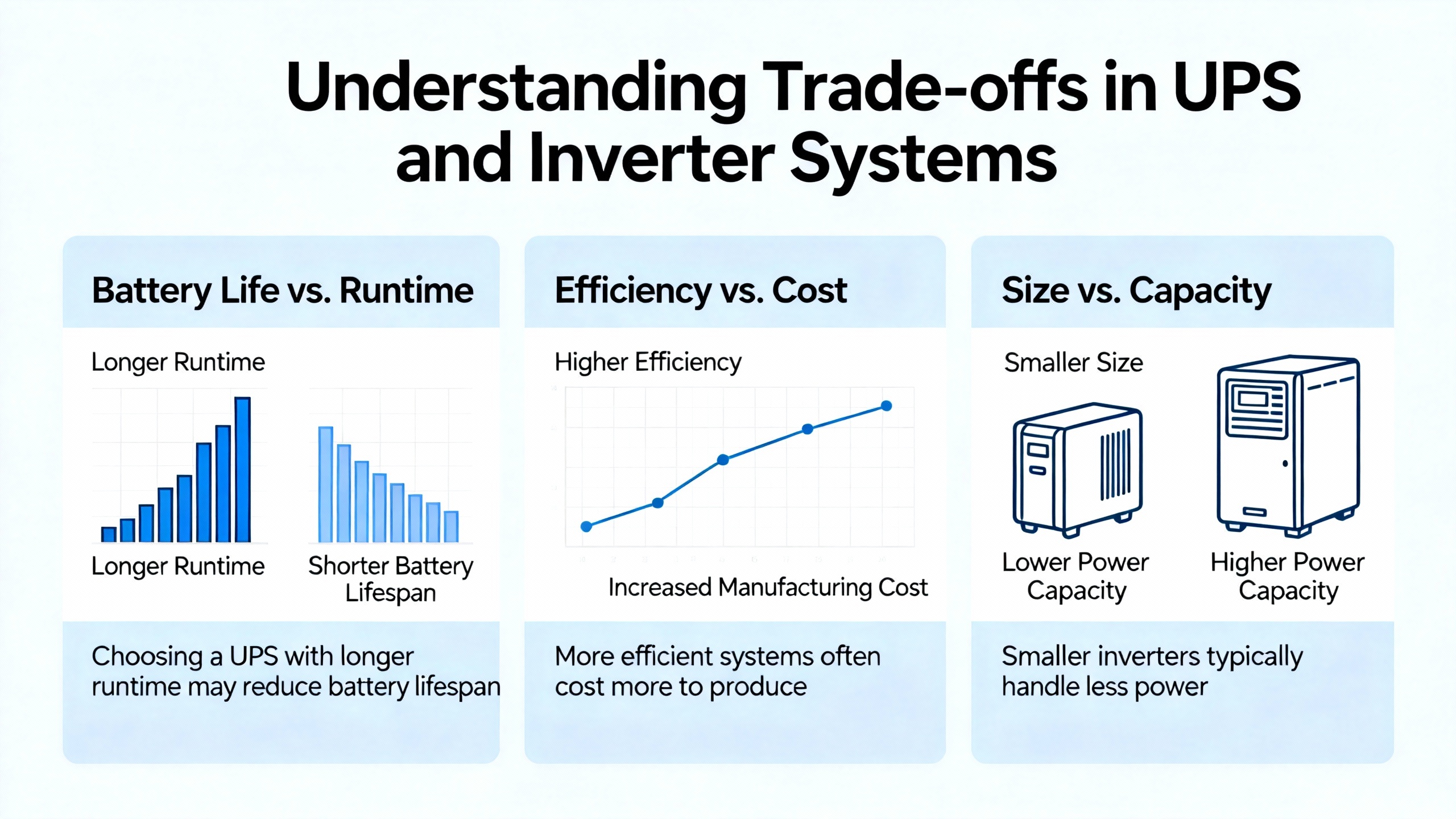
To translate the research into practical guidance for power protection, it helps to think in terms of component criticality, not just OEM versus aftermarket as labels. Different subsystems in a UPS or inverter behave differently under stress.
High‑criticality components are those whose failure can remove the entire system from service, compromise protection, or damage multiple other elements. Control boards, firmware‑loaded digital signal processors, communication modules, power semiconductor assemblies, static switches, and protection relays fall into this category. For these parts, several strands of evidence point in the same direction. Diag.net’s experience with genuine versus OEM electronics showed stark real‑world failure differences. FEECO’s findings on hardness matching and cascading damage demonstrate how a single poorly specified component can force early replacement of mated parts. Gregory Poole and GVEI recommend OEM solutions for control systems and safety‑critical elements, particularly while equipment is under warranty.
In practice, that translates into a conservative stance. For control electronics and power semiconductors, OEM or genuine parts are usually the risk‑balanced choice. When high‑quality aftermarket options exist, they should be treated as engineering projects, not commodity purchases. That means validating form, fit, and function, checking that gate‑drive, protection timing, and thermal interfaces are truly compatible, and monitoring performance closely after installation.
Medium‑criticality components are those that can usually be replaced without catastrophic knock‑on effects but still influence reliability and safety. Examples include contactors, auxiliary relays, door interlock switches, cabinet fans, and thermal sensors. For these, the experience across industries suggests that high‑quality aftermarket brands can perform well when they are carefully selected. Thompson Tractor and Capital Reman both report that reputable aftermarket suppliers, often operating under ISO 9001 quality systems, can match OEM performance at lower cost. At the same time, they emphasize the spread in quality and the need for diligence.
In the UPS room, that means aftermarket parts can be a good option for standard‑frame contactors, fans, and sensors, provided they come from trusted manufacturers with documented quality systems and appropriate certifications or test data. You still need to verify electrical ratings, environmental suitability, and mechanical fit, but you are not rewriting the system design.
Low‑criticality consumables include items like standard fasteners, non‑structural brackets, some wear liners, and simple filters. FEECO notes that for lower‑risk wear liners and standard hardware, aftermarket sources can offer cost‑effective replacements without compromising core machine behavior. MaintainX’s guidance on inventory management suggests that organizations can safely lean on aftermarket options for such items as long as compatibility is confirmed and supply is consistent.
In power protection, that would cover routine hardware and simple mechanical parts that do not affect electrical clearances, heat paths, or protective functions. Here the goal is consistency and availability more than brand alignment.
The following table summarizes these patterns in the context of industrial UPS and inverter systems.
| Component type | Typical sourcing strategy | Rationale |
| Control and communication boards | Prefer genuine or OEM; use aftermarket only with deep testing | Firmware, timing, and interfaces are system‑specific; failures can remove the entire UPS. |
| Power semiconductors and static switches | Prefer genuine or OEM assemblies | Design depends on matched gate drive, snubbers, and thermal paths; misfit can cause damage. |
| Protection relays and trip units | Prefer OEM or certified equivalents | Mis‑coordination can compromise safety and regulatory compliance. |
| Contactors, fans, and sensors | High‑quality aftermarket viable with careful selection | Widely used components where reputable brands can match OEM performance. |
| Mechanical hardware and simple brackets | Aftermarket generally acceptable | Lower impact on core electrical performance when compatibility is checked. |
This table is not a rulebook; it is a starting point. Your actual decisions should be shaped by risk tolerance, warranty position, and the specific behavior of your installed systems.
Counterfeit Risk and Authentication for Automation Parts
Counterfeits are the extreme end of the aftermarket spectrum. Acviss points out that fake parts have already caused catastrophic failures in safety‑critical sectors such as automotive, aerospace, and medical devices. Examples include counterfeit brake pads and airbags that fail under impact. In electronics, counterfeits can masquerade as high‑value semiconductors and capacitors, with subtle visual differences that are easy to miss.
For industrial power and automation, the risk is similar. A counterfeit IGBT module or surge protective device may survive light duty but fail in a real fault, leaving your UPS, inverter, or switchgear exposed.
Several tools are now used to combat this, and they are worth demanding from both OEM and aftermarket suppliers:
Unique serialization and QR codes allow you to scan a part with a cell phone or scanner and check its identity against a secure manufacturer database. Acviss emphasizes that non‑cloneable codes, combined with centralized records, are especially effective when backed by the OEM.
Blockchain‑based track‑and‑trace systems are being explored to record each step of a part’s journey on a tamper‑resistant ledger. Once implemented, these systems make it extremely difficult to falsify a part’s history.
AI‑powered digital scanning tools can analyze images and even material signatures to detect anomalies in branding, engraving, or construction that humans might miss. In sectors like electronics, this helps distinguish genuine components from visually similar counterfeits.
Tamper‑evident packaging and security features such as holograms, microtext, and UV‑sensitive labels provide quick visual checks. When you receive a breaker, relay, or semiconductor assembly with such labels, they should be intact and behave exactly as described in the manufacturer’s instructions.
In practice, the best protection comes from supply‑chain discipline. The research emphasizes buying from authorized OEM distributors or well‑known aftermarket brands, scanning available codes, inspecting packaging, and treating unusually low prices as a serious warning sign.
Building a Parts Strategy for Reliable Power Protection
A good parts strategy is proactive, not reactive. Instead of arguing OEM versus aftermarket on every single purchase, high‑reliability organizations decide up front how they will balance cost, risk, and uptime.
Several practical habits emerge consistently across the sources.
First, treat data as a decision tool. The independent BMW shop owner highlighted that tracking failure rates changed his view of OEM versus genuine parts entirely. For industrial operations, a modern maintenance or inventory system can do the same. MaintainX describes how Computerized Maintenance Management Systems track parts usage, Mean Time Between Failures (MTBF), and Mean Time To Repair (MTTR) across assets. When you correlate those metrics with whether a component was OEM, genuine, or aftermarket, patterns emerge quickly.
Second, align the parts strategy with equipment age and warranty status. GVEI and Accio both note that OEM or genuine parts are especially important on newer equipment and during warranty periods. In many vehicle contexts, laws like the U.S. Magnuson‑Moss Warranty Act mean a warranty cannot be voided solely for using non‑genuine parts; the manufacturer must show that the part caused the failure. In industrial power, protection usually comes from contracts rather than consumer law, and some service agreements explicitly require OEM parts and authorized service. Always review your UPS and inverter contracts before assuming aftermarket parts are acceptable.
Third, explicitly categorize your components by criticality, as discussed earlier, and decide which categories can use aftermarket suppliers by default. For example, you might standardize on OEM for control electronics and power semiconductors, allow vetted aftermarket sources for fans, contactors, and sensors, and treat hardware and basic mechanical parts as standard commodity items.
Fourth, use certifications and documentation as filters when selecting aftermarket partners. PDM Automotive’s discussion of ISO, CAPA, NSF, and SAE illustrates how formal standards and test programs reduce risk. In your world, that means preferring automation and power‑electronics suppliers operating under recognized quality management systems and able to share test data or third‑party validations.
Finally, recognize that OEMs design their business models around aftermarket services. McKinsey’s work on aftermarket lifetime value shows that OEMs that strategically grow their service business can double their aftermarket value within a few years and improve EBIT margins. From your side of the table, that means OEM proposals may bundle uptime guarantees, spare‑parts packages, and monitoring services into long‑term contracts. Those offers can be attractive when downtime is extremely costly, but they should still be evaluated against targeted use of high‑quality aftermarket parts in less critical areas.
The table below summarizes typical trade‑offs you will see.
| Factor | OEM / genuine automation parts | High‑quality aftermarket parts | Low‑price, generic aftermarket |
| Upfront price | Highest, often around 60–65% above budget aftermarket (various sources) | Moderate; can be competitive with OEM while delivering good value | Lowest; pricing well below market norms |
| Fit and compatibility | Designed specifically for the equipment | Generally good when vendor specializes in the application | Variable; may require modification or may not fit |
| Quality consistency | Tight quality control and stable specs | Can be strong when backed by certifications and test data | Widely variable; some units may be substandard |
| Warranty and OEM backing | Typically backed by OEM warranty and support | Supplier warranties vary; OEM may contest coverage | Often minimal warranty or none |
| Counterfeit risk | Lower when bought through authorized channels | Moderate; depends on distribution and labeling | Higher, especially in informal marketplaces |
| Long‑term lifecycle cost | Often favorable in high‑criticality applications | Favorable when applied to appropriate, lower‑risk components | Can rise sharply due to failures and downtime |
Short FAQ
Does using aftermarket parts always put my UPS or inverter warranty at risk?
Not always, but it can. In automotive contexts, consumer protection laws often prevent manufacturers from voiding warranties simply because you chose an aftermarket part, unless they can show that the part caused a failure. For industrial UPS and inverter systems, warranty terms are contractual rather than governed by consumer law. Some OEM service agreements explicitly require OEM parts and authorized service, especially for large systems. Before installing aftermarket components on equipment still under warranty or a service contract, review the terms carefully and, if needed, obtain written clarification from the OEM or service provider.
How can I tell if an aftermarket automation part is likely to be high quality?
Look for signs that the manufacturer treats quality as a discipline, not a slogan. As PDM Automotive describes, certifications such as ISO 9001 or ISO/TS 16949 indicate a structured quality management system. Independent test marks and adherence to recognized performance standards are additional positive signals. Combine that with a traceable brand history, realistic mid‑range pricing rather than the lowest offer on the market, and clear documentation of ratings and compatibility. Acviss also recommends using serialization, QR codes, and tamper‑evident packaging to verify authenticity and guard against counterfeits.
What data should my team collect to compare OEM and aftermarket parts in our facility?
The most useful metrics are those that tie directly to reliability and cost. MaintainX highlights Mean Time Between Failures (MTBF) and Mean Time To Repair (MTTR) as core indicators. Track which part was installed (genuine, OEM, or aftermarket), who supplied it, and in what operating conditions it ran. Log each failure and repair with timestamps. Over time, this dataset allows you to see whether certain suppliers or part types show higher failure rates, longer repairs, or more collateral damage. Those patterns will give you an evidence‑based view of where aftermarket parts are delivering value and where they are eroding it.
Closing Thoughts
In critical power systems, parts decisions are risk decisions. The evidence from automotive, heavy equipment, and process industries is consistent: OEM and genuine parts offer predictable quality and fit, aftermarket parts range from excellent to dangerous, and counterfeit parts must be actively excluded from your supply chain. For UPS, inverters, and power automation, the safest path is to reserve OEM and genuine solutions for high‑impact components, deploy vetted aftermarket parts where the stakes are lower, and let your own failure data refine that balance over time. As a reliability advisor, my goal is simple: make sure the first time you discover the true quality of a part is not at the worst possible moment, with the lights out and the plant waiting.

References
- https://diag.net/msg/m14op4dc3pz2t0jxhm3ngo87by
- https://www.mechanicalpower.net/blog/auto/oem-parts-vs-aftermarket/?srsltid=AfmBOoqtcL_O8y1u9hm7AScLnym0OkIyeb_YF0XjgHulO0RPRulADiD_
- https://blog.acviss.com/oem-vs-aftermarket-parts-ensuring-authenticity-and-quality
- https://www.herbchambers.com/aftermarket-parts-vs-oem-parts.htm
- https://www.accio.com/blog/oem-vs-genuine-parts-comparison-cost-quality-and-warranty
- https://www.capitalremanexchange.com/oem-vs-aftermarket-parts/
- https://www.edmunds.com/car-maintenance/aftermarket-versus-manufacturer-car-parts.html
- https://www.equipmentshare.com/articles/oem-vs-aftermarket-construction-equipment-parts-which-is-better
- https://feeco.com/aftermarket-vs-oem-choosing-the-right-parts-for-process-equipment/
- https://www.freedomcollisioncenterwv.com/key-differences-between-oem-and-aftermarket-parts/


 Videos
 News
News Applications





Leave Your Comment