Reliable power is not just about the box on the wall or the UPS in the rack. In industrial and commercial environments, your power is only as strong as the distributor standing behind it. As someone who spends a lot of time troubleshooting UPS trips, inverter glitches, and power‑quality complaints in plants and data centers, I can say with confidence: the choice of industrial power supply distributor is a strategic reliability decision, not just a purchasing task.
This article looks at what makes a power supply distributor genuinely reliable for UPS, inverters, and power protection equipment. We will unpack practical selection criteria, highlight quality and counterfeit risks, and show how a strong distributor helps you size the right supplies and keep your facility running without unpleasant surprises.
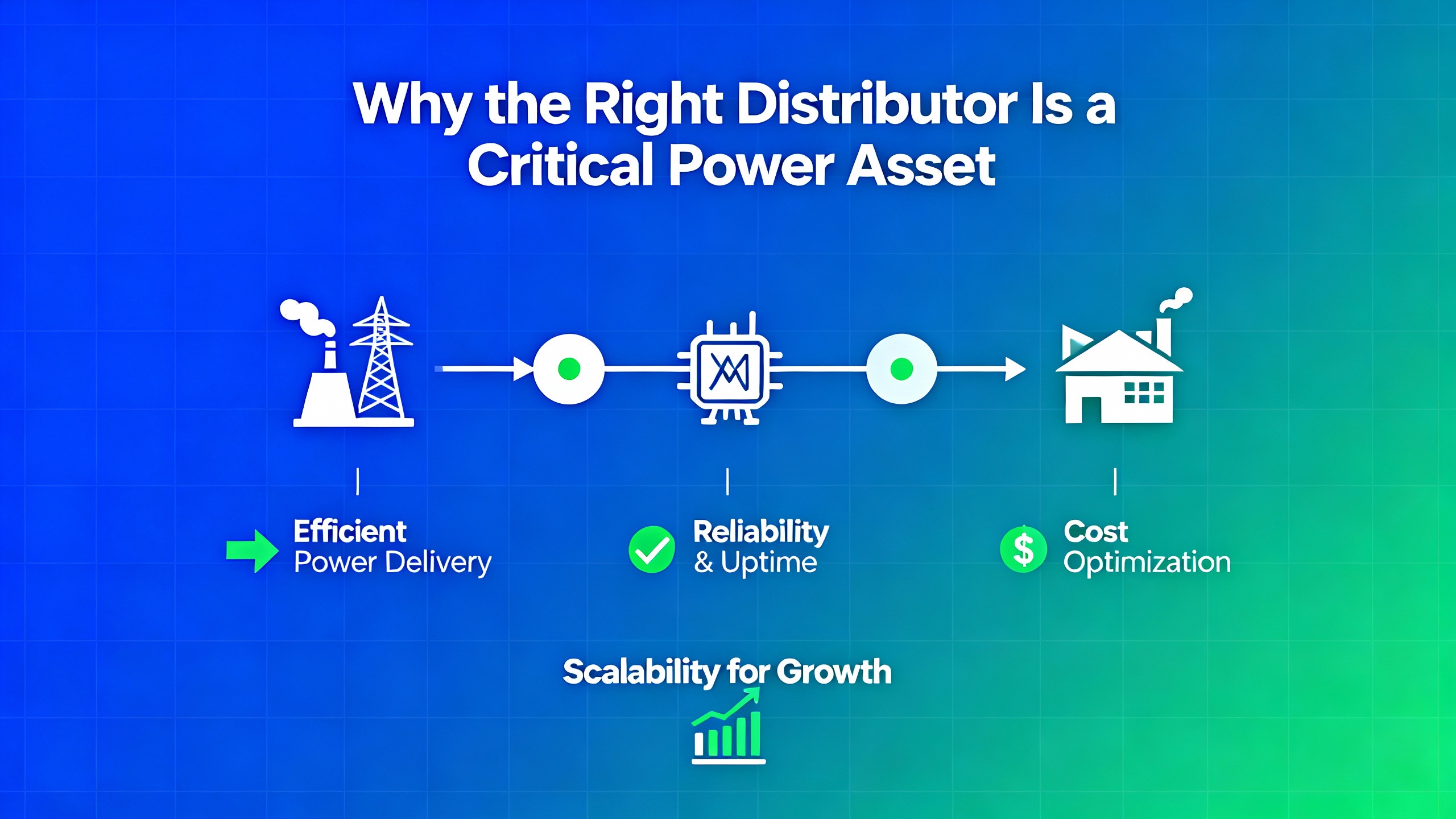
Why the Right Distributor Is a Critical Power Asset
In industrial and commercial settings, power continuity is a direct proxy for safety, uptime, and profit. eMergy Tech frames reliability as the ability of a power supply to deliver energy continuously and safely, avoiding interruptions and risks to connected devices. In production plants and data centers, even brief interruptions can stop critical lines, corrupt data, or damage sensitive equipment. From my own experience, a short brownout that a robust UPS should have handled can easily become a multi‑hour outage when the wrong power gear is specified, delivered late, or not supported.
Electrical and power‑supply distributors sit at the center of this reliability equation. ServiceTitan’s look at the North American market notes that there are roughly fifteen thousand electrical distributors in the United States and that the electrical distribution market was about two hundred thirty‑seven billion dollars in 2022, according to Hoovers and IBISWorld. That scale means you have plenty of options, but it also makes it harder to separate true reliability partners from catalog sellers.
The best distributors act as long‑term partners. Metro Wire & Cable describes their role as a vital link in the project value stream, supplying materials promptly and accurately so projects stay on schedule. In practice, that means combining product breadth, inventory depth, and logistics capabilities with engineering support and problem‑solving. The wrong distributor, on the other hand, creates hidden risks: counterfeit parts, underspecified UPS units, long lead times, and poor response when something goes wrong.
What Power Supply Reliability Really Means
When we talk about reliable industrial power supplies, reliability is not a vague buzzword. eMergy Tech describes it as the ability to supply energy in a constant and safe way, minimizing downtime and protecting equipment and investments. In technical terms, that reliability depends on the design of the power supply, the stresses it experiences, and how it is installed, monitored, and maintained.
A few key design‑related criteria matter. First, complexity of the power module: more complex architectures can increase the probability of malfunction if they are not engineered and tested correctly. Second, overcurrent management: the unit must handle normal and surge currents without destabilizing the DC bus or sacrificing safety. Third, sensitivity to voltage surges: industrial environments often see voltage swings, and supplies need appropriate protection to survive and keep the load safe over many years.
Industrial power supplies also face three major categories of stress. Thermal stress comes from high ambient temperatures and from heat trapped in cabinets or metal enclosures; if you do not manage it, components age prematurely. Mechanical stress arises from installation and vibration, which can create intermittent failures or physical damage. Electrical stress occurs when equipment operates outside its ratings, often due to configuration mistakes or events like surges or short circuits, and it accelerates aging and early failures.
Reliability does not happen by accident. eMergy Tech emphasizes strategies such as anomaly prediction and monitoring, derating or “downgrading” management where components are run conservatively, robust thermal control, and scheduled preventive maintenance. In my work, the longest‑lived power systems are always the ones where these ideas were baked into the design and distributor selection from day one.
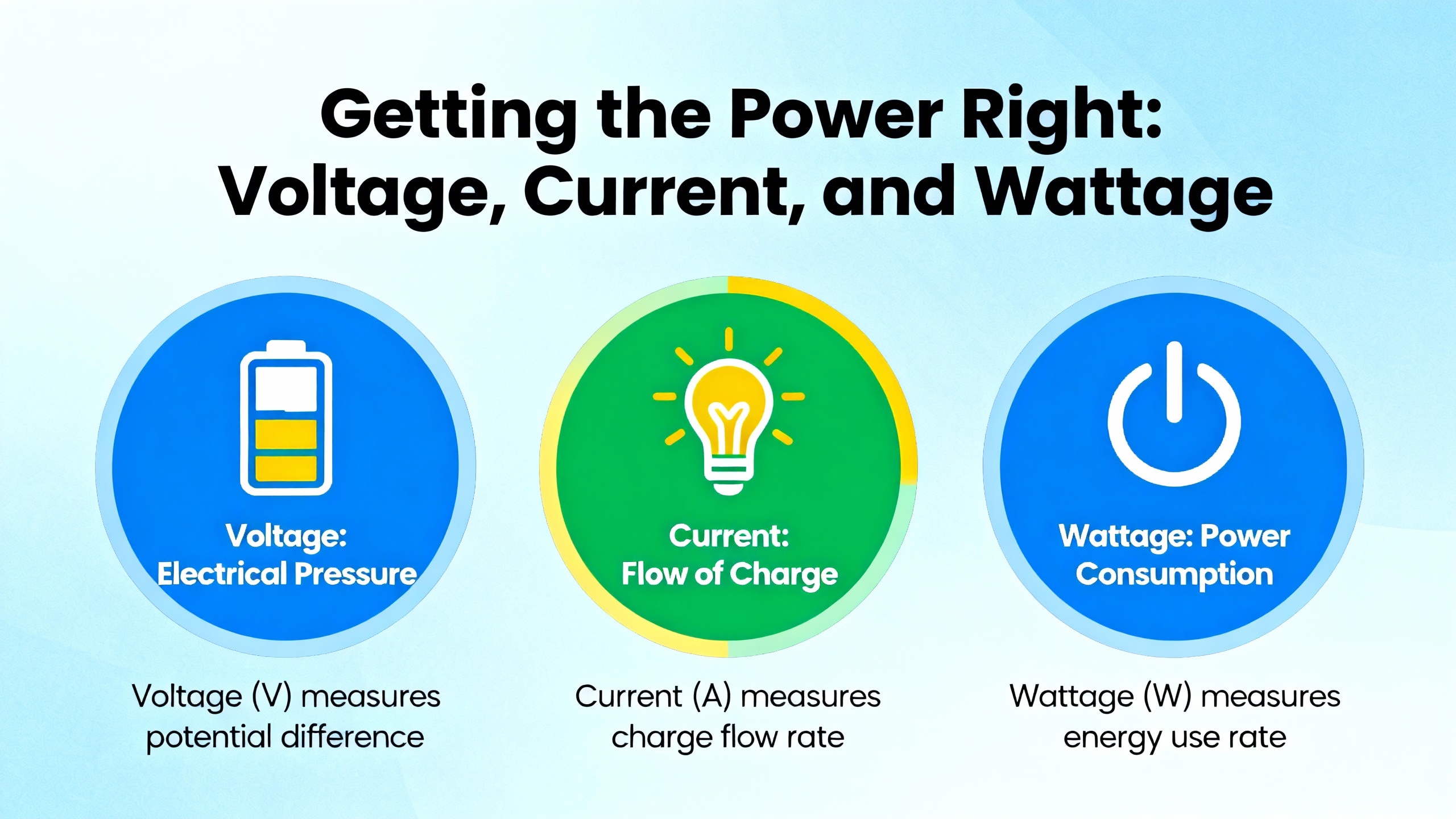
Getting the Power Right: Voltage, Current, and Wattage
A surprisingly large share of field problems trace back to basic sizing mistakes that a good distributor should help you avoid.
From a voltage perspective, the rule is absolute. As the engineering discussion on Electronics Stack Exchange notes, a device that specifies a given voltage must be given that voltage. Too low and motors may stall and overheat or circuits may draw excessive current; too high and you risk overstressing components with uncertain but often destructive results. When you replace a supply, you treat the old label as the requirement: match the voltage exactly.
Current behaves differently. With a constant‑voltage supply, the load decides how much current flows. If your equipment draws about two amperes at the rated voltage, it will draw that from a supply rated for two, three, or even twenty amperes. The current rating is a maximum capability, not a forced output. In practice, you must meet or exceed the required current. Choosing a higher‑current unit at the same voltage is typically safer and can improve thermal headroom.
Wattage and overall power must be sized for both steady‑state and worst‑case conditions. ACT and Advanced Energy emphasize the importance of a “sweet spot.” If you choose a wattage that is too low, the supply may run at or beyond its limits, triggering shutdowns or damaging loads. If you oversize dramatically, the supply may operate at very light load, where efficiency falls and more power is wasted as heat. A common engineering practice, reflected in ACT’s guidance, is to calculate total load and then add a margin of about twenty percent to accommodate peaks and growth.
Modern industrial power supplies are usually regulated and often support a universal AC input range. Advanced Energy notes that many AC‑DC units accept roughly eighty‑five to two hundred sixty‑four volts AC at standard line frequencies, maintaining stable DC output as long as load current stays within the rating. Older or simpler unregulated designs behave differently, with output voltage changing substantially as input and load vary, which can be risky for sensitive electronics.
A technically competent distributor will not just quote “a twenty‑four volt supply.” They will ask about load current, inrush, diversity factors, and whether your equipment includes drives, motors, or other dynamic loads, and they will steer you toward a unit with appropriate voltage regulation, current headroom, and transient performance.
Designing For Environment, Efficiency, and Derating
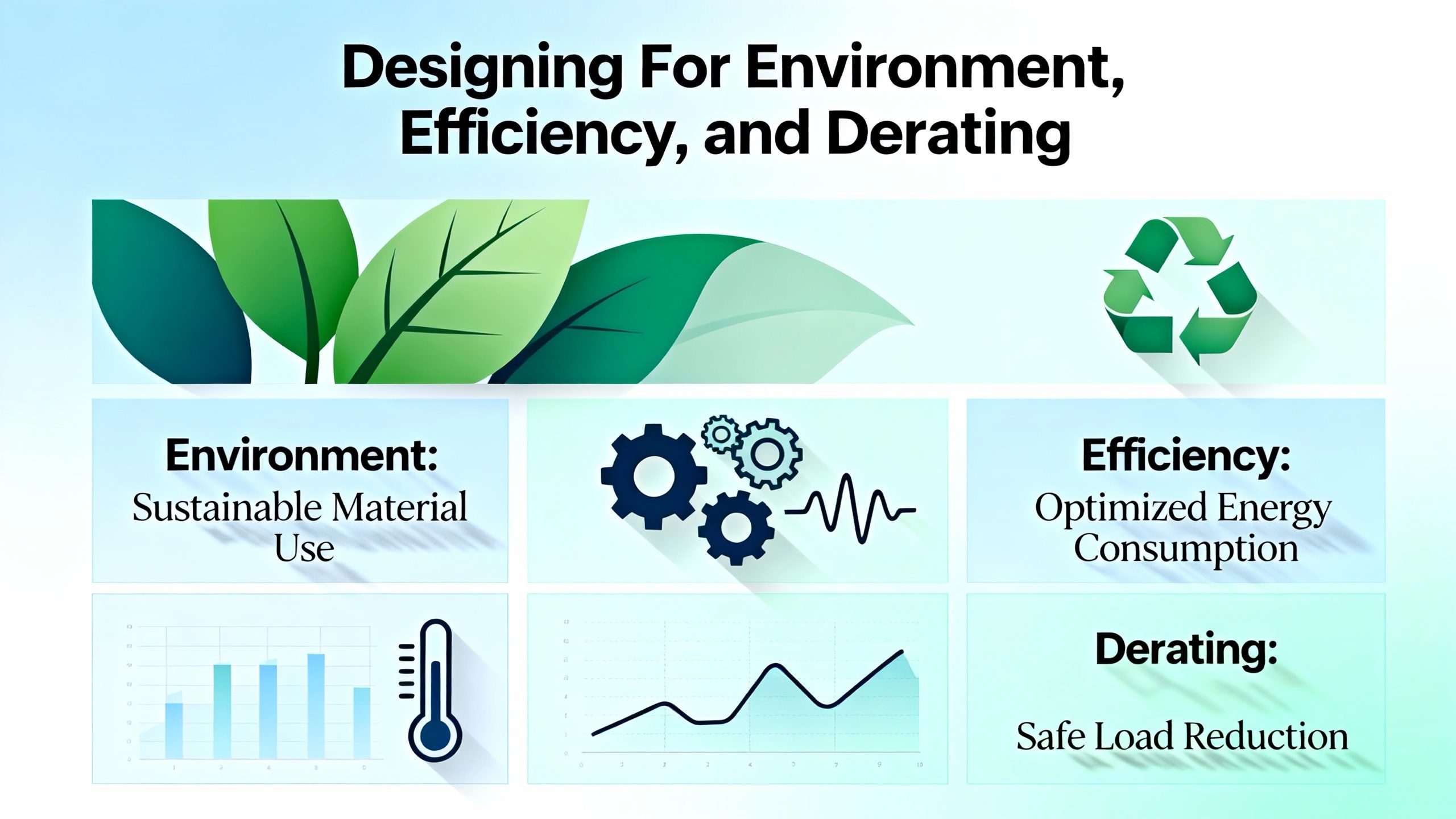
Real facilities rarely operate at the neat nominal numbers shown in datasheets. Ambient temperatures swing, cabinets are crowded, dust accumulates, and airflow changes after someone adds one more piece of equipment. Helios Power Systems and Advanced Energy highlight that usable power output falls as temperature rises or as altitude increases; this is why derating curves exist.
Derating means deliberately operating a power supply below its maximum ratings to enhance reliability and lifetime. You might select a one‑kilowatt supply but plan to use only seven or eight hundred watts under worst‑case ambient conditions. To do this correctly, you compare your worst‑case load with the vendor’s derating curves for the expected temperature and cooling method. ACT also stresses that environmental factors such as dust, moisture, vibration, and radiation exposure should influence whether you choose standard units or rugged versions with appropriate ingress protection and materials.
Cooling and enclosure choices are central. Advanced Energy explains that supplies can be fan‑cooled, conduction‑cooled, or externally cooled, each with trade‑offs in noise, maintenance, and reliability. Many include over‑temperature protection that shuts the unit down when internal temperatures exceed safe limits. From a reliability standpoint, keeping power supplies as cool as practicable is one of the simplest and most effective life‑extension strategies.
Efficiency matters for both operating cost and thermal stress. ACT illustrates this with a simple definition: if a unit is ninety percent efficient, roughly ten percent of input power becomes heat. Consumer gear often uses eighty‑percent‑plus efficiency certifications, while mission‑critical or high‑performance systems typically aim for efficiency around ninety percent or better. Phihong notes that advanced designs often target high efficiency standards such as 80 PLUS, DOE Level VI, and EU CoC Tier 2, combined with active power‑factor correction and modern semiconductors such as gallium nitride or silicon carbide.
A distributor that understands these trade‑offs will not just send you a spec sheet. Instead, they will help you compare derating curves, efficiency levels, and cooling options against your real environment, so that the UPS or DC supply you buy behaves as expected in a hot plant room or a tightly packed IT rack.
Quality, Counterfeit Avoidance, and Certifications
One of the most serious risks in industrial power projects is low‑quality or counterfeit parts entering your system through the supply chain. Area51 ESG highlights the scale of the problem, citing a 2019 ERAI report where about sixty‑six point nine one percent of reported parts were nonconforming, suspect counterfeit, or counterfeit from companies not located in China. That statistic underscores a critical point: simply avoiding one geography is not a counterfeit‑avoidance strategy.
For industrial and power‑protection equipment, you want distributors that treat quality and authenticity as non‑negotiable. Area51 ESG points to several certifications that signal a robust quality management and counterfeit‑mitigation program. ISO 9001:2015 validates an overall quality management system. AS9120B addresses aerospace‑grade distribution. ANSI and ESD standards such as ANSI/ESD S20.20 help ensure electrostatic discharge controls. FAA AC 00‑56B and SAE AS6081 focus directly on counterfeit avoidance, detection, mitigation, and disposition for distributors.
Beyond certificates on the wall, you want to understand their practices. Pro QC’s work on supplier evaluation stresses the importance of Incoming Quality Control as the gateway to manufacturing and of process control and inspection record traceability. Robust incoming inspection and testing for power supplies and UPS modules is essential, especially if your distributor sources across both authorized and independent channels. You should see a clear process to detect, segregate, and report substandard or fraudulent parts and to maintain traceability back to original component manufacturers or previous owners.
When I review a distributor, I look for more than an ISO certificate. I ask how they qualify their own sub‑suppliers, what proportion of incoming lots see additional testing, and how quickly they can produce inspection records for any given serial number. In my experience, distributors that cannot answer those questions clearly are not ready to support critical power systems.
Compliance With Electrical Codes and Safety Standards
A reliable distributor also helps you stay on the right side of electrical and safety codes. Blessrise emphasizes that for commercial and industrial projects, suppliers must comply with national and local standards such as the National Electrical Code for safe installation, NFPA and NFPA 70E for fire and workplace electrical safety, and OSHA requirements. For power supplies themselves, applications may require specific product‑level standards.
Advanced Energy and Phihong point to global safety norms such as UL 62368‑1 for IT and telecom equipment and IEC 60601 for medical applications. Environmental and material regulations such as RoHS and WEEE govern hazardous substances and end‑of‑life handling. Industrial and defense applications may demand adherence to military standards such as MIL‑STD‑810 and to ISO‑based quality systems. When you operate in sectors such as healthcare or aerospace, these are not optional; regulators will inspect.
In practical terms, that means you should expect your distributor to provide formal evidence of compliance before you place large orders. Blessrise recommends requesting certifications, test reports, regulatory filings, and safety data sheets. Distributors who stay active in industry bodies such as ECIA, GIDEP, and ERAI, as Area51 ESG suggests, typically have stronger visibility into emerging requirements and documented quality issues.
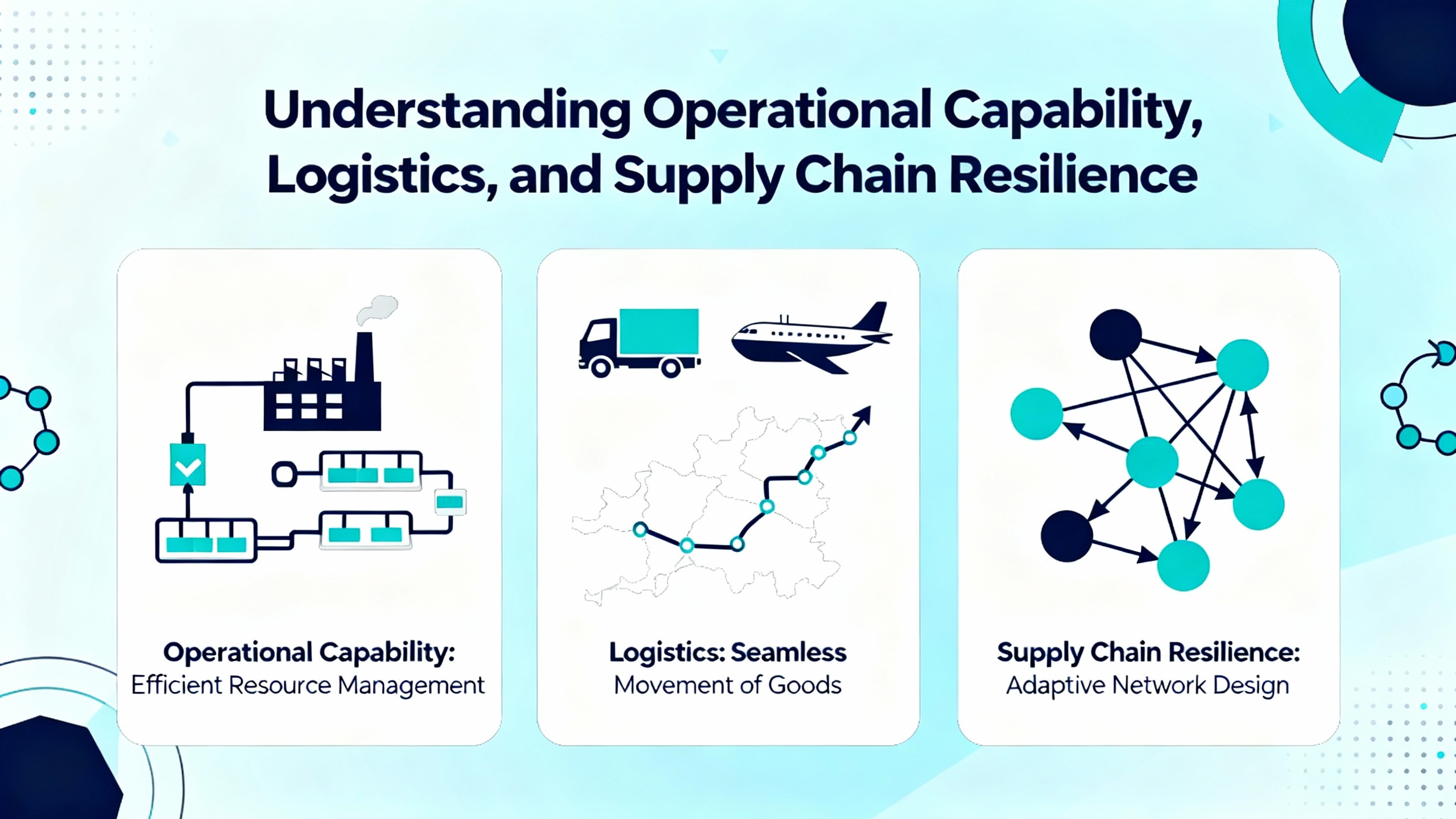
Operational Capability, Logistics, and Supply Chain Resilience
Even the best power supply is useless if it arrives late, in the wrong configuration, or not at all. Supplier evaluation frameworks from ESGrid and the case‑based guidance from ServiceTitan and Metro Wire & Cable all underscore delivery performance and operational capability.
A strong power supply distributor should achieve high on‑time delivery rates, often targeting more than ninety‑five percent for critical materials. That requires scalable capacity, consistent lead times, and the flexibility to handle rush orders or multi‑phase projects without sacrificing quality. Metro Wire & Cable illustrates this with strategically located regional distribution centers, extensive inventory, and manufacturer partnerships that support just‑in‑time availability.
Location and network coverage matter as well. ServiceTitan notes that there are thousands of distributors across the United States and Canada, and that contractors benefit from those with multiple branches and local warehousing to reduce transit times and shipping costs. For industrial UPS projects spanning multiple sites or regions, Schneider Electric emphasizes the value of a robust partner and distributor network that can deliver units where and when needed.
Financial stability and commercial terms also play a part in resilience. ESGrid recommends assessing financial ratios and, importantly, cash flow, as well as reviewing payment terms, discounts, and escalation clauses. Schneider Electric points out that distributors and suppliers who can align payment terms, such as offering ninety‑day terms that match end‑customer arrangements, can prevent contractors from being squeezed on cash.
Technical Competence In UPS, Inverters, and Power Supplies
Technical depth is where a power supply distributor distinguishes itself from a general electrical wholesaler. For industrial UPS in particular, Schneider Electric describes the supplier choice as a long‑term, business‑critical decision. The supplier or distributor should support you through the entire project lifecycle, from needs assessment and product selection through ordering, delivery, installation, commissioning, maintenance, upgrades, and eventual replacement.
At a minimum, Schneider Electric and GVE’s guidance on high‑voltage adapters both highlight the need for genuine engineering strength. You want distributors who understand circuit design, isolation strategies, load fluctuations, heat dissipation, and voltage stability, and who can work with both standard and custom solutions. They should be able to support diverse applications, from data centers and hospitals to industrial automation and building systems, and explain quantifiable advantages such as improved energy efficiency or longer service life.
Custom power supply partners such as Phihong show what best‑in‑class engineering support looks like. They emphasize in‑house design teams capable of custom PCB layouts, robust thermal management, wide input‑voltage designs, and firmware customization. For OEMs, they highlight the importance of long‑term component availability, high‑MTBF designs, and lifecycle support including firmware upgrades and field service. Even if you are not buying pure custom units, your distributor should be able to draw on similar expertise from their manufacturers and internal specialists.
In my own projects, the distributors who consistently resolve problems are the ones whose engineers are willing to discuss derating curves, harmonic filters, hold‑up time, and EMC behavior rather than just forwarding a catalog PDF.
Service, Communication, and Digital Experience
Reliability is not just about metal and silicon. It is also about people and systems. Metro Wire & Cable describes their service philosophy with the question, “What can we do to make your job easier?” and backs it with dedicated points of contact, twenty‑four by seven by three hundred sixty‑five availability, and white‑glove service. That kind of accountability and communication is invaluable when a critical UPS shipment is delayed or a spec needs to be changed late in the design.
Mechanical Power and Pro QC both stress the importance of effective two‑way communication and of testing it early through trial orders. You learn a lot about a distributor by how quickly and clearly they respond to basic technical questions, how they handle a mis‑shipment, and whether they take ownership of issues instead of passing blame.
Digital capabilities are increasingly part of that service picture. Power Assemblies argues that distributors can differentiate by building strong online presence and by enriching product pages with datasheets, spec sheets, and detailed technical information. ServiceTitan shows how electrician and contractor software can streamline purchase order management and inventory, integrating with distributors so that orders, returns, and transfers are tracked automatically and replenishment is triggered when stock runs low.
From a reliability advisor perspective, you want distributors whose systems make it easier to do the right thing. That means clear online documentation, real‑time shipment tracking where possible, and responsive support channels rather than a single overloaded email inbox.
Risk, Traceability, and Continuous Improvement
Long‑term reliability depends on how your distributor manages risk over time. ESGrid’s supplier evaluation criteria include business continuity and disaster recovery planning, concentration risks, cybersecurity, physical security, auditability, and organizational stability. Pro QC adds that you should look inside the supplier’s own supplier management: how they audit factories, how robust their IQC process is, how they monitor process parameters, and how complete their inspection records are.
Traceability is especially important for industrial power equipment. If a particular batch of UPS modules shows elevated failure rates, you need to be able to trace those units back through incoming inspection, production, and shipping records quickly. Pro QC describes inspection records as the “DNA” of the product; they allow fast root‑cause analysis and are crucial for regulatory audits.
Continuous improvement culture is another forward‑looking indicator. Suppliers that treat feedback as a nuisance, or that resist post‑launch modifications even when issues are clear, tend to generate repeated problems and warranty claims. By contrast, partners with structured improvement programs, regular audits, and a willingness to co‑invest in better processes will keep your power systems more stable over time.
Authorized, Independent, and Hybrid Distribution Models
The structure of a distributor’s supply chain has a direct impact on your options and risk profile. Area51 ESG suggests that a “diverse” distributor often operates both as an authorized and as an independent distributor.
Authorized distribution channels connect you directly to original component manufacturers across sectors such as energy, automotive, industrial, medical, and aerospace. They provide access to complete and current technical data and to supply‑chain traceability documents, which significantly helps avoid suspect counterfeit parts. For mission‑critical UPS and power modules, this level of traceability is often worth a premium.
Independent networks, by contrast, give access to the distributor’s own inventory and to a broader ecosystem of OEMs, contract manufacturers, and other distributors globally. This is particularly valuable for hard‑to‑find, obsolete, or constrained parts and can be a key lever for shortening lead times and maintaining production during shortages.
A hybrid distributor that manages both authorized and independent channels, combined with robust counterfeit mitigation as described earlier, allows you to consolidate orders, broaden your product range, and streamline purchasing. In practice, I have seen this model reduce the number of vendors a facility needs to manage and provide critical flexibility during supply chain disruptions.
A concise way to think about the trade‑offs is shown here.
| Channel model | Main strengths | Key risks or limitations |
| Authorized only | Strong traceability, direct OCM support, latest documentation | Less flexible for obsolete or constrained parts, sometimes longer lead times |
| Independent only | Access to broad, global inventories and hard‑to‑find items | Higher counterfeit and quality risk unless controls and testing are robust |
| Hybrid (authorized plus independent) | Combines traceability with flexibility and broader range, supports just‑in‑time and consolidation | Requires strong quality systems, clear channel separation, and transparent communication |
Practical Framework to Compare Distributors
Pulling these threads together, you can evaluate power supply distributors using a structured but practical framework, rather than relying on price alone. ESGrid recommends that criteria be specific, objective, and weighted according to business impact, rather than treating everything as equally important.
For industrial UPS and power supplies, common evaluation dimensions include quality and compliance, operational capability, technical competency, risk and security, and service and relationship strength. Each dimension can be turned into a few concrete questions. For example, on quality and compliance you might ask about certifications such as ISO 9001, AS6081, or IEC 60601 where relevant, defect rates, and results from recent audits. On operational capability you can look at on‑time delivery percentages, lead‑time consistency, and the ability to handle rush orders without mistakes.
The table below illustrates how to translate this into a comparison tool when you are shortlisting distributors.
| Evaluation area | What to verify for power supply and UPS distributors |
| Quality and compliance | Presence of standards such as ISO 9001 and AS6081, documented counterfeit‑mitigation program, defect and return rates, audit history, and electrical safety certifications appropriate to your sector |
| Operational capability | Capacity to support your forecast volumes, track record of greater than about ninety‑five percent on‑time delivery for critical items when required, consistency of lead times, geographic coverage, and local warehousing where needed |
| Technical competency | Demonstrated expertise in sizing UPS, DC supplies, and inverters, ability to discuss derating, harmonics, codes, and EMC in detail, and availability of engineers or application specialists to support unusual requirements |
| Risk and security | Business continuity plans, single‑point‑of‑failure risks in their own supply chain, cybersecurity and data protection practices where systems integrate, and clarity of traceability and record keeping |
| Service and relationship | Responsiveness, clarity and honesty of communication, willingness to conduct site visits or audits, strength of after‑sales support, and evidence of continuous improvement culture |
As ESGrid and Pro QC both suggest, you get the best results when you combine quantitative metrics with qualitative judgment, validate supplier claims through site visits or third‑party references where the stakes are high, and revisit evaluations periodically instead of treating them as a one‑time exercise.
How a Reliable Distributor Supports the Full Power Lifecycle
The value of a strong industrial power supply distributor shows up across the entire lifecycle of your projects.
At the design and specification stage, Schneider Electric notes that UPS suppliers should help contractors assess needs and select equipment, not just quote part numbers. Combined with guidance from ACT, Advanced Energy, and Phihong, a good distributor will help you build a clear “black box” specification: AC input range, DC outputs, physical and environmental constraints, regulatory requirements, and future growth plans. They will support scenario planning for different ambient temperatures and cooling options and help you choose between redundancy, monitoring features, and optional accessories such as harmonic filters.
During procurement and delivery, Metro Wire & Cable, ServiceTitan, and the supplier‑evaluation frameworks emphasize fast, accurate quotes, traceable order status, and proactive communication about delays or issues. In my experience, the most valuable distributors are those who surface emerging problems early, such as a manufacturer end‑of‑life notice on a UPS line, and bring you alternatives before it turns into a crisis.
At installation and commissioning, correct configuration and integration matter. ACT highlights the importance of proper installation by qualified personnel following manufacturer specifications and regulations. A competent distributor can arrange training, share application notes, or coordinate with manufacturer field engineers so that UPS, inverters, and power modules are installed and tested correctly.
Over the operational life, the combination of quality, monitoring, and service becomes critical. eMergy Tech recommends anomaly prediction, advanced monitoring, and scheduled preventive maintenance to catch irregularities before they cause failures. Phihong and ACT emphasize lifecycle support, including firmware updates and component continuity for five to ten years where possible. A distributor committed to long‑term reliability will help you plan spares strategies, coordinate firmware and hardware updates, and manage obsolescence without last‑minute scrambles.
Finally, when it is time for upgrades or replacements, your distributor can help you revisit load growth, efficiency targets, and new regulatory requirements, guiding you toward next‑generation solutions such as higher‑efficiency, smart, or modular power supplies where they add real value.
Short FAQ
Q: How is an industrial power supply distributor different from a general electrical supplier? A: General electrical suppliers focus broadly on wiring, breakers, lighting, and commodity materials. Industrial power supply distributors specialize in UPS, DC power units, inverters, and related protection equipment, and the best ones bring deeper technical expertise, stronger quality systems, and closer relationships with power‑electronics manufacturers.
Q: Is price ever a good primary criterion when choosing a power supply distributor? A: Price matters, but the research from Blessrise, ESGrid, and GVE all underscores that total value and risk are more important. Very low prices often hide risks such as unstable voltage output, poor components, higher failure rates, and weak support. Over the life of a plant, the cost of downtime or damaged equipment usually dwarfs the savings from the cheapest quote.
Q: When should I insist on authorized‑channel supplies only? A: For highly regulated or mission‑critical applications such as medical systems, aerospace, or some defense and utility environments, authorized channels with full traceability are usually the safest choice. As Area51 ESG notes, hybrid distributors that combine authorized lines with robust independent sourcing can still support you, but you should treat counterfeit mitigation, certification, and documentation as non‑negotiable.
In industrial and commercial power systems, reliability is engineered, not hoped for. The right power supply distributor brings together quality, engineering depth, disciplined supplier management, and responsive service so that every UPS, inverter, and DC supply in your facility works as intended when the lights flicker. If you treat distributor selection with the same rigor you apply to your switchgear or protection settings, you will see the payoff in fewer surprises, safer operations, and far more stable energy for the systems that matter most.
References
- https://metrowire.net/guide-to-choosing-the-perfect-electrical-distributor/
- https://www.researchgate.net/publication/346813303_Supplier_evaluation_in_industrial_power_services_a_case_study_in_gas-turbine_maintenance_repair_and_overhaul
- https://www.mechanicalpower.net/blog/industrial-machinery/supplier-evaluation-and-selection-for-industrial-machinery-parts/?srsltid=AfmBOorqvcNIXqu9EU_be-PsNcYMMgtfe9JlqPQyh9DMCt91CigdxFqj
- https://area51esg.com/finding-the-one-4-things-to-look-for-when-selecting-a-distributor/
- https://blessrise.com/how-to-choose-the-right-electrical-supplier-for-your-next-project/
- https://smart.dhgate.com/guide-to-choosing-the-best-computer-power-supply-manufacturer/
- https://esgrid.com/blog/supplier-evaluation-criteria
- https://www.gve-cn.com/article/how-to-choose-a-reliable-high-voltage-power-adapter-manufacturer.html
- https://www.ignite.no/blog/supplier-evaluation-and-assessment-the-what-how-and-why
- https://www.inventorysource.com/how-to-choose-wholesale-hardware-supplier/


 Videos
 News
News Applications





Leave Your Comment