Industrial automation runs on a surprisingly fragile foundation: thousands of discrete parts that have to be in the right place, at the right time, and at the right quality level. From PLCs and drives to UPS systems, inverters, and power protection gear, a single failed module can shut down a line and wipe out the benefit of every smart sensor and robot you have installed.
As a power system specialist, I have seen beautifully engineered UPS‑backed automation systems brought to their knees not by a major transformer failure, but by an obscure interface card that no one could source for weeks. The difference between a brief, well-managed outage and a prolonged, high-cost shutdown often comes down to the quality of your industrial automation parts suppliers.
This guide walks through how to choose and manage those suppliers with a reliability mindset, with particular attention to plants that depend on UPS, inverters, and power protection equipment.
Why Parts Suppliers Are Strategic, Not Tactical
The last few years of global disruption have reminded everyone how fragile supply chains can be. Industrial automation has felt this acutely. Research distilled from Industrial Automation Co. highlights how raw material shortages and shipping delays ripple through to end users: when one component in the control system fails, the entire production line can stop.
Reliable part resellers and distributors mitigate that risk by maintaining robust inventories of high‑demand and mission‑critical parts, using predictive analytics to anticipate demand, and sourcing compatible alternatives when specific SKUs are constrained. In one documented food processing example, a critical motor failure during a regional shipping backlog could have cost hundreds of thousands of dollars in downtime. Because the reseller had the right motor in stock and strong local sourcing options, they delivered a replacement in hours instead of days.
The lesson transfers directly to power systems. A failed UPS power module, a static transfer switch board, or a DC bus capacitor can have the same impact as that motor. If your parts supplier cannot respond quickly and reliably, all your investments in redundancy and protection are reduced to theory.
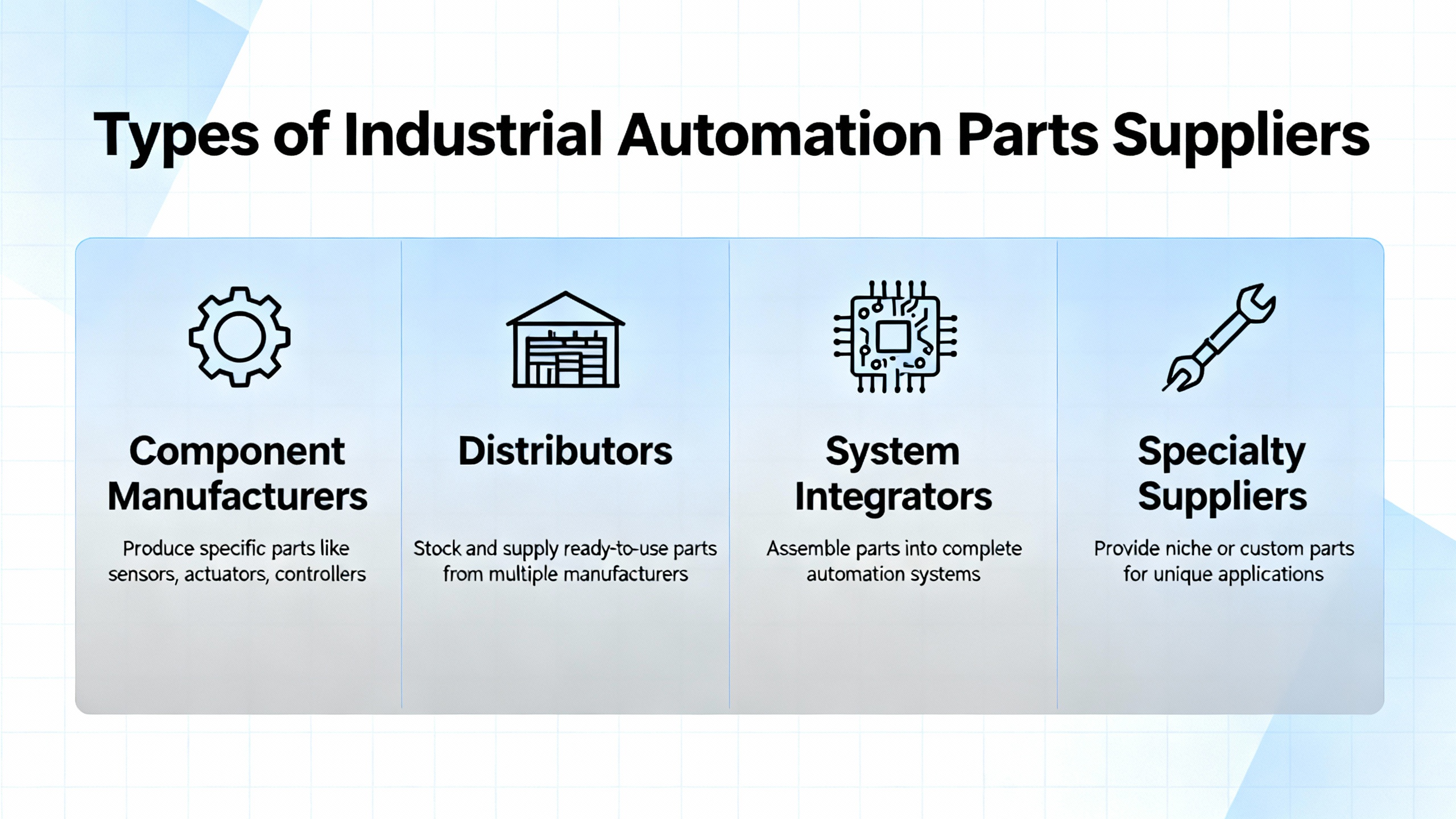
Types of Industrial Automation Parts Suppliers
Industrial buyers often treat “suppliers” as a single category, but different types of providers behave very differently under stress. Understanding these distinctions helps you build a balanced portfolio of sources instead of over‑relying on one channel.
| Supplier type | Typical strengths | Typical risks | Best suited for |
| OEM direct (automation or UPS maker) | Deep product knowledge, access to latest firmware and design changes, full traceability | Longer lead times, rigid processes, higher minimum order quantities, less flexibility on price | Newer systems, complex failures, firmware‑dependent components, safety‑critical power protection modules |
| Authorized distributors | Wide catalog, regional stock, OEM backing, established logistics | Allocation during shortages, varying technical depth by branch, contract constraints | Day‑to‑day replenishment, standard drives, PLCs, UPS batteries and breakers |
| Independent resellers / brokers | Agility, ability to source rare or obsolete parts quickly | Quality inconsistency if not vetted, risk of counterfeit or substandard components | Obsolete parts, emergency spares when the OEM no longer supports a product |
| Surplus and refurbished specialists | Cost savings, access to discontinued equipment, possible quick delivery | Variable refurbishment standards, limited warranties, non‑standard documentation | Bridging obsolescence gaps, non‑critical backup hardware, spares for legacy automation and power gear |
| System integrators and panel builders | Strong application knowledge, turnkey solutions, can bundle parts with engineering | Limited stocking depth, may rely on third‑party distributors for the actual parts | Greenfield projects, major retrofits, engineered UPS and control system upgrades |
| Digital procurement and SRM platforms | Centralized supplier data, automated workflows, analytics on spend and performance | Value depends on underlying suppliers and integration; change management for internal teams | Multi‑site organizations standardizing supplier management and procurement automation |
You rarely need only one of these. Resilient operations use a mix: OEMs and authorized distributors for critical UPS and protection components, supplemented by vetted resellers and refurbishers for obsolete or long‑lead items.
Core Criteria For Evaluating Parts Suppliers
The best suppliers share a consistent pattern: they protect your uptime and safety while supporting long‑term cost control. Research across supplier evaluation and procurement literature converges around several core dimensions.
Reliability, Quality, and Authenticity
Supplier evaluation is often defined as systematically assessing a supplier’s ability to meet your quality, cost, and delivery requirements over time. For industrial components, quality and authenticity are non‑negotiable.
Industry guidance on component sourcing emphasizes quality standards as the first screening factor. Buyers are advised to verify formal certifications such as ISO 9001, inspect samples or prototypes, and confirm that parts conform consistently to specifications. The Industrial Automation Co. perspective reinforces this: counterfeit or substandard components can devastate automation systems, leading to failures, costly repairs, and extended downtime.
A well‑known toy recall illustrates the cost of poor supplier quality. When a large manufacturer faced issues with lead paint and magnets, it recalled around 18 million toys, incurred at least tens of millions of dollars in direct costs, and was forced to overhaul its supply base and auditing approach. The same dynamic applies in automation: cheap, poor‑quality breakers or UPS batteries can turn into arc‑flash risks, load loss, or fire hazards.
For power protection equipment, insisting on genuine parts from trusted manufacturers or tightly controlled refurb processes is critical. Replacement UPS modules, inverter boards, transfer switches, and protective relays are not commodities; they sit on the front line of safety, data integrity, and equipment life.
Delivery Performance and Logistics Capability
A supply chain is only as strong as its weakest supplier. Studies on supplier performance describe five core evaluation areas: quality, delivery, cost competitiveness, reliability and risk management, and communication.
Delivery performance is often captured by on‑time delivery rate, lead time, and consistency. When deliveries are unpredictable, plants are forced to carry excessive safety stock, which ties up capital, or accept increased risk of stockouts. Demand and supply planning platforms such as Netstock highlight how variability in lead time is a major driver of bloated inventories and service failures, especially when sourcing from more volatile regions.
For automation parts, delivery metrics should be tracked explicitly. This includes average and worst‑case lead times for UPS batteries, power modules, breaker kits, drive power sections, PLC cards, and network switches. Suppliers whose lead times explode during disruptions or who consistently miss promised dates are directly eroding your uptime.
Technical Capability and Industry Knowledge
Research on evaluating automation integrators and industrial automation companies underscores the importance of technical expertise and industry knowledge. The most effective partners are those that understand not only the technology, but the specific regulatory and operational context, such as food and beverage, pharmaceuticals, or specialized manufacturing.
Strong suppliers demonstrate mastery of current automation and power technologies, from modern PLC and safety systems to inverters and high‑availability UPS architectures. They can walk you through clearly defined stages: problem definition, solution selection, and engagement of your internal team. They also understand sector‑specific requirements such as hygiene, validation, and clean power needs in pharmaceutical or semiconductor environments.
For power protection equipment, look for suppliers who can discuss fault currents, coordination, harmonic distortion, ride‑through requirements, and the interaction between drives, UPS systems, and upstream switchgear in practical terms. A parts supplier who cannot articulate how a specific static switch module behaves during a transfer under heavy non‑linear loads is not a reliability partner; they are a catalog.
Capacity, Scalability, and Financial Stability
Guides to supplier capability assessment highlight financial stability, production capacity, and responsiveness as core criteria. Financially healthy suppliers can weather downturns, maintain inventories, and invest in improvements. Those under stress tend to cut corners on quality, delay shipments, or exit the market suddenly.
Materials‑supplier guides recommend reviewing credit ratings, revenue trends, and margins as practical indicators of long‑term reliability. Similarly, industrial component sourcing specialists encourage site visits, equipment inspections, and workforce assessments to verify that suppliers can scale output without disrupting your schedules.
In the context of automation parts and power systems, capacity and scalability show up in more specific ways. You need to know whether a supplier can reliably support:
• Rapid replacement of high‑failure components such as contactors, power modules, and fan kits. • Surge demand during planned outages, major turnarounds, or fleet‑wide UPS battery replacements. • Multi‑site deployments where several plants will be upgrading or standardizing on the same drive or UPS platform over a short period.
Compliance, Sustainability, and Security
Modern guidance on supplier selection places growing emphasis on regulatory and ethical compliance. Manufacturers are encouraged to confirm environmental and labor compliance, seek eco‑friendly suppliers, and evaluate sustainability credentials.
In power and automation, this extends to compliance with electrical codes, safety standards, and data regulations. Papers on process automation selection and sourcing stress that security and compliance are non‑negotiable because automated processes often handle sensitive data. Encryption, access controls, and audit trails are expected, especially where cloud‑connected monitoring or vendor remote access is involved.
For UPS and power protection equipment, this has two implications. First, parts must meet relevant safety and performance standards. Second, any vendor‑supplied monitoring or remote diagnostics must be evaluated for cybersecurity posture, particularly in critical infrastructure, life sciences, or regulated industries.
Power Quality and Resilience Expertise
General automation vendors may see power protection as an afterthought. A reliability‑oriented buyer cannot. Telstar’s guidance on industrial automation emphasizes that automation is not just about productivity; it is about safety and resilience, especially in harsh or hazardous conditions.
Your automation parts suppliers should be able to discuss how power events propagate through your control system, how UPS topologies and inverter settings interact with drives, and how to design for graceful degradation instead of abrupt shutdown. When a supplier combines deep parts knowledge with system‑level power insight, you gain a true partner in reliability.
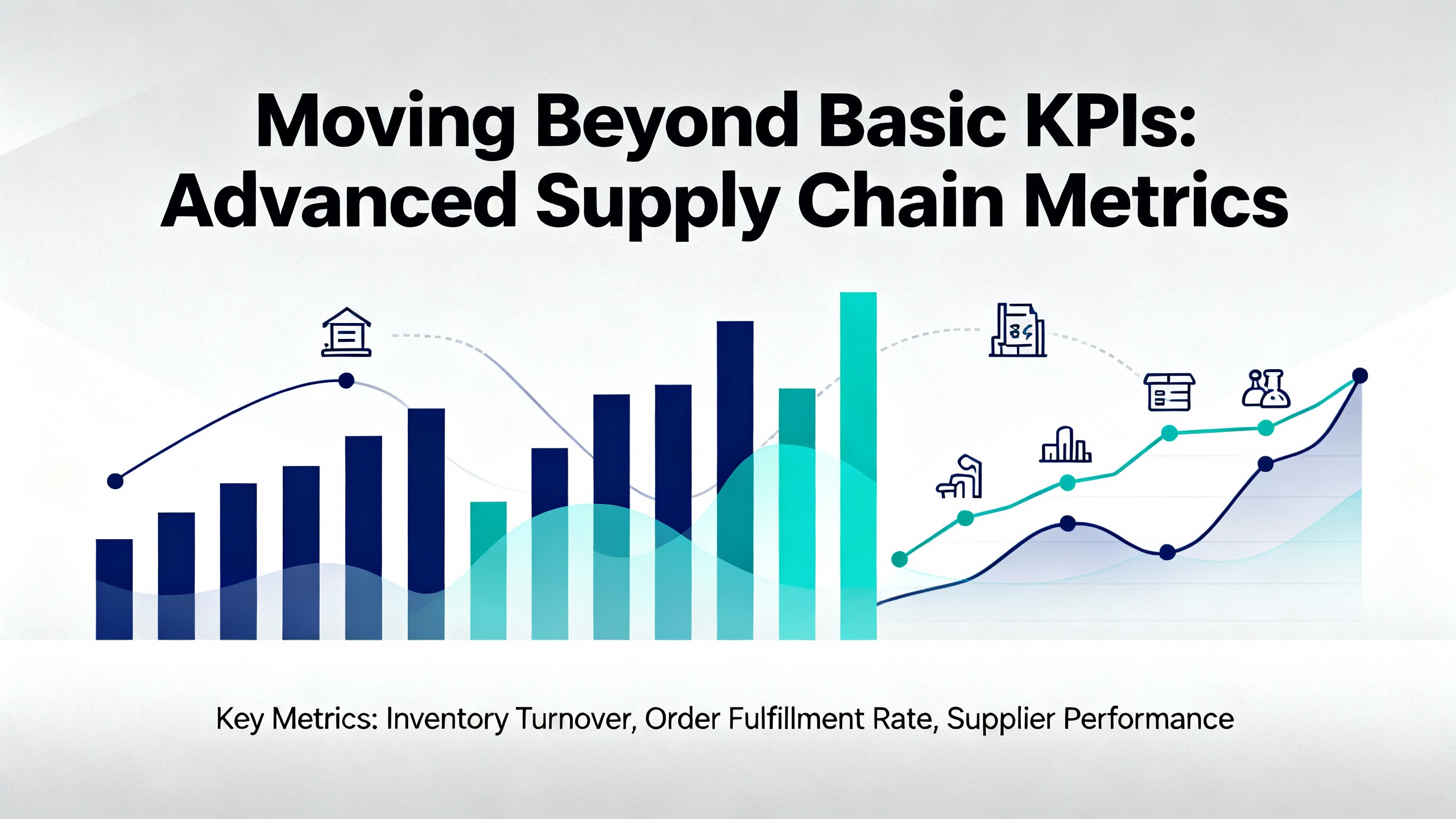
Moving Beyond Basic KPIs: Advanced Supply Chain Metrics
Traditional supplier scorecards usually focus on a handful of basic metrics: on‑time delivery, defect rate, order accuracy, lead time, cost performance, and qualitative measures such as communication quality and flexibility. Procurement platforms like Tradogram and Netstock advocate standardized KPIs to identify inefficiencies, reduce costs, and manage risk.
These KPIs remain essential. On‑time delivery rate is typically defined as the percentage of deliveries arriving on or before the agreed date. Defect rate is the percentage of units delivered that fail inspection. Order accuracy measures how often the correct items and quantities are delivered. Lead time is the duration from purchase order to delivery. Cost performance assesses whether prices remain aligned with expectations and market conditions.
However, recent research into supply chain performance suggests that advanced organizations are moving beyond these simple metrics. According to Frigate’s work on supply chain reliability, multi‑tier visibility and supplier risk mapping now extend monitoring beyond tier‑one suppliers. Studies cited there note that a large majority of disruptions originate beyond immediate suppliers. By using techniques such as graph‑based modeling and financial risk analysis, these approaches map vulnerabilities deeper into the supply chain.
Frigate and similar platforms propose indices that quantify unpredictability and resilience, using stochastic modeling, reinforcement learning, and real‑time IoT data. These metrics aim to reduce unpredictability and improve stock alignment and working capital usage. They also describe quantum‑optimized freight routing indices that use advanced optimization to lower transportation costs and reduce delivery disruptions, and AI‑based supplier performance indices that rely on time‑series models and automated anomaly detection to anticipate supplier failures.
While some of these frameworks are at the leading edge, the underlying message is practical: industrial buyers should graduate from ad‑hoc, siloed KPIs to integrated, predictive metrics that cover reliability, risk, logistics, and cyber‑resilience. That evolution is highly relevant to critical automation parts and power equipment, where the cost of disruption is high and lead times can be long.
Automation and AI in Supplier Evaluation and Procurement
Manual supplier management is notoriously inefficient. Vendor management research points out that teams can spend a large share of their time on paperwork, with vendor data scattered across emails, spreadsheets, and ERP screens. This fragmentation elevates compliance and fraud risk and undermines visibility.
Vendor management automation and procurement automation platforms address this problem by centralizing supplier data and standardizing workflows across onboarding, comparison, selection, contract management, performance monitoring, and compliance. Providers such as Kodiak Hub report that organizations adopting vendor management automation see measurable reductions in procurement costs, often in the mid‑teens to mid‑twenties percent range, along with better on‑time delivery and quality performance.
Procurement automation guidance from enterprise providers highlights several benefits particularly relevant to industrial automation parts:
• Automation of purchase approvals with pre‑approved budgets and preferred supplier lists, which speeds up routine buys while enforcing policies. • Real‑time tracking of purchase order lifecycles, improving communication with stakeholders and long‑term supplier performance monitoring. • AI‑driven analysis of historical spend and market data to forecast demand, detect maverick spend, and uncover cost‑saving opportunities. • Inventory optimization that triggers reorders only when needed, minimizing both overstock and stockouts.
AI‑powered supplier evaluation platforms, as described by Cflow and Infosys, go further by replacing experience‑based assessments with data‑driven models. They ingest supplier performance data, external market and risk signals, and transaction history, then generate reliability scores, structured risk assessments, and cost‑value analyses. These systems can automatically identify potentially unstable suppliers, flag contracts with hidden risks, and even adjust safety stock levels based on predicted disruption probabilities.
For plants that rely on UPS and automation parts, adoption does not have to be all‑or‑nothing. Even modest steps, such as centralizing supplier performance data, automating reminders for contract renewals and certification expirations, or using AI‑assisted risk scoring to prioritize audits, can significantly improve resilience.
Special Considerations for UPS, Inverters, and Power Protection Equipment
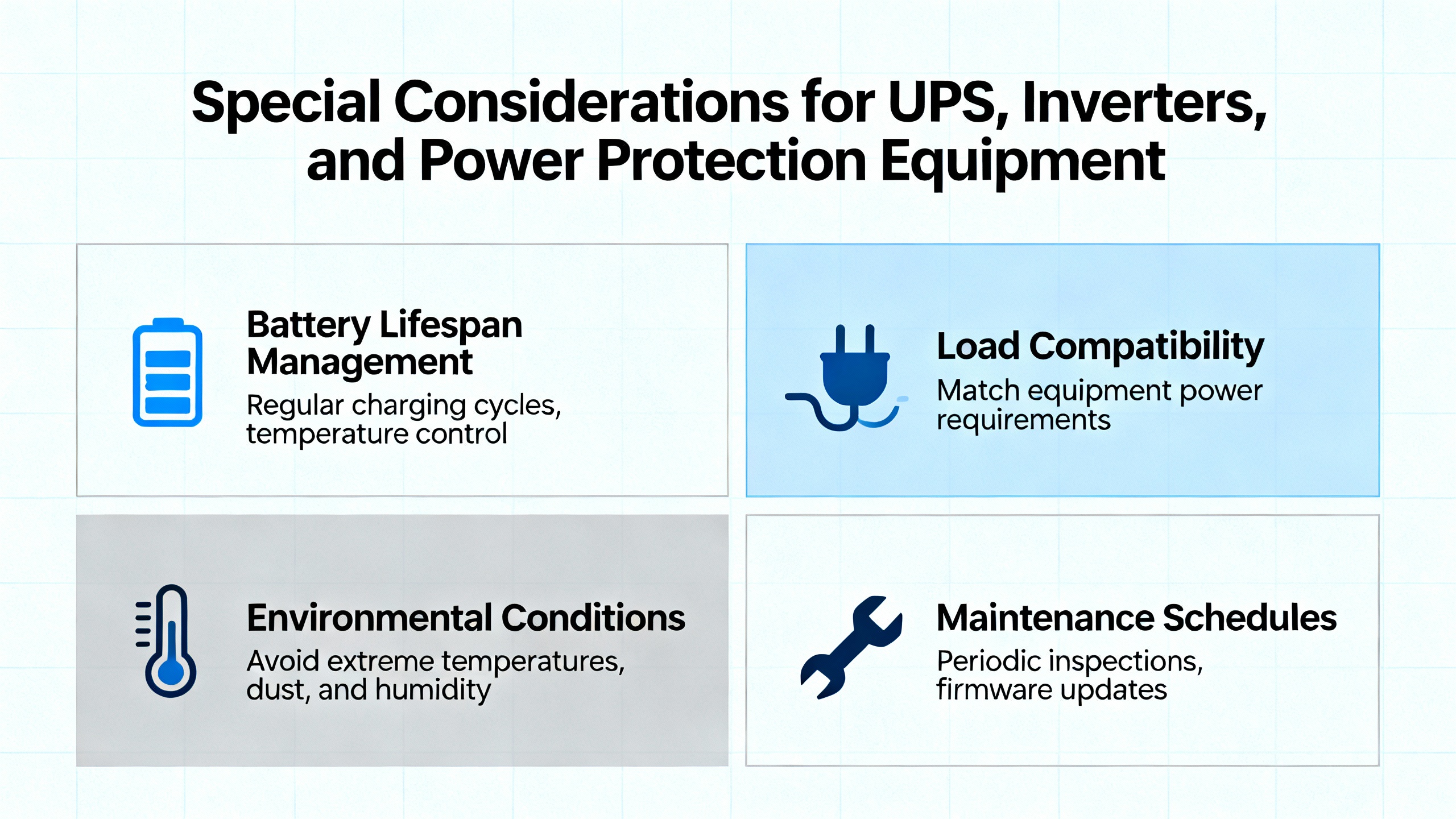
Not all automation parts are equal in their impact on risk. Power protection equipment deserves its own lens because it plays a dual role: it both protects the automation assets and is itself a potential single point of failure.
Several nuances stand out when selecting suppliers for UPS, inverters, and related parts.
First, the safety margin is thinner. A failed PLC card might stop a line; a failed UPS in a critical process can damage equipment, corrupt data, or compromise safety systems if not properly engineered. Supplier quality and authenticity controls around breakers, protection relays, surge protective devices, and energy storage components are therefore crucial.
Second, lifecycles are long and obsolescence is real. Many plants operate UPS systems, drives, and control gear for decades. Articles on choosing PLC vendors and control system providers note that hardware lifetimes often exceed the commercial lifespan of product lines. Suppliers must be able to support you through product transitions, offering migration paths, retrofit kits, and, where appropriate, reliable refurbished parts. This is where strong relationships with both OEMs and reputable resellers become critical.
Third, integration and power quality expertise are essential. Unlike simple mechanical parts, power electronics interact in complex ways. Drives can inject harmonics; UPS systems can affect fault levels; transfer schemes can create transient conditions that confuse protective relays. Suppliers who understand these interactions can help you avoid subtle reliability issues when replacing or upgrading components.
Finally, service and support expectations are higher. Guidance from control system providers such as Repete emphasizes the importance of round‑the‑clock support, robust diagnostics, and continuous improvement programs that keep systems current through incremental updates rather than forcing frequent full replacements. For power systems, this translates into suppliers who can provide:
• Quick access to technical experts during power incidents. • Clear, on‑system diagnostics and documentation for replacement procedures. • Recommended spare parts lists tied to failure modes and criticality. • Lifecycle programs for batteries, capacitors, fans, and other wear‑out components.
When you evaluate parts suppliers for power protection gear, these capabilities should be treated as core criteria, not optional extras.
Building a Resilient, Multi‑Tier Supplier Strategy
Supplier selection is not a one‑time event. It is a design choice in your overall reliability architecture.
Guides to supplier capability assessment and large‑scale automation projects emphasize that success depends heavily on supplier choice and on how clearly you define project scope and objectives. Before you even start creating a shortlist, you should clarify what you want automation and power protection to achieve: increased throughput, better quality, reduced manual interventions, lower energy use, or all of the above. You also need to understand your internal capabilities in engineering, installation, maintenance, and training so you can specify how much support you need from suppliers.
Once that groundwork is done, a structured selection process becomes far more effective. Best practice across multiple sources recommends identifying a broad initial pool using industry networks, directories, and trade shows, then narrowing it down based on technical expertise, financial stability, certification, capacity, and risk‑management practices. Detailed RFPs, site visits, sample testing, and reference checks help validate claims and reveal how suppliers behave under real‑world pressures.
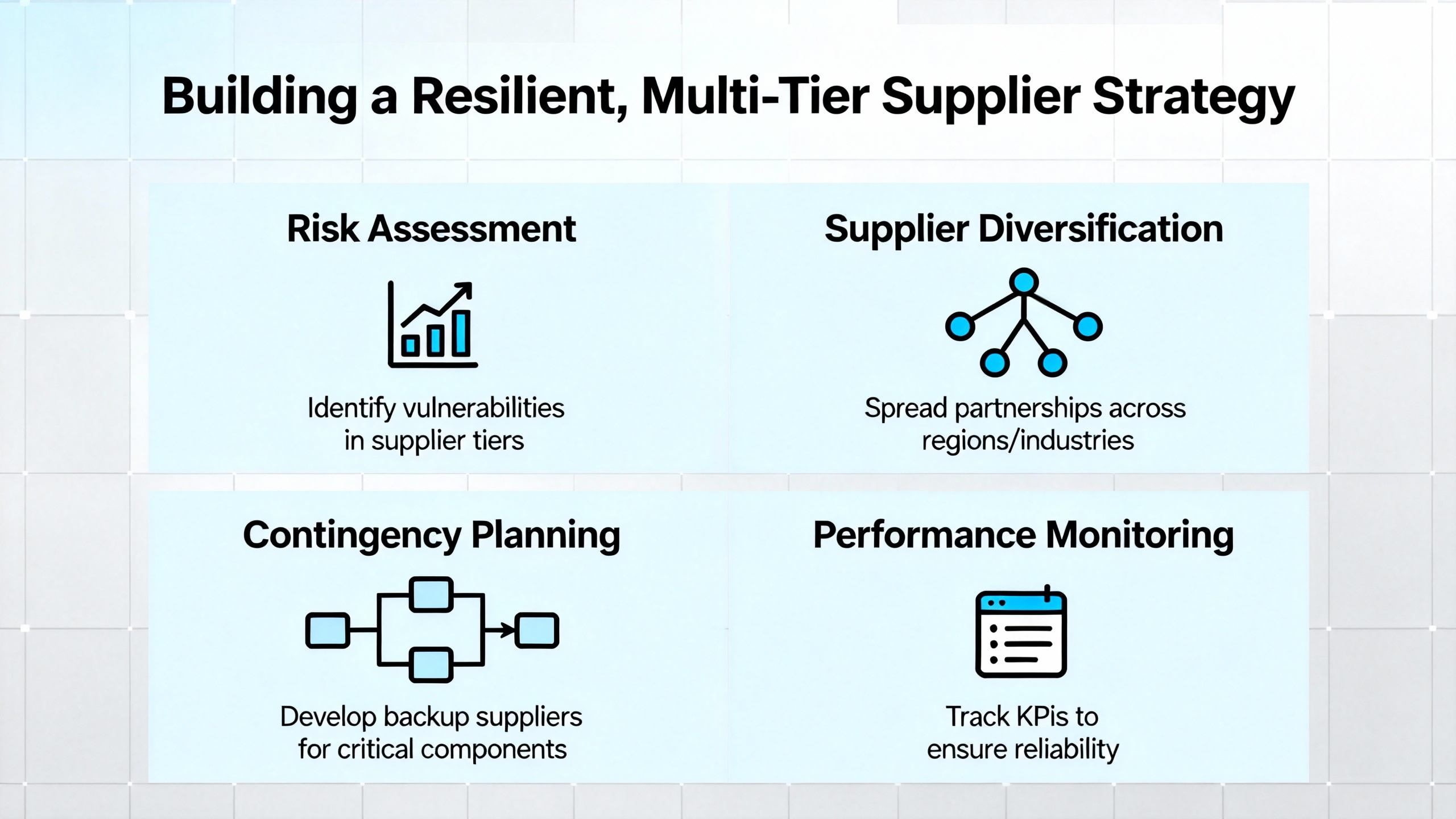
Resilience requires a portfolio mindset. Over‑dependence on a single source for critical UPS modules, drive ranges, or communication hardware is a known risk. Risk management guidance suggests dual sourcing and contingency plans, supported by performance data and scenario analysis. Multi‑tier visibility tools, which map exposures beyond immediate suppliers, can further reduce the risk that you are blindsided by sub‑tier disruptions.
Throughout this process, cultural fit and communication matter as much as technical features. Research on supplier performance stresses that misaligned expectations and poor communication are major failure drivers. You want suppliers who are transparent, responsive, and willing to collaborate on problem‑solving, particularly during commissioning, major outages, or post‑incident reviews.
Practical Roadmap to Selecting and Managing Parts Suppliers
Several independent guides converge on a pragmatic sequence for choosing and managing industrial suppliers. When you adapt these to the world of automation parts and power protection, a clear roadmap emerges.
Start by defining detailed requirements. That means technical specifications such as voltages, ratings, environmental conditions, and certifications for each class of component, but also volume needs, acceptable lead times (including surge capacity), and budget constraints. For power equipment, include fault levels, short‑circuit ratings, and coordination requirements.
Next, assess your internal capabilities. Determine the degree to which your team can handle engineering, commissioning, diagnostics, and maintenance. This assessment informs how much application support, training, and field service you must require in a supplier.
Then build and qualify a shortlist. Identify candidate suppliers through industry contacts, trade associations, and digital platforms. Filter them using publicly available information and initial interviews, focusing on expertise in your sector, track record with similar systems, and evidence of quality and compliance.
After that, validate through structured due diligence. Issue clear RFPs that describe your requirements and evaluation criteria. Request case studies and references in comparable applications. Conduct site visits or virtual audits to inspect quality systems, test facilities, and inventory management. For critical components like UPS modules or high‑power drives, consider test orders to evaluate real‑world performance and responsiveness.
Once suppliers are selected, formalize performance management. Define KPIs that align with your business goals and risk appetite, such as on‑time delivery rate, defect rate, order accuracy, lead time, responsiveness, and support quality. Capture these KPIs in your procurement or SRM systems and review them regularly with suppliers in a constructive, data‑driven way.
Finally, embed automation and continuous improvement. Use procurement automation tools to standardize workflows, monitor contract obligations, and centralize supplier data. Implement AI‑assisted risk scoring or predictive analytics where appropriate to spot early signs of trouble. Treat every incident, from a minor late delivery to a major power event, as an opportunity to refine stocking strategies, approved part lists, and supplier mix.
Over time, this roadmap creates a self‑correcting ecosystem: unreliable suppliers are either improved through collaboration or replaced; your approved parts list is hardened; and your plants become more resilient to both everyday variation and rare, high‑impact disruptions.
FAQ: Practical Questions About Parts Suppliers and Power Reliability
How many suppliers should I use for critical automation and power components? There is no universal number, but risk‑management guidance consistently warns against relying on a single source for critical items. Most plants benefit from at least two qualified suppliers for high‑impact components such as UPS modules, inverters, and key automation hardware, ideally with some geographic and logistical diversity. Multi‑tier visibility and formal contingency plans help you decide where dual sourcing matters most.
Where does procurement automation fit for a mid‑size plant? Even mid‑size facilities can benefit from lightweight procurement automation and vendor management tools. Centralizing supplier data, automating approvals for standard parts, tracking KPIs, and using basic analytics on spend and performance can significantly reduce manual effort and error. Research from procurement and SRM providers shows that these practices often deliver noticeable cost reductions and improved supplier performance without requiring a massive IT program.
What is the best way to assess a supplier’s reliability before a large UPS or automation upgrade? Combine quantitative and qualitative checks. Quantitative elements include reviewing historical delivery performance, defect and return rates, certifications, and financial stability measures. Qualitative elements include site visits, sample inspections, structured reference calls with existing customers, and tests of communication responsiveness during the evaluation. Supplier capability assessment guides recommend using standardized criteria and cross‑functional input so that engineering, maintenance, operations, and procurement all contribute to the decision.
In industrial power and automation, reliability does not start in the control room; it starts in the supply base. When you treat parts suppliers for UPS, inverters, and critical automation hardware as strategic partners, measure their performance rigorously, and support that relationship with modern procurement and risk tools, you convert a major vulnerability into a competitive advantage.
References
- https://bcm.nacm.org/finding-the-right-fit-a-guide-to-choosing-an-automation-vendor/
- https://www.flowwright.com/what-factors-should-you-consider-when-choosing-a-process-automation-solution
- https://www.889globalsolutions.com/blog/how-to-evaluate-suppliers-for-industrial-component-manufacturing
- https://www.ail-us.com/post/choosing-the-best-automation-solutions
- https://www.cflowapps.com/automating-supplier-evaluation-and-procurement-in-manufacturing/
- https://www.kodiakhub.com/blog/vendor-management-automation
- https://www.linkedin.com/posts/joab-shikuku-24108a248_the-seven-cs-of-effective-supplier-evaluation-activity-7375831073009627136-xx8w
- https://sourceday.com/identify-reliable-materials-suppliers/
- https://telstarinc.com/guide-to-vetting-and-selecting-an-industrial-automation-company/
- https://www.testdevlab.com/blog/10-things-to-consider-when-choosing-a-test-automation-tool


 Videos
 News
News Applications





Leave Your Comment