Why Honeywell DCS Operator Training Matters
When you walk into a control room, you are usually looking at the single most important system for keeping a plant safe, productive, and electrically stable. In refineries, chemical plants, power stations, and even large data centers, the Honeywell Distributed Control System (DCS) is the brain coordinating sensors, controllers, and power equipment, often backed by UPS and inverter systems. Hardware, software, and network design all matter, but in real incidents I have reviewed, the common factor in both great recoveries and costly failures has been operator competence.
Honeywell DCS platforms such as Experion PKS provide powerful tools for alarm management, advanced control, and integration with legacy systems. At the same time, these systems are increasingly complex and tightly integrated with plant power infrastructure. A misdiagnosed alarm during a bus transfer, a delayed response to a UPS fault, or an incorrect mode change on a controller can cascade quickly into trips, loss of critical loads, and damage to equipment.
Honeywell and independent providers emphasize that formal, structured DCS training is not a luxury; it is a risk-control measure. Industrial Design Solutions describes Honeywell DCS training as essential for safe and efficient operation, while Honeywell’s own workforce competency material highlights operator training simulators as a direct answer to a retiring workforce, high staff turnover, and growing system complexity. Proper training gives operators the tools to handle normal operations, abnormal events, and power disturbances with confidence rather than improvisation.
As a power system specialist and reliability advisor, I view Honeywell DCS operator training as part of the same discipline as UPS sizing, inverter configuration, and protection coordination. You invest in robust hardware and redundant power for a reason; trained operators are what make those investments pay off when something goes wrong.
Understanding the Honeywell DCS Landscape
From TPS to Experion PKS and C300
Honeywell sites still have a mix of legacy and modern systems. Many plants migrated from TotalPlant Solution (TPS) and its TPN stations to Experion PKS. Operators who grew up on US and GUS stations often need help understanding how those familiar concepts map into Experion PKS Stations. Honeywell’s own course “EXPERION Process Knowledge System C200 and TPS Operator (R210)” is designed specifically to bridge that gap for TPS operators, focusing on Experion PKS operation while respecting the habits and mental models built on the older systems.
On the more modern side, Experion PKS with C300 controllers is now standard across many chemical, petrochemical, and power applications. Training programs described by providers such as Excel Automation Solutions and Multisoft Systems focus on the C300 hardware, Experion architecture, network interfaces, and controller configuration. The curriculum typically covers controller blocks, cabinet layouts, and the way process graphics, alarms, and control strategies appear on Experion operator stations. For an operator, this background is not just academic; it explains why certain alarms arrive when they do, how controller failovers behave, and how control loops are actually executed.
Operators do not need to be system engineers, but they do need enough understanding of these architectures to recognize whether a disturbance is likely to be a field instrument issue, a controller issue, a network problem, or even a power event affecting the DCS infrastructure itself. When your controller, server, and network switches are riding on UPS power, the line between “process upset” and “power upset” is thinner than it appears on screen.
DCS vs PLC: Why Both Matter for Operators
Historically, distributed control systems were deployed on large continuous processes, while programmable logic controllers handled local equipment such as compressors and turbines. Training providers now point out that this distinction has blurred over the last few decades. Modern automation engineers are expected to understand both PLC and DCS concepts, and the same trend is impacting operators.
Honeywell DCS operator training that acknowledges this reality prepares students to understand sequences, interlocks, and logic that may be implemented partly in PLCs and partly in Experion C300 controllers, especially in plants that have grown through expansions and retrofits. Courses that explicitly address DCS versus PLC selection and integration help future specialists make better architecture decisions and avoid brittle handshakes between systems. For operators, this cross-knowledge translates to more accurate troubleshooting and fewer finger-pointing cycles between control and electrical teams when equipment fails to start after a power glitch.
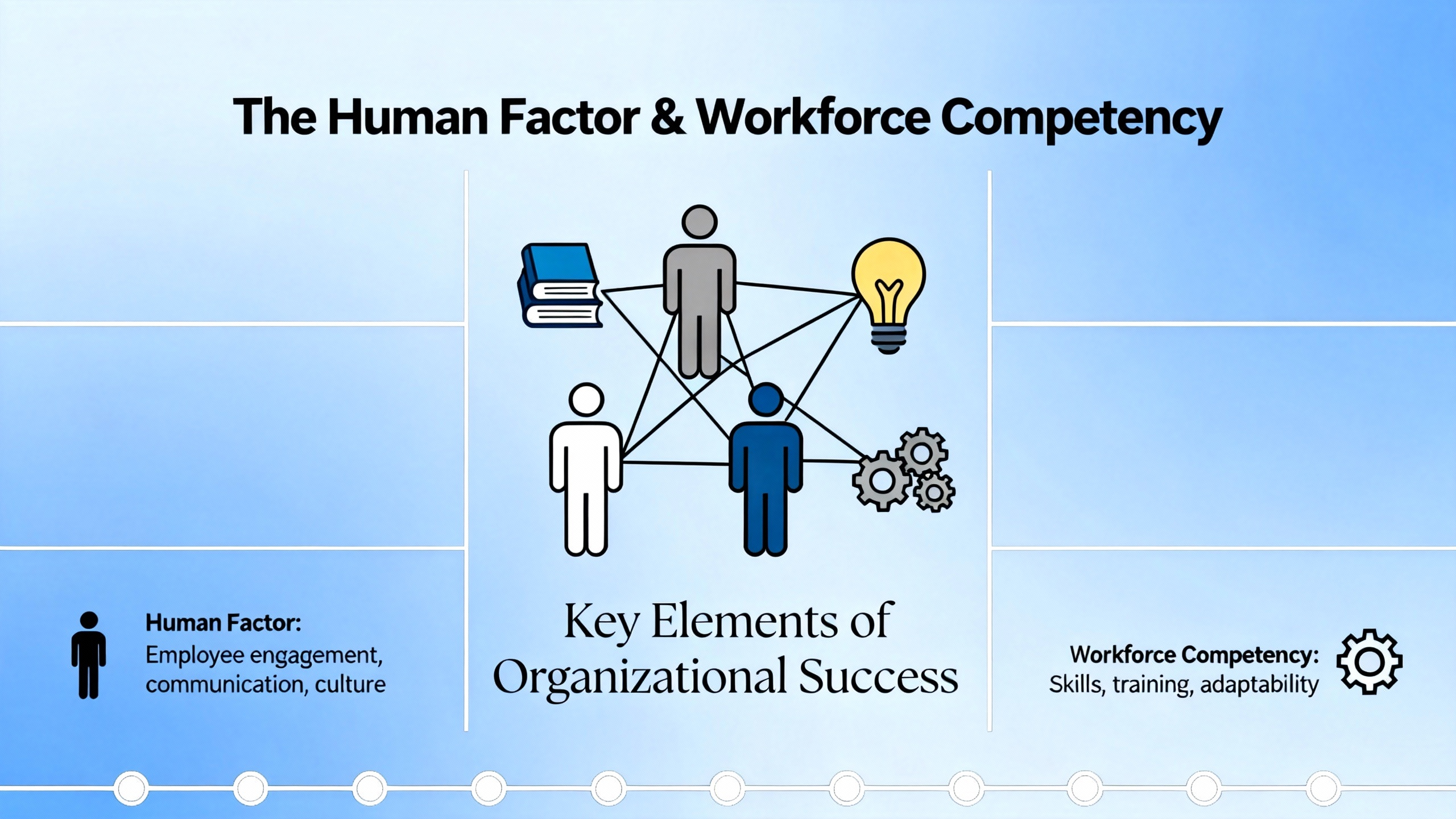
The Human Factor and Workforce Competency
Honeywell’s workforce competency material asks a blunt question: why do organizations buy operator training simulators? The answer is consistently about people rather than technology. Plants are facing a large retiring workforce, high turnover among newer staff, and increasing complexity in both process and automation systems. At the same time, management expects fewer human errors and more effective training, delivered in a way that feels realistic enough to transfer directly to the control room.
Operator errors are a recurring theme across DCS reliability discussions. Industrial Design Solutions highlights operator error as one of the major issues that degrade system reliability. LinkedIn experts on DCS training stress that human factors—attention, workload, stress, and teamwork—strongly influence how operators use the system. If training ignores these factors, the risk of performance problems and mistakes grows.
An operator training simulator, especially one that mirrors a Honeywell Experion environment, can directly address these challenges. By exposing operators to normal, abnormal, and emergency scenarios repeatedly, the simulator builds muscle memory without risking plant assets. Honeywell’s own materials underline that maintaining a realistic training experience is critical, because the closer the simulator is to the real DCS and process behavior, the more directly skills transfer during an actual power event, trip, or upset.
From a power reliability perspective, realistic simulation also means including events that are often filed under “electrical” rather than “process”: UPS failures, inverter overloads, bus transfers, transformer protection trips, or loss of redundant feeders. When DCS training includes these scenarios, operators learn to recognize early warning signs in their alarms and trends and to coordinate quickly with the power team before a disturbance escalates.
Essential Skill Domains for Honeywell DCS Operators
Core Process Control and Loop Understanding
Most Honeywell DCS operator curricula start with the basics: sensors, transducers, control loops, and PID control. Excel Automation Solutions notes that its C300 DCS training integrates instrumentation and electrical content, covering sensors, PIDs, advanced PID, power requirements, and UPS systems. Udemy’s DCS400 course from PiControl Solutions similarly emphasizes understanding tag attributes and types, analog and digital signals, and tuning parameters.
For an operator, this knowledge is not just theory. If a flow loop oscillates after a pump restart, recognizing that it is a tuning issue rather than a faulty transmitter can prevent unnecessary work orders and production losses. During a power disturbance, understanding which loops are most sensitive to voltage sag or equipment trips helps operators anticipate which control schemes are likely to go out of range first and which must be stabilized manually.
In practical terms, Honeywell DCS operator training should ensure participants can explain what PV, SP, and OP mean on Experion displays, describe the role of each mode (automatic, manual, cascade), and understand how their adjustments impact downstream units. When those loops are tied to power-critical equipment such as boiler feed pumps or inverter cooling systems, the stakes for such understanding become even higher.
Honeywell Experion Navigation and Situational Awareness
Modern DCS vendors, including Honeywell, design their interfaces to support situational awareness rather than overwhelm operators with data. Rockwell Automation’s discussion of high-performance HMIs for oil and gas, while focused on another platform, illustrates industry-wide trends: focused graphics, minimized clutter, guided navigation, and alarms that clearly indicate what needs to be done.
Honeywell Experion PKS follows similar principles. Effective operator training teaches more than which button to press; it explains how the operator station is structured, how to move from an overview to detail graphics, and how to interpret trends and events in context. The goal is to build a mental model of the plant, mapped onto the graphics, so that an alarm is not just a flashing color but a meaningful change in process condition.
Training that uses Experion-based simulators or live systems from the first session, as some C300 courses do, accelerates this learning. Operators quickly move from passive observation to active diagnosis. Instead of acknowledging alarms mechanically, they learn to scan overview displays, drill down, and decide whether the issue is self-correcting, requires intervention, or suggests a deeper electrical or mechanical problem.
Alarm Management and Abnormal Situation Handling
Alarm floods are one of the most common complaints in legacy control rooms. Rockwell Automation reports a gas-processing plant that reduced alarms to about ten per day by deploying a modern DCS and rationalizing alarms. While that example involves PlantPAx, the lesson is universal: less noise, more actionable alarms.
Honeywell DCS training should teach operators both the philosophy and the practice of alarm management. PiControl’s DCS400 course emphasizes using alarm limits, rate-of-change limits, trending, event monitoring, and history tools effectively. When combined with Honeywell’s alarm management features, this equips operators to distinguish nuisance alarms from genuine threats.
Industrial Design Solutions points out that communication failures, data overload, and latency all contribute to poor operator performance. Training that uses scenario-based exercises can deliberately stress alarm systems, forcing operators to practice prioritization under pressure. LinkedIn guidance on operator training underscores the value of scenarios that test situational awareness and problem-solving under abnormal conditions.
In a power system context, this means operators should experience not only process upsets but also alarms associated with UPS on battery, transfer to bypass, generator starts, or protective relay operations. Good training helps them avoid both overreaction and dangerous complacency.
Power and UPS Awareness in the Control Room
One detail that stands out in C300 DCS training materials is the explicit inclusion of power requirements and UPS systems. This is a welcome change. Too often, operators see the DCS as a purely process tool and view power systems as someone else’s problem, right up until the DCS reboots during a voltage dip.
Honeywell DCS operator training that integrates power topics should help participants understand what equipment supplies power to controllers, servers, switches, and operator stations; which parts of the control infrastructure are on UPS or inverter-backed power and which are not; how power events appear in the DCS, both in terms of alarms and process behavior; and what procedures apply when the plant is running on backup power.
In my experience with critical power and control projects, the most resilient plants are those where the control and electrical teams train together. When operators know how long their UPS systems can realistically support the control infrastructure, what load-shedding steps are expected, and how controller redundancy behaves during power disturbances, they are far less likely to be surprised in a real event. Honeywell-oriented training that includes these discussions builds that shared understanding.
Network and Communications Basics
Distributed control relies on robust communication. Industrial Design Solutions highlights communication failures and latency as notable challenges for DCS reliability. Their recommended mitigations include resilient protocols such as Ethernet and Fieldbus, redundant network paths, and active monitoring for latency and packet loss. Experion PKS C300 training courses also teach network architecture design and verification of communications via protocols such as Modbus and OPC.
For operators, network engineering details are less important than recognizing the symptoms of network problems. Honeywell DCS training should therefore teach how to spot telltale patterns on Experion stations: multiple related communication alarms, frozen trends from certain areas, slow responses from specific controllers, or intermittent data values. Training scenarios that simulate partial network failures, rather than only clean process faults, give operators practice in distinguishing between instrument failures and communication issues.
Because critical control infrastructure often shares power and physical paths with other plant systems, this knowledge ties back into power reliability. A tripped power panel feeding network switches can look like a DCS failure unless operators know how to interpret alarms and status information correctly.
Cybersecurity and Access Discipline
As DCS platforms become more connected and incorporate cloud-enabled analytics, cybersecurity is no longer an isolated IT concern. Industrial Design Solutions recommends multilayered security with firewalls, encryption, strict access control, and continuous monitoring. A LinkedIn discussion on DCS specialists further emphasizes disciplined patching, access control, and monitoring as core responsibilities.
For Honeywell DCS operators, this translates into concrete behaviors. Training should cover proper use of user accounts, understanding of role-based permissions, and awareness of why certain actions are restricted. It should also address practical cyber hygiene in the control room, such as treating unknown USB devices with caution and following change-management procedures for configuration modifications.
Operators who understand the rationale behind cybersecurity measures are more likely to support them rather than work around them. This is especially true when they see how malware or an infected engineering laptop could compromise the DCS and, by extension, the power and process equipment they are trying to protect.
How Honeywell DCS Training Programs Build These Skills
Formal Courses and Vendor Academies
Honeywell’s own training portfolio, delivered through Honeywell Academy, includes courses that address specific operator needs. The Experion PKS C200 and TPS Operator course focuses on Experion Stations in TPS environments and helps operators understand how C200 controllers and TPS hardware are presented and controlled in the newer interface. Global training catalogs from Honeywell group courses by platform and role, allowing plants to map content to operator responsibilities.
Independent providers complement these offerings with C300-focused training. Excel Automation Solutions describes a curriculum that covers DCS and network architecture design, system software installation, application programming, graphics creation, communications testing, and commissioning. Multisoft Systems provides an online Experion C300 course aimed at engineers and technicians who need to configure C300 controllers, integrate field devices, manage alarms, and troubleshoot the system.
These courses commonly blend classroom instruction with hands-on labs and case studies. Participants work directly with Honeywell Experion PKS environments, learning how theory translates into the screens and workflows they will use daily. For operators, this structured exposure accelerates familiarity, reduces reliance on tribal knowledge, and prepares them to support projects such as upgrades and expansions rather than merely living with the results.
Simulator-Based Operator Training
Honeywell’s workforce competency material makes a strong case for operator training simulators as a response to real-world pressures: retiring experts, high turnover, complex processes, and the need to reduce human error while improving training effectiveness. Honeywell UniSim Competency Suite is one example of how simulator-based training can model normal, abnormal, and emergency situations in a low-risk environment.
Industrial Design Solutions and other training providers reinforce this message. They recommend simulation-based learning to give operators realistic practice in handling upsets and emergencies. In the DCS domain, simulation is not limited to process behavior; it can also mimic DCS alarms, interlocks, and control actions as they would appear on an Experion Station.
A typical Honeywell-oriented simulator program lets operators start up units, change modes, respond to disturbances, and see the consequences of poor decisions without touching the real plant. Repeating such exercises builds the confidence and speed that are difficult to achieve through lectures or manuals alone. For power-sensitive operations, simulators can include scenarios such as bus transfers, generator failures, or UPS alarms, ensuring operators learn how to prioritize and act when process and power events intersect.
The role of these simulators in workforce competency can be summarized by linking cause to effect: they provide structured practice, they improve situational awareness, and they reduce human error in both routine and abnormal conditions.
Cross-Platform Skills and Continuous Learning
Modern Honeywell DCS operators are unlikely to spend their entire careers on a single release of Experion PKS or a single set of power and process equipment. Industrial Design Solutions stresses continuous learning because DCS platforms and automation technologies are continuously upgraded. A LinkedIn article on DCS performance optimization also recommends regular reviews of DCS strategy, at least annually and whenever major process or system changes occur, bringing together management, operators, engineers, and suppliers.
Training providers note that knowledge of both DCS and PLC systems is now expected, especially for engineers and specialists who will design future control architectures. Honeywell DCS training that includes discussions about DCS versus PLC selection and integration prepares operators and junior engineers to participate meaningfully in these decisions, not just execute them.
PiControl’s DCS400 program illustrates how operator training can be structured to support long-term growth. The basic course covers core DCS operation, while an extended version adds advanced topics such as custom tags, complex schemes, and advanced control. Completion of the full program leads to formal recognition as a process control expert for control room operations. Similar structured paths exist within Honeywell Academy and other Honeywell-focused training organizations, giving plants a roadmap for developing junior operators into future DCS specialists.
Designing a Honeywell DCS Training Roadmap for Your Plant
Building an effective Honeywell DCS operator training program starts with clarity about objectives. Plant leaders should first define what success looks like. This might include improved startup and shutdown performance, reduced alarm floods, fewer operator-caused trips, or better handling of power disturbances. Without clear targets, it is difficult to select appropriate courses or measure progress.
Once goals are identified, it is useful to segment the operator population. New operators typically need foundational training in DCS concepts, Experion navigation, basic loops, and standard operating procedures. Experienced operators and console supervisors benefit more from advanced control strategies, alarm management, network awareness, and cross-disciplinary topics such as power systems and cybersecurity. Training catalogs from Honeywell and independent providers are easier to use once this segmentation is defined.
Mapping training content to roles is the next step. For example, a new console operator on an Experion system might start with a Honeywell orientation course, then progress to simulator sessions that reflect the specific plant. A more senior operator might attend a C300 configuration and alarm management course, then participate in simulator-based drills on complex upsets, including power-related scenarios. Maintenance and engineering staff might enroll in courses with deeper focus on network architecture, redundancy, and integration with UPS and safety systems.
Finally, training must be treated as an ongoing process rather than a one-time event. LinkedIn guidance on DCS strategy recommends reviewing the DCS approach at least once per year and whenever the process or system changes significantly. That same cadence can be applied to training plans. As new equipment is installed, as the DCS is upgraded, or as UPS and inverter systems are reconfigured, operators should receive targeted refresher sessions. This continuous learning approach is especially important given the steady introduction of advanced features such as analytics and AI into modern Honeywell platforms.
Considerations for New Operators
New operators often arrive with little or no exposure to distributed control systems. They may be comfortable with general computing but unfamiliar with the discipline required in a control room. Training for this group should emphasize the basics: what a DCS is, how Honeywell Experion represents the plant, how control loops work, and how to navigate between overviews, unit graphics, and trends.
Courses like PiControl’s DCS400, which focus on fundamentals of tags, alarm usage, and safe operating habits, are well suited to this level. When combined with Honeywell-specific introductions and simulator sessions, new operators quickly move from tentative observation to competent participation in control-room operations.
From a reliability standpoint, it is important that new operators also receive a basic introduction to the plant’s power architecture. They do not need to design switchgear or UPS systems, but they do need to know what happens to the DCS, critical drives, and safety systems when the plant loses utility power or when UPS capacity is strained. Even a short module that walks through typical power events and how they appear on the Honeywell DCS can prevent confusion and dangerous assumptions later.
Considerations for Experienced Operators and Specialists
Experienced operators and aspiring DCS specialists need deeper training that leverages their existing process knowledge while stretching their technical understanding. Excel Automation Solutions’ C300 training, with emphasis on architecture design, programming from functional narratives, and commissioning, provides a model for how operator-focused engineering content can be delivered.
For such personnel, advanced topics should include alarm rationalization, control loop performance analysis, network diagnostics, and cybersecurity practices. They are well placed to join DCS upgrade or expansion committees, as suggested in C300 course outcomes, and to act as internal trainers for colleagues. Rockwell Automation’s insights into high-performance HMI design, even though vendor-specific, can also inspire Honeywell users to demand and help design better graphics for their own Experion systems.
These experienced operators are often the bridge between process and power teams. Training that explicitly covers how DCS configurations and alarm strategies interact with UPS, switchgear controls, and protection systems turns them into reliability multipliers, not just console experts.

Measuring Training Impact Without Getting Lost in Metrics
Many training brochures promise better safety, higher productivity, and fewer incidents, but plant leaders need more concrete ways of judging whether Honeywell DCS operator training is working. While the sources discussed do not provide specific formulas or KPIs, they point to practical indicators.
One such indicator is alarm behavior. Rockwell Automation recounts a real case where a gas-processing plant reduced nuisance alarms to about ten per day after deploying a modern DCS and rationalizing alarms. Honeywell users pursuing similar goals can track alarm counts, distribution by priority, and operator responses before and after training and alarm-rationalization projects.
Another indicator is the frequency and severity of operator-caused incidents or near misses. Industrial Design Solutions argues that better training and simulation reduce operator errors, especially under complex conditions. If incident investigations show fewer cases where misinterpretation of Experion graphics or alarms contributed to the problem, training is likely having an effect.
For power-sensitive sites, training impact can also be seen in how smoothly plants handle power disturbances. Evidence includes fewer unintended trips during transfers between utility and generator power, improved adherence to load-shedding procedures, and better coordination between control and electrical teams. Even without hard numbers, debriefs after real events often reveal whether operators felt prepared or overwhelmed. Those qualitative reports are valuable feedback for refining Honeywell DCS training content.
Practical Recommendations for Plant Leaders and Training Managers
From a reliability perspective, Honeywell DCS operator training should be treated as an integral part of your control and power system design, not a separate soft skill. Several practical steps emerge from the sources discussed.
Start by aligning training with actual plant risks. If your biggest vulnerabilities involve complex continuous processes, focus on advanced loop control, alarm management, and abnormal situation handling. If power quality and availability are the main concerns, ensure training explicitly addresses how the Experion system reacts to UPS events, inverter failures, and protection trips.
Next, leverage vendor and third-party strengths. Honeywell Academy provides platform-specific knowledge, while organizations such as Industrial Design Solutions, Excel Automation Solutions, Multisoft Systems, and PiControl Solutions bring complementary perspectives, case studies, and hands-on emphasis. ABB’s broad industrial training portfolio shows that even in multi-vendor environments, consistent training principles apply; Honeywell operators can learn from those general best practices while still focusing on their own platform.
Finally, make simulator-based practice non-negotiable for critical roles. Honeywell’s own workforce competency materials and multiple external sources converge on the idea that realistic simulation is one of the best ways to address a retiring workforce, high turnover, process complexity, and the need to reduce human error. Tie simulator sessions directly to your key scenarios, including those that involve power system interactions, and schedule them regularly rather than treating them as one-off events.
FAQ: Common Questions About Honeywell DCS Operator Training
Do operators really need Honeywell-specific training if they already know another DCS?
Experience with any DCS platform is valuable, but the details matter when every second counts. Honeywell Experion differs from other systems in terminology, navigation, alarm behavior, configuration concepts, and integration with legacy TPS hardware. Training that explicitly focuses on Experion PKS, C200, C300, and TPS migration helps operators transfer their general skills correctly rather than relying on assumptions formed on other platforms.
How often should we refresh Honeywell DCS training?
Several sources recommend reviewing DCS strategy and performance at least annually and after major system or process changes. Training can follow the same rhythm. New operators need more frequent, structured sessions early on, while experienced operators benefit from periodic refresher courses, updates on new Honeywell features, and simulator drills incorporating recent incidents or configuration changes.
Where should we start if budgets are tight?
When budgets are constrained, focus first on roles and scenarios that carry the highest risk. Critical console operators should receive core Honeywell DCS training and participate in simulator sessions that cover your most serious process and power events. Supplement formal courses with internal knowledge sharing, vendor webinars, and targeted reading. Even modest investments in operator training can produce outsized benefits compared with the cost of a single major trip or equipment damage event.
In the end, Honeywell DCS operator training is about turning complex technology into reliable, predictable performance. When operators understand their Experion systems, the control-room HMI, the power infrastructure behind it, and the human factors that influence their own actions, the plant gains a quieter alarm log, a steadier process, and a much stronger defense against the unexpected.
References
- https://utilities.utexas.edu/sites/default/files/UEM-Training-Cert-Program.pdf
- https://excelautomationsolutions.com/honeywell-experion-c300-dcs-training/?srsltid=AfmBOorXntJrMb5YMgUH2CWrxuTpFpEbl09F8K-uViBMyd4OazJmvKkO
- https://idspower.com/common-issues-control-systems/
- https://www.linkedin.com/posts/nworie-sunday-71171137_20-tips-on-dcs-specialist-that-may-help-activity-7153034155172257792-GzEA
- https://www.multisoftsystems.com/cad-cam-piping/honeywell-epks-c300-dcs-online-training
- https://runtimerec.com/distributed-control-system/
- https://www.sunewell.com/blog/how-to-optimize-the-performance-of-dcs-1053291.html
- https://www.wevolver.com/article/mastering-distributed-control-systems-a-comprehensive-guide-to-dcs-architecture-components-and-applications
- https://forum.dcs.world/topic/342170-performance-settings-guide/
- https://www.udemy.com/course/dcs-training-for-control-room-operators/?srsltid=AfmBOopNzo2ngFJ77T1_3CScbtb-ZOsPvg31pHKLA7RTUDnXLo1i3MWs


 Videos
 News
News Applications





Leave Your Comment