Why Vibration Certification Matters Around Critical Power Systems
In industrial and commercial power systems, the discussion about reliability usually centers on UPS strings, inverters, transfer switches, and protection logic. Yet when you look at the root cause of many serious power incidents, the failure story often starts with rotating equipment: a generator bearing that deteriorated, a cooling pump that seized, or a fan motor that quietly went from slightly unbalanced to catastrophically failed. That is where vibration analysis and, critically, vibration analyst certification come into play.
Experienced reliability engineers consistently emphasize that the success of a vibration program hinges more on well-trained people than on the monitoring hardware itself. Discussions among practitioners highlight that even the best monitoring system will underperform if analysts do not understand concepts like frequency resolution, demodulation, and how to interpret spectra on variable-frequency or low-speed machines. For plants running sophisticated monitoring systems in conjunction with power protection equipment, that skill gap can be the difference between a graceful transfer and a blackout.
Internationally, the competency roadmap for vibration analysts is defined mainly by ISO 18436-2. This standard describes four categories of vibration personnel, from basic data collectors to expert diagnosticians who can lead programs and recommend design changes. Independent certification bodies such as the Vibration Institute and the Mobius Institute Board of Certification (MIBoC) have built accredited programs against this framework, with training hours, experience requirements, and proctored exams. For engineers and technicians who support UPS-backed power systems and frequently interact with vibration data from monitoring platforms and route-based analyzers, following this structured certification path is one of the most reliable ways to build capability and credibility.
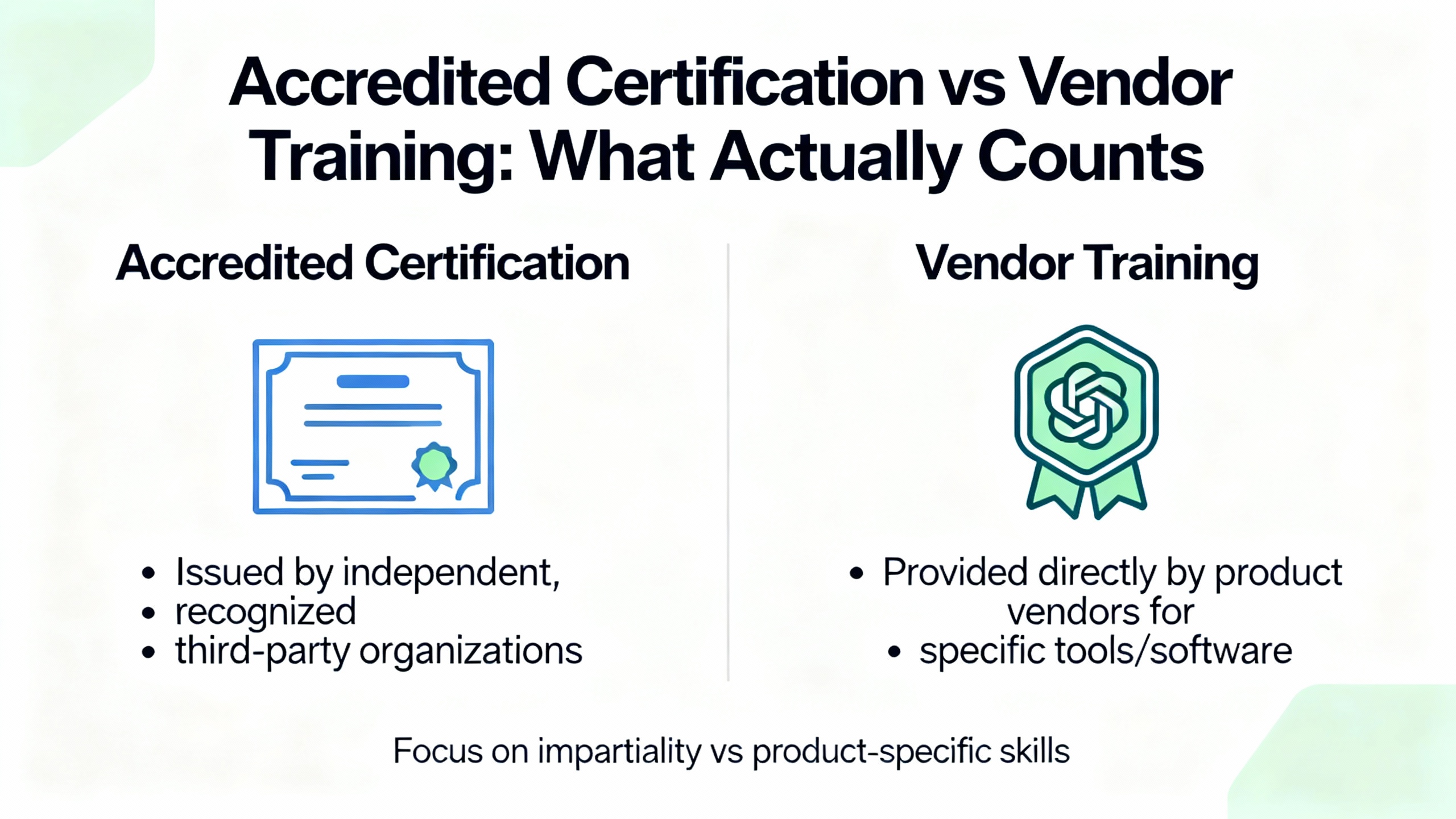
Accredited Certification vs Vendor Training: What Actually Counts
One of the recurring sources of confusion in condition monitoring is the difference between simply “having a certificate” and holding an accredited professional certification. Understanding that distinction is critical when you are trying to build a robust reliability culture around critical power assets.
Accreditation is formal recognition that a certification body itself has been independently audited and found to comply with standards such as ISO/IEC 17024, which governs personnel certification programs. Organizations like ANSI and ANAB act as accreditation bodies in this space. Their role is to verify that the certification scheme has clear rules, that exams are statistically controlled and secure, and that experience requirements are enforced in a fair and transparent way.
Certification, in this context, is a time-limited credential issued by a certification body, not by a training provider. The Vibration Institute, for example, runs a vibration analyst certification program that is accredited by ANAB. Their program conforms to ISO 18436-1 and ISO 18436-2 for condition monitoring and vibration diagnostics. Successful candidates receive a certification that is valid for five years, and as of late July 2023, several thousand analysts worldwide held these credentials. Similarly, MIBoC offers vibration analysis Category I through IV certifications that are accredited to ISO/IEC 17024. Candidates must complete approved training, pass secure exams, and document practical work experience that is verified by an independent person.
A certificate, by contrast, is typically a document you receive upon completing a course. It is owned by you, often with no expiration date, and it usually does not imply that a third-party body has assessed your competence beyond that specific training. The Vibration Institute’s Field Balancing Specialist program illustrates this difference. It was originally set up as a five-year certification, but because the relevant ISO standard for that role did not advance, the Institute restructured it as a non-expiring training certificate rather than an accredited certification.
For power-system reliability leaders, the practical takeaway is straightforward. Vendor or in-house training on a monitoring platform is important, but when you are writing job descriptions or planning career paths around vibration, you should anchor on accredited certifications tied to ISO 18436-2. Those credentials travel with the person across plants, hardware platforms, and vendors, and they can be independently validated by employers and auditors.
The ISO 18436-2 Vibration Analyst Categories
ISO 18436-2 defines four progressive categories of vibration analysts. Although individual providers describe them in slightly different words, the underlying structure is consistent and provides a clear professional development path.
Category I: Data Collection and Basic Assessment
Category I is the entry point. Certified Category I vibration analysts are typically responsible for single-channel condition monitoring and straightforward diagnostics. They acquire vibration data along predefined routes, run steady-state tests in line with written procedures, and compare results to alert settings.
Minimum requirements for Category I are modest but meaningful. The Vibration Institute and United States Marine Corps credential descriptions align on a baseline of about six months of relevant experience and at least thirty hours of formal vibration training. MIBoC specifies completion of an approved course plus a two-hour exam with sixty multiple-choice questions, where a passing score is at least seventy percent. Certification is valid for five years, after which recertification requires evidence of continued practice or retesting.
From a skills perspective, Category I analysts are expected to understand basic vibration concepts and to handle instruments correctly. Entry-level courses such as those described by ACOEM and AVT Reliability focus on fundamentals of vibration, time waveforms, spectra, basic signal processing, and correct setup of analyzer parameters. For a power plant technician, that means being able to collect usable data on motors, pumps, fans, and generators that support UPS and inverter systems, and to recognize when readings cross predefined thresholds that warrant escalation.
Category II: Frontline Diagnostician
Category II analysts go beyond data collection. They perform basic analysis using single-channel instruments, configure measurement setups, maintain databases, and interpret vibration signatures for most common fault conditions. They start to own the diagnostic loop rather than just feeding data into it.
ISO 18436-2, as interpreted by training and certification providers, requires a significant step up. Recommended minima include about eighteen months of practical vibration experience and around sixty hours of training, incorporating the foundational material from Category I. MIBoC again expects a MIBoC-approved course, verified field experience, and a proctored exam of one hundred multiple-choice questions lasting three hours, with a required minimum score of seventy percent.
Curricula at this level, based on descriptions from organizations such as AVT Reliability and John Crane, emphasize data interpretation, resonance, alarm limit setting, and practical skills using advanced visualizations and simulations. Analysts learn to relate spectral peaks to forcing frequencies like running speed, gear mesh, and bearing element frequencies. They also begin to apply more advanced signal processing, set appropriate Fmax, balance frequency resolution against measurement length, and use spectral averaging intelligently to reduce noise without masking transient events. In the context of a power system, a Category II analyst can now look at a fan motor on a UPS cooling system, recognize misalignment versus looseness via spectral and phase clues, and propose a concrete maintenance action.
Category III: Program Architect
Category III analysts are expected to design, direct, and improve entire vibration-based condition monitoring programs. They use spectral, waveform, and orbit analysis and can perform or oversee minor corrective actions such as operating deflection shape studies, single-plane balancing, and specialized diagnostic testing.
ISO-aligned guidance from providers such as the Vibration Institute and RITEC places the recommended minimum experience at about thirty-six months, with training hours totaling at least ninety when you include prior Category II content. MIBoC’s Category III requirements include an approved course, at least thirty-six months of practical experience, prior accredited Category II certification, and a one hundred-question exam lasting four hours.
At this level, an analyst is no longer just confirming faults; they are shaping the monitoring strategy for the plant. They decide which machines will be monitored continuously versus route-based, how to configure alarm and danger thresholds, and how to integrate vibration findings into broader reliability initiatives that may include thermography, oil analysis, and ultrasound. For a power protection engineer, having access to a Category III vibration specialist means you can challenge or confirm whether vibration issues on generator sets, boiler feed pumps, or cooling towers are genuine threats to power availability and how they should influence your maintenance outages and risk models.
Category IV: Expert Troubleshooter and Design Partner
Category IV represents the top of the vibration certification ladder. Category IV analysts are expected to understand advanced mechanical vibration theory and sophisticated signal analysis, direct large-scale condition monitoring programs, and lead major diagnostic and design modification efforts.
Standards-based summaries from sources such as RITEC and industry certification guides describe Category IV requirements as at least sixty months of relevant field experience and a training load of about one hundred thirty hours, building on all prior levels. MIBoC calls for an approved course, accredited Category III certification as a prerequisite, and a demanding exam: sixty questions over five hours with a seventy percent minimum score. Certification validity remains five years.
In practical terms, Category IV analysts are the people you want at the table when chronic vibration problems are threatening critical power assets. They can push beyond routine diagnostics and work with mechanical, electrical, and protection engineers to recommend design alterations, foundation improvements, or changes in operating strategy. When a plant repeatedly struggles with vibration-driven trips on generator shafts feeding medium-voltage switchgear, a Category IV-level professional is often the one connecting the dots between design assumptions, actual operating profiles, and monitoring system configuration.
Summary of Category Requirements
The progression from Category I to Category IV is a multi-year journey rather than a one-off course. The following table summarizes the typical requirements and role focus, based on aligned descriptions from the Vibration Institute, Mobius Institute, and ISO 18436-2 aligned providers.
| Category | Typical Role Focus | Minimum Experience (months) | Typical Training Load (hours) | Example Exam Format (MIBoC) | Certification Validity |
| I | Route-based data collection, basic assessment | 6 | 30 | 60 multiple-choice questions, 2 hours, 70% pass | 5 years |
| II | Basic diagnostics, setup, database management | 18 | 60 (including Category I) | 100 multiple-choice questions, 3 hours, 70% pass | 5 years |
| III | Program design and leadership, advanced diagnostics | 36 | 90 (including Category II) | 100 multiple-choice questions, 4 hours, 70% pass | 5 years |
| IV | Expert diagnostics, design and modification input | 60 | 130 (including Category III) | 60 multiple-choice questions, 5 hours, 70% pass | 5 years |
Key Technical Skills You Build Along the Way
Accredited vibration certification is not just a badge; it encodes a very specific set of technical competencies that are directly relevant to protecting power systems that depend on rotating machinery.
Foundational training programs, such as Category I courses described by ACOEM and AVT Reliability, start with time waveforms and spectra. The time waveform is the raw vibration signal plotted against time. Analysts learn to spot impacts, modulation, and transient events that might be washed out in a spectrum. The vibration spectrum then presents amplitude versus frequency, making it easier to diagnose rotating machinery faults by linking peaks to forcing frequencies like running speed or bearing defect frequencies.
Students are introduced to phase analysis, which compares vibration phase between locations or directions. Even a brief exposure to phase helps differentiate common problems such as unbalance, misalignment, and looseness. In a power plant, that distinction matters when deciding whether a generator coupling needs alignment work or whether a structural looseness is transmitting vibration into sensitive switchboards or UPS frames.
Signal processing is another key thread through the certification path. Trainees learn how sampling, filtering, and fast Fourier transform (FFT) parameters influence data quality. Concepts such as Fmax, resolution, and spectral averaging are emphasized. Fmax is the highest frequency captured in a spectrum; set it too low and you miss bearing fault signatures, too high and you dilute resolution. Resolution is often described in terms of the frequency spacing between lines in the spectrum, with clear trade-offs between fine resolution and longer measurement time. Spectral averaging is used to tame random noise and make recurring phenomena stand out, but excessive averaging can smear short-duration events such as impacts.
At more advanced levels, analysts dive into demodulation and envelope analysis for rolling-element bearings, operating deflection shapes and modal analysis for structural problems, and specialized techniques for low-speed and variable-frequency drive machines. Real-world courses from providers like 4X Diagnostics and AVT Reliability rely on 3D animations, flash simulations, and software tools to make these topics concrete, emphasizing that theory must always tie back to actual machine behavior.
Choosing a Certification Provider That Fits a Bently Nevada Environment
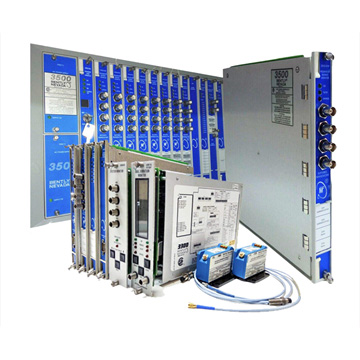
For teams working around high-end monitoring platforms, including those used alongside Bently Nevada systems in critical power applications, the practical question becomes how to choose a certification provider and training mix that delivers reliable, portable competence.
The Vibration Institute offers a long-standing analyst certification program accredited by ANAB to ISO/IEC 17024. Their course lineup includes overviews, Category I and Category II classes, and advanced offerings for more experienced analysts. Education is delivered through formal courses, conferences, and technical meetings. Certified analysts gain not only a credential but also membership in a global community of practitioners, access to technical articles, conference proceedings, and a dedicated magazine. The Institute positions its accreditation as proof that its certifications are an objective benchmark of competence, valued by employers and clients.
Mobius Institute, via MIBoC, runs another major accredited scheme that covers Vibration Analysis Categories I through IV along with related disciplines such as ultrasound, infrared thermography, and field lubrication. MIBoC’s structure includes independent committees that oversee scheme rules, exam content, and statistical quality control. Training can be delivered by Mobius directly or by approved providers, and MIBoC is willing to recognize third-party courses from competing training organizations if they meet the relevant standards.
Around these core certification bodies, a number of training organizations operate as either partners or independent providers aligned to ISO 18436-2. Companies such as 4X Diagnostics deliver Mobius-based vibration courses across Categories I through IV, including specialized classes in modal analysis and operating deflection shapes using MEscope software. AVT Reliability offers a four-day Category I basic course that introduces condition monitoring, complementary techniques such as thermography and oil analysis, and core vibration topics like equipment selection, data interpretation, and alarm limit setting. Red Wolf Reliability provides both classroom and on-demand training for all four ISO categories and uses the Vibration Institute for certification exams, combining flexible learning modes with third-party validation.
There are also long-established training houses such as Technical Associates of Charlotte and major vendors that deliver Category I-level classes. Peer discussions among reliability professionals consistently recommend using ISO-certified providers like the Vibration Institute and Mobius Institute because their certifications include experience requirements and are easily recognized and validated.
In a plant where vibration data flows from monitoring systems into your reliability and protection workflows, the practical strategy is often a hybrid. Vendor or platform-specific training ensures your team understands the details of configuration, data acquisition routes, and alarm management on the installed system. Accredited certification training and exams then validate that those same people have a solid, vendor-independent grounding in the underlying vibration science and diagnostic techniques.

A Practical Certification Roadmap for Power Reliability Teams
From a power system specialist’s perspective, the most effective certification strategies are planned like any other reliability project: with clear roles, realistic timelines, and alignment between expectations and capability.
For technicians and engineers who spend significant time collecting vibration data on motors, pumps, and generators that underpin UPS and inverter reliability, Category I is the logical starting point. Within about six months to a year of hands-on work, coupled with at least thirty hours of structured training, they can sit for an accredited Category I exam through the Vibration Institute or MIBoC. The result is a technician who not only follows the route but understands why a particular Fmax is chosen, why averaging is set the way it is, and when an alarm threshold merits immediate attention.
As these individuals accumulate field experience and begin to interpret basic spectra, Category II becomes the next target. Because Category II typically requires around eighteen months of experience and roughly sixty hours of total vibration training, it is reasonable to plan for a two to three year trajectory from hire to Category II certification for someone in a dedicated vibration or reliability role. During this time, formal training should be deliberately paired with mentoring by more experienced analysts, especially in areas that generic classes cannot cover deeply, such as how your specific analyzers or monitoring systems behave on variable-frequency drive motors or very low-speed machines.
Category III and IV certifications are multi-year milestones suited for senior staff who are already functioning as program architects or expert troubleshooters. It is common for organizations to reserve Category III and IV as part of a development path for reliability engineers who will own predictive maintenance strategy and interface with mechanical design, operations, and power protection teams. Red Wolf Reliability, for example, notes that direct entry into Category II or III may be possible for experienced practitioners, but even then, the individual must meet the formal training and experience requirements and pass the relevant exams. The key is not to chase the highest category number but to align certification level with actual responsibilities and experience, as recommended in industry guidance on matching job roles to ISO 18436-2 categories.
Avoiding Common Pitfalls
Several practical lessons emerge repeatedly from field experience and professional discussions about vibration analyst development.
The first is overreliance on technology. Engineers sometimes assume that implementing a sophisticated monitoring system will, by itself, improve reliability. However, seasoned practitioners emphasize that the real differentiator is a well-trained, experienced analyst who understands concepts such as frequency resolution, envelope analysis, and how to interpret spectra under nonsteady operating conditions. Without that foundation, route-based data or continuous system streams risk becoming underused or misinterpreted.
Another common pitfall is assuming that a short vendor class or an internal “certificate of completion” carries the same weight as an accredited certification. Vendor classes are useful for understanding specific tools, but they often do not include proctored exams, independent verification of experience, or ongoing recertification requirements. Accredited schemes require verified field work, enforce exam security, and are periodically audited by bodies like ANAB. That added rigor is what gives employers and clients confidence in the credential.
A third challenge lies in the gap between classroom training and real hardware. Route-based analyzer specifics, and the quirks of particular monitoring platforms, are not always deeply covered in generic courses. That is why mentorship and on-the-job coaching are repeatedly highlighted by practitioners as essential complements to classroom instruction. For instance, analysts must learn how their actual system handles data quality on low-speed machines, how it processes signals from variable-frequency drives, and how configuration choices impact what faults can be detected.
Finally, organizations sometimes misalign roles and certification levels. A Category I analyst is not trained or certified to design a full predictive maintenance program or to make major design recommendations, and Category IV certification is not necessary for every plant. Industry recommendations are clear that each category qualifies an analyst for tasks within a defined scope. Aligning job descriptions, responsibilities, and certification expectations prevents both underutilization and overreach.
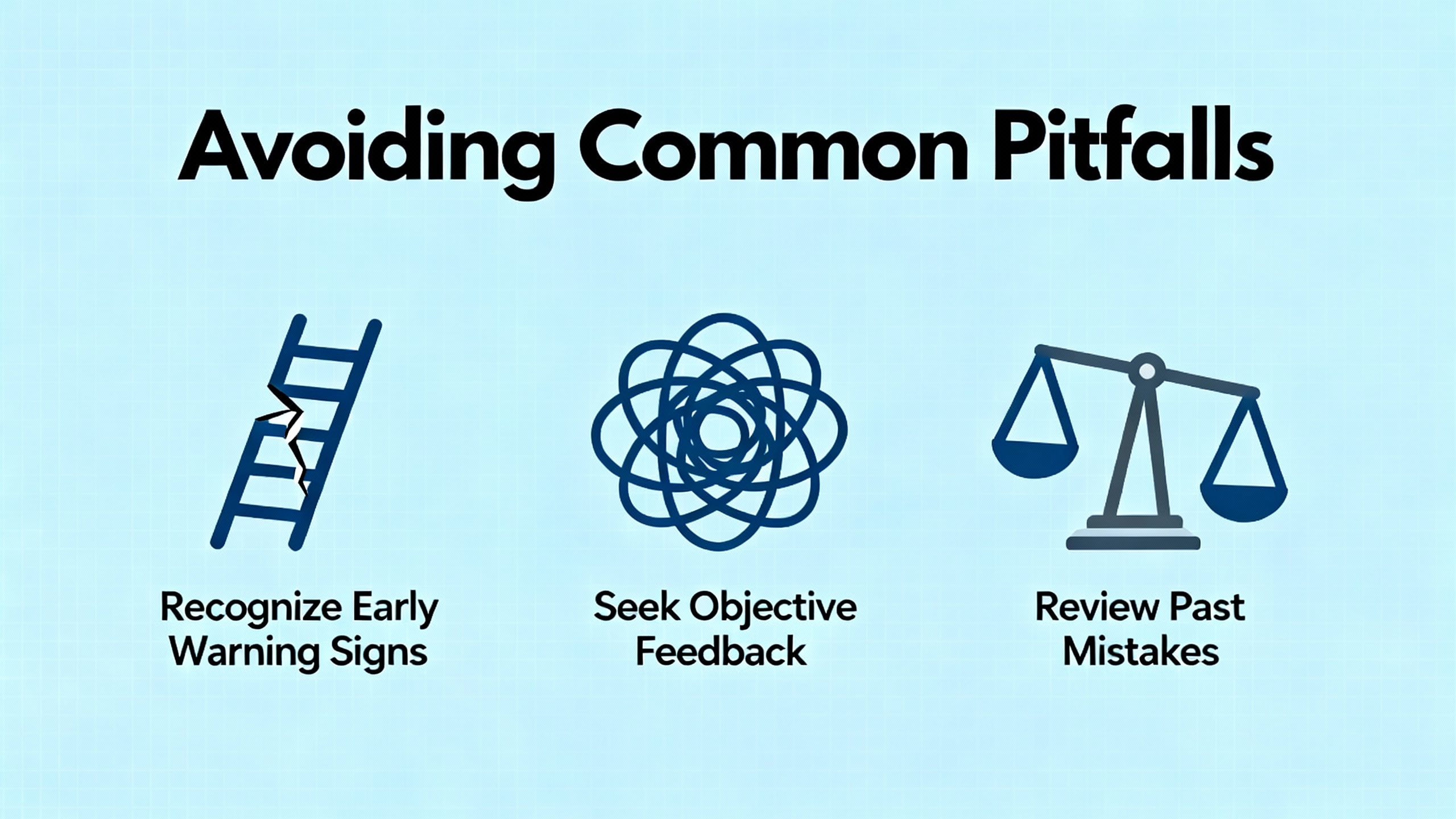
Aligning Vibration Certification with UPS and Power Protection Strategy
From the perspective of industrial and commercial power systems, vibration certification should not be seen as an isolated mechanical maintenance topic. It is a strategic enabler for power reliability.
Condition monitoring training, such as that described by AVT Reliability, emphasizes how techniques like vibration, thermography, oil analysis, and ultrasound work together to support asset reliability and overall performance. When these skills sit inside the same organization that manages UPS systems, inverter strings, and protective relays, you gain the ability to connect machinery health indicators directly with power risk.
For example, certified analysts can provide quantified assessments of the health of generator bearings, main cooling pumps, or fan systems tied to critical electrical rooms. Category II or III personnel can explain the likely progression of a fault identified in a vibration spectrum, giving power engineers the insight needed to decide whether a planned outage window is sufficient or whether an immediate intervention is warranted. Category III and IV experts can interpret chronic vibration issues that repeatedly threaten power availability and recommend structural or design changes rather than just more frequent bearing replacements.
Certification also influences how you specify and evaluate monitoring systems. Practitioners working on procurement emphasize the need to consider the types of rotating machinery present in the plant, especially variable-frequency and low-speed equipment, and to require vendors to demonstrate how their hardware and software handle these challenges. Trialing vendor hardware in your own environment, with input from certified analysts, is a practical way to ensure that a monitoring platform will genuinely support your reliability and power protection goals.
In short, a structured vibration certification path builds a common technical language between mechanical maintenance, reliability engineering, and power system specialists. That shared understanding helps turn vibration data from raw signals into actionable decisions about how to protect UPS-backed loads and critical processes.
Brief FAQ
Do I really need accredited certification if my team already took vendor vibration training?
Vendor training is valuable for learning how to use a specific monitoring platform, but accredited certification adds an independently audited layer of assurance that the analyst understands the underlying vibration science and has documented field experience. Bodies such as the Vibration Institute and MIBoC operate under ISO/IEC 17024 and ISO 18436 standards, with proctored exams and five-year renewal cycles. For critical power applications where failures carry significant cost, that level of rigor is a practical advantage.
How long does it typically take to progress from Category I to Category II?
Industry guidance suggests a minimum of six months of experience for Category I and about eighteen months for Category II, with training hours increasing from roughly thirty to sixty as you move up. In a realistic power-plant setting, assuming regular field work and mentoring, many practitioners plan on two to three years from entry into vibration work to Category II certification, though actual timelines depend on workload and support.
Is Category IV necessary for most power facilities?
Category IV is designed for experts who lead major diagnostic projects and design modifications. Many power facilities operate effectively with a mix of Category I and II personnel on site and access to Category III or IV expertise when needed, whether internally or through consultants. The key is to match certification levels to roles and responsibilities, ensuring that the skills in place are sufficient for the diagnostic and program leadership tasks you expect.
As a power system specialist and reliability advisor, I have found that the plants with the best uptime treat vibration certification not as a formality but as a core part of their protection strategy. When accredited vibration expertise sits alongside strong electrical engineering and robust UPS and inverter design, the result is a power system that fails less often, recovers more gracefully, and earns the trust of the operations it serves.
References
- https://www.vi-institute.org/
- https://assetmanagementprofessionals.org/discussion/vibration-analysis-cat-i-certification-preparation-series-8-booklets
- https://www.machineryanalysis.org/post/certifications-vi-vs-mi-8434864
- https://www.technicalassociates.net/CAT1Certification
- https://www.redwolfreliability.com/vibration-analyst-certification
- https://4xdiagnostics.com/vibration-analysis-training/
- https://avtreliability.com/vibration-analysis-courses-2/
- https://envibe.com/certification-information-vibration-analysis-zenco/
- https://www.knowernetwork.com/how-important-is-certification-for-vibration-analysis/
- https://www.mobiusinstitute.com/certification-requirements/


 Videos
 News
News Applications






Leave Your Comment