Automation projects rise or fall on the quality of their sensing layer. In industrial power supply environments, I routinely see beautifully engineered UPS systems, inverters, and switchgear undermined by a five-dollar sensor that was chosen on price rather than performance. When a proximity switch misreads a contactor position or a temperature sensor drifts in a battery room, the result is nuisance trips at best and catastrophic failures at worst.
This guide walks through the main detection technologies you will see on sensor supplier line cards and shows how to compare suppliers in a structured, reliability-focused way. It draws on practical selection and testing advice from sources such as Control Engineering, ISA, Simcona, ES Systems, Hokuyo, and others, and it is written from the standpoint of someone whose priority is keeping industrial power and automation assets running safely for years, not just passing a factory acceptance test.
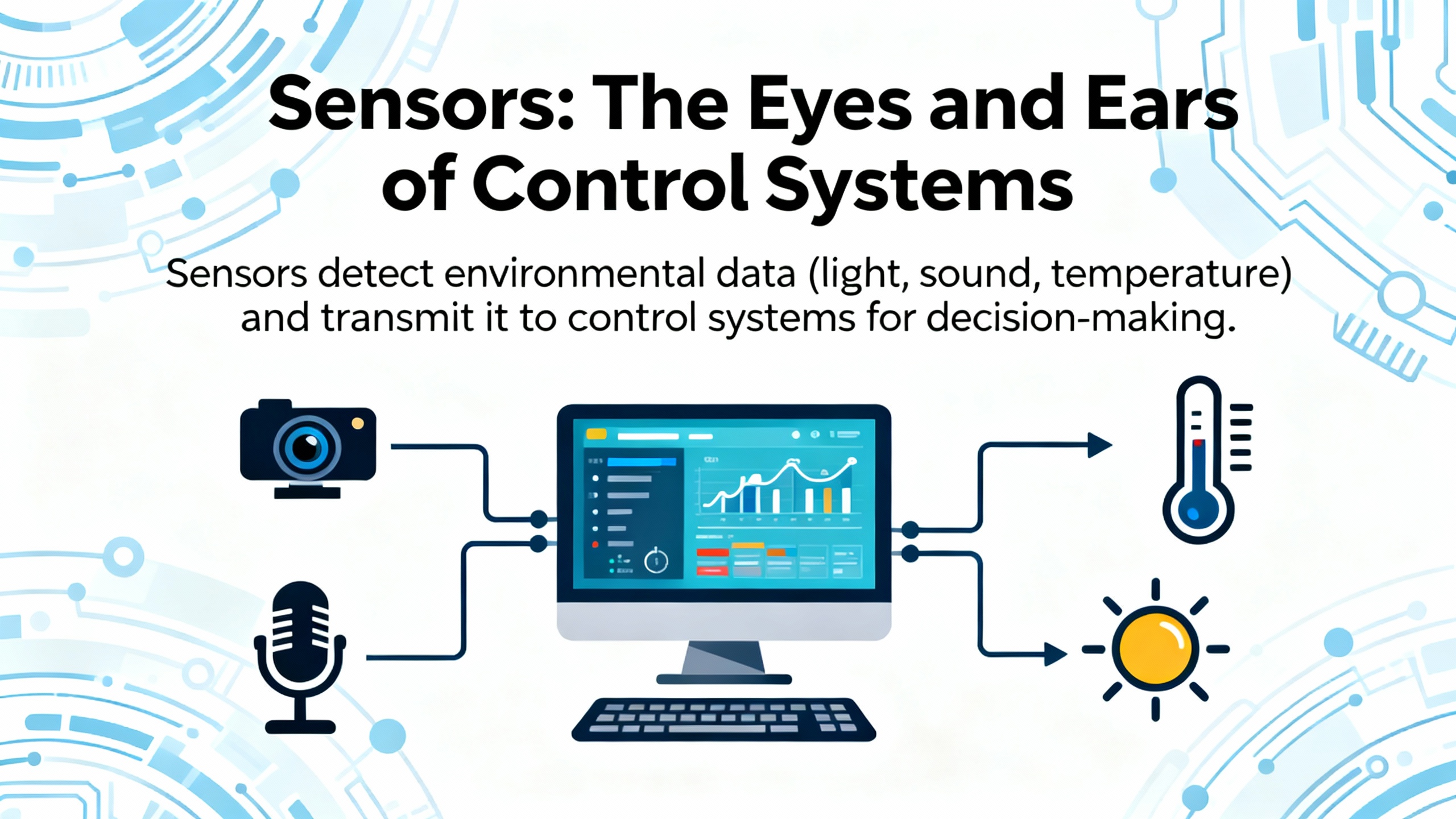
Sensors As The Control System’s Eyes And Ears
Automation specialists sometimes treat sensors as interchangeable commodities. The articles on industrial sensing and discrete sensor selection make a very different point. They repeat a consistent message: sensors are the core feedback mechanism that lets machines perceive the environment, correct their behavior in real time, and operate safely.
A proximity sensor on a conveyor that feeds power modules can stop a motor the instant a unit reaches a limit, preventing collision and scrap. Temperature sensors in heating and cooling systems maintain processes within tight bounds. Pressure sensors in hydraulic and pneumatic circuits prevent overpressure events. When these devices are properly chosen and integrated, machines run with higher precision, fewer errors, and improved safety.
Several sources also emphasize that sensors enable predictive maintenance. Pressure, flow, vibration, and temperature trends can reveal a pump bearing that is degrading long before it fails, or a fan in a UPS cabinet that is losing performance. Intelligent sensors tied into IoT and analytics platforms push this even further by providing self-diagnostics and richer process data.
In short, if you are serious about power system reliability and automation uptime, you must be serious about sensor technology and the suppliers behind it.
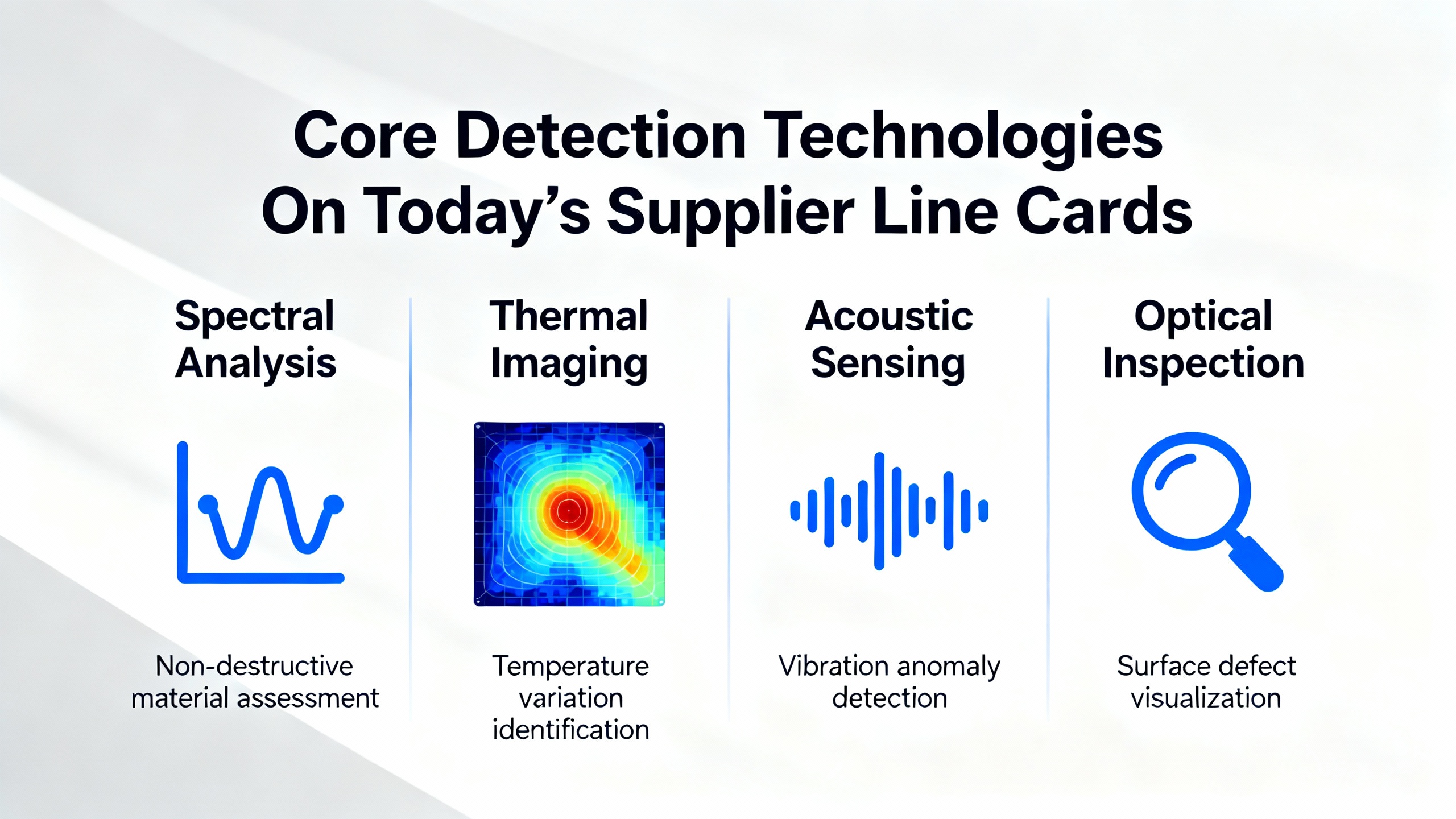
Core Detection Technologies On Today’s Supplier Line Cards
Before you compare suppliers, you need a clear picture of the major detection technologies, what each does well, and where the pitfalls lie. The following overview focuses on technologies that appear repeatedly in engineering guidance from ISA, Control Engineering, Simcona, Valin, ES Systems, Sonair, and others.
Discrete Object Detection And Proximity
In factory automation, the workhorses are discrete sensors that detect presence or absence of an object and generate an on or off signal.
Inductive proximity sensors use electromagnetic fields to detect nearby metal targets. They are extremely robust, with no moving parts, and they are excellent for detecting steel hardware, gear teeth, and metal parts. The downside, as Control Engineering and ISA note, is that nonferrous metals reduce range significantly, and detection distance always depends on target size and material.
Capacitive proximity sensors generate an electrostatic field and respond to changes in capacitance caused by any object with a sufficient dielectric constant. Valin and ISA both highlight that capacitive sensors can detect liquids, plastics, wood, powders, and even levels inside bins through a plastic window. They are more versatile than inductive sensors but are also more sensitive to environmental changes, alignment, and build-up on the sensing face.
Magnetic proximity sensors detect magnets bonded to moving parts. They can reach ranges of several inches through non-magnetic barriers, for example to sense a piston inside an aluminum cylinder. Their limitation is obvious: you must be able to mount a suitable magnet, and magnetic fields in welding areas can interfere without the right specialty designs.
Limit switches still have their place. Mechanical levers or plungers actuate electromechanical contacts when an object physically hits the switch. They provide very positive detection and clear on or off states but suffer from mechanical wear and can mark delicate products.
Ultrasonic proximity and level sensors emit sound waves and measure echoes. ISA and Valin emphasize their ability to ignore color and transparency, making them ideal for clear bottles, glossy surfaces, and liquid levels. Their challenges are dead zones close to the sensor and sensitivity to foam, turbulence, or heavy vapors in some applications.
Optical And Photoelectric Sensing
Photoelectric sensors are among the most widely applied devices in manufacturing because of their low cost, long range, and flexibility. Control Engineering’s overview walks through the main styles.
Diffuse photoelectric sensors have the emitter and receiver in a single housing and detect light reflected directly from an object. They are great for nearby objects and inexpensive, but background reflections can cause nuisance triggers if you do not tune them carefully.
Retroreflective sensors use a reflector opposite the sensor. Presence is detected when an object interrupts the light path between sensor and reflector. They cover mid-range distances and offer a good balance of cost and robustness.
Through-beam sensors place emitter and receiver facing one another, often across a conveyor. They provide the longest ranges and the most reliable detection of opaque objects, at the cost of two mounting locations. Examples include safety beams and garage door sensors. A fork light sensor is a compact through-beam variant with both elements in one U-shaped body, used to detect small parts or labels.
Laser photoelectric sensors and laser distance sensors add higher precision and longer-range measurement. EE Times Europe describes distance-measuring laser sensors that can reach hundreds of yards with millimeter-level accuracy, even on dark surfaces, which is useful in large industrial measurements. Valin notes that laser measurement sensors can achieve sub-micron resolution but are usually reserved for applications where that level of precision justifies their cost and integration complexity.
Time-of-flight photoelectric sensors, mentioned in the Valin discussion, measure distance based on the travel time of a light pulse rather than simple intensity. This makes them less sensitive to target color or finish, an advantage for automotive and material handling where surface conditions vary.
MEMS And Process Sensors
Micro-Electro-Mechanical Systems (MEMS) sensors, described in detail by ES Systems, are miniature devices that measure physical quantities such as pressure, temperature, acceleration, and magnetic fields. They combine mechanical structures like diaphragms or proof masses with on-chip electronics.
A typical capacitive MEMS pressure sensor has a flexible diaphragm forming one plate of a capacitor and a fixed electrode forming the other. When pressure deflects the diaphragm, capacitance changes, and electronics convert this into a precise electrical signal. ES Systems notes that their capacitive MEMS designs operate over moderate industrial temperature ranges, from about -4°F to roughly 185°F, and can withstand harsh environments thanks to robust mechanical packaging.
MEMS pressure sensors have become indispensable in industrial automation, automotive, and medical equipment for monitoring closed systems such as tanks and pipelines. They provide accurate pressure readings while staying compact and cost-effective, making them ideal for distributed sensing in smart factories.
Beyond pressure, MEMS accelerometers and gyroscopes provide motion and vibration data. A separate article on mechanical testing points out that low-cost integrated inertial sensors can monitor vibration profiles, while high-end industrial accelerometers, often piezoelectric, can cost up to about $1,000 but deliver high bandwidth and precision for critical applications such as engine or turbine condition monitoring.
Environmental, Flow, And Gas Sensing
Modern automation increasingly mixes classic discrete sensors with environmental and process instrumentation. The trade fair coverage in EE Times Europe showcases multi-gas, humidity, and temperature modules designed for HVAC and air quality control, combining multiple sensing elements in one module with calibrated outputs and compensated cross-sensitivities. These modules are attractive when you want turnkey air quality data rather than integrating separate sensors for each parameter.
Flow measurement technologies such as vortex flowmeters use the Kármán vortex street principle: a bluff body placed in the flow stream sheds vortices at a rate proportional to flow velocity. Piezoelectric sensors detect the resulting forces, and electronics convert the pulses into analog or frequency outputs. Inline vortex flow sensors are sturdy, with no moving parts, and can offer combined flow and temperature outputs, which is handy in thermal management of power electronics and cooling loops.
Gas detection technologies highlight an important economic distinction. EE Times Europe contrasts non-dispersive infrared (NDIR) gas sensors with metal-oxide semiconductor (MOS) sensors. MOS devices are cheap to buy but require frequent calibration and are more easily poisoned, increasing maintenance costs and downtime. NDIR sensors cost more up front but provide better selectivity, a longer calibration interval (about a year in the example), and higher immunity to poisoning. That difference in maintenance and lifetime illustrates why total cost of ownership matters when comparing sensor suppliers.
Vision And Automated Inspection
Where discrete sensors detect presence or level, machine vision systems detect shape, surface defects, print quality, and assembly errors. Control Engineering describes vision sensors as a cost-effective alternative to full camera systems in many cases, delivering bar code reading, counting, and basic shape verification.
A separate guide on automated inspection explains how industrial cameras, lighting, and software can inspect products at line speeds with higher consistency than human operators, particularly when defects are subtle or occur at high frequency. Traditional image processing performs edge detection, pattern matching, and segmentation. More recent systems add deep learning models that learn defect patterns from thousands of labeled examples and can perform anomaly detection for previously unseen issues.
For critical power and electronics assemblies, automated inspection is increasingly used to verify solder quality on PCBs, correct placement of components, and surface finish on heat sinks and busbars. The core takeaway is that vision-based sensors provide richer data but require more compute, more integration effort, and a different class of supplier expertise than discrete proximity sensors.
Robotics Perception: LiDAR, Cameras, Radar, And 3D Ultrasonic
Mobile robots, automated guided vehicles, and collaborative robots introduce a safety challenge that conventional photoelectric and proximity devices cannot fully address. For human and obstacle detection in dynamic environments, suppliers offer LiDAR, cameras, radar, and newer ultrasonic 3D sensing.
A detailed comparison from Sonair contrasts several technologies:
ADAR ultrasonic sensors are acoustic detection and ranging devices designed to provide safety-certified three-dimensional depth sensing. They are unaffected by lighting conditions, offer a compact form factor that can be embedded cleanly into robot bodies or static safety cells, and are cost-effective compared with many other safety-rated sensors. Current implementations are focused on indoor environments.
Two-dimensional LiDAR is a mature technology that scans a single plane and detects obstacles by measuring the time-of-flight of laser pulses. It works very well in flat, predictable spaces such as warehouse floors and offers fast responses. However, it only sees one plane, can struggle with glass and highly reflective surfaces, and safety-rated units from established brands can be expensive.
Three-dimensional LiDAR produces dense point clouds that give detailed 3D maps of the environment. This is excellent for precise navigation and object recognition in static industrial settings. According to the Sonair comparison, safety-rated 3D LiDAR options are not currently available, and cost, bulk, and sensitivity to light and dust limit their use as a sole safety layer.
Two-dimensional cameras provide rich visual data at low cost and are easy to integrate but do not provide depth, are sensitive to lighting conditions, are not safety-rated, and introduce privacy concerns, especially in workplaces.
Three-dimensional cameras combine imagery with depth information, enabling detailed scene understanding and classification for retail or service robots. They need significant processing power for real-time use, have limited fields of view that force trade-offs between floor and overhead coverage, and share the same safety and privacy limitations as 2D cameras.
Radar offers long-range detection and robust operation in weather and environmental conditions that can blind optical systems. It struggles to separate closely spaced objects, can create ghost targets by detecting through walls or structures, and is bound by regional spectrum regulations. Safety-rated radar options exist but are rare and not always compact.
Sonair’s conclusion is that no single technology satisfies every requirement. Combining sensors is usually the right approach, with safety-certified 3D ultrasonic sensing such as ADAR providing a robust safety foundation and cameras or LiDAR adding navigation and classification capability.
The takeaway for buyers is clear: when you compare suppliers in this space, you are really comparing system architectures and safety strategies, not just individual devices.
Comparing Detection Technologies In Practice
The table below summarizes the core industrial detection technologies most relevant to factory and process automation. It is meant as a quick mental checklist when you review sensor offerings from multiple suppliers.
| Detection technology | Typical measurement | Key strengths | Key limitations and risks | Representative automation uses |
| Inductive proximity | Presence of metal objects | Rugged, no moving parts; immune to dust and fluids; precise switching at short ranges | Only detects metal; reduced range on nonferrous metals; sensing distance depends heavily on target size and material | Detecting cylinder positions, gear teeth, metal parts on conveyors, interlocks in switchgear |
| Capacitive proximity | Presence of solids and liquids, level behind non-metallic walls | Detects many materials including liquids, powders, plastics, wood; can sense through plastic windows | Sensitive to environmental changes and build-up; requires tuning; limited range compared with optical or ultrasonic | Bin level detection, plastic bottle presence, packaging and bulk material handling |
| Ultrasonic proximity and level | Distance to surfaces and liquid levels | Unaffected by color or transparency; good for clear objects and liquids; relatively long range | Dead zones near sensor; affected by foam, turbulence, and some vapors; sound reflections can cause ambiguity | Tank levels, presence detection where optical sensors struggle, conveyor applications |
| Photoelectric and laser | Presence and distance via light | Long sensing ranges; high speed; laser variants offer high precision; time-of-flight versions less sensitive to color | Sensitive to alignment and contamination; glass and reflective surfaces can cause false readings without proper setup | Box detection on conveyors, label detection, distance measurement in material handling and packaging |
| MEMS pressure sensors | Pressure in gases and liquids | Compact; high precision; resistant to many industrial conditions; suitable for distributed sensing | Overpressure and temperature limits must match process; packaging and media compatibility are critical | Tank and pipe pressure monitoring, hydraulic and pneumatic system control, gas flow metering |
| Vision and machine inspection | Surface defects, shape, assembly correctness | Rich data; can detect subtle defects; adaptable with software and AI; eliminates human fatigue | Higher integration complexity; requires lighting and compute; not inherently safety-rated | PCB inspection, label verification, surface defect detection on machined or cast parts |
For robotics and advanced perception, you can think in terms of another comparison driven mainly by safety requirements, environmental robustness, and cost.
| Technology | Safety status and certification | Environmental sensitivity | Cost trend from available comparisons | Best-fit use cases |
| ADAR ultrasonic 3D sensing | Designed and certified for 3D depth sensing safety functions; suitable for AMRs and static cells | Unaffected by lighting and visual clutter; current generation intended for indoor environments | High cost-effectiveness compared with other safety-rated options | Human and obstacle detection in dynamic indoor environments, virtual safeguards around robotic cells |
| Two-dimensional LiDAR | Safety-rated units available but relatively costly; mature for 2D safety applications | Affected by dust, condensation, and glass; works best in clean, flat environments | Low to moderate cost for non-safety units; safety-rated models from well-known brands are expensive | Obstacle detection on flat warehouse floors, perimeter monitoring where 2D coverage is sufficient |
| Three-dimensional LiDAR | No safety-rated options noted in current industrial comparisons | Sensitive to light, dust, and weather; bulky hardware | Generally one of the costlier options, especially from established brands | High-resolution mapping and navigation in static industrial or logistics environments |
| Two-dimensional cameras | No safety-rated variants; not suitable as sole safety layer | Strongly affected by lighting and glare; introduce privacy concerns | Hardware is low cost; total solution cost depends on processing and integration | Visual classification, bar code reading, basic object recognition where safety is handled elsewhere |
| Three-dimensional cameras | No safety-rated variants; often combined with other safety sensors | Sensitive to lighting; limited field of view; mounting trade-offs between near-floor and above-floor coverage; privacy issues persist | Moderate to low cost depending on compute; higher than 2D cameras but lower than high-end LiDAR | Service robots in retail and hospitality, object recognition with spatial awareness, area monitoring where safety is provided by other devices |
| Radar | Limited safety-rated offerings, typically not very compact; subject to spectrum regulations | Very robust in rain, fog, and low visibility; can detect through some obstacles, causing ghost targets | Moderate cost from available comparisons; not as low as basic cameras or simple 2D LiDAR | Long-range obstacle detection outdoors, vehicle and equipment monitoring in challenging weather |
These tables are not meant to replace datasheets. They are a way to structure conversations with suppliers and to keep application realities in focus while you compare offerings.
What To Look For In A Sensor Supplier
Once you understand which detection technologies could work, the real comparison begins: which supplier can actually deliver the performance and reliability your automation and power systems require. Several independent guides converge on a common set of evaluation criteria.
Measurement Range, Accuracy, Sensitivity, And Resolution
Senther’s advice on selecting automation sensors starts with clarity on the physical quantity to be measured and the required measurement range. The sensor’s minimum and maximum measurable values must comfortably cover expected operating conditions, with margin for startup, upset, and fault conditions. Operating a sensor near the edge of its range degrades accuracy and may shorten its life.
Simcona emphasizes accuracy, sensitivity, and resolution as separate but related attributes. Accuracy describes how close the reading is to the true value, sensitivity describes the smallest change the sensor can detect, and resolution describes the smallest step in output. In practice, low-cost sensors may have enough resolution but poor long-term accuracy or stability. For critical applications such as battery temperature monitoring or busbar temperature in a UPS cabinet, it is usually better to pay for accuracy and stability than to chase the lowest price.
When comparing suppliers, pay attention to how they specify these parameters. Look for clear accuracy classes over specified conditions, not just “typical” values, and ask for long-term stability data. For proximity and discrete sensors, repetition accuracy and hysteresis are key: they determine how repeatably a switch point will be triggered as a target moves in and out.
Dynamic Performance And Response Time
Sensor selection guides from Simcona, Control Engineering, and Hokuyo all call out response speed as a critical criterion. Simcona usefully breaks response into how quickly the sensor provides a first reading, how quickly it recovers between readings, and how long it takes to settle to an accurate value.
In high-speed conveyors, press lines, and protection circuits, slow sensors become the bottleneck in your control loop. For example, Andrews Cooper describes a project in which an optical proximity sensor on a wearable gaming device was triggering at the wrong distances. They had to test dozens of distances and target materials to characterize its response accurately. Automating that characterization improved testing efficiency by roughly ninety percent and enabled fine tuning of the triggering thresholds.
When you compare suppliers, do not accept generic “fast response” claims. Ask how response time is defined in their datasheets, and whether they publish plots of output versus time for step changes in the measured variable. Where safety is involved, understand the total response time from stimulus to safe output.
Environmental Durability And Protection
Simcona and ISA both recommend thinking about durability in electrical, physical, and chemical terms. On the electrical side, you need compatibility with your power rails and noise environment. On the physical side, consider vibration, shock, and mechanical abuse. On the chemical side, consider temperature extremes, moisture, washdown chemicals, dust, and corrosive media.
ISA points to IEC ingress protection (IP) ratings as a starting point. IP65 devices are dust-tight and can withstand low-pressure water jets. IP69K devices can survive high-pressure, high-temperature cleaning as in food, pharmaceutical, or life sciences plants. However, the IP rating applies to the sensor housing and wiring entries, so cable glands and connectors must match.
Suppliers should offer appropriate housings, including weld slag resistant or weld field immune versions for welding environments, high-temperature versions for hot zones, and high-pressure versions for hydraulic applications. Ask explicitly about environmental testing, including thermal cycling, vibration, and chemical exposure. If a sensor will live in a battery room or power electronics enclosure with significant heat and airborne particulates, do not assume that a commodity housing is adequate.
Electrical Interface, Communication, And Compatibility
Control Engineering and ISA both note that industry has largely moved to 24 V DC, three-wire sensors for discrete automation, with either PNP (sourcing) or NPN (sinking) outputs. Many failures trace back to mismatches between sensor type and PLC input modules. A good supplier will offer both versions, clearly label them, and provide guidance on fail-safe wiring, including normally open versus normally closed behavior.
On the analog and digital side, Simcona and LinkedIn’s sensor selection guidance stress the importance of output signal compatibility. Does the sensor deliver analog voltage, current (such as 4 to 20 mA), digital pulses, or a fieldbus protocol such as IO-Link. IO-Link-enabled sensors simplify parameter changes, diagnostics, and standardized data access. Control Engineering suggests considering IO-Link when you benefit from remote set-point changes, rich diagnostics, or frequent reconfiguration.
For more advanced systems and sensor networks, metrology-focused research and NIST-style thinking recommend adopting open communication and metadata standards early, logging configuration and calibration changes, and designing in hooks for automated calibration and health monitoring. If a supplier’s “smart sensor” cannot feed your historians and asset management tools with meaningful diagnostic data, its intelligence is being wasted.
Mechanical Integration, Size, And Mounting
Simcona describes size and mounting as underrated factors that strongly influence reliability. Oversized sensors crowd other components and are more likely to be bumped or misaligned. Undersized sensors can complicate mounting and adjustability.
ISA’s discrete sensor guide explains the trade-offs between barrel-shaped and rectangular form factors, flush and non-flush mounting, and quick-disconnect cabling. Larger sensors generally offer longer ranges and stronger signals, but smaller sensors fit tight machines more easily. Quick-disconnect cables reduce replacement time after a failure.
Hokuyo’s article on selecting sensors for robotic applications uses an excavator example: multiple sensors in cylinders and link joints must survive harsh duty cycles and be mounted in locations that minimize mechanical stress. Their advice generalizes nicely: consider mounting not just for initial assembly, but for vibration, maintenance access, and the effect of mounting hardware on performance.
Certification, Safety, And Compliance
For many industrial and power applications, sensors are part of safety functions. Simcona points out that standards and certifications exist for safety, reliability, and durability, and their relevance depends on your industry. In robotics, Sonair’s comparison highlights that safety-rated options are limited for many perception technologies and often expensive or bulky when they exist.
When comparing suppliers, differentiate clearly between general-purpose sensors and devices designed and certified for safety roles. Ask which standards they meet, whether they provide safety manuals, and how they expect you to integrate the sensors into safety-related systems. For gas detection and process safety, the EE Times Europe discussion of NDIR sensors versus MOS sensors underscores that fail-safe behavior and calibration intervals are key parts of compliance, not just sensitivity.
Reliability Evidence, Testing Regime, And Warranty
Two aspects of quality matter here: what the supplier does at production, and what you must do at incoming inspection.
An Electrical Engineering Stack Exchange discussion explains that more expensive components are often one hundred percent tested at the factory, while low-cost sensors may only be tested in sampled batches. The sampling rate might be one in ten or one in a thousand, often with at least one device per package tested. For low-volume, high-consequence systems, the accepted advice is to test every sensor yourself, because building an entire assembly around a defective part is the worst possible way to discover a failure.
Andrews Cooper’s test automation case study demonstrates what serious characterization looks like: automated fixtures, gantry robots, scripted test sequences, and data logging. This style of testing revealed subtle mis-triggering in an optical proximity sensor and allowed the team to tune performance long before final prototypes were built, saving months of development time.
Ask suppliers specific questions about their production test coverage, their handling and storage controls (accelerometers, for example, can be sensitive to vibration during shipping), and how they characterize performance over temperature, supply voltage, and time. A robust warranty is valuable, but it is more valuable when it is backed by a proven test and quality system.
Lifecycle Cost, Digital Capabilities, And Support
Simcona and Senther both advise looking beyond sticker price. Up-front cost, installation cost, operating cost, and maintenance cost all matter. Cheap residential-grade sensors in industrial environments often fail early, driving more labor and downtime. Conversely, a more expensive sensor with self-calibration, on-sensor diagnostics, and extended calibration intervals can lower total cost of ownership.
EE Times Europe’s comparison of NDIR and MOS gas sensors is a textbook example: MOS sensors are attractive initially but require frequent bump tests and recalibration, and they are more susceptible to poisoning, while NDIR sensors provide longer calibration spans and greater stability.
Finally, consider support. Control Engineering suggests working with actuator and sensor from the same manufacturer when magnets are involved, because minor variations in magnet strength and mounting position can cause compatibility issues. For vision sensors, their guidance is to involve the sensor manufacturer in testing under realistic lighting and background conditions. The same logic applies across the board: the better your supplier understands your application, the higher your chances of long-term success.
How Serious Suppliers Prove Performance: Testing And Characterization
From a reliability perspective, one of the most telling differences between sensor suppliers is their approach to testing. Best practices for electronic systems, as described in engineering articles on test and validation, revolve around requirements-based testing, multi-level verification, and automation.
At the sensor level, this means tests derived from specific performance requirements: range, accuracy, response time, temperature drift, shock and vibration tolerance, and electromagnetic immunity. It also means validating systems at the board, subsystem, and full-product levels, not just at the bare sensor.
Test automation plays a central role. The Andrews Cooper case study illustrates how automating sensor characterization with a gantry robot and scripting turned an impractical manual test campaign into a fast, repeatable process. They could run more than one hundred distance points at fine increments without human fatigue or positioning errors, and quickly focus on problem regions. This style of automation is equally valuable for pressure, flow, and temperature sensors.
Mechanical testing and data management tools, such as those described by providers of sensor automation platforms, push this further by continuously logging sensor data, enabling queryable histories, and simplifying correlation of failures with conditions. For example, learning “normal” vibration signatures on a rotating machine and flagging deviations can prevent catastrophic failures. Using higher-end accelerometers in such cases is justified by the avoided downtime.
In distributed sensor networks, research on automated sensor metrology recommends building in calibration hooks, using standardized communication protocols, and automating not just measurement but calibration, configuration logging, and health monitoring. Good suppliers will support these practices by providing clear calibration procedures, metadata, and tools or scripts for configuration.
From the buyer’s side, especially in power-critical applications, it is prudent to perform your own acceptance tests. For small purchases, the earlier Stack Exchange advice to test every unit is sound. For larger volumes, a structured sampling plan combined with accelerated environmental tests, such as thermal cycling and vibration, can reveal weak batches before they reach the field.

Putting It Together: Matching Technology, Supplier, And Application
The real value in comparing sensor suppliers comes when you view technology choice, supplier capability, and application context as a single design decision rather than separate checkboxes. Consider two practical scenarios.
In a factory assembling large power electronics modules, you might need to detect module presence on a conveyor, verify enclosure doors are closed before energizing, and monitor coolant flow and pressure. Discrete inductive or capacitive proximity sensors from general-purpose industrial suppliers can handle presence detection, provided their ranges and target materials are appropriate. Photoelectric or time-of-flight sensors might be better for large boxes. Flow and pressure sensors benefit from MEMS-based designs with good stability and rugged packaging. Here, your supplier comparison might focus on environmental durability, IO-Link support for diagnostics, and long-term stability data, with less emphasis on safety certification because higher-level interlocks or controllers enforce safety.
In contrast, for autonomous mobile robots moving heavy battery packs through a warehouse, the sensing problem is as much about protecting people as it is about navigation. Sonair’s comparison makes it clear that relying on non-safety-rated LiDAR or cameras alone is not acceptable. A supplier that can provide safety-certified 3D ultrasonic sensing to establish a protective envelope around the robot has a clear advantage. You might still choose a different supplier for non-safety LiDAR used for navigation, or for cameras handling inventory recognition. Your evaluation here weighs safety certifications, cost-effectiveness for safety functions, privacy constraints in the facility, and the supplier’s ability to integrate into your safety architecture.
In both situations, Control Engineering’s practical advice remains valid: narrow your search to a short list, order samples, and test with your actual parts and environmental conditions. Field-proven experience is important, but there is also value in revisiting sensor and supplier choices periodically, as ISA notes, because technology, performance, and pricing evolve.
Short FAQ
How many sensors should I test from a new supplier?
For low volumes or critical functions, electronics experts often recommend testing every unit. A discussion in the electrical engineering community points out that some manufacturers only sample a small fraction of units at the factory, particularly for low-cost parts. Building a board or subsystem around an untested sensor and discovering a defect later is usually much more expensive than testing all devices up front. As volume grows, you can move to structured sampling and statistical acceptance plans, but maintain a higher bar for any sensor whose failure can take down a critical power or safety function.
How do I balance accuracy and cost when selecting sensors?
Guides from Simcona and Senther both stress that accuracy should match, not exceed, what your control system truly needs, while recognizing that extremely low-cost options often sacrifice stability and long-term performance. Start by quantifying how much error your process or protection scheme can tolerate. Then compare sensors within that band for long-term stability, environmental performance, and ease of integration. If two devices offer similar accuracy, choose the one with better stability, environmental ratings, and supplier support, even if it costs a bit more. The gas sensing example from EE Times Europe shows that paying more for a stable, less maintenance-intensive technology can pay back quickly.
When is it worth paying for IO-Link or smart sensor communication?
Control Engineering and ISA note that IO-Link and similar digital interfaces are especially valuable when you need to change parameters frequently, monitor health remotely, or reduce wiring complexity. In practice, IO-Link pays off when your plant has many similar sensors that benefit from centralized configuration and diagnostics, when downtime is costly, or when predictive maintenance is a goal. If a sensor is buried deep in a UPS or inverter cabinet, the ability to read diagnostics and adjust thresholds from a controller rather than opening panels and using local buttons is often worth the incremental sensor cost.
Closing Perspective
In industrial and commercial power systems, the sensor layer is as critical to reliability as the UPS, inverter, or switchgear it protects. Choosing the right detection technology is only half of the job; choosing a supplier with sound engineering, disciplined testing, and honest specifications is the other half. Treat sensors as engineered risk controls, not commodities, and insist on the same rigor in their selection and validation that you apply to your power conversion hardware. That mindset will pay dividends in uptime, safety, and long-term operating cost.
References
- https://qed.usc.edu/papers/SharmaGG10.pdf
- https://nvlpubs.nist.gov/nistpubs/ir/2017/nist.ir.8011-1.pdf
- https://www.iihs.org/media/d01ff4e0-50ba-4199-8e0f-c1ef8c3b18e1/ql-Ovw/Ratings/Protocols/current/automation_safeguards_test_and_rating_protocol_V1.pdf
- https://www.isa.org/intech-home/2023/august-2023/features/discrete-sensor-selection-basics
- https://www.globalapptesting.com/best-practices-automated-testing
- https://www.controleng.com/tips-on-sensor-selection/
- https://www.eetimes.eu/focus-on-sensor-and-measuring-technology-for-process-automation/
- https://www.elementaryml.com/blog/the-ultimate-guide-to-automated-inspection-systems
- https://www.linkedin.com/pulse/guide-selecting-sensors-automation-systems-md-javed-hassan--rq9yc
- https://www.plantautomation-technology.com/articles/right-sensor-for-your-industrial-automation-system


 Videos
 News
News Applications





Leave Your Comment