Why Allen‑Bradley Programming Matters for Power‑Critical Plants
In modern industrial facilities, especially where UPS systems, inverters, and power protection equipment keep production alive, the programmable logic controller is the silent coordinator behind almost every reliable process. Allen‑Bradley PLCs from Rockwell Automation sit in the middle of that ecosystem. They supervise motors and drives, sequence breakers and contactors, coordinate with SCADA, and tell your power systems when to start, stop, or safely ride through disturbances.
When these controllers are programmed well, you get stable operation, predictable transitions, and clean handoffs between utility, generator, and UPS sources. When they are programmed poorly, the result is nuisance trips, unexplained shutdowns, watchdog faults, and long nights in the plant trying to make sense of an unreadable ladder diagram.
From a power system reliability perspective, Allen‑Bradley PLC programming is not just a software skill. It is a risk‑reduction tool. This guide lays out a practical training roadmap for industrial engineers who want to become truly effective with Allen‑Bradley PLCs, grounded in proven best practices from Rockwell‑centric training resources, troubleshooting guides, and field‑tested programming methods.
Understanding the Allen‑Bradley PLC Ecosystem
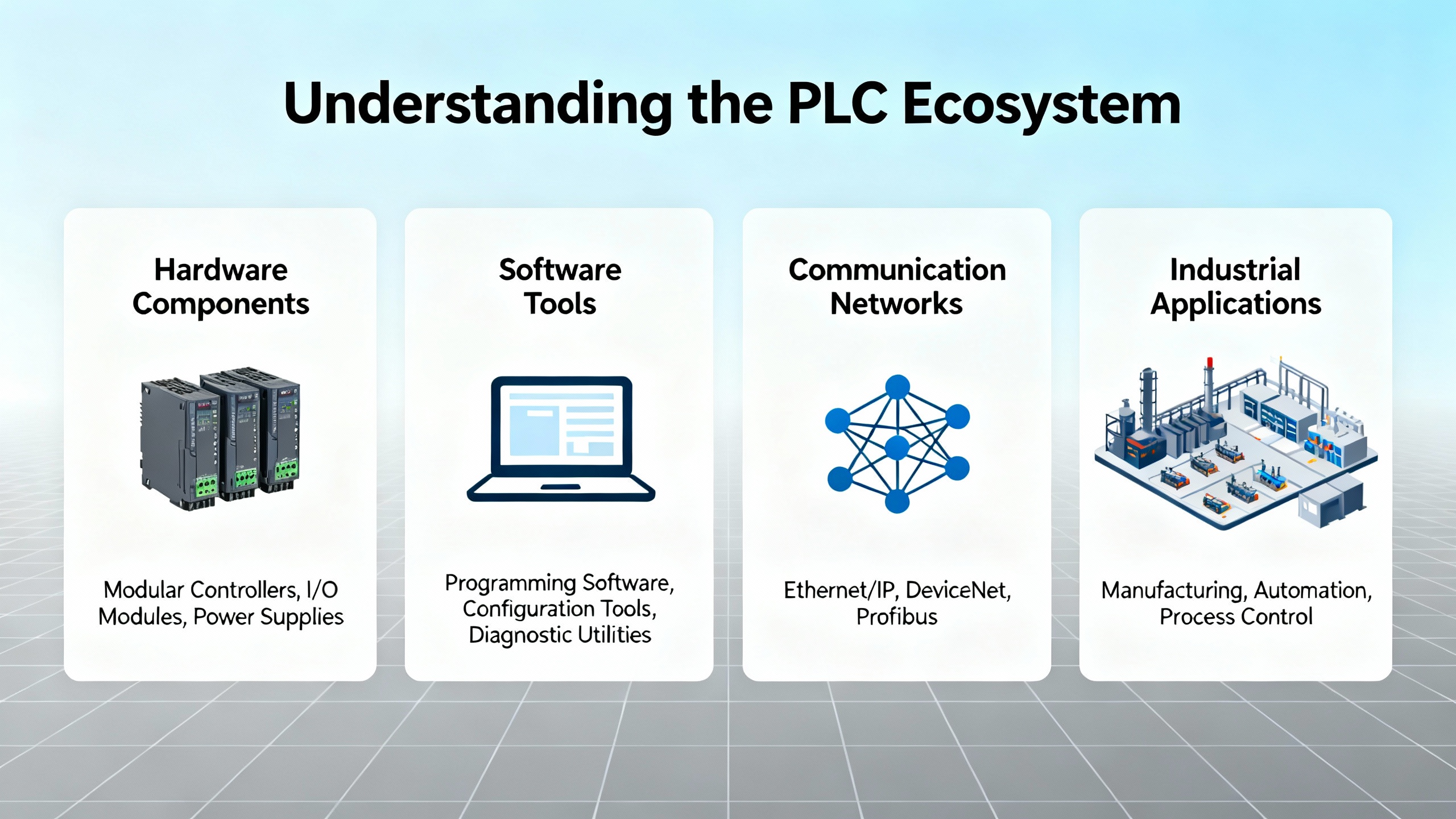
Core hardware building blocks
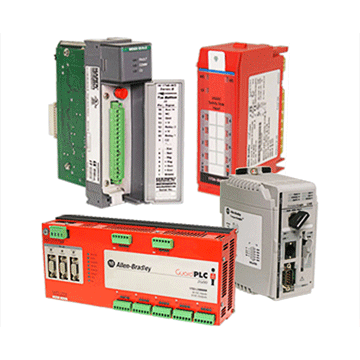
Across families such as ControlLogix, CompactLogix, and MicroLogix, Allen‑Bradley PLCs share a modular architecture. At the heart is the processor or CPU, which executes your control logic and manages communication. Power supplies provide the required voltage and current to the chassis. Input and output modules connect the CPU to the real world, collecting signals from sensors and driving actuators. Communication modules handle Ethernet/IP and other industrial networks, linking the PLC to HMIs, SCADA, and higher‑level systems.
Training that ignores this hardware context is incomplete. A programmer who understands only the software cannot properly debug “I/O not responding,” battery faults, or power supply issues that are common on Allen‑Bradley platforms. Industrial training should therefore link programming with basic hardware diagnostics, including recognition of status LEDs, correct module seating, and healthy power supply operation under load, all of which are emphasized in Rockwell troubleshooting material and third‑party guides.
Software and languages you will use
Allen‑Bradley systems are typically configured and programmed using RSLogix 500 for legacy controllers and Studio 5000 Logix Designer for Logix5000‑class platforms such as ControlLogix and CompactLogix. These environments provide code editing, online monitoring, trend tools, and extensive diagnostics.
According to several Allen‑Bradley training and best‑practice sources, ladder logic remains the first language you should learn. It mirrors relay schematics, making it intuitive for technicians and engineers with an electrical background. Structured Text provides a high‑level, text‑based language similar to Pascal or C and is ideal for complex math, algorithms, and data manipulation. Function Block Diagrams and Add‑On Instructions allow encapsulation of reusable control logic and motion functions.
Effective training teaches when to choose each language. Ladder logic offers clarity and is easier to troubleshoot under time pressure, which is why it dominates in safety‑critical interlocks and power system sequences. Structured Text and function blocks help when implementing advanced calculations, array processing, or motion profiles that would become unwieldy in pure ladder form.
Training Roadmap for Industrial Engineers
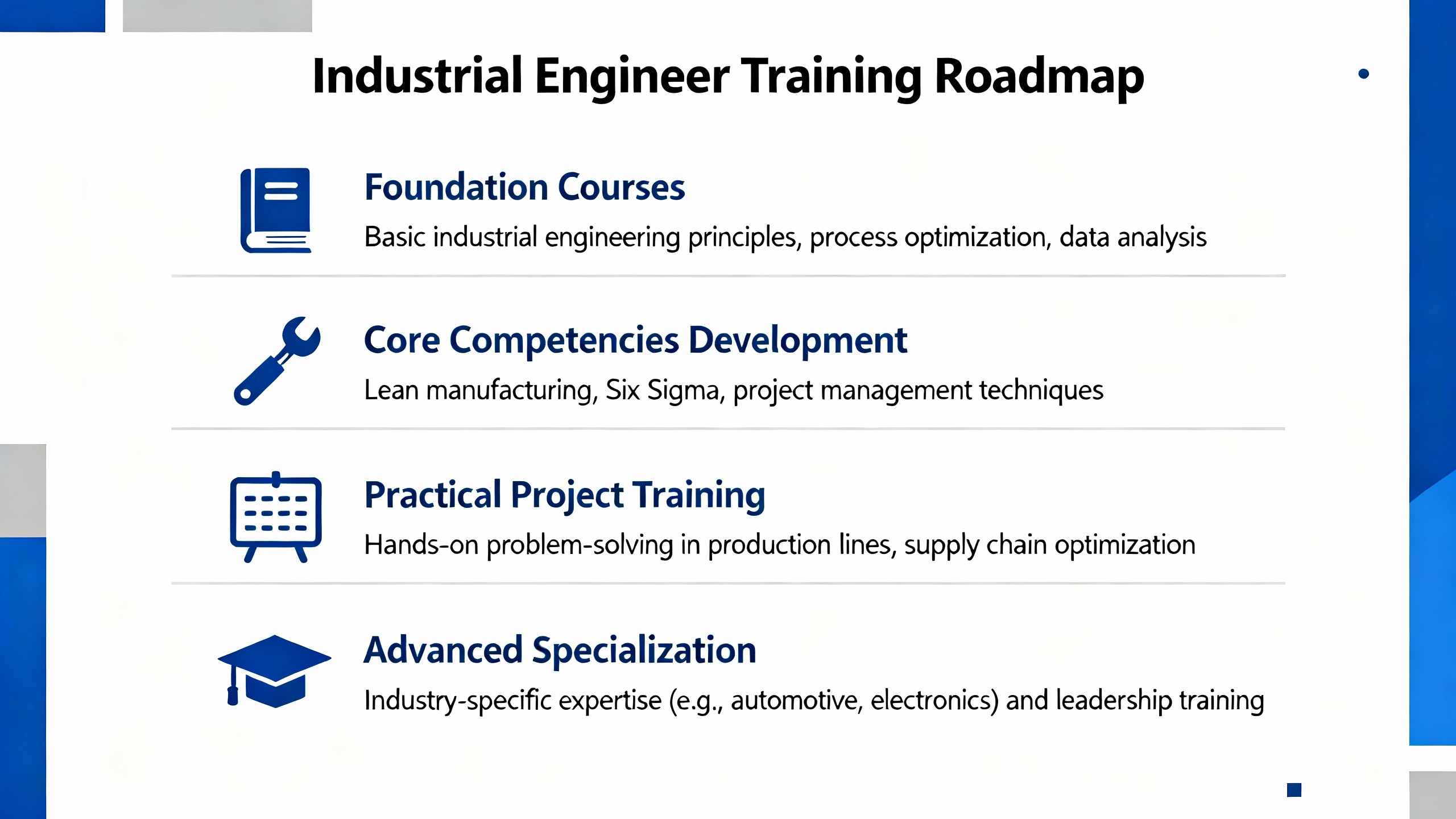
A good Allen‑Bradley training program is more than a software tutorial. The most respected PLC training methodology breaks learning into design, writing, testing or debugging, and final documentation, with a strong emphasis on safety and maintainability. The phases below synthesize practices documented by PLC training organizations, RealPars, and Allen‑Bradley specialists.
Phase 1: Safety, standards, and control fundamentals
Before opening Studio 5000, an industrial engineer should anchor their thinking in the safety and control standards that PLC programs must respect. Influential PLC training guidance recommends starting with frameworks such as NFPA 79, IEC 60204‑1, IEC 61131‑3, and OSHA machine guarding rules. These standards define what “safe” looks like for industrial control.
At this stage, training should emphasize the PLC as one part of a protection system that also involves hardware interlocks, safety relays, and sometimes dedicated safety PLCs. You learn what must never depend solely on software, where redundancy and fail‑safe behavior are required, and how safety‑related tags, interlocks, and emergency stops are typically implemented in Allen‑Bradley controllers.
Equally important is the mental model. Many entry‑level courses assume no background in electronics or programming and instead relate ladder logic directly to familiar electrical schematics. That approach is effective for industrial engineers coming from mechanical, power, or process backgrounds, because it bridges existing knowledge rather than teaching “programming” in a vacuum.
Phase 2: Allen‑Bradley platforms and architecture
Once safety fundamentals are in place, the next training phase is platform‑specific. Here you learn how different Allen‑Bradley families are built and when to choose each. Material from Rockwell‑focused integrators and training providers stresses that CompactLogix and ControlLogix share a Logix5000 architecture but target different scale and performance levels, while MicroLogix and older SLC systems remain in service as legacy platforms.
Hands‑on exercises should cover creating a simple project in RSLogix 500 and Studio 5000, adding a controller, configuring power supply and I/O modules, and mapping field devices to tags. Best‑practice programming curricula recommend allocating roughly twenty percent spare inputs and outputs during design, rather than filling every terminal, to accommodate future changes without disruptive rewiring.
This is also the right phase to learn communication basics. Training should introduce Ethernet/IP, Modbus, DeviceNet, Profibus, and other common industrial protocols, along with at least one vendor‑specific method. For power systems engineers, that knowledge becomes critical when you later integrate PLC logic with protective relays, metering devices, or intelligent MCCs over Ethernet/IP or serial links.
Phase 3: Writing clean, maintainable logic
With hardware and project structure understood, the focus shifts to the logic itself. High‑quality PLC programming training heavily emphasizes readability and maintainability, not just making the code “work.” Real‑world programs often become the only documentation of a machine or power system once commissioning is over, so unreadable code is a long‑term liability.
Respected PLC training resources recommend several rules that should be taught and practiced from day one. Every rung should have a clear description in plain language, explaining what it does and why. Tag names should be short but meaningful, avoiding cryptic abbreviations and unnecessary negations. Programs should include dedicated startup and cross‑reference subroutines, with the main routine reserved for high‑level control and safety logic rather than a tangle of detailed operations.
Modular design is another central theme. Training should demonstrate how to break a system into modules, modes, tasks, and steps. Each module, such as “generator control” or “transfer switch control,” belongs in its own subroutine. Modes like startup, normal operation, manual, shutdown, or diagnostics must have explicit state handling in code. Structured, modular programs are far easier to troubleshoot and extend than monolithic ones.
Repeated best‑practice rules from Allen‑Bradley programming literature include avoiding duplicate outputs, ensuring every latch has a corresponding unlatch, keeping timer bases under one second for clarity, and placing all real‑world inputs and outputs in a cross‑reference subroutine so that I/O usage is centralized and easy to audit. Training exercises that require participants to enforce these rules on real code are far more effective than lectures alone.
Phase 4: Testing, simulation, and commissioning
Many PLC training providers point out that skipping simulation and relying only on live testing is one of the costliest mistakes a programmer can make. Proper training therefore includes extensive work with simulators. Software such as the built‑in PLC simulators provided by major vendors and general‑purpose 3D environments are used to validate logic before you ever touch a real breaker, motor, or UPS.
A solid training lab will walk through the typical workflow: write the logic, test in simulation, review scan behavior and timing, then migrate to physical hardware under controlled conditions. Participants learn to monitor scan times, verify that watchdog limits are respected, and observe how interlocks behave through startup, normal operation, and fault scenarios.
Commissioning best practices are a critical part of this phase. PLC training sources that work closely with Rockwell platforms stress points such as never using default IP addresses on live systems, avoiding long‑term use of forces, documenting every change once the system is in startup, and always verifying wiring and field device operation before blaming the PLC program. When power systems are involved, the stakes rise further, because mis‑sequenced transfers or interlock failures can result in widespread outages.
Phase 5: Troubleshooting and maintenance discipline
A complete training program must teach engineers how to diagnose issues quickly when the plant is down. Articles and guides focused on Allen‑Bradley PLC troubleshooting converge on a common theme: most major incidents can be traced to a relatively small set of recurring faults.
Typical Allen‑Bradley errors include I/O modules not responding, controller major faults, battery low or missing, communication failures with HMIs or SCADA, firmware mismatches that prevent software from going online, controllers left in program mode, watchdog timeouts, unrecognized modules in the chassis, and power supply faults. Industrial troubleshooting material explains not only what these errors mean but also how to resolve them using tools such as Studio 5000, RSLogix, RSLinx, and Rockwell firmware utilities.
Training should include live or simulated scenarios in which communication paths are misconfigured, I/O cards are mismatched to their configuration, or a power supply is overloaded. Participants then practice systematic troubleshooting: verifying wiring and seating, checking IP and subnet settings, examining scan times and watchdog settings, and interpreting LED status codes on CPUs and modules.
Maintenance and reliability practices are also crucial. Rockwell‑focused service providers recommend routine visual inspections of wiring and environmental conditions, proactive replacement of PLC batteries every two to three years rather than waiting for alarms, careful monitoring of cabinet temperature, and regular program backups at least quarterly or after major changes. Training that builds these habits helps power‑critical facilities avoid preventable outages due to overlooked PLC details.
Phase 6: Advanced optimization, SCADA, and IIoT
Once core skills are solid, industrial engineers can benefit from advanced topics that directly affect performance and scalability. Real‑world discussions among SCADA and controls practitioners show that naive integration between Allen‑Bradley PLCs and platforms such as Ignition can lead to heavy communication loads, slow updates, and missed performance targets.
Advanced training should therefore cover efficient tag design and communication. For example, rather than reading every internal member of a complex PID instruction from a SCADA system, practitioners recommend exposing only key process variables, setpoints, and outputs as external tags for fast updates, while treating less frequently used parameters with slower, configuration‑oriented reads. Training also needs to address how leased tag groups and read‑after‑write settings affect responsiveness and communication load.
Driver configuration matters as well. Field reports indicate that reading thousands of individual tags at fast scan rates can overwhelm default communication settings. Restructuring data into arrays and compact structures dramatically reduces the number of requests required to move the same data, leading to significant performance gains. In parallel, Rockwell performance tuning guidance for ControlLogix systems highlights the importance of choosing appropriate task types and intervals, tuning the System Overhead Time Slice to balance communications and logic execution, optimizing I/O update rates, and keeping firmware current.
For engineers working with UPS and power distribution systems, these advanced skills translate directly into more responsive alarms, accurate power and load reporting, and reliable coordination between PLCs, SCADA, and power monitoring equipment.
Essential Programming Concepts and Best Practices
Designing with modules, modes, tasks, and steps
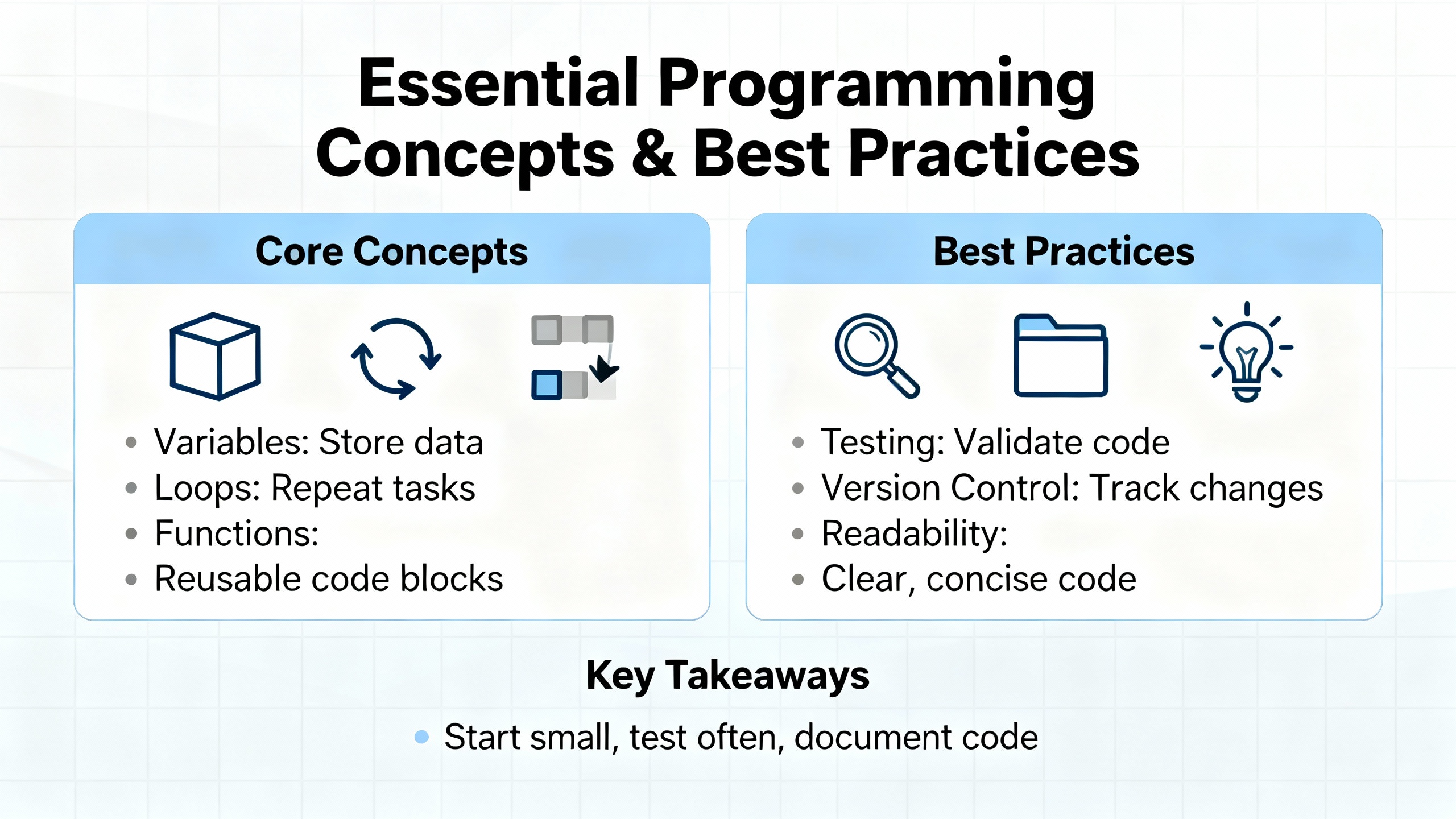
High‑quality PLC training encourages engineers to design before they code. Recommended methods include building flow charts, timing diagrams, and Boolean word descriptions of sequences. You then partition the design into modules, modes, tasks, and steps before creating any ladder logic.
A module might be an automatic transfer system, a generator, a chiller, or any logical subsystem. Modes define how that module behaves during startup, normal operation, manual intervention, shutdown, setup, or diagnostics. Tasks in a Logix controller determine how often and under what conditions code runs, whether continuously, at fixed intervals, or in response to events. Steps represent the individual states in a sequence, such as “pre‑check,” “start,” “synchronize,” and “load transfer” in a generator application.
Training exercises should walk through mapping such a design into subroutines, periodic tasks, and well‑named state bits. This approach produces logic that is easy to follow, test, and modify, which is critical when supporting equipment that must run for many years.
Tags, data structures, and memory management
Allen‑Bradley controllers offer rich data handling capabilities, and modern training resources emphasize using them well. Instead of scattering unrelated tags across memory, you group related values into structured data types and arrays. This organization simplifies program logic and improves communication efficiency with SCADA systems.
Discussions among Ignition and Logix practitioners show that reading arrays or compact user‑defined types is far more efficient than polling thousands of separate tags. Similarly, ControlLogix performance tuning guides encourage disciplined tag management, avoiding duplicates and unused tags that consume memory and slow program downloads.
Training should also stress careful use of real numbers and comparisons. Practical programming advice suggests using relational comparisons such as “greater than” or “greater than or equal to” when working with real‑valued signals to avoid subtle rounding issues. Hard‑coded numeric constants are replaced with named parameters so that setpoints and engineering ranges are self‑documenting and easier to audit.
Fault handling and alarm strategy
Industrial engineers working on power and protection systems cannot rely on default fault behavior. Training should cover both controller‑level fault handling and application‑level alarms.
At the controller level, you learn how major faults are generated, how to read fault codes in RSLogix or Studio 5000, and how to design fault routines that safely stop equipment while preserving useful diagnostic information. For example, watchdog faults that occur when scan time exceeds a defined limit must be corrected by simplifying logic or re‑structuring tasks, not just by raising the limit and hoping the issue disappears.
At the application level, PLC programming best practices recommend centralizing alarms in a dedicated data file or structure. Each alarm condition has a clear identifier, description, and severity. Combining this with good naming conventions and rung comments yields a system in which operators can understand alarms quickly, and engineers can trace them back to specific rungs and I/O points without guesswork.
This is especially important in plants with UPS and power protection systems, where operators must know whether a trip was caused by utility power quality, a breaker failure, a generator issue, or a misconfigured interlock, rather than facing a generic “fault” message.
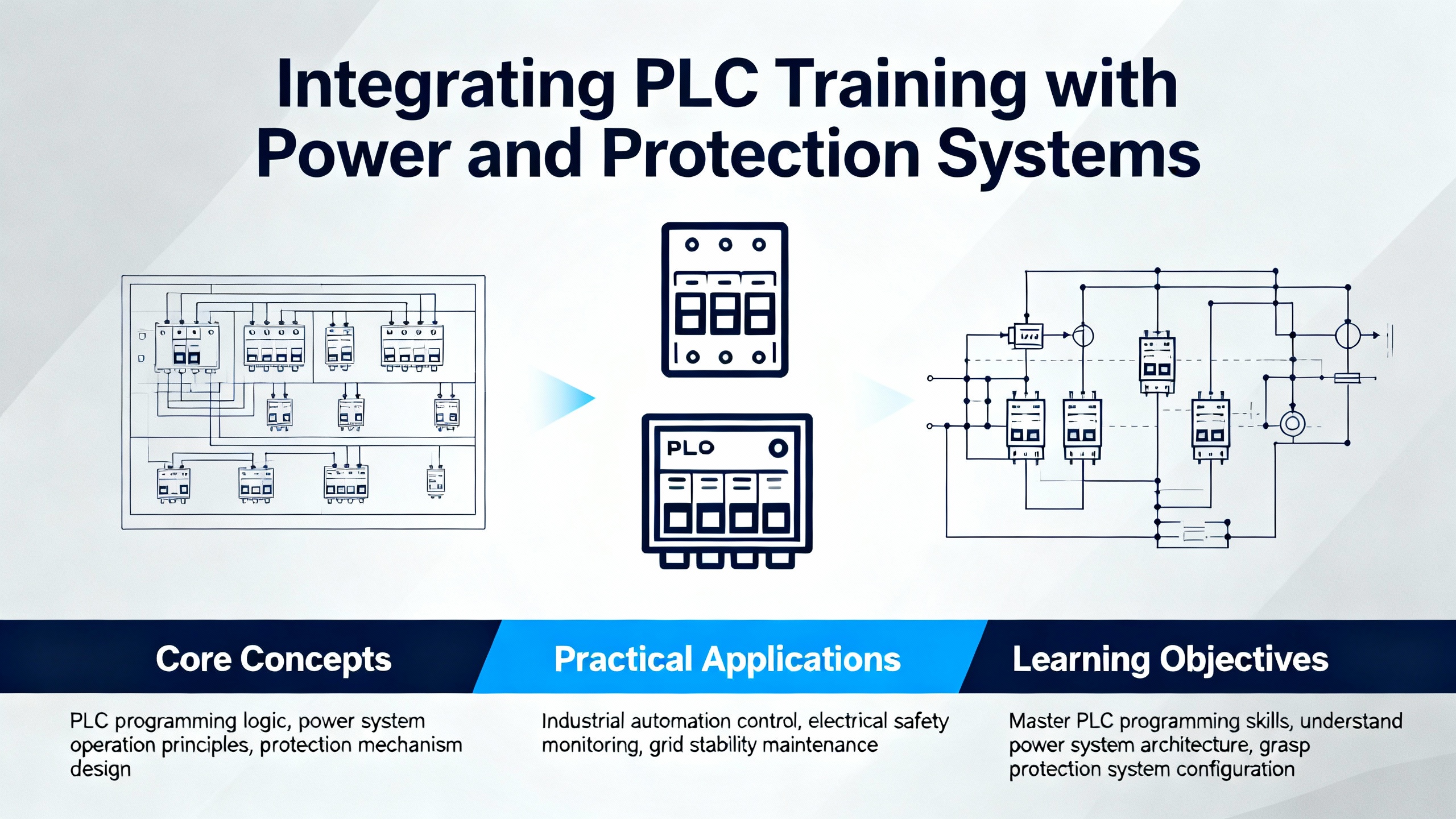
Integrating PLC Training with Power and Protection Systems
For industrial engineers focused on power, UPS, and protection, it is tempting to treat PLC programming as a separate discipline owned by controls specialists. The reality on the plant floor is that these domains are tightly coupled. Rockwell‑based PLCs frequently coordinate switchgear sequences, monitor load and source availability, manage load shedding, and provide the logic backbone around which protective relays and UPS controls operate.
Training programs should therefore include case‑based exercises drawn from power applications: sequencing of a transfer between utility and generator, controlled starting of large motors to avoid inrush issues, coordination between PLC logic and UPS alarms, or integrating power quality measurements into process interlocks. Using the same programming best practices in these scenarios forces engineers to think through not only normal operation but also failure modes and restart procedures.
Reliability‑oriented training also highlights the role of preventive maintenance and lifecycle planning. Resources focused on Rockwell systems encourage regular program backups, asset evaluations to identify aging controllers such as older SLC families, and planned migrations to modern platforms before failures force rushed replacements. From a power system perspective, that means verifying that critical sequences, such as black‑start or emergency transfer logic, are fully documented and tested in the new platform before decommissioning older controllers.
Choosing the Right Training Mix
Industrial engineers have multiple ways to learn Allen‑Bradley programming, and each has strengths and limitations. Short vendor courses, online training platforms, internal mentoring, and project‑driven learning all play a role. The goal is to build competency that is both broad and deep enough to support reliable operation of critical systems.
A useful way to think about training options is summarized below.
| Training mode | Description | Pros | Limitations |
| Vendor or integrator classes | Instructor‑led courses focused on specific Allen‑Bradley topics | Fast immersion; direct exposure to Rockwell practices | Limited time; may not match your plant’s realities |
| Structured online courses | Self‑paced PLC programming curricula with labs and simulators | Flexible schedule; repeatable content | Requires self‑discipline; hardware access still needed |
| Internal mentoring and code walks | Review of existing plant programs with senior engineers | Real‑world relevance; exposure to plant history | Quality depends on mentor availability and practices |
| Project‑based learning | Gaining skills during new automation or upgrade projects | Immediate business value; strong motivation | Risky if done without prior fundamentals |
In practice, the most effective path combines structured learning with real plant exposure. Many organizations start with an external or online course that builds solid fundamentals, then reinforce that foundation by having engineers study commissioned PLC programs from their own facility. Training guidance from experienced instructors consistently emphasizes reading and understanding proven, post‑startup programs as one of the most powerful ways to grow.
For teams responsible for power and protection systems, it can be particularly valuable to schedule dedicated sessions where engineers and electricians walk through the PLC logic that controls transfer schemes, generator starts, or UPS bypass operation. Those sessions often reveal undocumented assumptions and highlight where better comments, naming, or alarm handling would reduce risk.
Short FAQ for Industrial Engineers
How long does it take to become productive with Allen‑Bradley PLCs?
For an industrial engineer with good understanding of the plant process and basic electrical concepts, focused effort over several weeks is usually enough to become productive with small logic changes and troubleshooting, provided the training includes real exercises and review of existing programs. Reaching the level where you can architect new systems, design robust fault handling, and optimize performance typically takes sustained practice across multiple projects, along with continuous learning as hardware and software evolve.
Do I need real hardware, or are simulators enough?
Simulators are excellent for learning languages, program structure, and testing techniques, and training material from PLC educators strongly encourages their use to catch logic issues early. However, exclusive reliance on simulation leaves gaps around hardware behavior, communication quirks, and commissioning realities. A complete training plan will start with simulation and then add supervised sessions on real Allen‑Bradley hardware, even if that hardware is a small test rack rather than production equipment.
Which Allen‑Bradley family should I learn first?
If your plant already uses a particular family, such as CompactLogix or ControlLogix, it makes sense to focus there because Studio 5000 and the Logix5000 platform share many concepts across models. If you are starting from scratch and expect to work on both new and existing systems, it can be helpful to see at least one legacy platform such as MicroLogix or SLC 500 via RSLogix 500, since many facilities still have these controllers in service. Regardless of the family, the underlying best practices in design, readability, testing, and maintenance are consistent.
Closing Thoughts
Allen‑Bradley PLC programming, when approached with the discipline normally reserved for power system design, becomes a powerful lever for reliability. Training that blends solid standards, clean architecture, readable logic, rigorous testing, and practical troubleshooting prepares industrial engineers to support not only automation, but the stability of the entire power and protection stack behind it. Treat your PLC skills as part of your plant’s resilience strategy, and the payoff will be measured in fewer trips, smoother transfers, and far less time spent in the switchgear room during the night.
References
- https://scholarsmine.mst.edu/ele_comeng_facwork/3998/
- https://www.canton.edu/media/employee/elec141/1747-rm001c-en-p.pdf
- https://webarchive.gemini.edu/documentation/webdocs/icd/icd_19.pdf
- https://www.slac.stanford.edu/grp/lcls/controls/global/standards/sw/SNS%20PLC%20Programming%20Guidelines%20rev%20f.doc
- https://plc-training.org/plc-programming-training-bp6.html
- https://www.plctalk.net/forums/threads/fault-handling-allen-bradley.68857/
- https://gesrepair.com/troubleshooting-controllogix-plc-failures-common-causes-and-fixes
- https://blog.hesconet.com/rockwell-automation-plc-troubleshooting-common-problems-and-solutions
- https://idspower.com/allen-bradley-plc-tips/
- https://pacificblueengineering.com/optimize-rockwell-allen-bradley-plc/


 Videos
 News
News Applications





Leave Your Comment