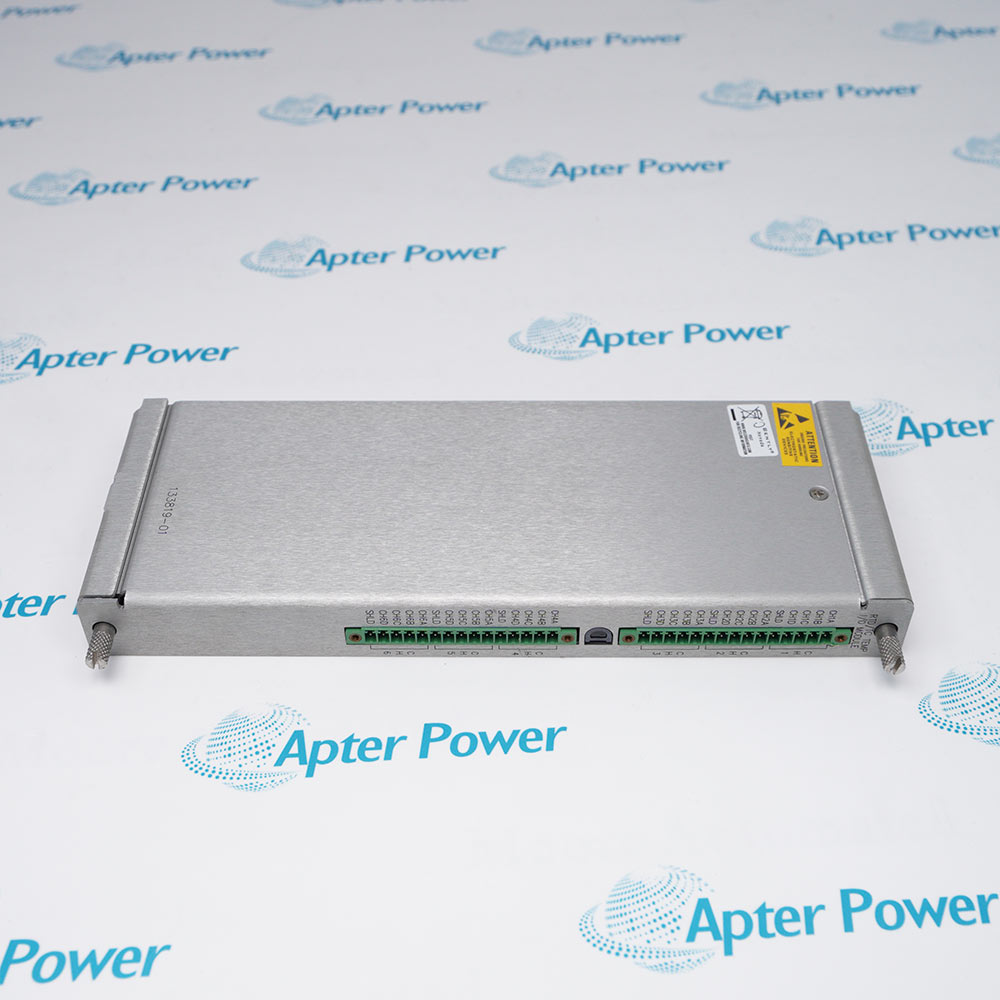
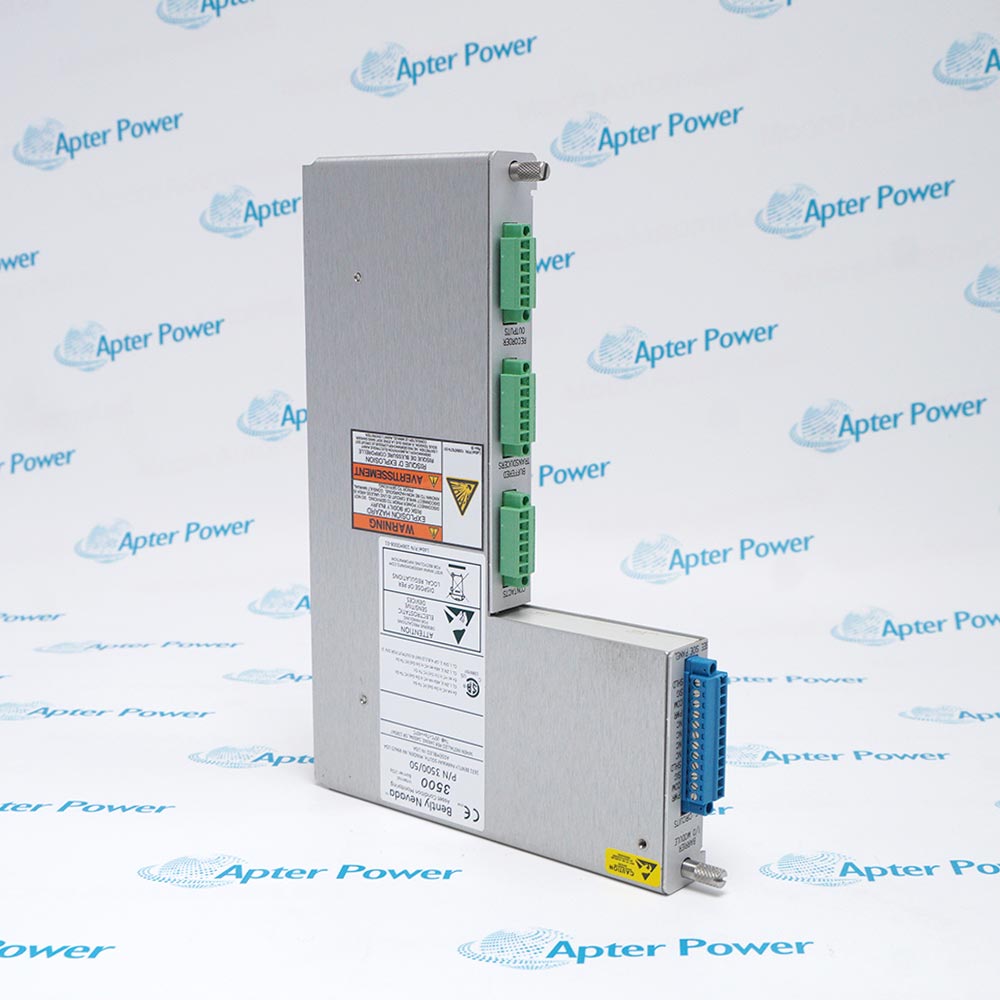
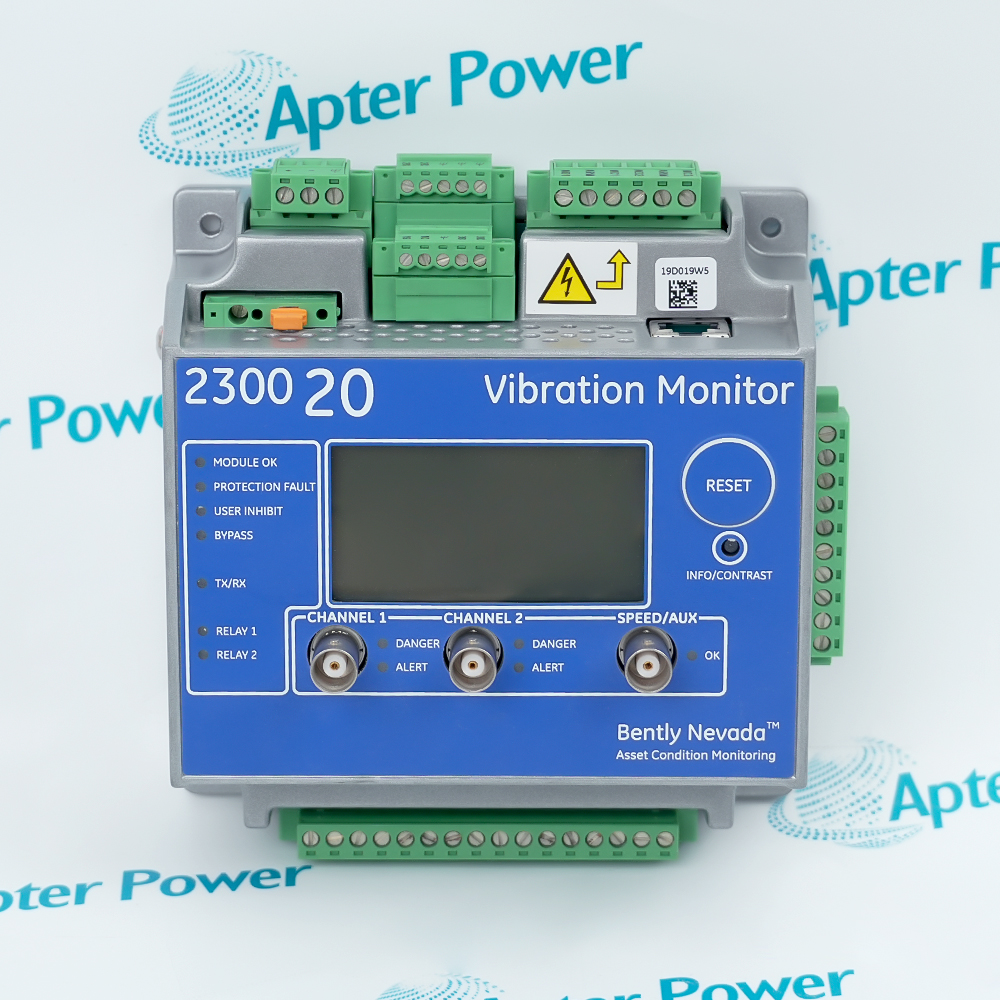
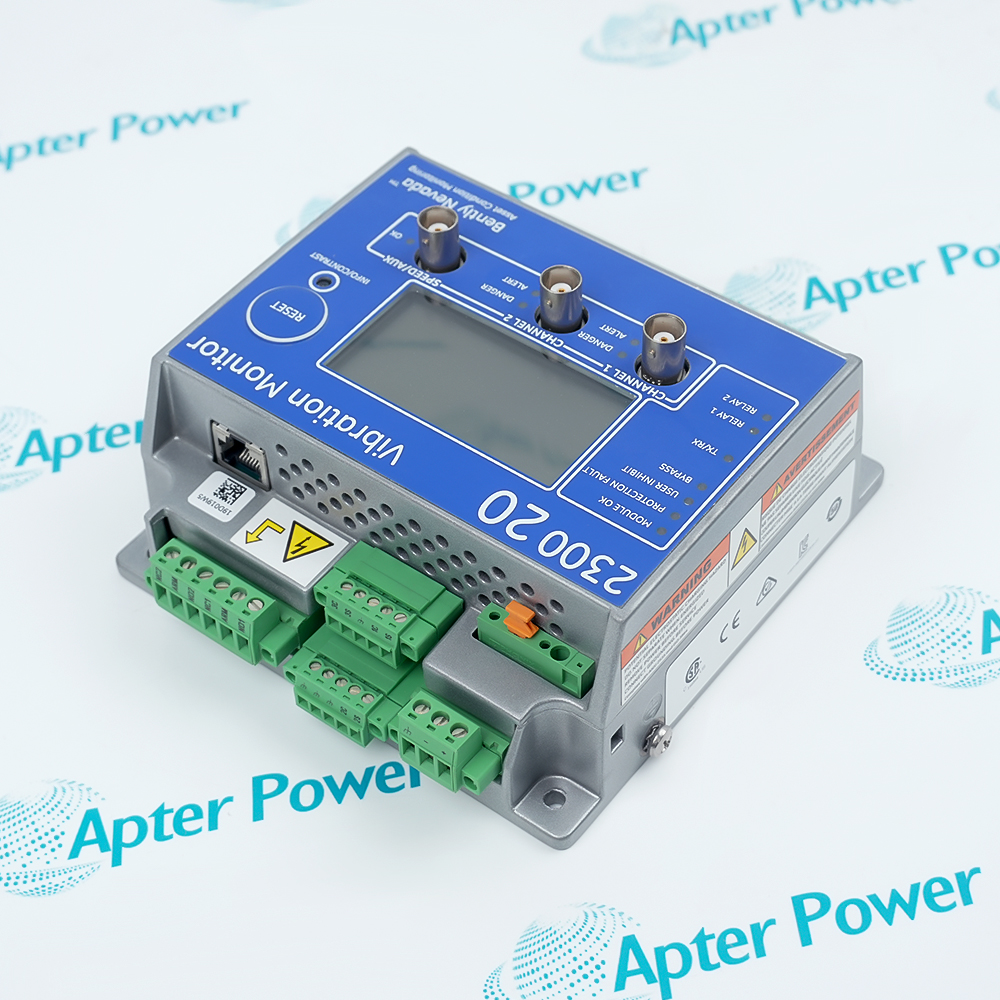
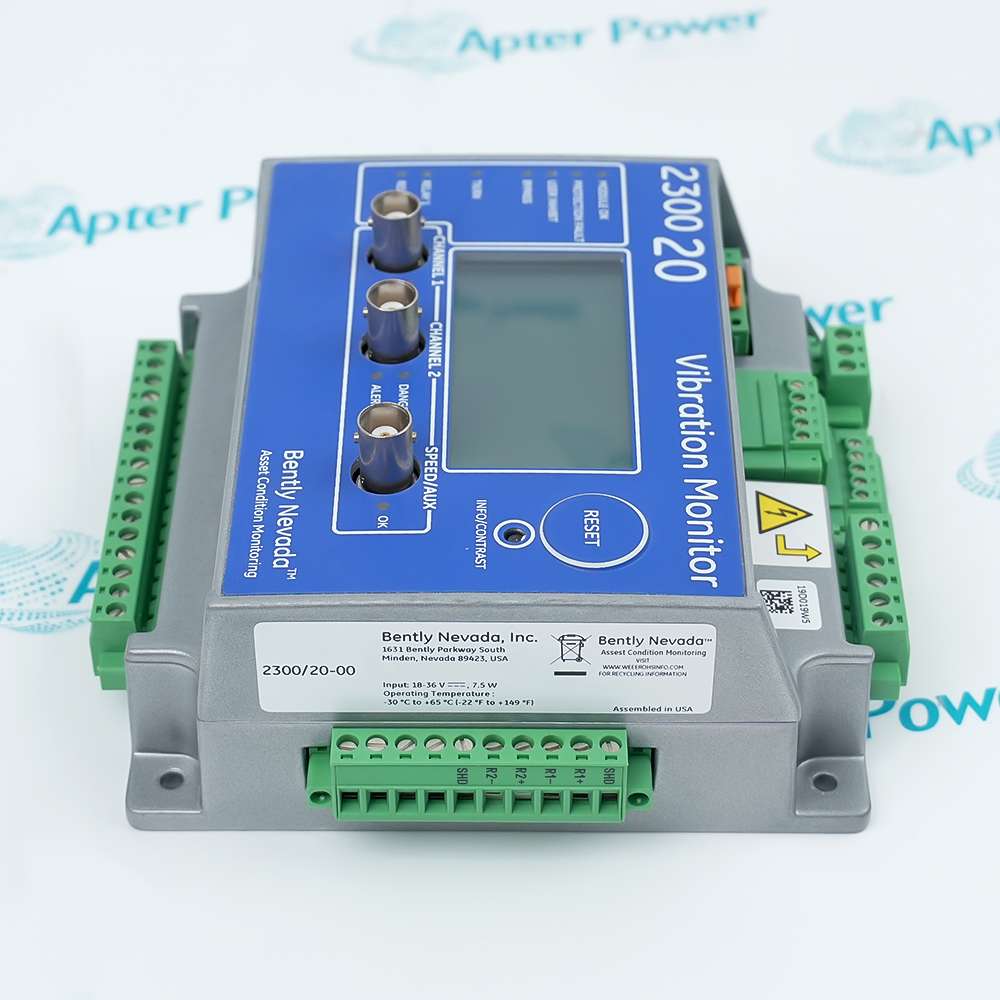
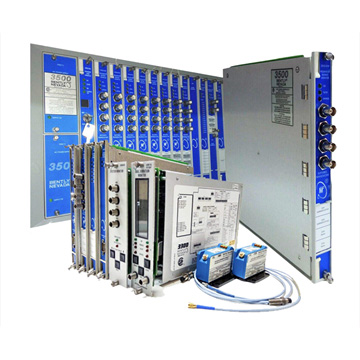
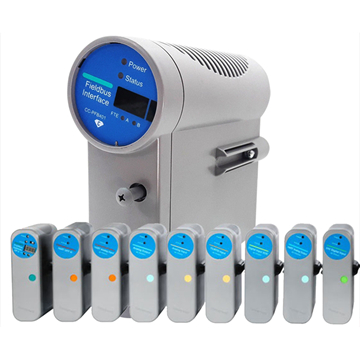
Performs local machinery-condition monitoring and converts sensor information into protection, indication and control-system interfaces.
- Signal or energy path: Connected vibration or speed transducers feed the monitor, which conditions and digitizes the signals, evaluates configured alarm logic, and provides relay, analog and buffered outputs.
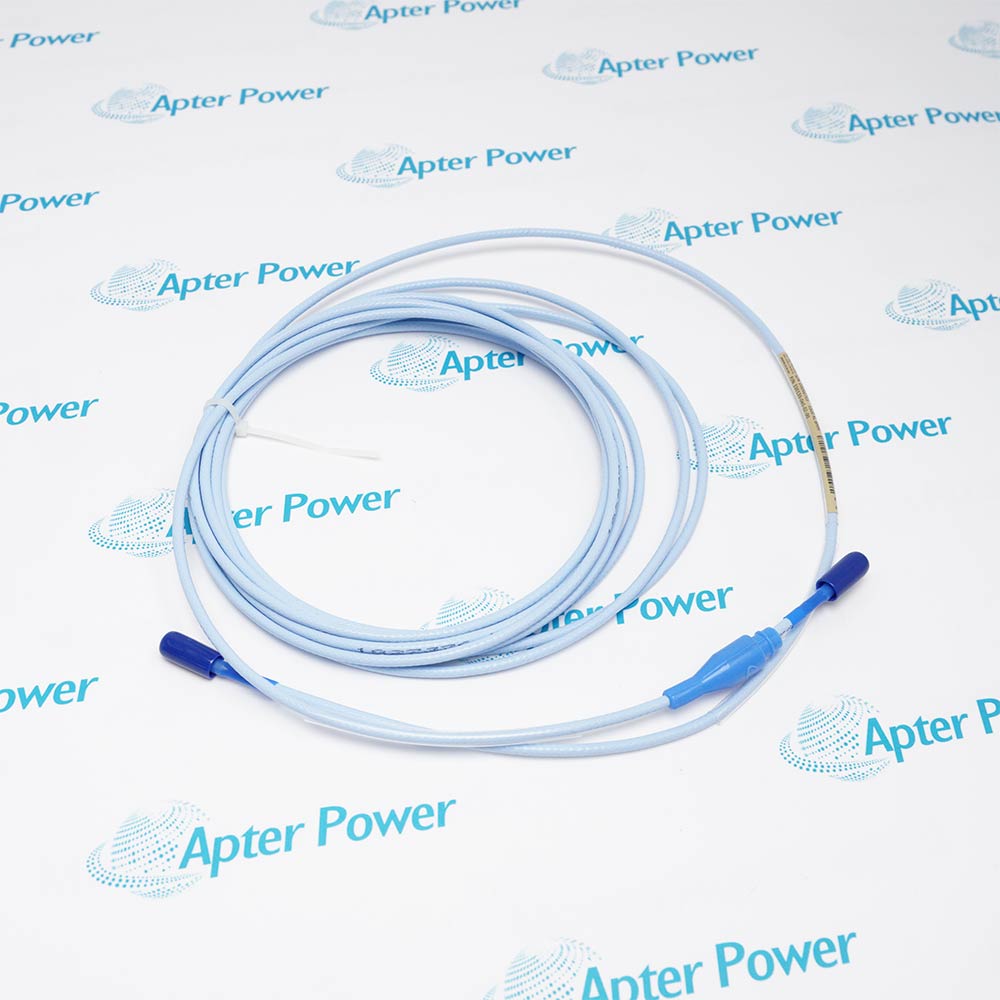
- Companion components: Coordinate the monitor with the correct accelerometer, velocity sensor, proximity system or speed pickup, plus the plant trip and data-acquisition wiring.
- Engineering check: Verify transducer type, scale factor, measurement units, filtering, alarm setpoints and relay philosophy before commissioning.
- System boundary: The monitor's protection response is determined by the configured transducer, measurement mode, alarm logic and relay philosophy.
Pumps, motors, fans, compressors, gearboxes and other balance-of-plant rotating machinery.
Important Notice: Verify the complete 2300/20-00 nameplate, installed-system documentation, companion hardware and current Bently Nevada instructions before installation or replacement.
Apter Power 2300/20-00 Manuals and Guides
Important Notice: The first link is the product-parameters PDF prepared only from the cited manufacturer information; the second link is the Apter Power product manual. Confirm the physical nameplate, current manufacturer documents, and host-system requirements before installation or replacement.
Compact balance-of-plant machinery protection
Continuously measures two vibration points and a speed or process input, alarms on configured levels and can operate relay outputs for an essential or spared machine whose point count fits the monitor.
Fluid-film-bearing shaft monitoring
Uses compatible Proximitor inputs for radial-vibration or thrust-position measurements, with a phase/speed input for time-synchronous diagnostics.
Slow-speed and rolling-element-bearing monitoring
Uses Velomitor or accelerometer inputs for casing velocity, acceleration and configured enveloped-acceleration measurements on slow-speed, bearing or geared assets.
Small hydro or cryogenic-pump monitoring
Provides a compact continuous monitor for officially documented small-hydro use and for engineered cryogenic-pump acceleration/velocity measurement strategies, subject to sensor and area-approval selection.
Read and follow the current Bently Nevada documentation and host-equipment instructions before work. Verify the complete physical nameplate and system configuration.
1
Treat 2300/20-00 as the approvals-option-00 unit: do not claim or rely on ATEX, IECEx or CSA explosive-atmosphere approval, and do not assume an approved enclosure changes the monitor certification.
2
Supply only 18 to 36 VDC within the 7.5 W maximum requirement, use the documented grounding and enclosure practice, and keep the unit within -30 to +65 °C and non-condensing humidity limits.
3
Connect the two 4-20 mA channels only as internally powered loops; the manufacturer warns that they will not work with an external powered loop, and the connected load must remain within 0 to 600 ohms.
4
Before service, verify each sensor type, excitation, wiring, scale factor, bandpass, speed range, alert/danger setpoint, relay logic and bypass state, then perform the site's required functional test.
5
Use the official operation, field-wiring, software and installation documents for the installed firmware; control configuration access, apply compatible BN Monitor Configuration/System 1 versions, and keep copper Ethernet runs within the 100 m published limit.