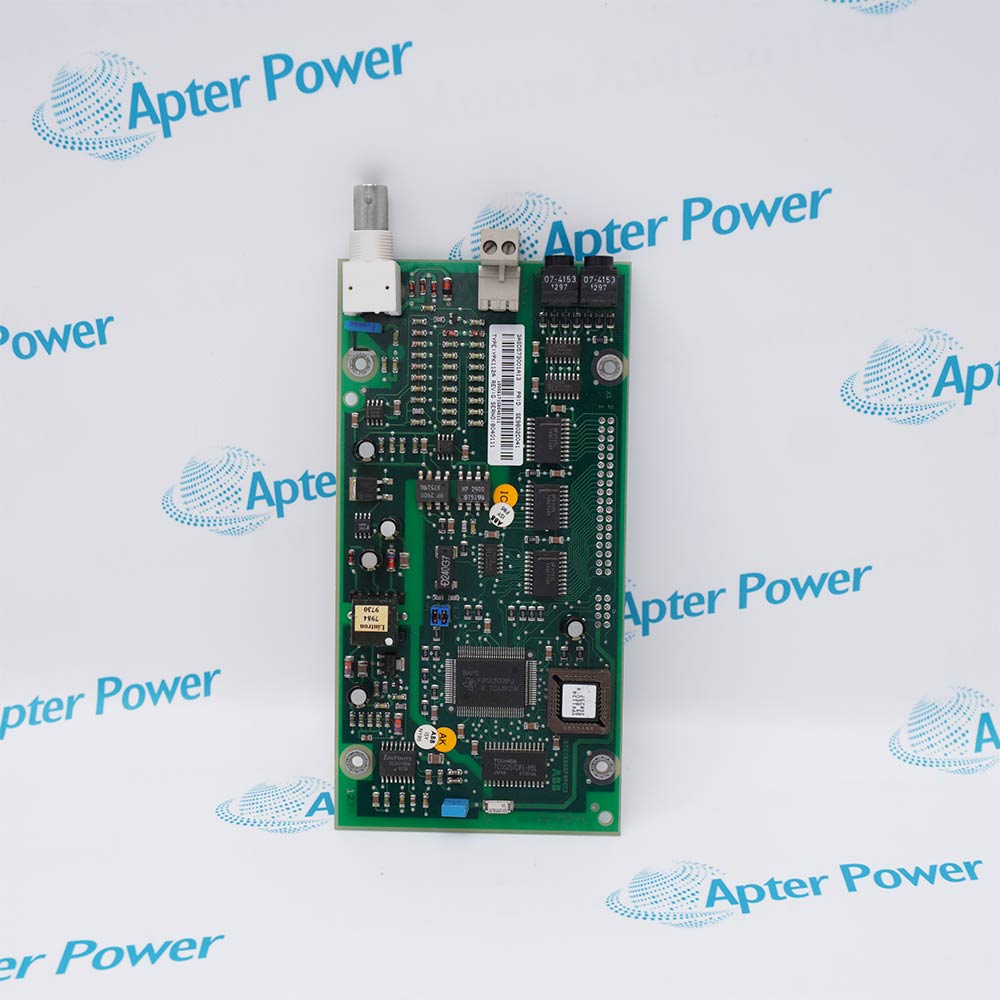
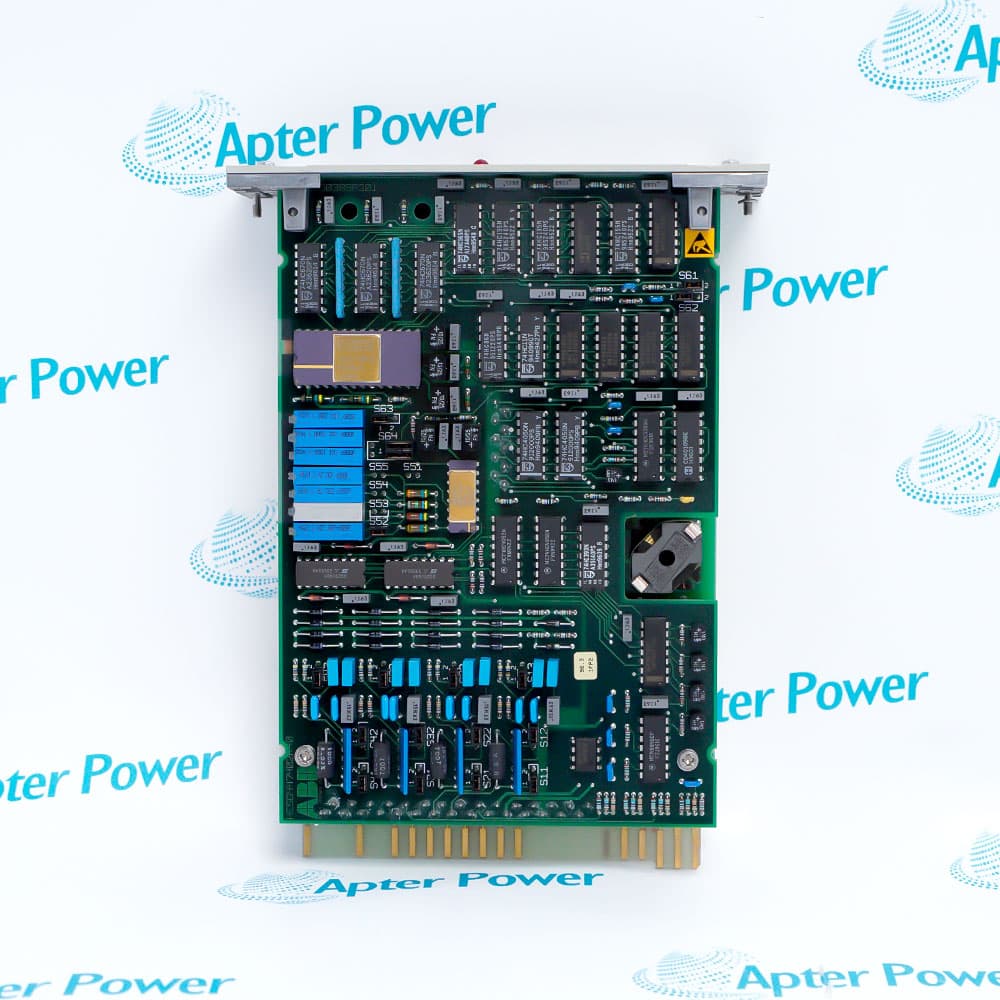
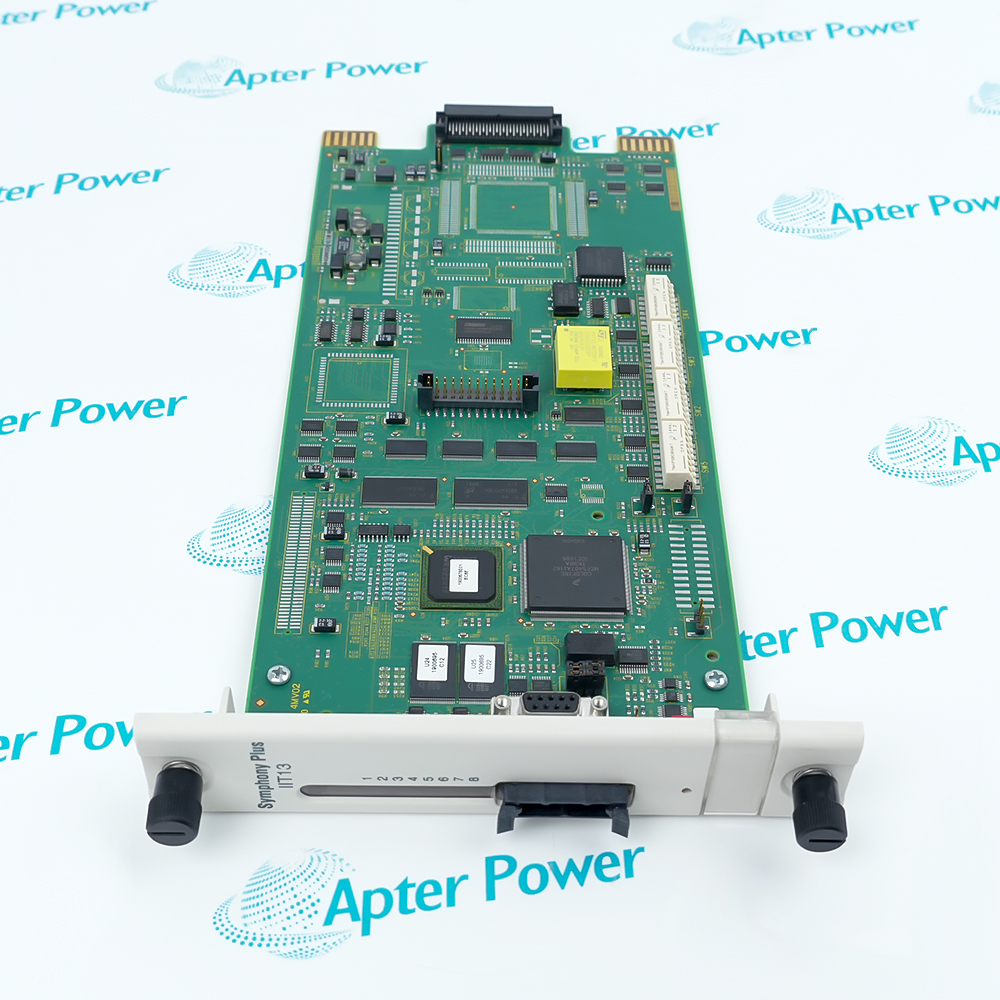
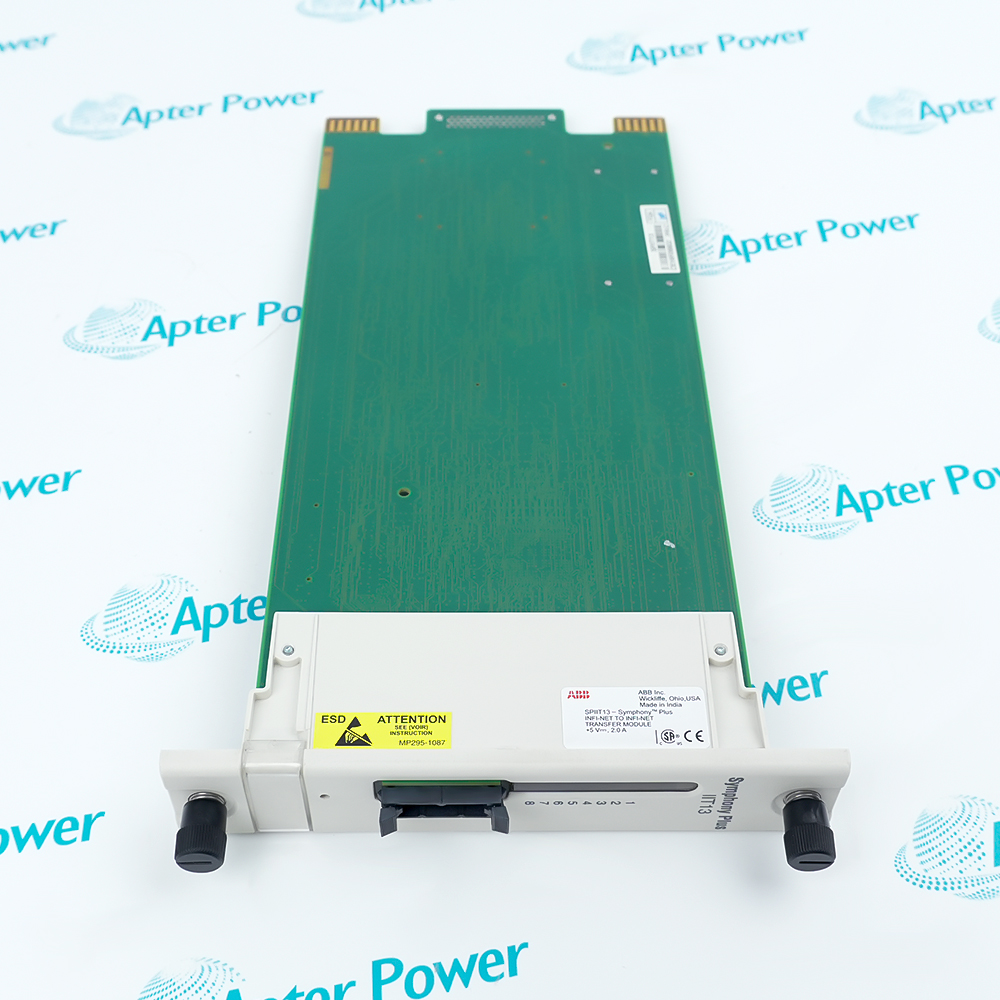
Extends the Symphony Plus communication architecture by transferring control-network traffic between local Cnet sections.
- Signal or energy path: Network frames enter through the installed interfaces, are handled by the module processor and memory resources, and are forwarded to the opposite local network while diagnostics remain available for service work.
- Companion components: Use the approved interface kit, local-network cabling, host rack and Symphony Plus communication components documented for the installed node.
- Engineering check: Verify network topology, node configuration, cable routing, grounding and diagnostic-port procedure before commissioning.
- System boundary: Network transfer depends on the approved Symphony Plus topology and does not replace the host controllers' application processing.
Distributed-control network expansion, cabinet integration, staged migration and maintenance of legacy process-control installations.
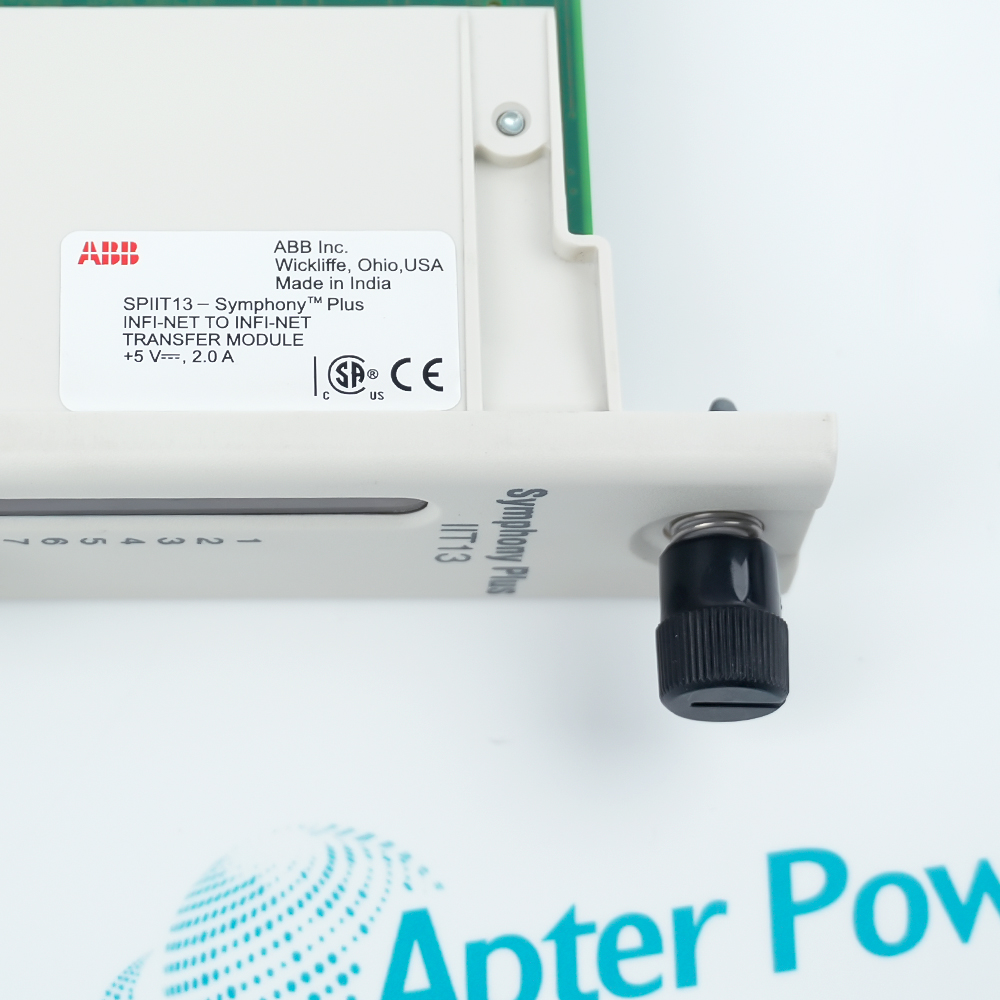
Important Notice: Verify the complete SPIIT13 nameplate, installed-system documentation, companion hardware and current ABB instructions before installation or replacement.
Apter Power SPIIT13 Manuals and Guides
Important Notice: The first link is the product-parameters PDF prepared only from the cited manufacturer information; the second link is the Apter Power product manual. Confirm the physical nameplate, current manufacturer documents, and host-system requirements before installation or replacement.
Local Cnet interconnection
Transfers control-system network communications between two local Cnets in an ABB-documented architecture.
INFI-Net local interface
Serves as the transfer-module component in the SPIIL02-L INFI-Net-to-INFI-Net local interface bundle.
Symphony Plus installed-base communication
Supports a plant control network that uses the HR Series Cnet interface components documented by ABB.
Network-module diagnostics
Provides the documented P4 RS-232-C diagnostic port for qualified service work; it is not published as a general process serial interface.
Read and follow the current ABB documentation and host-equipment instructions before work. Verify the complete physical nameplate and system configuration.
1
Confirm that the target system uses two compatible local Cnets and the ABB-documented SPIIL02-L architecture before installation.
2
Verify the module nameplate, revision, rack/mounting unit, SPNIS21 modules, NTCL01 termination units and NKLS01-10 cables against the current site documentation.
3
Provide the documented +5 V DC supply at 2 A and keep the module within the 0 to 70 deg C ambient range.
4
Treat P4 as the documented RS-232-C diagnostic port; do not wire it as a process I/O or substitute it for the Cnet interfaces.
5
Do not copy Cnet speed or node-capacity values from the neighboring SPNIS21 catalog entry into the SPIIT13 data table.