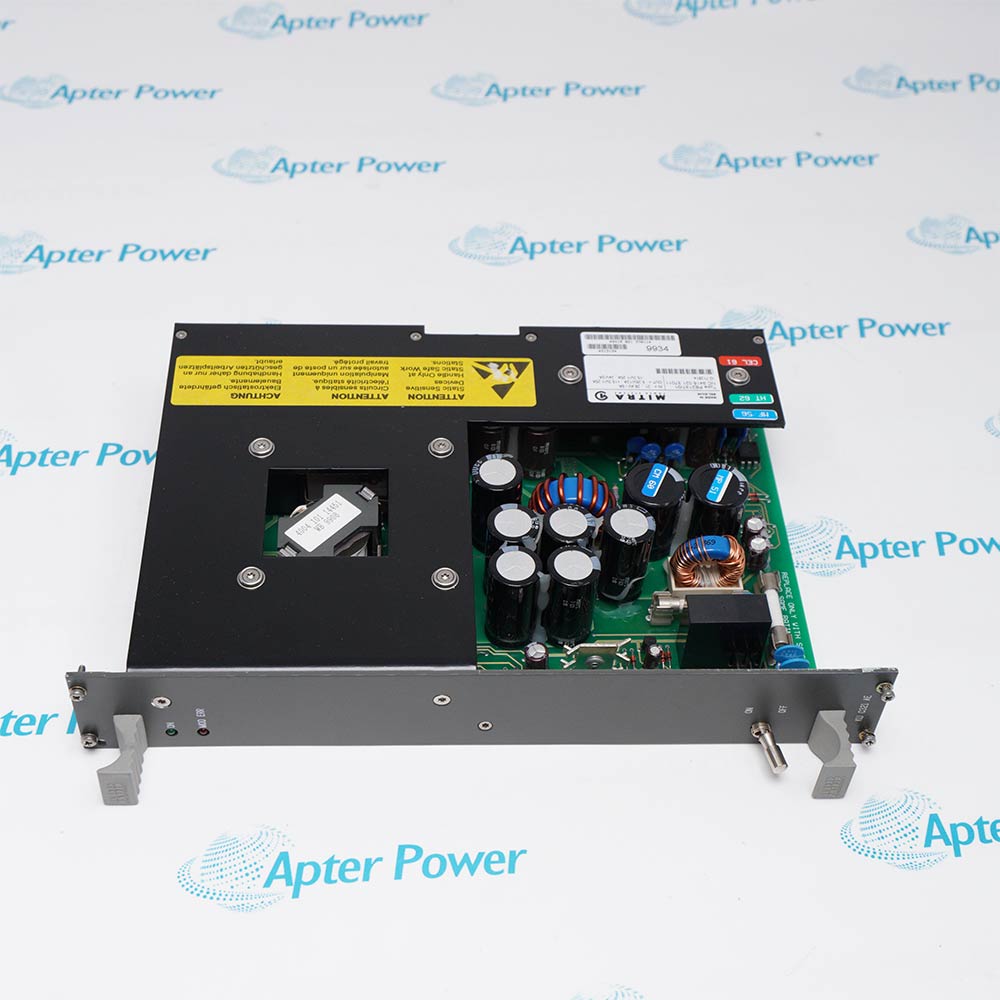
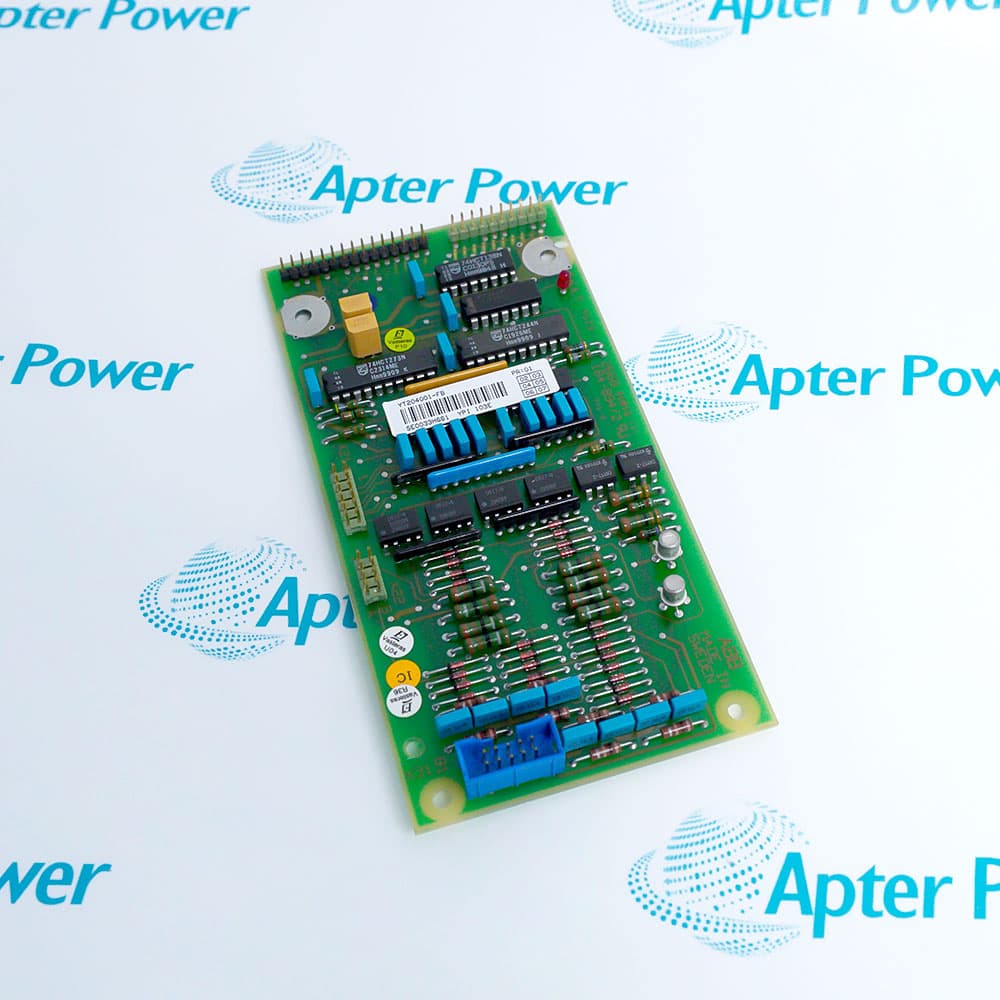
ABB IMSET01 is a Harmony Sequence of Events Timing module. It processes up to 16 digital field inputs and receives and decodes time-synchronization-link information sent by the INTKM01 module for a Harmony controller.
- Digital field inputs: Up to 16
- Time-synchronization function: Receives and decodes time-synchronization-link information from INTKM01
- Input channel isolation: Each channel optically isolated
- Individually programmable input selections: 24 VDC ±10%; 48 VDC ±10%; 125 VDC ±10%; 120 VAC ±10%
The Harmony controller uses function code 241 to interface SOE data from IMSET01 to INSEM01 and function code 242 to configure and access the module's input channels. IMSET01 communicates over the I/O expander bus, and ABB permits only one IMSET01 on an I/O expander bus segment. Each channel is optically isolated and individually programmable for 24 VDC, 48 VDC, 125 VDC, or 120 VAC input, with 120 VAC limited by ABB to system control logic. The module cable connects to NTST01 for time-synchronization-link termination and NTDI01 for field wiring; ABB also associates NTBMN2 with IMSET01 in its rack-termination table. IMSET01 is not an alias for IMSED01: ABB assigns the timing-link function only to IMSET01 and permits the segment's additional event inputs to be supplied by IMSED01 modules. A 2012 ABB lifecycle presentation called this Harmony Rack family Active, but the current exact-model phase, replacement, origin, tariff code, weight, and dimensions remain HOLD.
Important Notice: Verify the complete ABB IMSET01 nameplate and current project documentation before use.
Apter Power IMSET01 Manuals and Guides
Important Notice: The first link is the model-specific product-parameters PDF prepared only from the cited ABB official evidence; the second link is the Apter Power product information manual. Confirm the physical nameplate, current ABB documents, and host-system requirements before installation or replacement.
Time-referenced SOE acquisitionProvide the timing-link endpoint and as many as 16 digital event inputs on a Harmony I/O expander bus segment in the documented INTKM01/IMSET01/controller architecture.
Controller event chronologyInterface SOE data through function code 241 and configure digital event channels through function code 242 where the site's Harmony configuration uses INSEM01.
Mixed IMSET01 and IMSED01 event segmentsUse the single IMSET01 timing role with additional IMSED01 input modules, remaining within ABB's one-IMSET01-per-segment rule.
Maintenance of installed Harmony SOE systemsIdentify an exact IMSET01 replacement position only after confirming INTKM01, NTST01, NTDI01 or approved termination topology, bus address, controller function blocks, and current service status.
Read and follow the exact ABB documentation and host-equipment instructions before work. Verify the complete physical nameplate and system configuration.
1Install no more than one IMSET01 on an I/O expander bus segment.
2Do not substitute or merge IMSED01 with IMSET01; only IMSET01 performs the documented time-synchronization-link decoding role.
3Verify the complete timing chain, including INTKM01, NTST01, controller function code 241, and INSEM01 configuration, before commissioning.
4Verify every channel's voltage selection before energizing field wiring, and use 120 VAC only for system control logic.
5Confirm NTST01 time-link termination and NTDI01 field-wiring termination; treat NTBMN2 as a separately documented configuration association, not assumed universal interchangeability.
6Observe the published temperature, noncondensing humidity, pollution-degree, altitude, and noncorrosive-atmosphere limits.
7Confirm +5 VDC supply tolerance and cabinet power capacity before inserting the module.
8Preserve function-code 241 and 242 configuration and verify the controller database after replacement or maintenance.
9Treat document-era CE and approval statements only in their stated Symphony-cabinet context and obtain current project certification evidence separately.
10Do not publish or use unverified timestamp resolution, link distance, event capacity, weight, dimensions, origin, or tariff data.


 Videos
 News
News Applications