Industrial power systems live or die on the quality of their measurements. If your boilers, turbines, or critical process skids are running on unreliable pressure or level data, it does not matter how robust your UPS or inverter lineup is: the control logic will make bad decisions. That is why replacing a failed or obsolete Yokogawa transmitter is not just a purchasing task; it is a reliability decision.
From a power system and reliability standpoint, the goal is simple: when you cannot or do not want to buy a like‑for‑like Yokogawa unit, you still need equivalent safety integrity, performance, and lifecycle cost. Fortunately, the transmitter market is mature and well studied by organizations such as MarketsandMarkets, ARC Advisory Group, and Industrial Instrumentation Market Report 2022, so there is real data on who the credible alternatives are and where they fit.
This article walks through how Yokogawa pressure and differential pressure (DP) transmitters are positioned, which alternative manufacturers are technically comparable, and which sourcing channels are realistic if you are under schedule or budget pressure. The focus is practical: minimizing risk to power and process reliability while keeping long‑term cost of ownership under control.
What Transmitters Actually Do In Your Plant
A transmitter is more than a “smart gauge.” As described in industrial references such as Metoree’s overview of transmitters, it is a device that takes a physical measurement from a sensor section, conditions that signal in its processing electronics, and then sends a standardized output from its transmission section to your control system or protection relays.
In process and power plants, transmitters sit on pipes, tanks, ducts, and headers to measure variables such as pressure, differential pressure, level, flow, and temperature. Modern units almost always use electrical transmission methods, typically current or voltage signals, because they offer fast response, long distance coverage, and straightforward integration with digital control systems. Pneumatic signal transmission still appears in some hazardous or high‑EMI environments, and optical links with fiber are used where very long runs or high bandwidth are needed, but for most UPS‑backed control rooms, electrical transmitters are the default.
Pressure and DP transmitters in particular are critical in oil and gas, chemical plants, power generation, water treatment, and other continuous processes. Studies cited by Industrial Instrumentation Market Report 2022 and BCST Group stress that brand and model choice directly influence safety, reliability, and downtime risk. If a boiler drum DP transmitter drifts or fails, your DCS can mis-handle firing sequences or trip unnecessarily, and even a perfectly sized UPS cannot compensate for bad data.
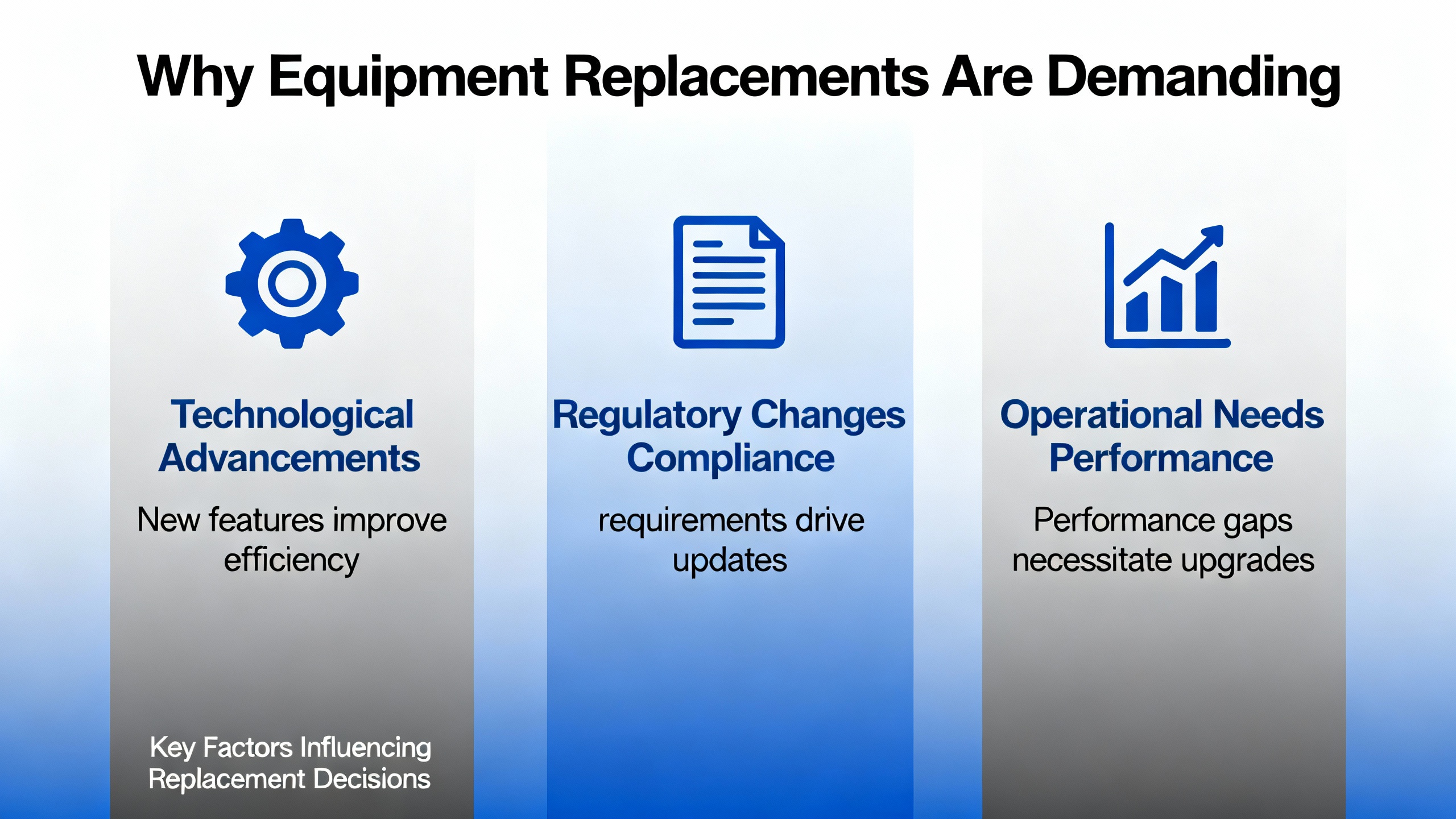
Yokogawa’s Position: Why Replacements Are Demanding
Yokogawa’s DPharp pressure transmitters have earned a reputation for high integrity measurements in demanding applications. According to Yokogawa’s own technical documentation, all of its pressure transmitters are certified to functional safety standards IEC 61508 and IEC 61511 by Exida and TÜV Rheinland. They are qualified for SIL2 when used as single transmitters and SIL3 when installed in dual configurations, so a single product family can serve both control and safety instrumented functions.
A key differentiator is the DPharp digital sensor, which uses resonant silicon technology. Markets and technical reviews note that this approach improves resistance to overpressure, temperature changes, and static pressure effects, and Yokogawa backs that with an unconditional long‑term stability guarantee of about ±0.1% for up to 15 years under operational conditions. That stability allows users to extend calibration intervals, and Yokogawa claims maintenance cost reductions of up to roughly one‑third when those longer intervals are adopted.
Yokogawa also leans heavily into total cost of ownership. Its multi‑sensing DP transmitters can measure both differential pressure and static pressure with one device, eliminating the second gauge transmitter, manifold, piping, wiring, and control‑system I/O that a conventional setup would require. The “universal mounting” concept means the same hardware can be configured for gas or liquid service, reducing the number of spare models in stock. Communication options span analog 4–20 mA with BRAIN or HART, low‑power 1–5 VDC with HART, and digital FOUNDATION Fieldbus or PROFIBUS PA, which makes it easier to drop them into existing loops.
From a reliability advisor’s perspective, this creates the core challenge: if you have standardized on Yokogawa and now need an alternative, the bar is high. Any replacement supplier has to be credible on safety integrity, stability, diagnostics, and long‑term support, not just purchase price.
Why Plants Look Beyond Yokogawa
Despite Yokogawa’s strengths, there are legitimate reasons for power and process operators to look at alternative suppliers and channels.
Some sites face obsolescence or long lead times on specific Yokogawa models. Others are expanding in regions where Yokogawa service coverage is thin compared to competitors. Acquisitions and new project standards also drive multi‑vendor strategies; for instance, a plant might have Yokogawa on legacy units but Siemens or Emerson on newer lines.
Market research from MarketsandMarkets projects the pressure transmitter market growing from about $3.21 billion in 2025 to $3.84 billion by 2030, driven by automation, smart sensors, and tightening safety and environmental regulations. That growth has attracted and sustained multiple strong vendors. ARC Advisory Group, as reported in an industrial comparison by HK Jiuheng, notes that Emerson Rosemount, Endress+Hauser, Siemens, Yokogawa, and Honeywell together hold roughly 72% of the global industrial pressure measurement market. In other words, there is a deep bench of Tier‑1 suppliers with proven technology.
There is also a technology reason to consider alternates. Verified Market Reports, writing about transmitter companies and two‑wire pressure transmitters, highlights the rapid move toward IoT‑enabled, self‑diagnosing devices with predictive maintenance and cloud integration. If your existing Yokogawa base is older, a newer Emerson, Siemens, or Endress+Hauser device may bring features that fit your digitalization roadmap better, especially if your plant already runs that vendor’s control system.

Tier‑1 OEM Alternatives To Yokogawa
When choosing an alternative to a Yokogawa transmitter, you want to stay in the same reliability league. Multiple sources, including Holykell’s ranking of differential pressure manufacturers, BCST Group’s pressure transmitter brand review, AntletsTech’s comparative analysis of ten leading pressure transmitter brands, and the ARC Advisory Group‑based comparison from HK Jiuheng, consistently point to a common set of top manufacturers.
The table below summarizes the major brands that appear repeatedly in these independent rankings, along with characteristics that matter when they are considered as Yokogawa alternatives.
| Brand | Example series mentioned in research | Noted strengths relative to Yokogawa | Where it often fits as a replacement |
| Emerson (Rosemount, Micro Motion) | Rosemount 3051S/3051C; Micro Motion pressure | Very high accuracy and stability, SIL3 pipeline credentials, strong diagnostics, global support | Oil and gas, power, and chemical services needing safety‑rated, highly trusted instruments |
| Honeywell | SmartLine, ST3000 | Modular design, wireless options, early diagnostics; strong in brownfield upgrades | Existing Honeywell DCS sites, wireless retrofits, explosive atmospheres |
| Siemens | SITRANS P series | Tight integration with SIMATIC/TIA Portal, native PROFINET, predictive‑maintenance case studies | Plants standardized on Siemens automation, especially power and chemical |
| Endress+Hauser | Cerabar, Deltabar | Ceramic capacitive sensors, advanced Heartbeat diagnostics, very strong in corrosive media | Pharmaceutical, chemical, and sanitary or corrosive services |
| ABB | 2600T/266 series | Long‑term stability, SIL2/3 models, digital technology | High‑risk process industries needing safety certification |
| WIKA | A‑10 and others | Robust construction, broad pressure range, cost‑effective options | General industrial and utility services where ruggedness and budget balance are key |
| VEGA | Pressure and level transmitters | Resistant to dust, moisture, EMI; easy installation | Level and pressure in harsh environments and plants emphasizing minimal maintenance |
| KROHNE | Pressure/flow/level portfolio | Century‑long measurement expertise and strong calibration infrastructure (especially in Greater China) | Flow and level‑oriented plants wanting a single measurement partner |
| Holykell, Keller, LEEG | Differential pressure transmitters | Competitive pricing, customization, international standard compliance (Holykell and LEEG), rugged harsh‑service solutions (Keller) | Cost‑sensitive projects and localized installations that still demand credible performance |
| Foxboro (Schneider), Fuji Electric, Azbil | Various pressure lines | Foxboro noted for decades‑long service life; Fuji for cost‑effective accuracy; Azbil as high‑end Japanese option | Legacy Foxboro plants, budget projects, and advanced control systems respectively |
The rest of this section looks at a few of these in more detail.
Emerson Rosemount: The Benchmark Competitor
Multiple independent sources treat Emerson’s Rosemount line as an industry benchmark. BCST Group emphasizes the Rosemount 3051 line and its patented Coplanar technology, which allows manifolds and primary flow elements to be mounted directly, simplifying installation and reducing leak points. AntletsTech highlights the 3051 family’s very high accuracy, excellent long‑term stability, wide pressure range, and robust design that tolerates high temperature, humidity, and vibration.
HK Jiuheng’s technology comparison cites ARC Advisory Group and notes that the Rosemount 3051S can achieve about 0.04% accuracy with a five‑year stability guarantee and has SIL3 compliance, with long‑term drift around ±0.1% over five years. That combination of metrological performance, safety certification, and widely deployed reference cases in pipelines is the main reason reliability‑focused plants often treat Rosemount as the “safe” alternative when a Yokogawa replacement is not practical.
From a power system angle, Rosemount’s global 48‑hour spare parts network, as reported in the same comparison, is valuable for plants where a failed transmitter can curtail generation or critical process throughput. If your control system is vendor‑neutral or Emerson‑centric, Rosemount is usually the first candidate to screen against the Yokogawa spec.
Honeywell SmartLine and ST3000: Modular and Wireless
Honeywell’s SmartLine and ST3000 families appear frequently in brand rankings from BCST Group, Holykell, and AntletsTech. SmartLine transmitters emphasize user experience and modularity: Honeywell’s materials highlight how maintenance teams can swap displays or electronics modules without full recalibration, which reduces shutdown time.
The ST3000 line focuses on intelligent pressure sensing and, according to the HK Jiuheng comparison, supports ISA100 Wireless with line‑of‑sight ranges on the order of over half a mile. It also complies with API 670 for critical machinery protection. Holykell’s survey of differential pressure manufacturers characterizes Honeywell’s DP transmitters as high‑performance units for demanding environments, with precise measurements and robust construction.
As a Yokogawa alternative, Honeywell makes sense where you already rely on Honeywell automation, or where wireless backhaul is attractive. For brownfield sites where pulling new cables is disruptive, a wireless ST3000 can replace a wired Yokogawa device while leveraging the same process taps and protection concepts.
Siemens SITRANS P: Integrated With Siemens Automation
Siemens’ SITRANS P series is consistently described as a reliable, versatile transmitter portfolio. AntletsTech notes its compact design, flexible configuration, fast response, and advanced communication protocols that integrate easily with industrial networks, enabling efficient data transmission and remote monitoring.
BCST Group underlines another dimension: tight integration with SIMATIC PLCs and the TIA Portal engineering environment. In HK Jiuheng’s comparison, the SITRANS P family also shows strong digital architecture with native PROFINET support, yielding communication latencies under a few milliseconds. A documented case study describes a BASF plant that achieved an 18% reduction in unplanned downtime after deploying SITRANS P320 units with predictive maintenance algorithms.
If your plant’s control backbone is Siemens‑based, replacing a Yokogawa device with a SITRANS P unit can simplify engineering and lifecycle management. For power plants, HK Jiuheng specifically points to Siemens SITRANS P500 as a candidate for steam lines, which are some of the most demanding environments in a thermal power block.
Endress+Hauser: Corrosive Media and Advanced Diagnostics
Endress+Hauser (E+H) appears near the top of nearly every ranking of pressure transmitters, including BCST Group, Holykell’s top ten differential pressure manufacturers, and AntletsTech’s analysis. The Cerabar and Deltabar families use ceramic capacitive technology with a proprietary Ceraphire alumina sensor material. HK Jiuheng reports that this offers about five times the corrosion resistance of 316L stainless steel and notes a 92% survival rate in hydrochloric acid service, based on a 2022 E+H reliability report.
E+H also differentiates with diagnostics. BCST Group highlights its Heartbeat Technology, which provides continuous self‑checking and on‑demand verification reports without interrupting the process. AntletsTech notes intelligent self‑diagnosis and automatic calibration features in Cerabar units, which reduce maintenance and downtime.
As an alternative to Yokogawa, E+H comes into its own where media are aggressive or sanitary requirements are strict. HK Jiuheng recommends Cerabar S PMP75 in clean‑in‑place pharmaceutical systems and cites its EHEDG cleanability. For a plant that previously used Yokogawa transmitters in corrosive services but is now facing supply or support constraints, a Cerabar or Deltabar can be a very credible replacement.
ABB: Safety Credentials and Stability
ABB’s 2600T and 266 series transmitters are singled out by BCST Group for long‑term stability and strong safety credentials, with many models certified to SIL2 or SIL3. AntletsTech describes the 2600T line as using advanced digital technology to achieve high accuracy and repeatability and supporting remote calibration and configuration. Built‑in safety features are emphasized to protect measurement integrity in hazardous environments.
This makes ABB a practical Yokogawa alternative in petrochemical, refining, or power‑generation services where functional safety assessments already drive the architecture. The availability of SIL‑rated models and global process‑automation presence means ABB can be dropped into existing safety instrumented functions that previously relied on Yokogawa, provided the detailed safety calculations are updated.
WIKA, VEGA, and KROHNE: Robustness, Level Focus, and Regional Strength
WIKA, VEGA, and KROHNE occupy an important middle ground. BCST Group describes WIKA as a specialist in pressure and temperature measurement whose mechanical‑gauge heritage translates into robust electronic transmitters. AntletsTech’s profile of the WIKA A‑10 pressure transmitter calls it cost‑effective, simple, durable, and targeted at small to medium industrial applications where budget control matters.
VEGA, highlighted by AntletsTech and by The Transmitter Shop’s distributor material, focuses on advanced sensing technology and durability. Its transmitters and level instruments are designed to resist dust, moisture, and electromagnetic interference, while offering easy installation and configuration. The Transmitter Shop notes that VEGA level and radar measurement solutions deliver German‑engineered precision, long‑term reliability, and minimal maintenance, backed by more than six decades of innovation.
KROHNE, profiled in a world manufacturing survey, is an international measurement company founded in the early twentieth century with a strong flow and level portfolio. Its Chinese entity has built real‑flow calibration facilities and multiple plants that manufacture and calibrate flow, level, and pressure instruments for the Greater China region. This combination of global expertise and local calibration infrastructure makes KROHNE a strong candidate supplier in that region, including for differential pressure measurement.
These brands are particularly attractive when your replacement problem straddles pressure and level. For example, if a Yokogawa DP transmitter used for level measurement in a power‑plant condensate tank fails, a VEGA or KROHNE radar or DP solution might offer both a technical upgrade and a simplification of vendor base.
Cost‑Effective Alternatives: Holykell, Keller, LEEG, Fuji, Azbil
Not every replacement involves a safety‑critical loop on a main steam line. Many are utility services, secondary cooling circuits, or non‑hazardous storage tanks where reliability still matters, but cost pressure is severe.
Holykell’s own summary of the Industrial Instrumentation Market Report 2022 positions Holykell and LEEG alongside major Western and Japanese brands in the top ten differential pressure transmitter manufacturers. Their differential pressure transmitters are described as accurate, stable, and reliable, with Holykell emphasizing cost‑effectiveness, customization options, and strong customer support. LEEG’s products are noted for complying with international standards.
Keller is characterized as a specialist in rugged transmitters designed for demanding environments, offering excellent long‑term stability and customized solutions. BCST Group’s broader brand review adds Fuji Electric as a cost‑effective option for less critical or budget‑constrained applications, and Azbil as a high‑end Japanese choice with strong reliability for advanced process control, especially in Asian markets.
These suppliers are not typically drop‑in replacements for a Yokogawa unit in a SIL3 loop on a turbine lubrication system. However, in balance‑of‑plant services or where you are actively segmenting risk, they can offer significant cost savings while still staying within a credible, standards‑compliant supplier set.
Sourcing Channels: Where To Buy Reliable Replacements
Choosing the right manufacturer is only half of the equation. The sourcing channel affects lead time, authenticity, and lifecycle support. The same model bought from an authorized distributor, a specialist stocking shop, or an online used‑equipment seller carries very different risk.
A convenient way to compare channels is shown below.
| Sourcing channel | Typical offering | Main advantages | Key risks and caveats |
| OEM direct or through official regional offices | New, fully supported transmitters from Emerson, Siemens, Yokogawa, etc. | Strongest assurance of authenticity, full warranty, direct access to OEM engineering and configuration tools | Longer commercial processes, potentially higher prices, minimum order terms |
| Authorized distributors and regional stocking representatives | Brand‑new devices with local inventory and application support | Shorter lead times than factory; local service and commissioning help; coordinated with OEM policies | Territory restrictions; product ranges tied to specific brands; still within OEM pricing structures |
| Independent stocking shops and online specialists | Mix of new surplus and refurbished instruments from multiple brands | Fast delivery from existing stock; cross‑brand replacement guidance; ability to bridge gaps during OEM lead‑time spikes | Variability in refurbishment quality; warranty terms depend on the shop, not OEM; careful vetting required |
| General marketplaces and used‑equipment listings | Used or “new old stock” units, often individual pieces | Lowest acquisition cost; useful for hard‑to‑find or obsolete models; acceptable for non‑critical services | No inherent guarantee of calibration, configuration, or storage conditions; risk of hidden damage; buyer must handle verification |
Examples from research illustrate how these channels behave in practice. The Transmitter Shop positions itself as a trusted source for VEGA level and radar instruments, emphasizing reliability, German engineering, and easy integration. That kind of specialist can help you map a failed Yokogawa level transmitter to a VEGA replacement with appropriate accessories, while also advising on installation.
Regional stocking representatives behave similarly. For example, Allied Instrumentation describes itself as a stocking distributor for industrial products such as RAYCHEM in parts of the Midwest, highlighting local inventory and faster deliveries. Even though that specific announcement focuses on heat‑tracing products, the model is typical for measurement devices as well: a regional distributor carries inventory and knowledge for multiple industrial brands.
On the used and surplus side, a listing for a Yokogawa EJA530A pressure transmitter on a major auction platform describes a previously used but fully operational unit, with cosmetic wear and a 10.5–42 VDC supply range. The listing itself sensibly recommends that buyers verify model and pressure range compatibility and consider recalibration, especially when using the unit in safety or quality‑critical loops. That reflects the general rule: used transmitters can be a viable option for non‑critical service, but they shift the responsibility for inspection and calibration entirely onto your maintenance team.
For high‑end, safety‑critical applications that tie into UPS‑backed control systems and protective relays, OEM and authorized‑channel sourcing remain the most consistent way to preserve risk posture.
Matching Alternatives To Yokogawa: Technical Considerations
When replacing a Yokogawa transmitter with a different brand, the goal is not just “functionally similar.” You need to match or exceed the original performance and safety envelope, especially in power and process protection loops.
Several sources provide practical criteria. AntletsTech, Holykell’s top‑ten analysis, BCST Group’s overview, and Metoree’s transmitter fundamentals all stress the same themes.
First, match the measurement principle and range. If the original Yokogawa device was a differential pressure transmitter used to infer flow, the replacement should also be a DP unit with compatible range and overload ratings. HK Jiuheng’s comparison shows, for example, the Yokogawa EJX910A with resonant silicon sensing and a rating of 100 MPa overload capability, which is why it is recommended for high‑pressure wellheads. A replacement in that service has to live in the same pressure class.
Second, align accuracy, stability, and diagnostics with the importance of the loop. Yokogawa’s DPharp devices bring about ±0.1% long‑term stability over 15 years. Rosemount 3051S, according to ARC data cited by HK Jiuheng, reaches approximately 0.04% accuracy with a five‑year stability commitment. E+H, Siemens, ABB, Honeywell, and others have published performance benchmarks that, while slightly lower or higher in formal spec, are generally in the same high‑precision class. Holykell’s review of leading DP manufacturers notes that advanced diagnostics and integration with control systems are now expected capabilities; in other words, your alternative should offer self‑checking and clear error reporting, not just raw accuracy.
Third, verify safety certifications and functional integrity. If the Yokogawa transmitter was installed as part of a SIL‑rated safety instrumented function, look at ABB’s SIL2/3‑rated transmitters, Emerson’s SIL3 pipeline references, or other devices whose safety documentation matches your target safety integrity level. Holykell’s Industrial Instrumentation Market Report 2022 summary and BCST Group’s brand overview both highlight how ABB, Emerson, Yokogawa, and others are chosen specifically because of their certified safety credentials.
Fourth, ensure communication and integration compatibility. Metoree emphasizes that transmitters emit standardized signals, and both the Yokogawa DPharp series and competing brands support common protocols such as analog 4–20 mA with HART, FOUNDATION Fieldbus, PROFIBUS PA, and, for Siemens, PROFINET. If your existing DCS expects HART or a particular fieldbus, prioritize alternatives that natively support those protocols. This is not just about wiring; it keeps your existing asset‑management tools and diagnostics intact.
Fifth, do not neglect mechanical and impulse piping details. HK Jiuheng’s analysis notes that about 63% of field failures in pressure measurements originate from improper impulse piping, not the transmitter hardware itself. When swapping a Yokogawa unit for another brand, pay attention to process connection sizes, manifold compatibility, and the routing and support of impulse lines. The best transmitter in the world cannot overcome a plugged or poorly sloped impulse line.
Finally, consider calibration strategy and lifecycle support. Yokogawa’s recommended 10‑year calibration cycle for some DPharp devices is unusually long. Emerson typically recommends five‑year recalibration for comparable models, and Siemens and Endress+Hauser emphasize long product support periods, with commitments in the 15‑year range for spare parts. Align your choice with how frequently you are willing to verify and adjust these instruments and how long you expect to run the plant between major turnarounds.
Reliability, Cost, And Digitalization: Choosing Wisely
From a reliability advisor’s standpoint, two questions matter the most when evaluating Yokogawa alternatives: will this device protect my people and equipment as well as the original, and what does it really cost over the life of the plant?
Total cost of ownership is not just the purchase price. Yokogawa’s DPharp documentation explicitly points out that TCO includes calibration frequency, maintenance labor, spare parts inventory, engineering hours for installation, and costs associated with regulatory compliance and safety. Its multi‑sensing capability, universal mounting, and long‑term stability are all framed as ways to reduce those components.
HK Jiuheng’s comparative cost analysis of Emerson, E+H, Siemens, Yokogawa, and Honeywell models illustrates how this plays out numerically. For example, the Siemens SITRANS P320 is characterized as having a medium initial cost but a relatively low ten‑year TCO and a payback period on the order of a few years. Emerson’s Rosemount 3051S has a higher initial cost but a mid‑range TCO with a similar payback period. Endress+Hauser’s Cerabar S PMP75 shows a mid‑range capital cost but somewhat higher TCO, while Yokogawa’s EJX910A carries the highest initial cost but the lowest long‑term TCO, with a longer payback period. The message is clear: the cheapest purchase is rarely the lowest‑cost solution when you factor in maintenance, downtime, and service life.
On the technology side, multiple market research sources converge on similar trends. MarketsandMarkets emphasizes how integration with IoT and digital communication systems enables real‑time data analysis, remote monitoring, and predictive maintenance, improving operational efficiency and safety. Verified Market Reports’ commentary on transmitter companies and two‑wire pressure transmitters notes increasing focus on AI‑driven diagnostics, self‑monitoring, and integrated security features as cyber‑physical risks rise.
Pragmatically, that means a Yokogawa replacement that includes advanced diagnostics, predictive capabilities, and secure digital communications can do more than just match the previous unit’s accuracy. It can help you run a more resilient power system, especially when your UPS‑backed control and protection infrastructure is already collecting and analyzing data from across the plant.
There is also a strong case for field validation. The Verified Market Reports author describes how a chemical plant ran a six‑month pilot of Emerson Rosemount transmitters to validate durability and accuracy, and how a water treatment facility compared Siemens and Endress+Hauser units and observed faster response times and easier calibration with Siemens. Those pilots are exactly the kind of risk‑managed experiments a reliability‑driven plant should run before switching en masse from Yokogawa to another supplier.

Short FAQ
Q: Can I safely mix Yokogawa and other brands on the same control or protection loops?
A: Research from Metoree and multiple manufacturer datasheets shows that modern transmitters are designed to output standardized electrical signals, such as 4–20 mA with HART or common digital fieldbuses. Yokogawa DPharp transmitters and competitors from Emerson, Siemens, Endress+Hauser, ABB, Honeywell, and others all support these protocols. As long as the electrical interface, safety requirements, and configuration are correctly engineered, mixed‑vendor loops are a normal practice. The main requirement is to maintain consistent engineering data and safety calculations when you substitute a new brand.
Q: Are lower‑cost brands like Holykell, Keller, or LEEG acceptable replacements?
A: Holykell’s summary of the Industrial Instrumentation Market Report 2022 lists Holykell, Keller, and LEEG among the top ten differential pressure transmitter manufacturers worldwide, noting their accuracy, reliability, and compliance with international standards. They are particularly attractive where cost is tight and the application is not the highest‑risk loop in the plant. For safety‑critical services, Tier‑1 brands with a long track record in functional safety may still be more appropriate, but these cost‑effective manufacturers are legitimate options to consider for less demanding duties.
Q: When is it reasonable to use a used or refurbished Yokogawa transmitter instead of buying a new non‑Yokogawa alternative?
A: A used Yokogawa transmitter, such as the EJA530A unit described in a marketplace listing as fully operational but cosmetically worn, can be a practical choice when you are dealing with an obsolete model or a non‑critical loop and the price difference is significant. In that case, plan to verify operation with a zero and span check and consider professional calibration, especially before installing it in any loop that can affect safety or product quality. For critical pressure measurements that protect major power equipment, a new transmitter from a reputable OEM or an authorized channel generally offers a clearer reliability path.
In power and industrial plants, transmitters sit at the intersection of process safety, equipment protection, and energy efficiency. Yokogawa has earned its place as a high‑end choice, but the global market now offers multiple alternative suppliers that can meet or even exceed those capabilities when selected carefully. If you treat transmitter replacements with the same rigor you apply to UPS design or protection coordination, you can diversify your vendor base without sacrificing reliability.
References
- https://holykell.com/TOP-10-Differential-Pressure-Transmitter-Manufacturers.html
- https://www.alibaba.com/showroom/original-yokogawa-eja110e-transmitters.html
- https://alliedinst.com/brands/yokogawa-brands-page
- https://bcstgroup.com/what-are-the-top-10-pressure-transmitter-brands-worldwide/
- https://www.dstransmitter.com/blog/2025-top-10-temperature-transmitter-suppliers-in-t-1858321.html
- https://www.ebay.com/itm/405299395715
- https://www.marketsandmarkets.com/ResearchInsight/pressure-transmitters-market.asp
- https://www.techjockey.com/alternatives/yokogawa-eems?srsltid=AfmBOor7c-f_ywHyM0lD86u77WRasfHcfl9AGVN2GNQ7c-XXyhCEeZ5M
- https://www.thomasnet.com/products/smart-transmitters-87440434-1.html
- https://www.toprefine.com/industrial-pressure-transmitter-technology-comparison-emerson-vs-siemens-vs-yokogawa/


 Videos
 News
News Applications





Leave Your Comment