Summary: Redundant control and power systems turn equipment failures into non-events, so hospitals, water plants, data centers, and transport networks keep running even when something critical breaks.
Why Redundancy Matters More Than Ever
In mission‑critical sites, a “momentary outage” is not a nuisance; it is a safety and reputational event. Studies cited by Maverick Power and Giva show that an hour of downtime can easily exceed $100,000.00, with many incidents reaching $1–5 million.
For hospitals, control rooms, and utilities, the more serious cost is loss of life‑safety functions: dark operating rooms, silent pumps, or frozen SCADA screens when operators need them most. EIS Council and CISA both frame redundancy as a core resilience strategy, not a luxury.
From a power-systems perspective, this means treating UPS, inverters, ATS, PLCs, and networks as one chain. If any link remains a single point of failure—whether it is a breaker, a controller, or a network switch—the whole chain is still fragile.
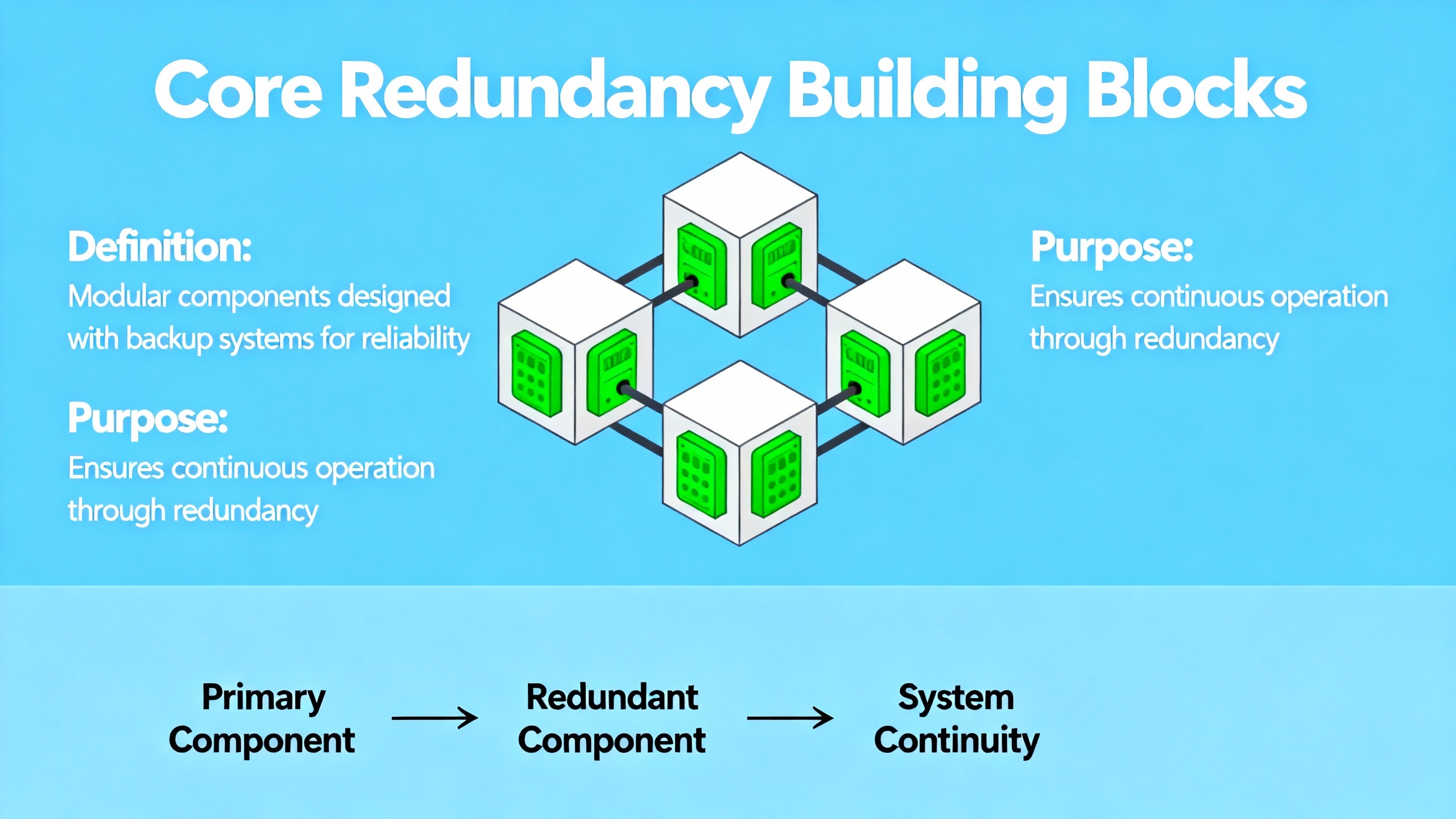
Core Redundancy Building Blocks
In field work on data centers, water plants, and industrial campuses, three layers consistently determine whether a facility rides through a fault or not.
- Power-path redundancy Maverick Power, Vaultas, and C3 Controls all converge on the same pattern:
- Multiple utility feeds where possible, often from diverse substations.
- UPS systems in at least N+1 configuration, so one unit can fail or be serviced with the load still fully supported.
- Generators with enough capacity and fuel to carry true critical loads, not just “lights and office PCs.”
- Redundant distribution paths and branch protection, so one tripped breaker does not black out both “redundant” controllers.
- Controller redundancy (PLCs, DCS, and safety systems) ISA and ACE describe modern controller redundancy as hot‑standby pairs that run in lockstep: the secondary PLC tracks all I/O and memory every scan and can take over within milliseconds.
Vendors like Rockwell (ControlLogix) support fully redundant chassis with dedicated sync modules. Vertech rightly reminds us that you are not just buying a second CPU; you are buying extra racks, power supplies, communications, and engineering hours—and you still have to address I/O and code failures.
- Network and communication redundancy Hallam‑ICS and Sparro highlight that industrial Ethernet and control networks must be redundant as well:
- Ring or mesh topologies with Rapid STP or similar for fast recovery.
- Redundant switches, links, and firewalls, ideally fed from separate UPS branches.
- Multiple WAN paths (for remote SCADA/cloud) using different carriers and media, for example, fiber primary with 5G or microwave backup.
CISA’s emergency communications guidance adds a second, crucial point: your routing and radio/dispatch infrastructure also needs backup paths and power, or the best PLC redundancy will not matter during a regional event.
Architectures That Actually Survive Failures
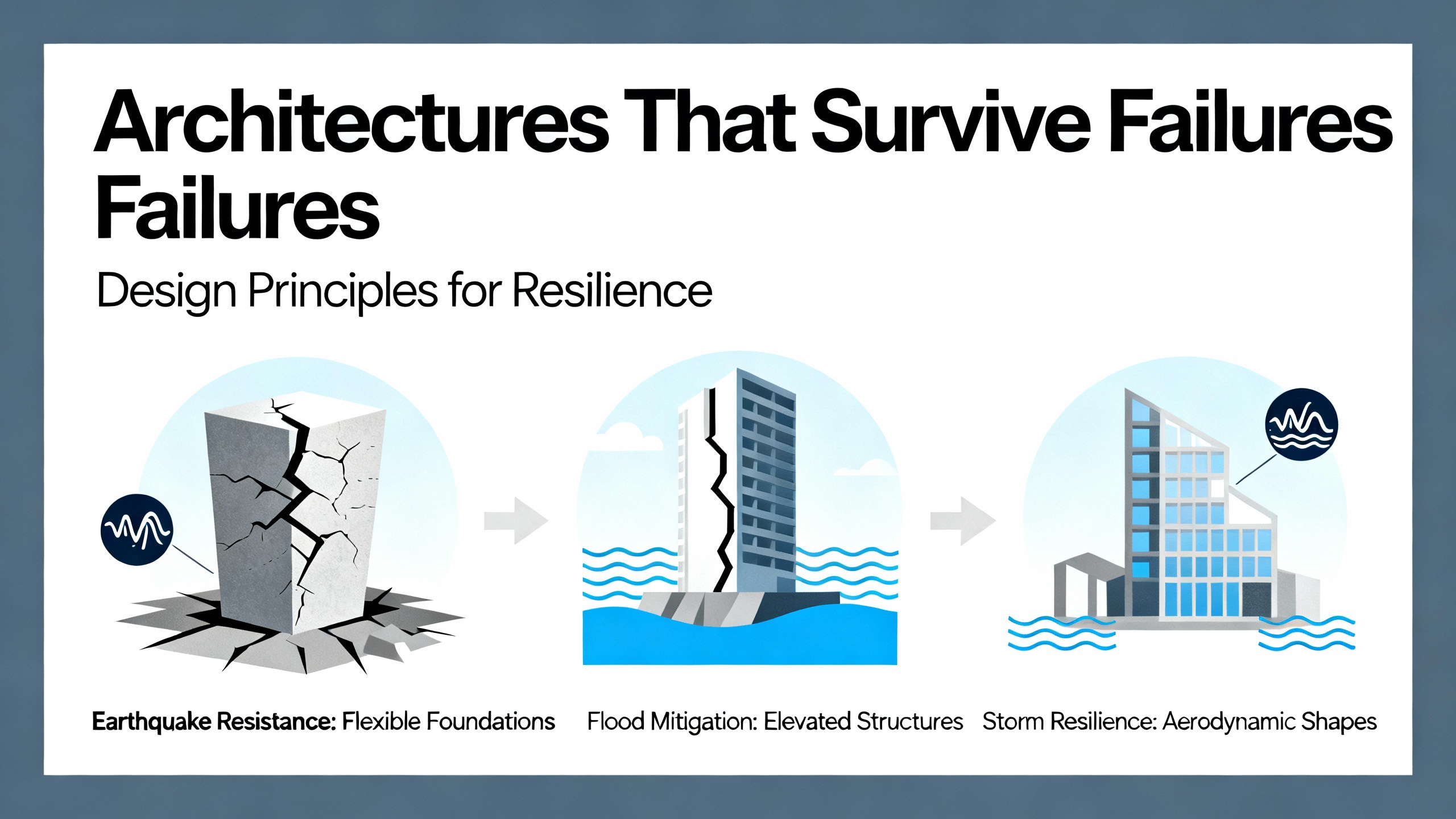
Not all redundancy is equal. Data from Maverick Power and Vaultas, along with Microsoft Azure and Cycle’s design guidance, show that the pattern matters as much as the hardware count.
Commonly useful configurations:
N+1: One extra UPS, rectifier, or cooling unit beyond what is required. A strong baseline for most plants and control rooms.2N: Two fully independent power and control paths that can each carry the full critical load—often justified for Tier III/IV‑style data centers and large hospitals.- Active‑active: Multiple components share load in normal operation (for example, two UPS strings at 50% load each).
- Active‑passive: One unit runs; another mirrors state and takes over on failure (typical for PLC pairs).
A nuance: cloud‑style multi‑region patterns described by Cycle and Microsoft do not map one‑for‑one to plant‑floor controls, but the underlying principle of independent failure domains still applies. Separate controller racks, physically separated cable routes, and independent UPS feeds are the plant equivalent of “different zones or regions.”
JD Solomon’s “Four Horsemen” framework is a useful sanity check: as you add redundancy, watch complexity, independence, failure propagation, and human error. Two identical units on the same bus, in the same cabinet, fed from the same breaker, are not independent redundancy.
Operating and Governing Redundant Systems
Even well‑designed redundancy fails if it is never tested or maintained.
Based on experience and guidance from ACE, ISA, JD Solomon, and Apps Associates, I recommend treating redundant power and control as a living system with clear operating practices:
- Testing: Perform scheduled failover drills for UPS, ATS, PLC pairs, and network paths—at least annually for low‑risk sites, quarterly for hospitals, tunnels, and large data centers. Prove that loads stay up and controls remain stable.
- Preventive maintenance: Maintain both duty and standby equipment. Redundant power supplies, batteries, fans, and I/O cards must be inspected, exercised, and replaced on schedule, not “when we get around to it.”
- Run‑books and training: Document exactly how to respond to controller or UPS failures. Redundant PLCs add steps; a rushed, untrained intervention can turn a minor fault into a plant‑wide trip.
- Managed coverage: For public agencies and lean industrial teams, managed services models like those described by Apps Associates can remove “single expert” risk and keep 24/7 eyes on redundancy health.
If one hour of outage costs $100,000.00 and a robust N+1 / 2N architecture plus testing program costs $250,000.00 more than a bare‑bones design, two avoided incidents over the life of the system pay for the entire investment.
For critical infrastructure, that is usually the easiest business case in the facility.
References
- https://www.cisa.gov/resources-tools/resources/improving-emergency-communications-resiliency-through-redundancies
- https://extapps.ksc.nasa.gov/reliability/Documents/Preferred_Practices/3003ksc.pdf
- https://eiscouncil.org/redundancy-critical-infrastructure/
- https://www.isa.org/intech-home/2021/june-2021/features/under-the-hood
- https://3laws.io/redundant-systems-enhancing-reliability-fault-tolerance/


 Videos
 News
News Applications







Leave Your Comment