Industrial and commercial power systems live and die by the quality of their weakest link. In a facility where an ICS Triplex Trusted platform, UPS plant, and inverter-based backup all sit between the utility and your critical loads, that weakest link is rarely a circuit breaker or a battery string. More often, it is an invisible decision made much earlier: which distributor you trust to source, qualify, and support the electronics and power equipment you build your system around.
Speaking as a power system specialist who has had to explain multi-hour outages to executives in rooms that felt far too quiet, I can say this bluntly. You cannot design a resilient power architecture and then feed it through a fragile supply chain. The entire ICS Triplex Trusted and UPS ecosystem only works when the distribution partners behind it are engineered for the same reliability expectations as the hardware itself.
This article looks at what makes a distributor “trusted” in the context of ICS Triplex-class platforms, UPS systems, inverters, and power protection equipment. It draws on research on electronics supply chains, distribution strategy, and supplier relationships from sources such as McKinsey, Harvard Business Review, Altium, Brightpath Associates, and multiple specialized distributors, and translates those insights into practical guidance for engineers, facility managers, and procurement teams.
Critical Power Systems Depend On More Than One Line Diagram
In a modern facility, the electrical backbone combines switchgear, transformers, and UPS units to keep power flowing under all reasonable contingencies. Consulting engineering research notes emphasize that switchgear and transformers manage and distribute energy, while the UPS acts as the immediate shield between disturbances and sensitive loads. A UPS is defined as equipment that converts incoming AC to DC to charge batteries, then inverts that stored DC back to AC during outages or disturbances. It provides short-term emergency power and filters interruptions and voltage fluctuations that would otherwise trip or damage servers, industrial control systems, medical equipment, or building infrastructure.
An ICS Triplex Trusted platform or any other high-integrity control or protection system sits directly on top of this power foundation. If your UPS rides through a utility event but the control platform fails because of a counterfeit component or a marginal PCB, your end-users will not care that the one-line “looked right.” They will remember that their line was down.
Research on electronics manufacturing shows how fragile the design and sourcing pipeline can be. One study on PCB supply chain management reports that projects average almost three board re-spins, and each re-spin can cost around $46,000. The root cause is often poor visibility into component availability and lifecycle, forcing risky part choices that later fail due to shortages or obsolescence. Those same dynamics apply to modules, I/O cards, and protection assemblies used in ICS Triplex Trusted environments. When your distributor does not have a resilient supply chain, you inherit every one of those risks.
What “Trusted Distributor” Really Means In Critical Power
The phrase “trusted distributor” gets used loosely in marketing brochures. In the context of ICS Triplex Trusted systems, UPS plants, and industrial power protection, it has a much more specific meaning. A trusted distributor is an organization whose processes systematically reduce the probability that quality, availability, or information failures in the supply chain will turn into power system failures in your plant.
Quality, Authenticity, And Compliance
Counterfeit and substandard parts are not a theoretical annoyance; they are a reliability hazard. Research on electronic components cites a 35 percent year-over-year increase in counterfeit components reported by a leading industry watchdog, and the U.S. Chamber of Commerce has estimated that counterfeits cost up to $500,000,000,000 globally across industries. In high-reliability sectors such as aerospace, defense, automotive, and medical, there have been documented safety incidents linked back to faulty or suspect components. If you extend that to mission-critical industrial power, the implication is clear. You cannot afford a questionable relay, current sensor, or power module anywhere near your ICS Triplex Trusted control and protection layers.
Franchised distributor relationships are one of the strongest structural defenses against this risk. In a franchised model, distributors have formal, authorized agreements with manufacturers. They source directly from credible production lines and operate under quality management systems that test parts before delivery. Sourceability’s analysis explains that these franchised networks not only reduce counterfeit exposure, they also streamline procurement, shorten lead times, and stabilize supply.
Quality credentials matter here. Respected distributors highlight certifications such as ISO 9001:2015 for distribution processes and RoHS and REACH compliance to make sure products meet environmental regulations. For sectors such as aerospace and defense, standards like AS9120 and AS6081 for distributors are called out in supply chain guidance as key protections against counterfeit and substandard components.
In practice, when you evaluate a candidate to act as an ICS Triplex Trusted distributor, you want to see evidence of structured quality and authenticity controls rather than general assurances. Research-based recommendations include asking how they validate traceability back to the manufacturer, which third-party or industry certifications they hold, and how they test and quarantine suspect lots. Some distributors, like those profiled in industry case studies, maintain large, organized warehouses where inventory is stored safely and tracked rigorously, helping customers offload warehousing risk.
Authorized Versus Independent Channels In Practice
Not every situation calls for the same kind of distributor. Industry guidance differentiates between authorized franchised distributors, independent distributors, and hybrid distributors that carry both franchised and non-franchised lines. Articles on distribution strategy suggest that manufacturers should maintain relationships with both authorized and independent distributors. Authorized partners handle standard, franchised supply. Independent distributors can be critical in times of shortage or when long-term support is needed for hard-to-find parts.
For ICS Triplex Trusted and UPS projects, this typically translates to using franchised distributors for core, safety-, and power-critical components where authenticity and data alignment are non-negotiable. Independent channels may be engaged, with care, to solve specific obsolescence or allocation challenges, but only when backed by robust testing and traceability. Thought leaders in the semiconductor industry warn that buyers must navigate complex combinations of franchised, authorized, independent, hybrid, and third-party suppliers, and that comparing these on lead time, price, and reputation requires discipline.
The goal is not to exclude independent distributors entirely. It is to build a distribution ecosystem where the highest-risk components for your ICS Triplex Trusted, UPS, and inverter platforms are protected by strong authorized relationships, while carefully vetted independent channels provide flexibility at the edges.
How Trusted Distributors Show Up In Daily Operations
Trusted distributors do more than ship boxes. Simcona, a mid-sized U.S. distributor profiled in a recent article, describes its “Goldilocks” model. The company positions itself as large enough to offer scale yet small enough to remain flexible. It invests in dedicated inside and outside sales representatives who know each account, uses a roughly 50,000 square foot distribution warehouse for organized, safe inventory storage, and offers services such as blanket orders, inventory management, and forecasting. Customers emphasize relationship quality as the main value driver, not just price.
This kind of model matters for ICS Triplex Trusted deployments for two reasons. First, blanket orders and inventory management agreements stabilize pricing and reduce lead times for critical spares. Second, a distributor that actively forecasts last-time buys, shortages, and risk on your behalf can warn you about vulnerabilities in your ICS Triplex Trusted ecosystem before they turn into outages.
Supply Chain Resilience For ICS Triplex And UPS Ecosystems
Resilience has become the organizing principle for modern electronics supply chains. Brightpath Associates, in a September 12, 2024 article on electronic supply chain resilience, defines resilience as the ability to withstand and recover from disruptions such as geopolitical tensions, natural disasters, and sudden demand shifts. The article argues that resilience is now a core competitive advantage in fast-changing, innovation-heavy markets.
When you apply that lens to ICS Triplex Trusted, UPS, and inverter supply chains, several themes stand out.
Diversification Without Chaos
Multiple sources, not just multiple part numbers, are required. Brightpath Associates and other supply chain specialists consistently warn about overreliance on a single supplier or region. The Rand Technology analysis on electronics sourcing calls supplier diversification “a key to risk mitigation,” noting that companies should onboard alternative suppliers across multiple regions, build strategic partnerships with flexible and resilient suppliers, and use analytics to assess performance and risk profiles.
For ICS Triplex Trusted and UPS ecosystems, diversification can occur at several levels. You may qualify more than one distributor for specific categories of components or assemblies. You may also use distributors that themselves maintain multiple franchised lines or strong connections to multiple original manufacturers. Semiconductor-focused research from McKinsey shows that when manufacturers expanded from a very small number of distributors to a carefully selected set, distribution revenues increased by more than 12 percent in one case, with better alignment between distributor roles and product portfolios.
The key is controlled diversification. Studies on PCB supply chains recommend dual sourcing and inventory buffering for high-risk items, but they also warn against introducing so much channel complexity that quality and governance become unmanageable. In practice, that means segmenting your ICS Triplex Trusted and UPS Bill of Materials into what one electronics sourcing guide calls strategic, tactical, and operational suppliers. Strategic items, such as core controllers and critical power modules, warrant close, frequent reviews and redundancy in supply. Lower-risk items can be handled with less intensive oversight.
Data-Driven Visibility From Plant Floor To Global Suppliers
Modern channel management research describes data as the “lifeblood” of successful distribution ecosystems. Cloud-based channel automation providers emphasize that accurate, timely analytics allow vendors and distributors to identify top-performing partners, optimize incentives, and improve forecasting and inventory management.
In electronics specifically, Altium’s work on supply chain management argues that the root cause of expensive redesigns is outdated or fragmented visibility into component supply. Best practice is to embed up-to-date supplier and component data directly into design tools through centralized supply chain systems. This lets engineers make risk-aware selections and reduces late design changes.
For ICS Triplex Trusted architectures, that translates into two practical requirements. First, your distributor should be able to provide live or near-real-time data on availability, lead times, lifecycle status, and compliance for the components and assemblies you depend on. Second, that data should be integrated into your own engineering and procurement workflows, not stuck in spreadsheets or email threads. Some distributors and SRM platforms offer portals that centralize specifications, certifications, quotes, and real-time order tracking, with performance dashboards tracking metrics such as delivery variance, defect parts per million, and emergency response times. Case studies show that such portals can reduce shortages and follow-up emails dramatically while improving inventory accuracy.
Inventory Strategies: Hubbing, Bonding, And Distributed Warehousing
Resilience is not just about who you buy from; it is also about where your inventory lives. Rand Technology points to hubbing and bonding programs as critical tools for strengthening supply chain resilience. These programs position inventory strategically to improve visibility and control, achieve cost efficiency through stock placement, and give organizations flexibility to respond quickly to demand fluctuations.
Logistics research from Ware2Go describes a similar concept in the context of ecommerce and B2B distribution. Distributed warehousing places inventory in multiple facilities closer to end customers, enabling one to two day delivery via ground transport while reducing single points of failure. Although these examples focus on consumer goods, the underlying principle carries over to ICS Triplex Trusted and UPS spares. Locating spare modules, controllers, and power electronics in multiple, strategically chosen warehouses can dramatically cut the time to recover from a failure, especially when shipping during storms or regional disruptions.
There is a tradeoff. Distributed inventory ties up more capital and increases inbound and storage costs. One study notes that each additional facility can require a sizable upfront increase in inventory. Trusted distributors will be transparent about these tradeoffs and work with you to model optimal stocking strategies. The objective should be to match the redundancy level of your ICS Triplex Trusted architecture with a compatible redundancy level in your supply chain.
Sustainability And Ethics As Reliability Factors
Supply chain articles increasingly treat sustainability and ethical sourcing as business imperatives, not public relations add-ons. Rand Technology highlights environmental and social responsibility, noting that ethical sourcing enhances brand reputation and supports long-term viability. Sourceability underscores that franchised relationships and credible manufacturing partners improve visibility all the way back to raw materials, which is crucial when only about 45 percent of organizations can see beyond their first-tier suppliers, according to a McKinsey analysis.
For ICS Triplex Trusted and UPS systems, sustainability intersects with reliability in subtle ways. Distributors that prioritize responsible sourcing and environmental compliance are less likely to rely on opaque supply chains riddled with quality and compliance risks. Over the expected decades-long life of a critical power installation, those upstream decisions significantly influence your exposure to future recalls, regulatory changes, and reputational damage.
Evaluating A Distributor For ICS Triplex-Class Power Projects
Selecting a distributor for ICS Triplex Trusted and critical power equipment is fundamentally a risk management decision. Supplier relationship research argues that the biggest supply risk in electronics manufacturing is often not material scarcity but how buyers engage with suppliers. Companies that treat key suppliers as extensions of their team can avoid more than $2,000,000 per year in disruption-related losses and secure priority access to inventory and new technology.
A practical evaluation framework spans quality and performance metrics, technical capabilities, and governance and trust.
Performance Metrics That Actually Matter
Electronics sourcing experts recommend tracking on-time delivery, defective parts per million, emergency order response time, and lead-time variance. High-performing suppliers are often expected to achieve on-time delivery above about 98 percent and defect rates below roughly 500 parts per million. Supplier scorecards are widely used to monitor these metrics. Studies show that well-designed scorecards can push on-time delivery to 98 percent or better while reducing delays significantly.
For an ICS Triplex Trusted and UPS ecosystem, you can sharpen these metrics even further. On-time delivery should be measured not just on ordered quantities, but on the readiness of complete functionally tested assemblies when commissioning or outage windows are scheduled. Lead-time variance is critical. A few extra days of delay on a commodity component may be tolerable; a surprise delay on a protection relay or triplicated controller card can force you to extend a risky run or postpone a critical maintenance window.
A concise way to think about this is to differentiate between life-safety or uptime-sensitive components and everything else. The former category deserves tighter delivery and quality targets, more frequent performance reviews, and more robust contingency planning.
Technical And Engineering Depth
Trusted distributors differentiate themselves through engineering support. Sourceability notes that authorized franchised distributors can provide technical and design assistance, helping customers choose appropriate components, optimize performance and cost, and respond quickly to emerging market trends. Simcona describes specialized internal teams for logistics, forecasting, and engineering, including help identifying alternative parts to reduce cost or lead time.
For ICS Triplex Trusted and power protection systems, the most valuable distributors are those who understand how upstream component choices ripple into power integrity, electromagnetic compatibility, and long-term serviceability. Articles on power distribution networks in PCBs emphasize that delivering clean, stable voltage depends on maintaining low impedance over a wide frequency range, placing decoupling capacitors close to IC power pins, and designing robust power and ground planes. Errors here can cause noise, EMI, and ultimately system failures.
A distributor that collaborates with your design team can flag parts at risk of obsolescence, suggest components with better availability, or recommend layout strategies for high-current traces and PDNs based on reference designs. PCB supply chain research shows that early and continuous collaboration between engineering and procurement reduces expensive redesigns and time-to-market delays. In ICS Triplex Trusted environments, that translates into fewer unexpected redesigns of control or protection boards and more predictable qualification cycles.
Governance, Trust, And Relationship Health
Harvard Business Review and Deloitte both frame trust as a central pillar of supply chain resilience. Trust in supplier relationships means confidence that partners will act fairly, meet commitments, and share critical information instead of exploiting vulnerabilities during crises. Low-trust, purely transactional sourcing characterized by aggressive price squeezing and risk shifting leads suppliers to under-invest, withhold information, and prioritize other customers in times of scarcity.
Multiple studies converge on similar recommendations. Increase transparency by sharing demand forecasts, inventory positions, and strategic plans with key suppliers. Align incentives and share risk through contracts that balance volume commitments, cost-sharing for capacity investments, and fair allocation of scarce supply. Treat critical suppliers as strategic partners, involving them early in design and innovation rather than treating them as interchangeable vendors.
Supplier relationship research quantifies the upside. Strategic partnerships can cut supply chain risk by about 37 percent. Proactive communication can prevent around 68 percent of component quality issues. Long-term contracts can improve pricing by 12 to 15 percent, and supplier scorecards combined with regular reviews can push on-time delivery above 98 percent. Importantly, about 83 percent of procurement leaders say they prioritize relationship-building over pure price haggling in critical categories such as integrated circuits and printed circuit boards.
For an ICS Triplex Trusted distributor, that kind of relationship health shows up in behaviors such as early warnings on shortages or obsolescence, proactive suggestions for alternatives, and willingness to hold safety stock for your most critical items.
A Simple Evaluation Table For Critical-Power Distributors
The following table summarizes key evaluation dimensions and why they matter for ICS Triplex Trusted and UPS ecosystems.
| Dimension | What To Look For | Why It Matters For ICS Triplex And UPS Reliability |
| Quality and authenticity | ISO-certified systems, franchised lines, strong counterfeit prevention and testing | Reduces risk of silent failures in control, protection, and power modules |
| Performance metrics | On-time delivery, defect rates, emergency response, lead-time variance | Aligns supply reliability with outage windows and uptime commitments |
| Engineering and design support | Early BOM review, obsolescence insight, PDN and component guidance | Cuts rework, ensures components remain available over system life |
| Inventory and warehousing | Hubbing, bonding, distributed warehouses, blanket orders | Shortens recovery times, stabilizes pricing, avoids line-down events |
| Digital visibility | Portals, real-time tracking, integrated data feeds | Enables proactive risk management instead of reactive firefighting |
| Governance and trust | Transparent communication, fair contracts, joint planning | Encourages suppliers to invest in your success and prioritize your critical needs |
| Sustainability and compliance | RoHS and REACH alignment, ethical sourcing, environmental initiatives | Reduces long-term regulatory, reputational, and quality risks |
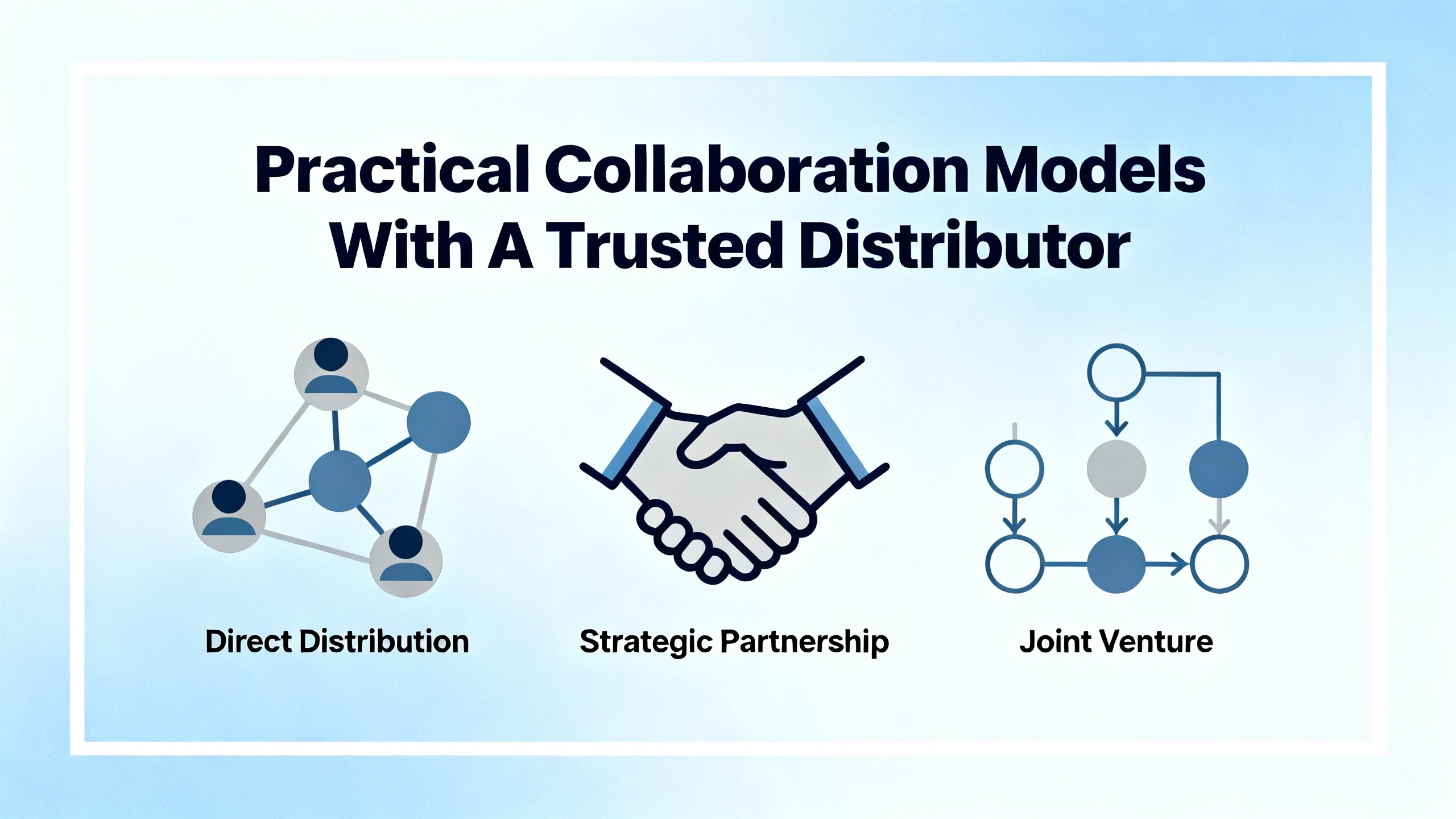
Practical Collaboration Models With A Trusted Distributor
Having a trusted distributor is not enough; you must work with them in a way that actually transfers resilience into your ICS Triplex Trusted and UPS projects. Research on forging stronger distributor partnerships and supplier relationship management offers several practical patterns.
During design and specification, involve the distributor early. One electronics article recommends sharing complete Bills of Materials, not just a shortlist of parts, so distributors can advise on component choices, highlight parts at risk of obsolescence, and suggest options with better supply chain resilience. PCB supply chain studies show that embedding live supplier and component data directly into design tools helps engineers avoid parts that are likely to become bottlenecks.
For ICS Triplex Trusted projects, this means bringing your distributor into discussions about which PLC, I/O, protection relays, communication modules, and power electronics will be standard across your fleet. Several industry examples describe how suppliers upgraded production equipment or modified test processes once they understood upcoming demand and quality expectations, leading to double-digit reductions in defects and scrap.
During commissioning and rollout, use the distributor’s logistics and forecasting capabilities. Distribution network research shows that merchants and manufacturers benefit from placing inventory near demand, enabling faster delivery while reducing shipping costs and emissions. For a critical power project, your distributor can help stage spares and replacements near key facilities, using blanket orders and planned releases to balance cash flow with readiness.
In day-to-day operations, treat quality problems and delays as shared issues. Supplier relationship guidance recommends flagging concerns quickly, tracking response times, and developing solutions collaboratively via audits and structured escalation processes. Case studies demonstrate how this approach has reduced scrap and recurring issues significantly while eliminating substantial recurring return costs in electronics contexts.
The same logic applies to your ICS Triplex Trusted and UPS fleet. When a field failure occurs, your first question to your distributor should not be, “Why did you ship this?” but “How do we jointly prevent this class of issue?” Over time, that mindset builds a feedback loop where field data informs sourcing and quality decisions.
Common Pitfalls In Distributor Selection For Critical Power
Several recurring mistakes appear across the research and in practical projects.
One is treating distributors as interchangeable based solely on annual price. McKinsey’s semiconductor research warns that manufacturers often take a narrow, margin-only view and miss the broader value distributors create in reaching smaller customers, supporting mature products, and providing technical expertise. In ICS Triplex Trusted environments, choosing a slightly cheaper but less capable distributor can increase total lifecycle cost through more downtime, redesigns, and expedited freight.
Another pitfall is underestimating the risk of counterfeit or gray-market parts, particularly when budgets are tight or lead times are long. Counterfeit statistics and documented incidents demonstrate that the exposure is real, and that high-reliability applications are not immune. Cheap parts that compromise a triplicated safety system or a UPS transfer circuit are never a bargain.
A third is ignoring relationship and governance factors. Harvard Business Review and JPMorgan analysis both argue that trust-based supplier networks recovered faster from pandemic shocks and that well-designed accounts payable and supply chain finance programs can improve supplier liquidity and reduce disruptions. If your contracts and day-to-day behaviors signal that you will shift all risk to your distributor and renegotiate opportunistically, you should not expect them to invest heavily in your long-term resilience.
Brief FAQ
What makes a distributor truly “trusted” for ICS Triplex Trusted and UPS projects?
In this context, “trusted” means more than responsive customer service. It means a distributor with franchised or otherwise well-governed manufacturer relationships, strong quality and counterfeit-prevention systems, reliable on-time performance, deep engineering support, and governance practices that emphasize transparency and mutual risk sharing. Their processes should measurably reduce the probability that supply chain issues become downtime events in your power system.
How many distributors should we use for ICS Triplex Trusted and critical power components?
Research favors a balanced approach. Overreliance on a single distributor or region increases risk, while an uncontrolled number of partners creates complexity. Semiconductor case studies suggest that expanding from a small, misaligned distributor base to a carefully selected group tailored by region and product can increase revenue and coverage. For critical power, a practical pattern is one or two primary franchised distributors for core items, backed by one or more vetted independents for hard-to-find parts, all governed by clear roles and performance metrics.
How early should we involve distributors in ICS Triplex Trusted design?
The earlier, the better. Electronics supply chain studies show that embedding supplier and component insight into design from the start reduces expensive redesigns and delays. Involving distributors when you define control platforms, I/O, protection functions, and UPS interfaces allows them to highlight at-risk parts, propose more sustainable options, and align their inventory and capacity plans with your roadmap.
Closing Perspective
Critical power systems are built from copper, silicon, and software, but they are sustained by relationships, data, and discipline. An ICS Triplex Trusted architecture backed by a resilient, high-integrity distribution network behaves very differently from one fed through fragile, transactional supply chains. If you treat your distributor as a strategic reliability partner, design and procurement decisions will start to reinforce the same goal your UPS and protection schemes already pursue every day: keeping power clean, continuous, and predictable when it matters most.

References
- https://hbr.org/2022/11/3-ways-to-build-trust-with-your-suppliers
- https://www.allpcb.com/allelectrohub/designing-power-distribution-networks-pdns-for-high-speed-digital-circuits
- https://resources.altium.com/p/electronics-supply-chain-management-best-practices
- https://brightpathassociates.com/building-a-resilient-supply-chain-for-electronics/
- https://computermarketresearch.com/successful-channel-partnership-elements/
- https://www.csemag.com/how-to-create-a-resilient-robust-electrical-distribution-system/
- https://www.eetimes.com/how-to-forge-stronger-distributor-partnerships/
- https://electroniccomponent.com/how-to-build-a-strong-relationship-with-your-electronics-supplier/
- https://www.globaltrademag.com/how-to-build-a-resilient-supply-chain-in-electronics-manufacturing/
- https://www.propelapps.com/blog/supply-chain-trust


 Videos
 News
News Applications






Leave Your Comment