In industrial and commercial power systems, the conversation about reliability often centers on big-ticket assets: switchgear, UPS systems, inverters, and protection relays. Yet in the field, what quietly makes or breaks uptime is far more granular: the specific parts you put into your control panels and how you source them. When those parts include Honeywell industrial components, the difference between buying from a trusted distributor and “whoever has it in stock” can show up as the difference between a routine maintenance window and an unplanned outage that takes a line down for half a day.
As a power system specialist and reliability advisor, I have seen otherwise well-designed systems undermined by inconsistent parts sourcing. The technology stack may follow guidance from NIST’s industrial control system security publications and ISA/IEC 62443, the panels may be built to UL 508A and NEC Article 409, yet a single questionable replacement part can quietly erode short-circuit ratings, safety margins, and even cyber resilience. Understanding what “trusted distributor” really means in the context of Honeywell parts for industrial control systems is now a core reliability discipline, not a purchasing afterthought.
Industrial Control Systems Depend on Every Component
Standards such as NIST SP 800-82 describe industrial control systems as the nervous system for critical processes in power, water, transportation, and manufacturing. These systems connect sensors, controllers, actuators, and human–machine interfaces into a real-time environment where safety and availability outrank almost everything else. ISA/IEC 62443 frames this as an industrial automation and control system security lifecycle that spans design, implementation, operation, and continuous improvement. What both perspectives share is the recognition that control systems are cyber-physical: a single change in a low-level component can have process, safety, and security consequences.
Industrial control panels are where these components come together. Guidance synthesized from UL 508A, NFPA 79, and NEC Article 409 defines a control panel as an assembly of power and control-circuit devices—breakers, contactors, PLCs, power supplies, terminal blocks, and wiring—that manage industrial equipment. The Siemens industrial control panel guidelines emphasize appropriate short-circuit ratings, correct overcurrent protection, proper wiring practices, and environmental protection via suitable enclosures. C3 Controls describes panels as centralized hubs where enclosures, wiring, PLCs, HMIs, power supplies, breakers, relays, transformers, and terminal blocks must be properly specified, installed, and maintained.
All of that design rigor assumes that the parts installed in the panel match the specified ratings, third-party approvals, and manufacturer’s instructions. When you specify a Honeywell sensing device, switch, or other control component with particular voltage, current, and environmental ratings, the entire chain of calculations—short-circuit current rating, conductor sizing, thermal management—depends on that part being exactly what the drawings say it is. That is where distribution quality ceases to be a purchasing detail and becomes an engineering concern.

What “Trusted Distributor” Means for Honeywell Industrial Parts
“Trusted distributor” is often used as marketing shorthand, but in an industrial control system context it has a concrete meaning. It describes a supply partner whose processes align with the reliability, safety, and cybersecurity expectations set by standards such as NIST SP 800-82 and ISA/IEC 62443, and with panel-construction rules such as UL 508A and the NEC.
At the most basic level, a trusted distributor of Honeywell parts provides verified authenticity and traceable sourcing. The part you receive must be the part Honeywell designed, with the correct approvals, firmware revisions (if applicable), and accompanying documentation. This is essential for industrial control panels that must demonstrate conformity to UL 508A, where the use of listed or recognized components in accordance with manufacturer instructions underpins the panel’s short-circuit rating and safety evaluation. The Siemens-based guidance stresses that short-circuit current rating for the panel is determined starting from the lowest-rated component; unknowingly substituting a look-alike device with a lower rating (or no rating) can pull the entire panel out of compliance.
Trusted distribution also means lifecycle awareness. The Andrews Cooper guidance on selecting an automation controls platform highlights how obsolescence of general-purpose hardware and operating systems, such as the end-of-support for common desktop platforms, forced costly application rewrites and even led some operators to remove systems from the network to dodge security issues. Industrial controller vendors generally mitigate this with extended support and planned migration paths. The same principle applies to Honeywell field devices and control components: a reliable distributor should proactively communicate lifecycle changes, offer equivalent or migration options, and help you avoid the trap of hunting obsolete hardware on secondary markets when a panel fails.
Finally, in the era of rising ICS-focused cyber incidents as documented by NIST SP 800-82 Rev. 2 using ICS-CERT data, trusted distribution acquires a security dimension. ISA/IEC 62443’s emphasis on risk management, zones and conduits, and foundational requirements such as system integrity and resource availability implies that supply chain trustworthiness is part of the security baseline. A distributor that understands industrial cybersecurity concerns, keeps precise records of part origins, and avoids gray-market channels helps reduce the risk of counterfeit or tampered hardware entering safety-critical environments.
Authenticity, Certification, and Panel Compliance
From a control panel perspective, the authenticity of Honeywell components is not only a question of quality; it is a compliance requirement. UL 508A, NEC Article 409, and related standards presume that installed components are those referenced in the panel documentation, with the specified approvals, creepage and clearance distances, and thermal performance. Siemens’ industrial control panel guidance emphasizes that short-circuit current ratings must be marked and that these ratings depend on known, tested combinations of protective devices and downstream components.
If a replacement relay, sensor, or switch branded as Honeywell is in fact a counterfeit or an obsolete variant, several things can silently go wrong. The real short-circuit withstand capability may be lower than assumed, undermining the panel’s marked rating. The component may not meet the same pollution degree or enclosure ratings assumed in creepage and clearance calculations, threatening dielectric withstand in damp or dusty environments. If a field device deviates from the documented control circuit design, troubleshooting and maintenance become slower and more error-prone, especially when another technician inherits the system years later.
A trusted distributor reduces this risk by providing complete and consistent documentation with each order, including up-to-date data sheets, declarations of conformity, and clear part-number cross-references when Honeywell introduces successor products. This makes it far easier to maintain panel documentation, as required by Siemens’ and UL 508A’s guidance on nameplates, schematics, bills of material, and terminal diagrams. In practice, that means your on-site panel drawing set continues to match reality after years of maintenance and modifications, which is vital during inspections, audits, and fault investigations.
Performance Matching for Power Quality and UPS Integration
Power-critical systems—UPS units, static transfer switches, inverters, and power distribution panels—are particularly sensitive to component substitution. Vista Projects’ guidance on planning industrial control panels stresses that power supply design and protection must consider total load, power quality, and disturbance handling, and explicitly recommends using uninterruptible power supplies to ride through disturbances. In a panel coordinating a UPS and an inverter, even a modest change in control or protection components may alter how the system responds to undervoltage, overcurrent, or frequency deviations.
When Honeywell parts are specified as part of the sensing and control layer in these power systems, substituting devices without proper verification can distort trip curves or change control timing enough to impact coordination with upstream and downstream protection. For example, replacing a temperature or pressure transmitter with a unit that has different response characteristics or range scaling can skew the behavior of protective logic written in a PLC or relay. While NIST SP 800-82 emphasizes the need to treat availability and safety as top priorities in ICS, those goals assume that field data is trustworthy and consistent with the original design.
A trusted distributor supports performance matching by maintaining clear mappings between original Honeywell part numbers and approved alternatives, and by flagging when a seemingly compatible substitute carries different approvals, ratings, or performance characteristics. That kind of diligence helps you keep your short-circuit coordination, thermal design, and protection settings aligned with real-world behavior, which is essential when a UPS or inverter must ride through disturbances instead of disconnecting prematurely.
Where Honeywell Parts Fit Inside Control Panels and Power Protection Chains
Industrial control panel references from c3controls and Vista Projects show how many distinct component categories must work together inside a panel: enclosures matched to the environment, correctly sized and organized wiring, PLCs or controllers, HMIs, power supplies, circuit breakers, relays, transformers, and terminal blocks. Xpect Solutions’ guidance on choosing industrial control panels adds the lens of features such as alarms, data logging, PLC-based automation, and IoT connectivity, all while maintaining compliance with NEC and UL 508A.
Honeywell components typically occupy the sensor, switching, and sometimes interface layers in this hierarchy. In power distribution and protection systems, Honeywell parts may provide position feedback for disconnects, limit switches for mechanical interlocks, environmental monitoring for panel temperature or humidity, and sometimes elements of safety interlocking. In process-oriented facilities, Honeywell devices may provide the primary process measurements—pressure, flow, level, or temperature—that feed PLCs, safety systems, and higher-level supervisory control.
NIST’s ICS security guidance emphasizes that ICS differ from traditional IT systems because they directly control physical processes, often with strict real-time and availability requirements. Every sensing or control element is part of a chain that spans from field device through cabling, marshalling, controllers, and networking into HMIs and historization. ISA/IEC 62443 reflects this in its concept of security zones and conduits, where groups of assets with similar risk levels are segmented to limit the spread of incidents. Honeywell field devices, HMIs, and panel components therefore are not simply spare-parts catalog entries; they are elements inside critical zones that must behave predictably if the overall defense-in-depth strategy is to hold.
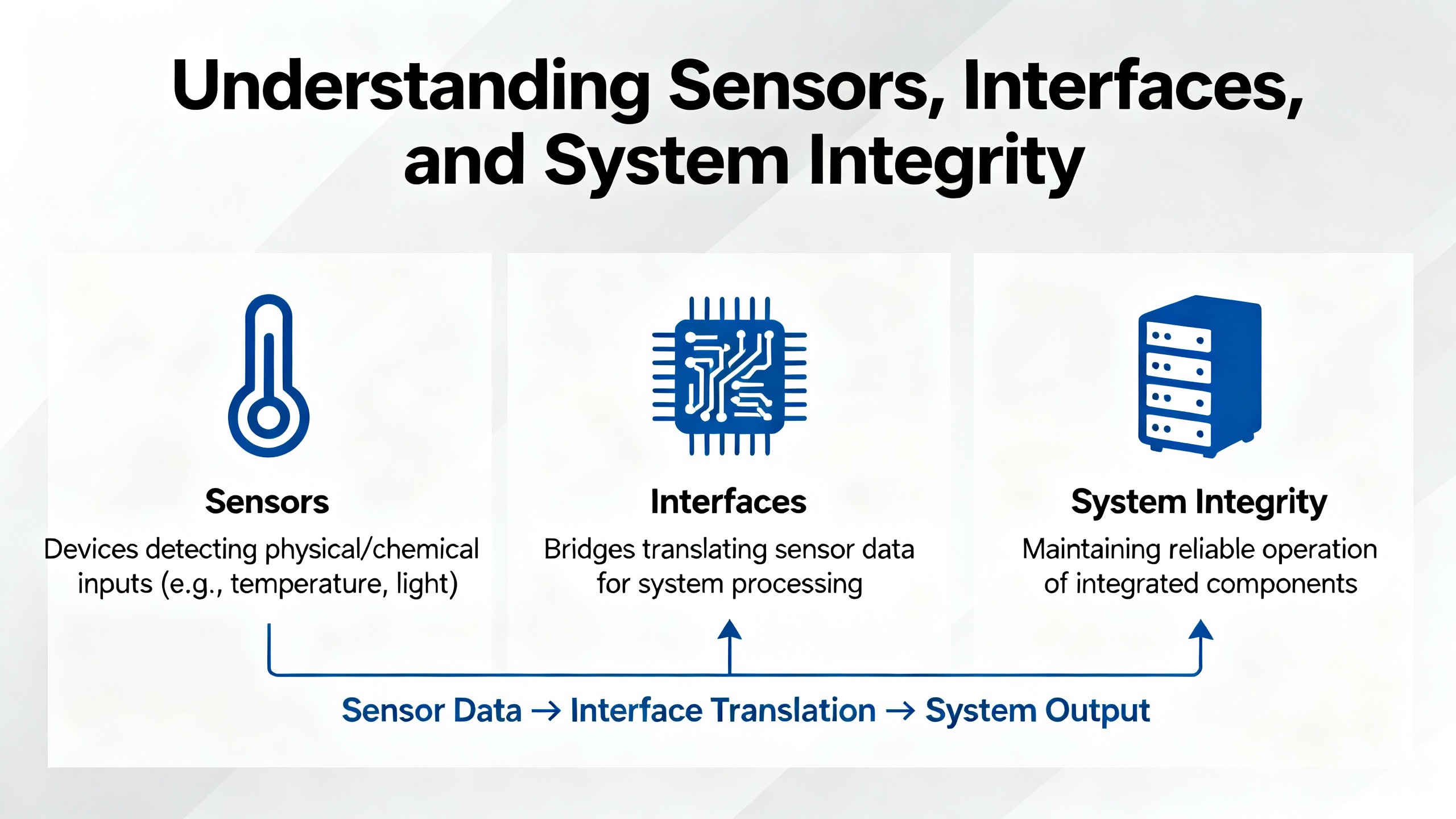
Sensors, Interfaces, and System Integrity
Reliable industrial control begins with accurate sensing and robust operator interfaces. The c3controls overview describes HMIs ranging from simple indicators and pushbuttons to advanced touchscreens, as well as PLCs that act as the “brains” of the control panel. When Honeywell devices provide the contact, proximity, or environmental feedback into these controllers, their accuracy and reliability directly affect the integrity of safety and protection functions.
NIST SP 800-82 highlights that ICS security objectives frequently prioritize human safety, protection of physical equipment and the environment, and availability and reliability of control functions, with data confidentiality a secondary concern compared to typical IT systems. That prioritization assumes that control decisions are based on valid sensor data. Substandard or counterfeit parts in sensing and interfacing roles jeopardize this assumption. A limit switch that fails to trip a safety interlock or an environmental sensor that drifts outside tolerance without alarm can be the root of an incident long before any cyber intrusion occurs.
Trusted distribution for Honeywell sensors and interface devices provides two advantages here. First, it ensures that the devices match the environmental and electrical ratings assumed in panel design, including exposure to dust, humidity, temperature extremes, and vibration as discussed in control panel planning guides. Second, it improves consistency across identical control panels or redundant channels, which matters when an ICS is designed for high-availability operation and uses comparisons between redundant measurements to detect faults.
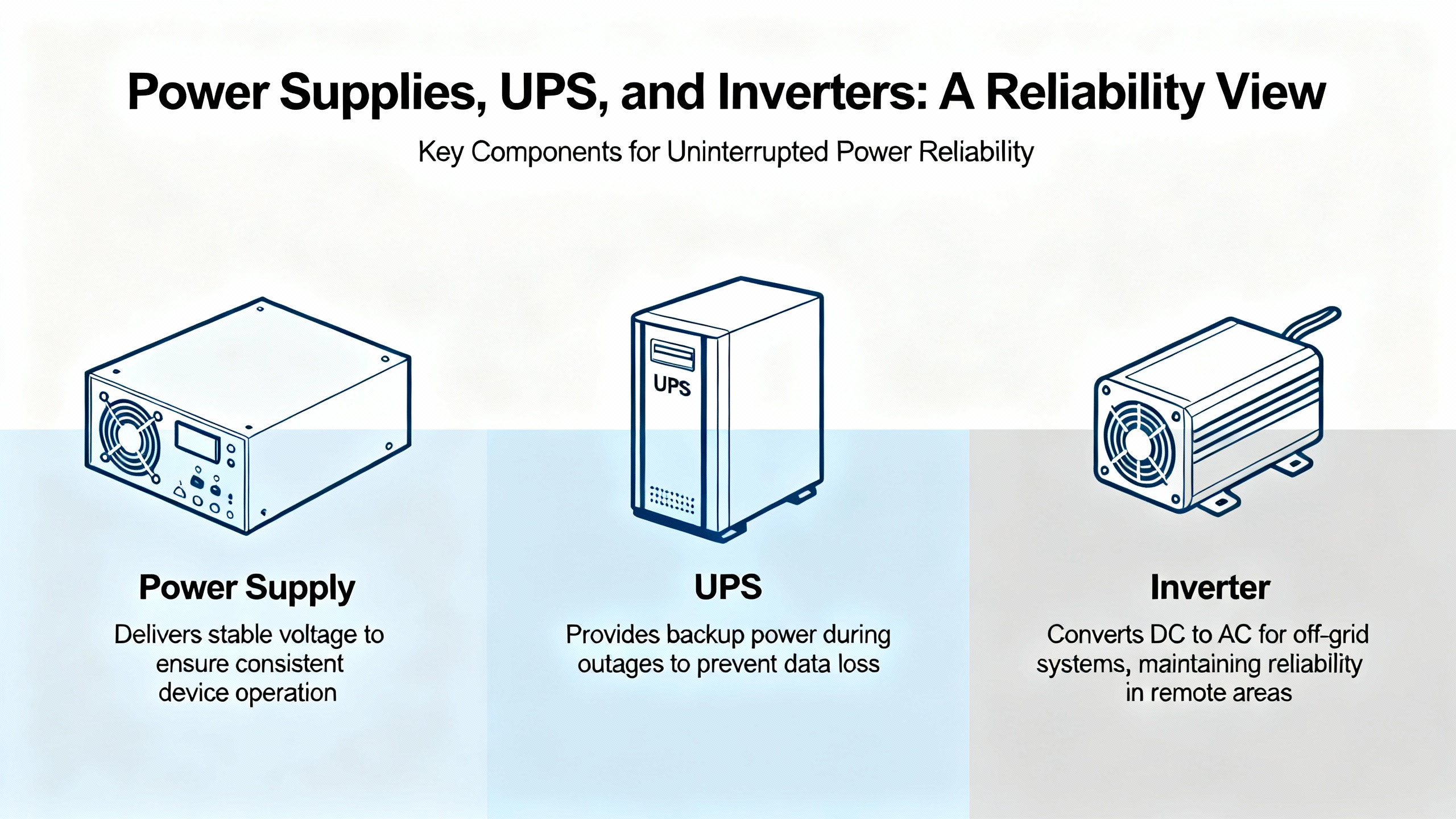
Power Supplies, UPS, and Inverters: A Reliability View
Power supplies and power protection devices are central to control-panel reliability. The Vista Projects guidance on panel planning stresses sizing supplies based on total load, considering power quality, and adding UPS units to maintain control-system operation during disturbances. C3 Controls adds that power supplies must provide and regulate the correct voltage and current for each component, while protection devices such as breakers must disconnect faults to prevent fire or equipment damage.
When Honeywell parts are embedded in this power chain—for example as power monitoring, control inputs to static switches, or environmental protection—they become part of the mechanism that keeps UPS and inverter systems operating as intended. If a UPS system relies on Honeywell-sensed parameters to determine when to transfer load, an out-of-spec replacement part can lead to nuisance transfers or, worse, failure to transfer when it should. In a plant that expects multi-year continuous operation from its UPS, this is not theoretical; it directly impacts mean time between system-level events.
A trusted Honeywell parts distributor supports this reliability view by helping you maintain a consistent bill of materials across similar panels, stocking the specific variants used in your UPS and inverter applications, and understanding how power disturbance events affect component stress. Combined with panel standards that stress proper short-circuit protection, neutral and protective earth separation, and adequate thermal management, consistent parts sourcing closes the loop between design calculations and real-world performance.
Distribution as Part of Cyber-Physical Defense
Industrial cybersecurity literature, including NIST SP 800-82 and ISA/IEC 62443, often focuses on network segmentation, secure remote access, and control-system hardening. The NIST guidance notes a clear upward trend in reported ICS-related cyber incidents, particularly in sectors such as energy, water, and critical manufacturing, and recommends defense-in-depth architectures with segmented networks, demilitarized zones, and careful control of remote and vendor access. ISA/IEC 62443 introduces foundational security requirements around identification and authentication control, use control, system integrity, data confidentiality, restricted data flow, timely response to events, and resource availability.
While these documents do not treat spare-parts distribution as a primary control, the same principles apply. Asset owners are responsible for governance and risk management, system integrators for secure design and integration, and product suppliers for secure development. A Honeywell parts distributor that takes its role seriously becomes a supporting actor in this model. It can provide precise records for asset inventory, part provenance, and configuration baselines; it can coordinate with your change-management process to ensure that component substitutions are evaluated for both safety and cybersecurity implications.
The Idaho National Laboratory’s training program, discussed by the Center for Infrastructure Protection and Homeland Security, illustrates the value of a systems approach to training and blended learning for ICS security professionals. They emphasize analysis, design, development, implementation, and evaluation in a continuous loop, backed by learning management systems that track participation and outcomes, and they report high rates of trainees applying security principles on the job. When your operations team has that kind of training, they are more likely to ask the right questions of a distributor: about firmware history, about known vulnerabilities, about patch applicability. In other words, skilled people plus trustworthy distribution practices combine into a stronger cyber-physical posture.
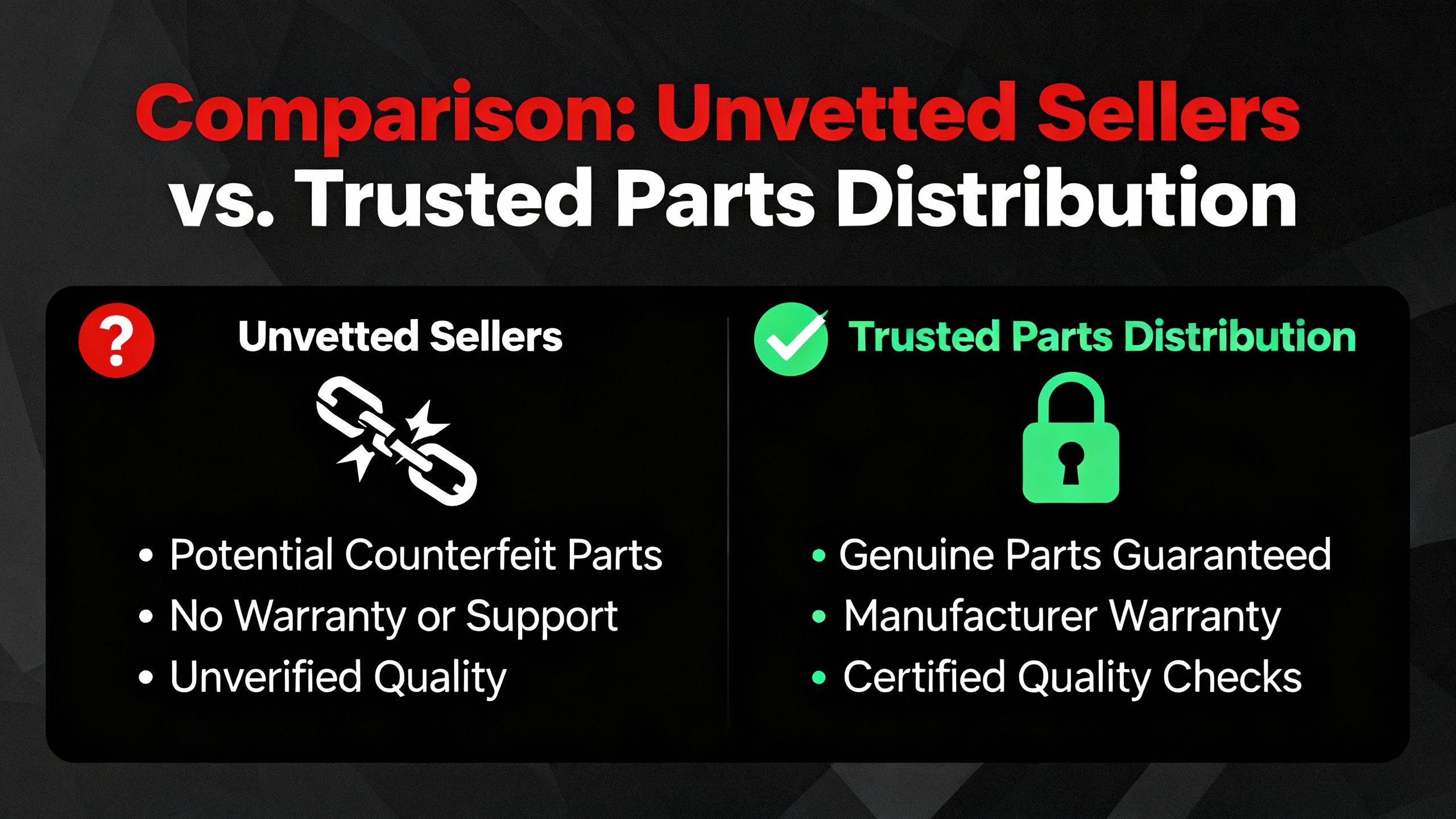
Comparing Unvetted Sellers and Trusted Honeywell Parts Distribution
The differences between buying Honeywell-branded parts from an unvetted online seller and from a trusted industrial distributor are tangible. They show up in authenticity, documentation, compliance support, lifecycle support, and security awareness. The following table summarizes these contrasts.
| Aspect | Unvetted online source | Trusted Honeywell parts distributor |
| Part authenticity | Uncertain origin, higher risk of counterfeit or obsolete | Verified sourcing with traceability to Honeywell and official channels |
| Technical documentation | Incomplete or outdated data sheets, limited application help | Current documentation, application guidance, and standards alignment |
| Panel and code compliance | No assurance of UL 508A, NEC, or IEC compatibility | Components matched to panel standards and markings |
| Lifecycle and obsolescence | Little warning of end-of-life, limited migration options | Proactive lifecycle notices and recommended successor parts |
| Security and supply-chain trust | Minimal consideration of ICS security implications | Awareness of ICS risk, controlled channels, and better audit trails |
In a power-critical facility, each of these aspects connects directly to risk: risk of downtime, risk of safety incidents, and risk of cybersecurity exposure.
Evaluating a Honeywell Parts Distributor in Practice
Qualifying a Honeywell parts distributor should be approached like assessing any other critical supplier in an industrial environment. Start by looking at how they handle authenticity and traceability. Ask how they verify that a part is genuine and how they document its origin. Look for written processes rather than informal assurances, and confirm that part numbers, date codes, and approval markings are captured in their systems so you can align them with your asset inventory.
Next, evaluate their understanding of industrial standards and your application domain. A distributor who can speak fluently about UL 508A, NEC requirements for industrial control panels, and NIST and ISA guidance on ICS security is more likely to appreciate why a seemingly minor substitution may not be acceptable. For a facility with substantial UPS, inverter, and power protection assets, look for evidence that they understand the nuances of continuous operation, ride-through requirements, and the impact of component stress over long life cycles.
Then, examine their lifecycle and obsolescence management. Ask how they notify customers of product end-of-life announcements, how they handle last-time buys, and how they propose replacements when Honeywell transitions to newer platforms. The Andrews Cooper discussion of platform support shows how disruptive obsolescence can be when there is no clear migration path; you do not want to reproduce that pattern at the component level.
Finally, assess their logistics and support model. For ICS environments, uptime and response time matter more than unit price alone. A distributor that can ship critical Honeywell parts quickly from regional stock, offer 24-hour emergency support, or provide on-site or remote technical assistance will often save more money in avoided downtime than you spend on slightly higher unit costs. That aligns with Xpect Solutions’ emphasis on treating total cost of ownership, including downtime risk and maintenance, as more important than purchase price alone when choosing control panels and their supporting ecosystem.
A Practical Strategy for Power-Critical Sites
For sites where industrial and commercial power systems are central to operations—data centers, hospitals, semiconductor fabs, or continuous-process plants—a structured approach to Honeywell parts distribution is particularly valuable. Begin with a clear inventory of panels and systems where Honeywell components are used, capturing part numbers, locations, and associated UPS or protection functions. NIST and ISA/IEC 62443 both stress accurate asset and communication inventories as prerequisites to effective risk management; components are part of that inventory, not an afterthought.
With that baseline, work with your preferred Honeywell parts distributor to define a standard catalog of approved parts and successors, tied back to each critical application. Align this with your control-panel documentation, including schematics, terminal diagrams, and bills of material. If your organization uses a cybersecurity management system aligned with ISA/IEC 62443, treat part changes as configuration changes subject to the same change-management process you apply to firmware or logic updates.
Finally, integrate distribution into your training and incident response planning. When control system personnel attend ICS security and reliability training—whether from national laboratories, industry associations, or internal programs—ensure that they understand how parts sourcing fits into defense-in-depth. When you rehearse incident response based on NIST’s risk management framework, include scenarios where a field device failure or counterfeit component is discovered and must be traced through your supply chain. Over time, this turns distribution from a reactive purchasing function into a proactive contributor to resilience.

FAQ: Honeywell Parts and Trusted Distribution
Q: Do I always need to buy Honeywell parts directly from the original equipment manufacturer to protect my industrial control systems? A: In many cases, a trusted distributor who can prove authenticity, maintain clear traceability, and demonstrate understanding of industrial standards provides equal or better support than direct-only purchasing. The key is not the label on the storefront but the rigor of their sourcing, documentation, and lifecycle management. For control panels built to UL 508A and operated under NEC and NIST and ISA/IEC 62443 principles, what matters is that every Honeywell part in your system is exactly what your design and safety analysis expect it to be.
Q: How does working with a trusted Honeywell parts distributor relate to ICS cybersecurity standards such as NIST SP 800-82 and ISA/IEC 62443? A: These standards emphasize asset inventories, risk assessments, change management, and defense-in-depth. When your distributor provides accurate records of what is installed where, supports consistent configurations across identical systems, and avoids introducing counterfeit or tampered hardware, they help you maintain system integrity and resource availability. In effect, they supply clean building blocks for your ICS, so that your network segmentation, access control, and monitoring efforts are not undermined by hidden weaknesses at the component level.
In modern industrial and commercial power environments, reliability is built from the circuit board up. When Honeywell parts are involved, a truly trusted distributor is one of the quiet but essential partners in keeping your UPS systems, inverters, and protection schemes operating safely and predictably over the long haul.
References
- https://www.academia.edu/74056046/Industrial_Control_Systems
- https://digitalcommons.kennesaw.edu/cgi/viewcontent.cgi?article=1013&context=jcerp
- https://ui.adsabs.harvard.edu/abs/2002ITCST..10..272F/abstract
- https://nvlpubs.nist.gov/nistpubs/specialpublications/nist.sp.800-82r2.pdf
- https://www.eng.auburn.edu/~wilambm/pap/2011/Recent%20advances%20in%20industrial%20control.pdf
- http://acme.able.cs.cmu.edu/pubs/uploads/pdf/Explanation_for_Secure_Industrial_Control_System.pdf
- https://admisiones.unicah.edu/fulldisplay/1hKVV1/6OK121/control-system_design_guide.pdf
- https://cip.gmu.edu/2016/01/12/success-in-industrial-control-system-cyber-security-training/
- https://calhoun.nps.edu/server/api/core/bitstreams/ab27edfa-32d5-4bc9-86f9-d151c99d7377/content
- http://large.stanford.edu/courses/2016/ph240/parthasarathy2/docs/NIST.SP.800-82r2.pdf


 Videos
 News
News Applications





Leave Your Comment