Understanding ControlLogix And Its Role In Power Systems
In many industrial and commercial power systems, the Allen‑Bradley ControlLogix family sits at the heart of the control architecture. It is not just a “PLC” in the traditional sense; it is a full Programmable Automation Controller (PAC). That distinction matters when you evaluate replacement options.
A classic programmable logic controller is a single‑processor, modular device originally created to replace banks of relays and timers. It leans heavily on ladder logic and is intentionally electrician‑friendly. Training providers such as BIN95 describe PACs differently: a PAC, such as ControlLogix or its smaller CompactLogix sibling, is closer to an industrial PC in a modular rack. It supports multiple programming languages, multitasking, distributed control, motion control, and uses standard Ethernet networking. In practice, it behaves more like a modern distributed control system than a simple machine PLC.
For power systems, this architecture is attractive. ControlLogix can coordinate generator controls, switchgear, UPS and inverter interfaces, load shedding schemes, and data exchange with SCADA or energy management systems, often in facilities that run around the clock. The same flexibility becomes a liability when plants face aging hardware, rising software costs, or a need to standardize on less vendor‑specific platforms. A PAC replacement project is fundamentally different from swapping a small PLC on a standalone machine. It has more impact on uptime, cybersecurity, and life‑cycle cost, especially when it is supervising UPS‑backed feeders or critical DC buses.
Before choosing an alternative, it helps to understand why ControlLogix became the default in so many plants, and where its boundaries are.
Why Plant Owners Look For ControlLogix Alternatives
Several recurring drivers push power and process facilities to consider ControlLogix replacements.
Cost and licensing are usually near the top of the list. Comparative work by PDFSupply and others notes that Allen‑Bradley systems, particularly in the Logix family, are often at the premium end of the market. In one study, a comparable Omron PLC solution was estimated at roughly one‑tenth of the hardware and software cost of an equivalent Allen‑Bradley system, depending on configuration. Articles comparing leading PLC brands also place Allen‑Bradley pricing higher than Siemens, Mitsubishi, or Omron for similar application classes, quoting typical controller price ranges around one to several thousand dollars.
Ecosystem lock‑in is another factor. Industrial Automation Co. points out that choosing a major PLC brand effectively commits you to its broader ecosystem—software, drives, HMIs, support, and spares—for roughly a decade or more. Plants in North America often standardize on Allen‑Bradley because of local expertise and part availability; European‑centric fleets may lean toward Siemens. When a facility wants to break out of that orbit, for example to harmonize with global standards or reduce license exposure, ControlLogix becomes an obvious replacement candidate.
Serviceability also plays a role. Experienced practitioners on Electrician Talk describe Rockwell’s line as powerful but “fussy,” with tight coupling between controller firmware, programming software versions, and supported Windows versions. That complexity is manageable in a highly standardized automation group but can be frustrating for a smaller maintenance team focused primarily on power systems and protection.
At the same time, Rockwell has deliberately made migration from older platforms relatively straightforward. ControlLogix and CompactLogix are the natural landing spot for SLC 500 and PLC‑5 users; Rockwell’s own conversion tools in Studio 5000 can translate legacy SLC programs into Logix tag‑based structures. A Control.com technical article notes that this trend has driven many upgrades, even though meticulous verification is still required, particularly for networks such as DeviceNet or ControlNet.
Finally, the human factor matters. BIN95 emphasizes that calling a PAC a “PLC” hides the learning curve. They describe cases where plants asked for “PLC ladder training” only to discover their machines were actually ControlLogix‑class PACs written almost entirely in structured text. That mismatch can produce both downtime and safety risk when maintenance staff try to “learn on the job” inside a live PAC that is managing switchgear, UPS contactors, or generator interlocks.
When you step back, the core question is not whether ControlLogix is a capable controller; it clearly is. The question is whether it is still the best fit for your scale, team, budget, and long‑term power reliability goals.
Internal Alternatives: Staying In The Logix Family
For many facilities, the lowest‑risk alternative to an aging or oversized ControlLogix system is another controller within the Logix ecosystem. That might mean migrating from ControlLogix to CompactLogix, or from legacy MicroLogix or SLC hardware to CompactLogix rather than staying at the high end.
ControlLogix Versus CompactLogix In Practice
Multiple sources, including RealPars, LadderLogicAI, GBL‑Data, and Asteam Techno, describe the positioning of these families consistently. ControlLogix is the high‑end, chassis‑based PAC platform, engineered for very large and complex systems. CompactLogix is the mid‑range platform, intended for standalone machines, skids, and small to mid‑sized processes.
RealPars highlights several architectural differences. ControlLogix modules plug into a backplane inside a 1756 chassis with a separate power supply. A single chassis can host multiple controllers, communications modules, I/O, and specialty modules. That allows designs where one chassis coordinates thousands of distributed I/O points and many motion axes, with options for redundancy modules or advanced Model Predictive Control cards that are not available on CompactLogix.
CompactLogix uses a rackless or small‑chassis architecture. Controllers such as the 5370 and 5380 families connect side‑by‑side to local I/O through an integrated bus, sometimes with a small 1769 or 5069 chassis, and then out to distributed I/O over EtherNet/IP. CompactLogix controllers are single‑CPU systems; you do not put multiple CPUs in one base the way you can in a ControlLogix rack.
From a capacity standpoint, Asteam Techno summarizes typical user memory ranges like this: ControlLogix 5570 controllers span roughly 2 to 8 MB of user memory plus up to 4 MB of safety memory, while 5580 controllers start around 3 MB and go up to about 20 MB plus 6 MB of safety memory, with gigabit Ethernet onboard. CompactLogix 5380 controllers range from roughly 0.6 MB up to about 10 MB of user memory plus 5 MB of safety memory, and CompactLogix 5370 L3 units from about 1 to 5 MB plus 1.5 MB of safety memory. LadderLogicAI notes that older ControlLogix variants went as high as 32 MB or more.
Both families support similar logical structures: tag‑based variables instead of SLC‑style data files, user‑defined types, and up to dozens of tasks with hundreds of programs per task. The real separation is in performance, I/O and network capacity, and specialty modules.
The table below summarizes the roles as described in those sources.
| Platform | Architecture | Typical Scale And Use Case | Notable Features |
| ControlLogix 5570/5580 | Chassis‑based PAC | Large plant‑wide control, tens of thousands of I/O, multi‑axis motion | High memory, multi‑controller racks, redundancy and MPC modules |
| CompactLogix 5380 | Compact or small chassis | Small to mid‑size systems, packaging lines, skids, power subsystems | Integrated motion and safety, gigabit EtherNet/IP, SD storage |
| CompactLogix 5370 | Compact chassis | Machine‑level control, moderate I/O | Dual‑port EtherNet/IP switch, mid‑range memory |
| MicroLogix / Micro800 | Brick / micro PLC | Standalone small machines, basic power panels | Low cost, limited I/O and advanced features |
For a power system engineer, the key practical takeaway is that CompactLogix can handle a surprising amount of work, especially when you use distributed EtherNet/IP I/O near switchgear, UPS, and inverter cabinets. In many facilities I have worked with, we have replaced oversized ControlLogix racks that were barely using their capacity with CompactLogix 5380 controllers and remote I/O, without sacrificing performance or reliability.
When CompactLogix Is A Viable Replacement
RealPars and GBL‑Data both recommend CompactLogix for small to mid‑sized systems such as packaging lines, moderately complex material handling, and similar applications. For power systems, the analog is a control scope such as a single medium‑voltage substation, a UPS plant for one critical building, or a generator pair with transfer switches and load controls.
In these cases, CompactLogix gives you tag‑based programming, integrated motion (if needed for breakers or disconnect drives), integrated safety, and modern Ethernet communications. Asteam Techno notes that CompactLogix 5380 processors ship with USB ports and SD card slots for non‑volatile program storage, with super‑capacitors instead of batteries. Program images can be moved between controllers by moving the SD card, which is attractive when you want quick replacement after a failure without re‑licensing software in the field.
If your existing ControlLogix system is under‑utilized, has modest I/O counts, and does not rely on specialty modules available only in ControlLogix, CompactLogix is often the simplest internal replacement. You stay within Studio 5000, keep EtherNet/IP integration with existing HMIs and drives, and reuse much of your existing Logix code.
When You Still Need ControlLogix
There are many applications where a ControlLogix‑class platform remains the right answer, even when you explore alternatives. The RealPars comparison emphasizes that ControlLogix is designed for large, complex systems and is the preferred choice when you need to coordinate large processes across many units, execute advanced process control, or manage a high number of motion axes.
Asteam Techno and DoSupply both highlight high‑availability features such as redundancy modules, higher connection limits, and richer communication options. ControlLogix 5570 controllers, for example, support hundreds of controller‑to‑controller and controller‑to‑device connections, and both 5570 and 5580 families support a mix of legacy and modern networks, including EtherNet/IP, ControlNet, DeviceNet, and Data Highway Plus. For critical power systems that span multiple substations, cogeneration assets, and large UPS plants, those capabilities and connection limits can be decisive.
If your power system spans an entire campus with thousands of I/O points, hard real‑time interlocking between feeders, or extensive integration with drives and relays, staying with ControlLogix or moving to a newer 5580 controller is often the most conservative risk posture. In that case, your “alternative” is not a different brand but a newer generation with more memory, gigabit networking, and improved diagnostics.

Cross‑Vendor Replacements For ControlLogix
When plants decide to move away from ControlLogix entirely, they usually do so for reasons of cost, standardization across regions, or strategic alignment with other OEM equipment. Based on the research notes, three families show up repeatedly as realistic alternatives: AutomationDirect’s Productivity and related PLCs, Siemens S7‑1500‑class systems, and Omron’s NJ/NX and CS/CJ families.
AutomationDirect: Productivity, Do‑more, And CLICK
On Electrician Talk, experienced contractors describe AutomationDirect as “hard to beat all around.” Their PLCs, many manufactured by Koyo, are considered more than capable for small and mid‑sized systems, with attractive pricing and a company that is easy to work with. The author of that thread argues that for small‑ to medium‑sized contractors working on systems of similar complexity, it can make more sense to invest in AutomationDirect skills than in Rockwell, particularly when clients are sensitive to capital cost.
In an AutomationDirect community question, a machine builder who had been heavily invested in Rockwell looked for a lower‑cost alternative for plants with little existing automation. After initially dismissing AutomationDirect PLCs as low quality, they found, through research and community feedback, that the CLICK, Do‑more, and Productivity series are technically solid. Feedback indicated that all three families are viable; selection depends on the specific application. The builder decided to start with the Productivity series, then explore CLICK and Do‑more.
Inductive Automation’s Ignition forum offers additional nuance. Users there praise AutomationDirect’s Productivity series for strong functionality at low cost, free programming software and videos, and easy online ordering without distributor friction. However, they also point out a key limitation: many Productivity PLCs do not include built‑in OPC UA servers, so SCADA integration often falls back to Modbus TCP with manual tag configuration, which becomes time‑consuming at scale.
For ControlLogix replacements, this implies that AutomationDirect is attractive when you are cost‑constrained and your system is modest in scale or uses a SCADA package that can live with Modbus‑oriented integration. Productivity controllers can certainly run power‑system logic for switchboards, small generator plants, or UPS control where I/O counts are moderate and high‑end redundancy is not required. But if you rely heavily on native EtherNet/IP integration with existing drives, relays, or third‑party PACs, or you want OPC UA as a first‑class protocol, you should factor that into your choice.
Siemens S7‑1500 And S7‑1200 Families
Several comparisons, including Industrial Automation Co., DoSupply, and a 2025 PLC brand review, position Siemens as the primary peer to Allen‑Bradley at the mid‑to‑high end. Siemens S7‑1200 is roughly comparable to CompactLogix and S7‑1500 to ControlLogix.
Hardware‑wise, the S7‑1500 is described as a modular, high‑performance PLC with strong diagnostics and native PROFINET and PROFIBUS networking. Sources comparing Siemens S7‑1500 and ControlLogix note that S7‑1500 offers very fast instruction execution and up to about 32 MB of work memory in higher‑end CPUs, along with modern connectivity such as OPC UA and MQTT. TIA Portal provides a unified engineering environment covering PLCs, HMIs, drives, and safety, which can simplify lifecycle management when you standardize on Siemens.
Industrial Automation Co. stresses that geography and skill base should drive this decision. In North America, ControlLogix and CompactLogix often win because parts are quicker to source and more technicians are comfortable with Studio 5000 and ladder logic. In Europe and many international OEM markets, the opposite is true: Siemens is the default, and S7‑1500 is a natural choice for new plants.
For power system replacements, S7‑1500 can be a strong ControlLogix alternative if your facility is already Siemens‑heavy, or you want to lean into PROFINET and IEC‑style integration. You trade off the tight coupling with Rockwell drives and HMIs for closer ties to Siemens SINAMICS drives and SIMATIC HMIs, and you move from EtherNet/IP to PROFINET. That shift has ripple effects on relays, meters, and third‑party equipment, so it should be evaluated carefully in substations and UPS rooms where many devices still skew toward EtherNet/IP or Modbus.
Omron NJ/NX, CS/CJ, And CS1D Platforms
PDFSupply provides a detailed comparison of Allen‑Bradley and Omron lineups. Omron offers compact brick PLCs (CP series), modular CJ1/CJ2 controllers, and rack‑mount CS1G/CS1H and CS1D platforms, along with newer motion‑centric NJ and NX controllers. Their systems emphasize multi‑axis motion, robotics, vision, safety, and flexible networking.
One notable point from that comparison is cost: the authors estimate that an Omron PLC system, including both hardware and software, can be about one‑tenth the cost of an equivalent Allen‑Bradley system, acknowledging that actual ratios depend on details. Omron’s CP series and mid‑range controllers are particularly cost‑effective for small and mid‑size applications.
In terms of networking, Omron supports a wide array of protocols, including EtherNet/IP, PROFINET IO, DeviceNet, PROFIBUS‑DP, CC‑Link, and Modbus TCP/IP, plus USB and serial links. That breadth makes it easier to integrate with heterogeneous power equipment fleets. The CS1D family adds high‑availability features such as dual power supplies, duplex CPUs with automatic synchronization, and redundant communications. According to PDFSupply, the CS1D can switch to a standby CPU within one scan cycle, making it suitable for high‑availability applications.
For ControlLogix replacements in power systems where redundancy and cost are both important, Omron CS1D‑class platforms deserve serious consideration. They can deliver redundant control in substation or plant‑wide power management roles at a significantly lower hardware and software price point, provided your team invests in Omron’s CX‑Programmer or Sysmac Studio tools and the associated learning curve.
How These Alternatives Compare
The table below summarizes the positioning of these alternatives relative to ControlLogix based on the research notes.
| Option | Role Versus ControlLogix | Network Orientation | Cost Positioning And Notes |
| Allen‑Bradley ControlLogix 5570/5580 | Baseline high‑end PAC; plant‑wide, high I/O, advanced control | EtherNet/IP, ControlNet, DeviceNet, DH+, more | Premium pricing; strong in North American plants |
| CompactLogix 5380 | Internal downsize option for mid‑range systems | EtherNet/IP | Mid‑tier cost; reuses Studio 5000 and Logix code |
| AutomationDirect Productivity | Cost‑driven alternative for small to mid‑sized systems | Primarily Modbus TCP; limited OPC UA | Often significantly cheaper; free software; SCADA effort |
| Siemens S7‑1500 | Peer high‑end PLC for complex and fast applications | PROFINET, PROFIBUS, OPC UA, MQTT | Broad price range; strong in Europe and global OEMs |
| Omron CS1D / CJ2 / NJ / NX | High‑availability and motion‑centric alternatives | EtherNet/IP, PROFINET IO, DeviceNet, others | Roughly one‑tenth of equivalent AB system in one study |
From a power reliability perspective, your decision is not just about the controller’s instruction set or scan rate. It is about network standards (EtherNet/IP versus PROFINET or Modbus), the depth of redundancy features that matter for UPS and inverter controls, and the availability of local expertise to maintain the system over long service lives.

Migration Strategy: Reducing Risk In PAC Replacement
Regardless of which alternative you choose, the way you execute the migration has as much impact on uptime as the hardware itself. The Electrician Talk discussion offers a simple but effective approach: clearly list what you need and what you want from the new system, then rank each requirement by criticality.
In that discussion, the author proposes four categories. The first is true necessities that would be dealbreakers if not met, such as required I/O counts, essential communication protocols, safety integrity levels, or redundant CPU capability. The second comprises highly valuable features that are not strict dealbreakers but strongly influence the decision, such as built‑in diagnostics, integrated energy metering, or native OPC UA support. The third covers modest‑impact nice‑to‑haves that might break ties between otherwise comparable platforms. The fourth consists of features you actively prefer to avoid because they add complexity or risk.
When you apply that method to a ControlLogix replacement, you often see the candidate list shrink quickly. For example, if native EtherNet/IP interoperability with existing relays and drives plus redundant CPUs are non‑negotiable, certain low‑cost PLCs fall away. If you must keep the programming environment familiar to an existing Rockwell‑trained team, moving from ControlLogix to Siemens becomes a bigger training investment and might shift from “desirable” to “dealbreaker.”
The same Electrician Talk thread suggests piloting a small, non‑critical system on the proposed alternative platform. For instance, you might convert a single UPS bypass panel or a smaller distribution section to AutomationDirect or Omron as a trial. Because the hardware is relatively inexpensive, you can afford to treat the pilot as both a technical evaluation and a training exercise, while retaining the ability to revert if necessary.
From a power system reliability standpoint, I generally advocate a phased migration path. Start with mirrored control logic and shadow I/O in a test environment; use vendor conversion tools where applicable, as Rockwell does for SLC to Logix. Validate logic thoroughly with offline simulations and, when possible, hardware‑in‑the‑loop testing before cutting over any real breakers or contactors. Only once you have confidence in both the new platform and your team’s competence should you schedule live switchover windows, ideally on loads backed by UPS or redundant feeders.
Training And Skill Requirements
The difference between PLCs and PACs is especially important in training programs. BIN95 recommends about forty hours of hands‑on PLC training just to build a solid foundation in PLC safety, reliability, and best practices. Only after that, they suggest, should staff move on to PAC training. A comprehensive PAC curriculum that includes motion control, structured text, networking, and cybersecurity can easily add another forty hours or more, and ISA has similar guidance for deep training in the IEC 61131 languages.
When you replace ControlLogix with another PAC‑class system such as S7‑1500 or Omron NJ/NX, you are not “going simpler”; you are trading one complex environment for another. Maintenance technicians and power engineers used to ladder‑only PLCs may initially struggle with tag‑based architectures, task scheduling, or structured text routines. That is true even when staying within Logix, and even more so when switching brands.
In my experience, the most successful migrations treat training as a design deliverable, not an afterthought. They budget structured, hands‑on training on the target platform, focused specifically on the project’s power system application—such as load shedding logic, breaker interlocks, or static transfer control—rather than generic tutorials. That investment pays back quickly in reduced commissioning time and fewer late‑night calls when a breaker fails to close and the UPS plant is running on battery.
Power‑System‑Specific Considerations
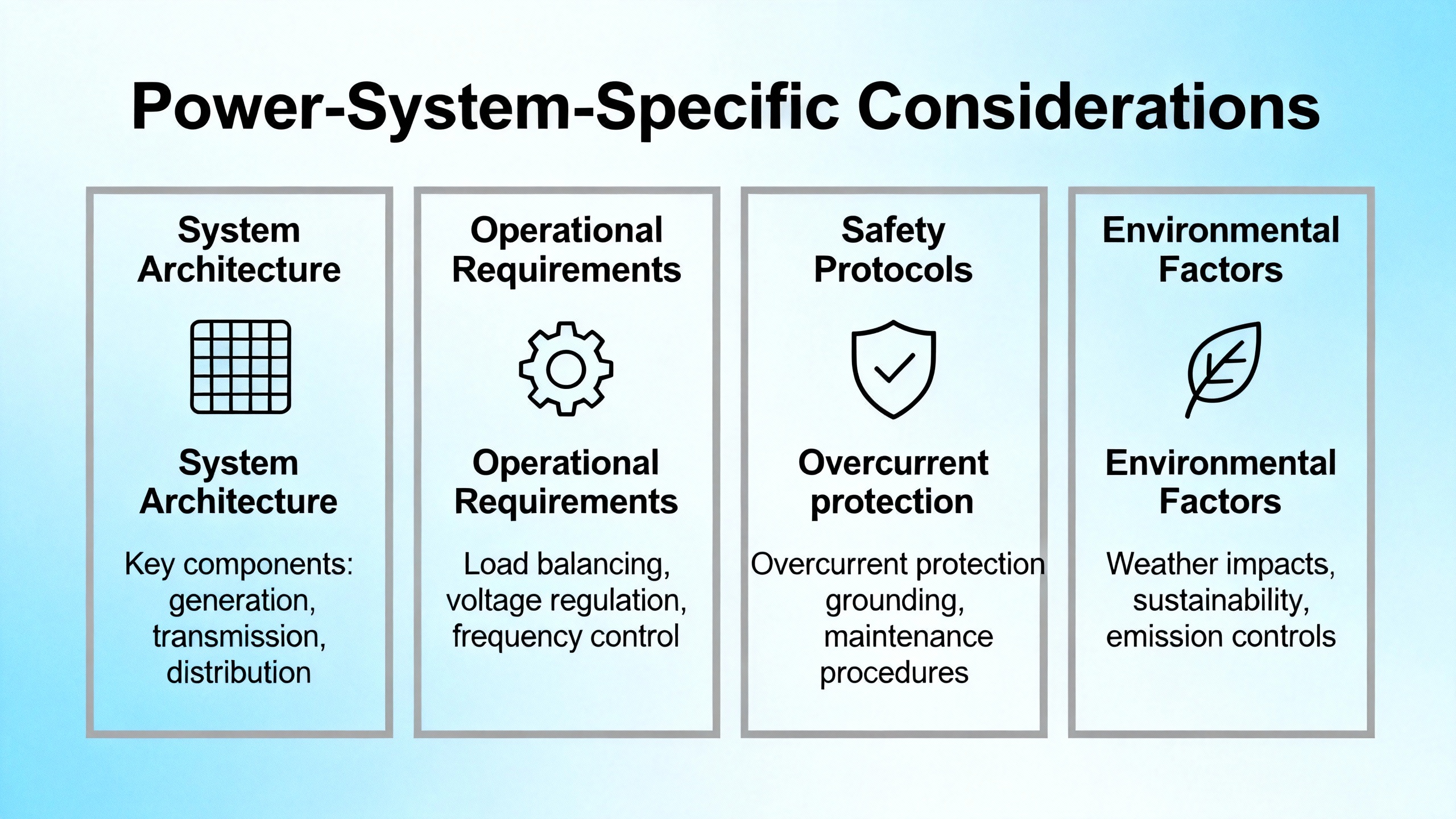
ControlLogix‑class replacements in power environments have some unique wrinkles that do not always show up in general automation discussions.
First, consider how the new controller will behave during abnormal power events. A high‑end PAC that manages transfer schemes, breaker interlocks, or inverter control should be powered from a robust UPS or DC control supply. When you change platforms, verify that power supply ratings, ride‑through behavior, and start‑up characteristics are compatible with your existing UPS and battery systems. The PDFSupply comparison notes typical operating temperature ranges for Allen‑Bradley controllers around minus 13°F to 158°F and relative humidity up to roughly 95 percent, with Omron units often specified for about 14°F to 131°F and about 85 percent relative humidity. While those ranges are adequate for most electrical rooms, you should still confirm environmental ratings, particularly for outdoor switchgear lineups or harsh industrial sites.
Second, pay close attention to communications with protective relays, meters, and UPS or inverter controllers. Many modern relays speak multiple protocols, but in practice plants often settle on one or two. ControlLogix and CompactLogix natively favor EtherNet/IP and can integrate with a broad array of Allen‑Bradley drives and I/O via that network, whereas Siemens S7‑1500 leans on PROFINET and Omron often integrates via EtherNet/IP plus a mix of other fieldbuses. PDFSupply lists extensive protocol support for both families, including DeviceNet, PROFIBUS, Modbus, and others. You want to select a replacement platform that aligns with the protocols your power equipment already uses or can support without awkward gateways.
Third, think through how the replacement will interact with your power monitoring and SCADA systems. An Inductive Automation forum discussion highlights the value of PLCs that include native OPC UA servers when integrating with Ignition SCADA. Ignition can also talk to Allen‑Bradley controllers via tag‑browsable EtherNet/IP drivers, but cheaper PLCs that only expose Modbus TCP require more manual tag handling. If your energy management system is OPC UA‑centric, that might tilt the decision toward Siemens or Omron rather than a low‑cost platform without OPC UA.
Finally, do not overlook cybersecurity. Several sources on modern PLCs and brand comparisons emphasize features such as secure boot, encrypted communications, and role‑based access control, particularly in newer Siemens and Allen‑Bradley platforms. As more power systems connect to corporate networks or remote monitoring centers, those capabilities move from “nice to have” to essential.
Short FAQ
Can CompactLogix Safely Replace ControlLogix In A Critical Power Application?
CompactLogix 5380 controllers can handle substantial I/O counts, integrated safety, and modern EtherNet/IP I/O, and RealPars and GBL‑Data both position them for advanced mid‑range systems. For a single substation, a medium‑sized UPS plant, or a generator pair, CompactLogix is often sufficient. However, if your application depends on ControlLogix‑only specialty modules, very high connection counts, or multi‑controller architectures, staying on ControlLogix or moving to a newer 5580‑series controller is the safer choice.
When Does It Make Sense To Leave The Rockwell Ecosystem Entirely?
Industrial Automation Co. and PDFSupply both point out that brand choice locks you into an ecosystem for many years. Leaving Rockwell tends to make sense when the rest of your plant is already aligned with another vendor, when you can realize significant hardware and software savings with alternatives such as Omron or AutomationDirect, or when you want to standardize globally on something like Siemens TIA Portal. The tradeoff is the training and integration work needed to adapt your team and devices to new tools and protocols.
How Should I Start Evaluating A ControlLogix Replacement For My Power System?
The Electrician Talk guidance is a practical place to start: clearly document your required I/O, processor performance, communications, HMI interfaces, redundancy needs, and environmental constraints, then separate absolute necessities from strong preferences. Use that list to screen candidate platforms down to a manageable set. From there, consider piloting a non‑critical portion of your power system on the leading candidate, verify integration with relays, meters, UPS controllers, and SCADA, and invest in focused training on the chosen platform before you migrate any critical feeders or UPS‑protected loads.
Closing
Replacing an Allen‑Bradley ControlLogix system is less about chasing the newest controller and more about aligning control architecture, networks, and team skills with the long‑term reliability targets of your power system. Whether you stay within the Logix family, move to Siemens or Omron, or adopt a cost‑driven platform like AutomationDirect, the most resilient outcomes come from sober requirement analysis, realistic training plans, and disciplined migration and testing rather than from any particular badge on the front of the controller.
References
- https://slashdot.org/software/p/ControlLogix-SIL-2/alternatives
- https://www.plctalk.net/forums/threads/allen-bradley-plc-alternatives.125698/
- https://mizenautomation.com/controllogix-compactlogix-comparison
- https://www.asteamtechno.com/different-between-controllogix-vs-compactlogix-controller/?srsltid=AfmBOooekA0vF9cffxhScujhYX7usDeb3Rt-Kxi34j4LpoDfORk7SBFh
- https://gbl-data.com/comparison-of-allen-bradley-plcs/
- https://www.realpars.com/blog/compactlogix-vs-controllogix
- https://compatibility.rockwellautomation.com/Pages/MultiProductCompareSelections.aspx?crumb=113&toggleState=&versions=55395,55396,55063,55397,55062
- https://bin95.com/articles/automation/pac-vs-plc.htm
- https://control.com/technical-articles/comparing-slc-and-controllogix-plcs-an-in-depth-review/
- https://www.electriciantalk.com/threads/slc500-replacement-choices.297409/


 Videos
 News
News Applications





Leave Your Comment